












The pursuit of perfection in pharmaceutical manufacturing is an arduous journey, governed by a complex web of regulations designed to protect the public health. At the heart of this endeavor lies the practice of Good Manufacturing Practice (GMP) auditing. Traditionally, many organizations viewed audits as a necessary evil a high-pressure event characterized by stressful preparations and the fear of uncovering significant non-conformances. However, a shift in industry philosophy is reframing these assessments. Today, progressive firms recognize that GMP audits and quality excellence are two sides of the same coin. Rather than being a static measurement of past performance, a well-executed audit is a forward-looking engine for growth, providing the critical insights needed to refine processes, strengthen supply chains, and ultimately deliver safer medications to patients.
In an increasingly globalized and scrutinized industry, the ability to maintain a state of “constant readiness” has become a key competitive differentiator. Regulatory bodies such as the FDA, MHRA, and EMA have moved toward more data-driven and risk-based inspection models, meaning that superficial compliance is no longer enough to pass muster. True success requires a deep-seated commitment to the principles of continuous improvement, where the results of every audit are used as a roadmap for the next stage of the quality journey. By integrating GMP audits and quality excellence into the core business strategy, pharmaceutical leaders can ensure that their operations are not only compliant on the day of an inspection but are fundamentally robust every single day of the year.
The Evolution of the Internal Audit: Beyond Check-the-Box Compliance
The first line of defense in any quality system is the internal audit program. Historically, these were often “check-the-box” exercises where auditors looked for the most obvious infractions, such as missing signatures or outdated training records. While these details are important, they rarely uncover the systemic risks that lead to major recalls. The modern approach to GMP audits and quality excellence focuses on the “spirit” of the regulation as much as the letter. Auditors now conduct deep-dives into process data, interview shop-floor personnel to gauge their level of understanding, and look for misalignments between different departments. This holistic view allows the organization to spot “weak signals” minor deviations that, if left unaddressed, could coalesce into a major quality catastrophe.
Designing a Risk-Based Auditing Strategy
With limited time and resources, it is impossible to audit every process with equal intensity every year. Therefore, the cornerstone of achieving GMP audits and quality excellence is a sophisticated, risk-based auditing strategy. This involves prioritizing facilities, departments, and vendors based on their historical performance, the complexity of the products they handle, and their critical role in the overall supply chain. For example, a facility manufacturing sterile injectables would naturally receive more frequent and intense scrutiny than one producing stable oral solids. By focusing the highest level of expert attention on the areas of highest risk, an organization maximizes its return on the auditing investment and ensures that potential vulnerabilities are identified and mitigated before they can affect the patient.
The Importance of Auditor Competency and Independence
The effectiveness of an audit is directly tied to the skills and mindset of the individual performing it. To truly drive GMP audits and quality excellence, auditors must possess a rare combination of technical expertise, regulatory knowledge, and soft skills. They need to be able to “read between the lines” of a document and ask the probing questions that uncover the true root cause of a problem. Furthermore, the concept of independence is paramount. An auditor must have the organizational freedom to report findings without fear of retribution or pressure to downplay a significant observation. This impartiality is what gives an audit its credibility and ensures that senior management receives an accurate, unvarnished picture of the company’s compliance health.
From Observations to Action: The Power of Effective CAPA
Finding a problem is only half the battle; the true measure of a quality system is how it responds to that discovery. The link between GMP audits and quality excellence is most visible in the Corrective and Preventive Action (CAPA) process. A common pitfall for many firms is focusing solely on the “correction” fixing the immediate error without addressing the “preventive” side of the equation. For instance, if an audit reveals an operator error, the standard response is often simply to re-train the individual. However, a quality-centric organization will ask why the error was possible in the first place. Was the procedure confusing? Was the lighting poor? Was the equipment interface counter-intuitive? By using audit findings to drive systemic changes, firms ensure that the same problem never recurs, leading to a leaner and more resilient operation.
Measuring Audit Effectiveness Through Quality Metrics
To ensure that the auditing program is actually delivering on its promise, it must be measured. Integrating GMP audits and quality excellence into the corporate dashboard requires the use of meaningful quality metrics. Instead of just counting the number of audits completed, leadership should look at the “repeat finding rate” how often the same issue is found in subsequent audits and the “CAPA cycle time” how quickly the organization resolves the issues uncovered. A decrease in repeat findings is a clear indicator that the auditing program is driving real change. Furthermore, tracking the correlation between internal audit findings and external regulatory observations can provide a “reality check” on the rigor of the internal program, ensuring that the company’s internal standards are as high as those of the regulators.
Fostering a Collaborative Rather Than Adversarial Culture
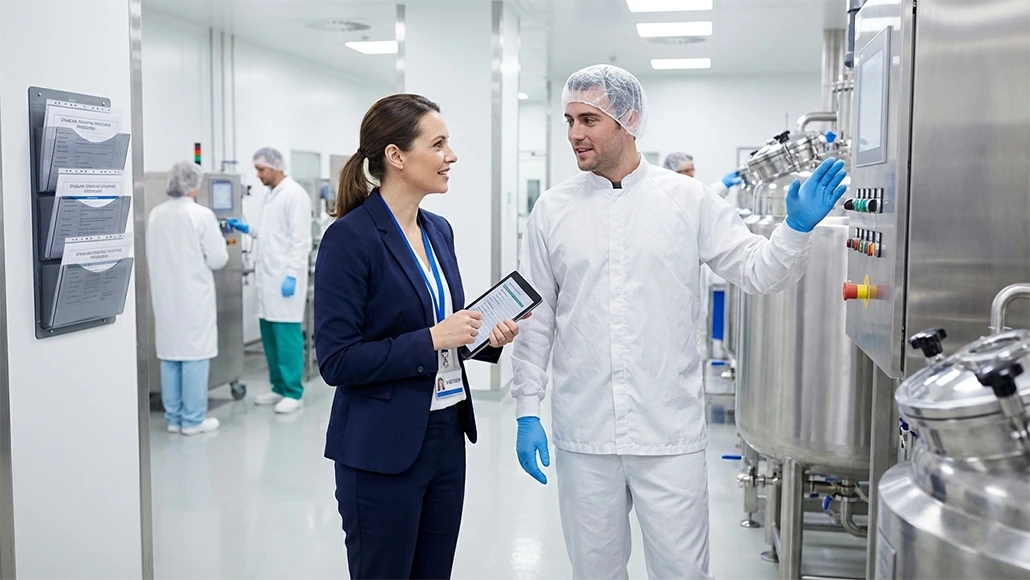
Perhaps the biggest hurdle to achieving GMP audits and quality excellence is the “fear factor.” When employees view auditors as the “quality police” looking for reasons to get them in trouble, they are likely to hide information or offer defensive answers. This adversarial dynamic is counterproductive to the goals of quality. Leading companies work hard to build a culture where audits are seen as collaborative “health checks.” In this environment, auditors and auditees work together to find better, safer, and more efficient ways of working. When people feel safe to report their own mistakes and point out flaws in the system, the organization gains a much more accurate view of its risks, allowing for faster and more effective intervention.
The Role of Technology in Modern GMP Auditing
As manufacturing processes become more complex, the tools we use to audit them must also evolve. Digital auditing platforms are replacing paper notebooks and spreadsheets, allowing for real-time data entry and instant reporting. These tools facilitate better GMP audits and quality excellence by providing a central repository for all audit findings, making it easy to track trends across multiple global sites. Furthermore, the use of remote auditing technology accelerated by the global pandemic is becoming a permanent part of the landscape. Using high-definition cameras and augmented reality headsets, expert auditors can “walk the floor” of a facility thousands of miles away, providing high-quality oversight without the cost and time associated with international travel.
Integrating Big Data and AI into the Audit Lifecycle
The future of auditing lies in the ability to analyze vast amounts of data to predict where the next failure might occur. Artificial intelligence can scan years of deviation reports, maintenance logs, and environmental monitoring data to identify patterns that a human auditor might miss. This “predictive auditing” allows firms to move from periodic checks to a model of continuous oversight. In the context of GMP audits and quality excellence, this means that the audit is no longer a discrete event but a continuous process that runs in the background of every manufacturing run. By catching the early warning signs of process drift, these advanced systems can alert quality managers to a risk before a single non-conforming unit is even produced.
Strengthening the Global Supply Chain Through Vendor Audits
In today’s interconnected world, a pharmaceutical company is only as strong as its weakest supplier. Therefore, the scope of GMP audits and quality excellence must extend far beyond the company’s own four walls. Robust vendor auditing programs are essential for ensuring that raw materials, packaging components, and contract manufacturing services meet the same high standards as the primary manufacturer. This external oversight requires a different set of skills, as auditors must navigate different cultures, languages, and regulatory environments. By building strong, audit-based partnerships with their suppliers, pharmaceutical firms can build a “quality wall” that protects their products from the risks of contamination, counterfeiting, and supply chain disruptions.
Conclusion: The Path Forward for Quality Leadership
Achieving a state of continuous quality excellence is not a destination but a perpetual cycle of assessment, action, and improvement. GMP audits are the heartbeat of this cycle, providing the rhythmic pulse of data and insight that keeps the organization healthy. For those who embrace the audit as a strategic partner, the rewards are significant: fewer recalls, lower operational costs, and a reputation for reliability that is beyond reproach. In the end, the true beneficiaries of this commitment to GMP audits and quality excellence are the patients. By ensuring that every pill, vial, and patch is produced under the highest possible standards, the industry fulfills its ultimate promise to provide safe and effective healthcare solutions to a world in need.