











Close
Digital Health & Ai Innovation summit 2026
Medical Taiwan 2026

How to Automate Patient Care Workflow

Note* - All images used are for editorial and illustrative purposes only and may not originate from the original news provider or associated company.

Subscribe

- Never miss a story with notifications

- Gain full access to our premium content

- Browse free from any location or device.

Media Packs

Expand Your Reach With Our Customized Solutions Empowering Your Campaigns To Maximize Your Reach & Drive Real Results!

– Access the Media PackNow

– Book a Conference Call

Leave Message for Us to Get Back

Related stories

Medical Device Innovation and Regulatory Strategy...

A comprehensive look at how the medical device sector is navigating the complex intersection of cutting-edge technology and increasingly stringent global regulations. The industry is currently shifting toward a more data-centric approach to compliance, where clinical validation and quality assurance are integrated into the earliest stages of product development.

Hospital Infrastructure Modernization Shapes Healthcare

The physical environment in which care is delivered is evolving from a static container of services into an active, intelligent participant in the healing process. By prioritizing sustainability and integrating sophisticated facility management systems, modern medical institutions are enhancing their operational resilience while creating safer and more efficient spaces for both patients and clinicians.

Precision Diagnostics Accelerating Early Detection

The fundamental strategy of clinical medicine is shifting from managing symptoms to identifying the earliest molecular indicators of disease. By integrating sophisticated genomic analysis with high-fidelity imaging, practitioners are now able to intercept pathological processes long before they manifest as systemic illness, significantly improving the efficacy of therapeutic interventions.

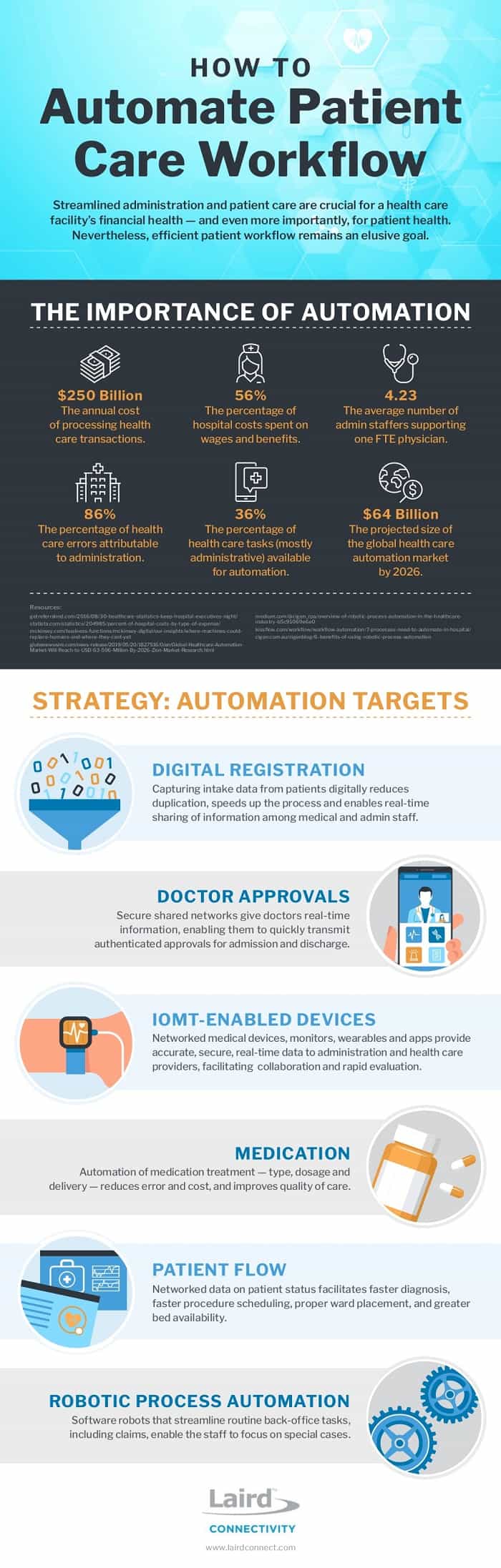
STRATEGY:
AUTOMATION TARGETS THE IMPORTANCE OF AUTOMATION DIGITAL REGISTRATION
Capturing intake data from patients digitally reduces duplication, speeds up the process and enables real-time sharing of information among medical and admin staff.

IOMT-ENABLED DEVICES Networked medical devices, monitors, wearables and apps provide accurate, secure, real-time data to administration and health care providers, facilitating collaboration and rapid evaluation.

PATIENT FLOW Networked data on patient status facilitates faster diagnosis, faster procedure scheduling, proper ward placement, and greater bed availability.

DOCTOR APPROVALS Secure shared networks give doctors real-time information, enabling them to quickly transmit authenticated approvals for admission and discharge.

MEDICATION Automation of medication treatment — type, dosage and delivery — reduces error and cost, and improves quality of care.

ROBOTIC PROCESS AUTOMATION Software robots that streamline routine back-office tasks, including claims, enable the staff to focus on special cases.

MEDICAL FAIR ASIA 2026

Latest stories

Related stories

Medical Device Innovation and Regulatory Strategy Trends

A comprehensive look at how the medical device sector is navigating the complex intersection of cutting-edge technology and increasingly stringent global regulations. The industry is currently shifting toward a more data-centric approach to compliance, where clinical validation and quality assurance are integrated into the earliest stages of product development.

Hospital Infrastructure Modernization Shapes Healthcare

The physical environment in which care is delivered is evolving from a static container of services into an active, intelligent participant in the healing process. By prioritizing sustainability and integrating sophisticated facility management systems, modern medical institutions are enhancing their operational resilience while creating safer and more efficient spaces for both patients and clinicians.

Precision Diagnostics Accelerating Early Detection

The fundamental strategy of clinical medicine is shifting from managing symptoms to identifying the earliest molecular indicators of disease. By integrating sophisticated genomic analysis with high-fidelity imaging, practitioners are now able to intercept pathological processes long before they manifest as systemic illness, significantly improving the efficacy of therapeutic interventions.

Regulatory Trends Shaping Medical Technology

The path from innovation to clinical implementation is governed by an increasingly complex and dynamic set of global standards. As digital health and artificial intelligence become integral to patient care, the frameworks that ensure safety and efficacy are evolving to address the unique challenges of software-based medical solutions and interconnected hardware.

Subscribe

- Never miss a story with notifications

- Gain full access to our premium content

- Browse free from any location or device.

Media Packs

Expand Your Reach With Our Customized Solutions Empowering Your Campaigns To Maximize Your Reach & Drive Real Results!

– Access the Media Pack Now

– Book a Conference Call

Leave Message for Us to Get Back

Translate »