

















The global pharmaceutical industry is currently witnessing a historic shift from small-molecule chemical synthesis to the production of large, complex biological entities. This transition has necessitated a complete overhaul of traditional manufacturing philosophies, as the inherent variability of living cells requires a much more nuanced approach to production and oversight. The integration of advanced biopharmaceutical processing and quality systems has become the essential foundation for this new era, providing the tools necessary to maintain consistency, safety, and efficacy in the production of life-changing therapies such as monoclonal antibodies, vaccines, and cell-based treatments.
The Complexity of Biologics Manufacturing and Process Control
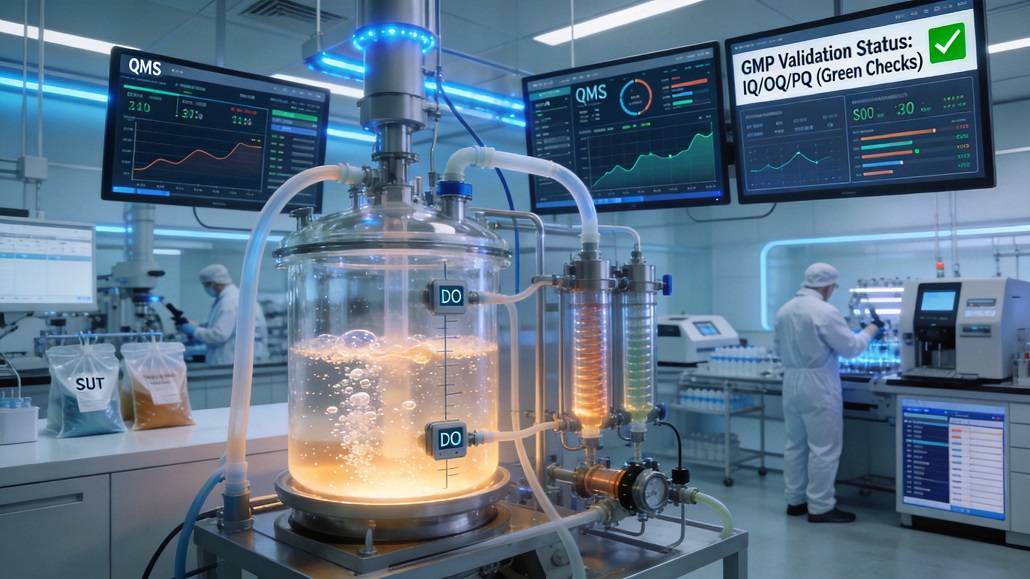
Unlike traditional drugs, which are produced through predictable chemical reactions, biologics are “grown” in living systems. This means that every variable in the bioreactor environment from the concentration of dissolved oxygen to the precise nutrient mix can significantly impact the final product’s quality. Advanced biopharmaceutical processing and quality systems rely on sophisticated sensors and real-time analytical tools to monitor these parameters with unprecedented precision. By utilizing process analytical technology (PAT), manufacturers can now make mid-stream adjustments to the fermentation or cell culture process, ensuring that the biological system remains within the “design space” required for a successful batch.
Optimizing Upstream and Downstream Workflows
The efficiency of biologics manufacturing is determined by the seamless integration of upstream and downstream processes. Upstream processing focuses on maximizing the yield of the target protein, often through the use of high-density cell cultures and optimized media. However, the subsequent downstream processing which involves the purification and concentration of the therapeutic molecule is often the more significant bottleneck. Modern biopharmaceutical processing and quality systems utilize advanced chromatography and filtration technologies to handle the high volumes of material produced in large-scale bioreactors, ensuring that impurities are removed without damaging the delicate structure of the protein itself.
The Critical Role of GMP Validation in Bioprocessing
Regulatory bodies like the FDA and EMA maintain a rigorous standard for biologics, summarized by the mantra that “the process is the product.” Because the final molecule is so complex that it cannot be fully characterized by laboratory testing alone, the manufacturing process itself must be validated to ensure consistent results. GMP validation protocols within modern biopharmaceutical processing and quality systems involve a multi-stage approach: installation qualification, operational qualification, and performance qualification. This rigorous documentation ensures that every piece of equipment and every step of the workflow performs exactly as intended, every single time, minimizing the risk of batch failure and protecting patient safety.
Biosimilars and the Need for Analytical Comparability
The rise of the biosimilars market has added a new layer of complexity to the regulatory landscape. To gain approval, a biosimilar must be demonstrated to be “highly similar” to an already approved reference product, with no clinically meaningful differences in safety or potency. This requires an exhaustive analytical comparison using the most advanced tools available within biopharmaceutical processing and quality systems. Manufacturers must employ a suite of orthogonal testing methods including mass spectrometry, nuclear magnetic resonance, and high-performance liquid chromatography to prove that the biosimilar’s primary and secondary structures are essentially identical to the innovator drug.
Digital Transformation of Quality Management Systems
The move toward “Quality 4.0” is perhaps the most transformative trend in the biopharma sector. Traditional, paper-heavy quality management systems (QMS) are being replaced by integrated digital platforms that provide a single source of truth for all production and quality data. These digital biopharmaceutical processing and quality systems allow for real-time visibility into the status of every batch and every deviation. By automating the review and approval of batch records, companies can significantly reduce the “lead time” between production and release, ensuring that critical medications reach the market faster while maintaining a flawless compliance record.
Enhancing Regulatory Compliance through Data Integrity
Data integrity has become a primary focus for regulatory inspectors worldwide. The use of digital quality systems ensures that all data is captured according to the ALCOA+ principles (Attributable, Legible, Contemporaneous, Original, and Accurate). Within advanced biopharmaceutical processing and quality systems, every change to a process parameter or a test result is recorded in an immutable audit trail. This transparency not only simplifies the audit process but also fosters a culture of accountability and continuous improvement within the manufacturing organization.
The Shift Toward Continuous Bioprocessing
While batch processing remains the industry standard, there is a significant push toward continuous manufacturing in the biologics space. Continuous bioprocessing involves a steady flow of materials through the bioreactor and purification stages, which can lead to higher productivity and a smaller facility footprint. However, implementing continuous manufacturing requires even more sophisticated biopharmaceutical processing and quality systems to manage the constant data stream and ensure that the product quality remains stable over long production runs. The ability to monitor and control a continuous process in real-time is the “holy grail” of modern biopharmaceutical engineering.
Single-Use Technologies and Manufacturing Flexibility
The adoption of single-use technologies (SUT) has revolutionized the way biopharmaceutical facilities are designed and operated. By replacing permanent stainless-steel equipment with disposable plastic components, manufacturers can significantly reduce the risk of cross-contamination and eliminate the need for time-consuming cleaning validation. SUT is a core component of modern biopharmaceutical processing and quality systems, allowing for rapid changeovers between different products and making it much easier to scale production up or down based on market demand. This flexibility is particularly valuable for companies developing personalized therapies or responding to sudden public health emergencies.
Future Outlook: AI and Machine Learning in Bioprocessing
As we look to the future, the integration of artificial intelligence (AI) and machine learning (ML) will further enhance the capabilities of biopharmaceutical processing and quality systems. AI algorithms can be trained on vast datasets of historical production data to predict the outcome of a batch before it is even completed. These “predictive quality” models can identify the early warning signs of a deviation, allowing operators to take corrective action before any material is wasted. Furthermore, ML can be used to optimize the design of the biologic itself, ensuring that the molecule is not only therapeutically effective but also “manufacturable” at scale.
The evolution of biopharmaceutical processing and quality systems is an ongoing journey driven by the need for greater efficiency, safety, and innovation. As the complexity of modern therapies continues to grow, the reliance on advanced data-driven manufacturing and rigorous quality oversight will only increase. By investing in the latest technological frameworks and fostering a culture of regulatory excellence, biopharmaceutical manufacturers can ensure that they remain at the forefront of the industry, delivering the next generation of life-saving medicines to patients around the world with absolute confidence.