





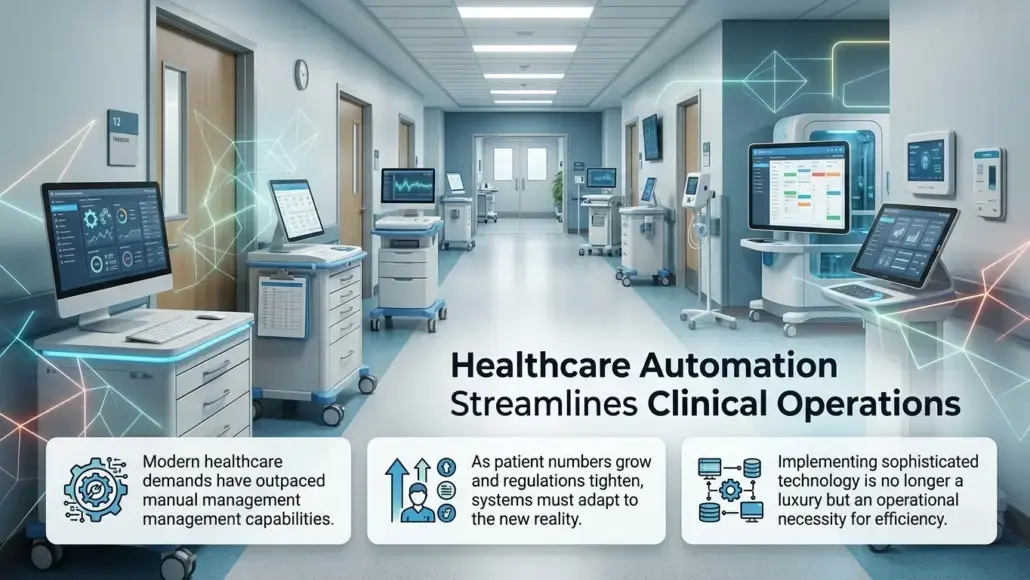
The administrative and operational burdens facing modern healthcare institutions have reached a level where manual intervention is no longer sufficient to maintain efficiency. As patient volumes increase and regulatory requirements become more complex, hospitals are turning to technology to manage the intricate web of clinical and logistical tasks that define a typical day of care. The implementation of sophisticated software and hardware systems is not just a luxury; it is a necessity for the survival of the institution. The core reality is that healthcare automation streamlines clinical operations by removing the friction from routine processes and allowing staff to focus on the human aspects of patient care.
Clinical operations encompass everything from patient scheduling and registration to the management of supply chains and the coordination of discharge plans. In many traditional settings, these tasks are handled through fragmented systems and manual data entry, which are prone to error and delay. Hospital automation seeks to integrate these disparate functions into a unified digital ecosystem. By automating the flow of information across departments, hospitals can reduce wait times and improve the overall patient experience. This shift toward digital healthcare is a fundamental component of modern hospital management.
Workflow Optimization and IT Infrastructure
One of the most significant impacts of healthcare automation is in the area of workflow optimization. Automated scheduling algorithms can match patients with the appropriate providers based on clinical need and availability, maximizing the utilization of clinic space and physician time. Similarly, automated systems for managing pharmacy inventories and surgical supplies ensure that the necessary tools are always available when needed, without the cost of maintaining excessive stock. This level of operational precision is essential for maintaining the financial health of the organization in an era of tightening margins.
The role of healthcare IT in supporting these initiatives is critical. Modern electronic health records (EHRs) are being enhanced with automated features that can flag potential medication errors, suggest evidence-based treatment protocols, and automate the documentation process. This reduces the cognitive load on clinicians and helps to prevent burnout, which is a major concern for healthcare leaders. When technology can handle the repetitive and data-intensive aspects of the job, clinicians are free to engage more deeply with their patients. The way healthcare automation streamlines clinical operations is through this liberation of human potential.
Process Automation in Diagnostics and Therapeutics
Process automation is also making inroads into the diagnostic and therapeutic areas of the hospital. Laboratory automation systems can process thousands of samples daily with minimal human intervention, providing faster and more accurate results. In the pharmacy, robotic systems can dispense medications with high precision, reducing the risk of errors and freeing up pharmacists to focus on clinical consultations. These examples of hospital automation demonstrate how technology can improve both the quality and the efficiency of care simultaneously.
Data analytics is a powerful companion to healthcare automation. By analyzing the data generated by automated systems, hospital management can identify bottlenecks and inefficiencies in real-time. For example, data on patient flow through the emergency department can be used to adjust staffing levels dynamically, ensuring that the hospital can respond to surges in demand. This data-driven approach to clinical operations allows for a level of agility and responsiveness that was previously impossible. The continuous improvement of hospital processes is a hallmark of the digital healthcare era.
Patient Journey and Experience Enhancement
The patient journey is also being simplified by the adoption of automated tools. Patient portals allow individuals to schedule appointments, view test results, and communicate with their care teams from their own devices. Automated reminders for follow-up appointments and medication refills help to improve adherence and reduce the number of missed appointments. These customer-facing aspects of healthcare automation are essential for building patient loyalty and improving long term health outcomes. When administrative parts of healthcare are easy to manage, patients are more likely to stay engaged.
Security and compliance are major considerations when implementing any automation strategy. Healthcare IT departments must ensure that all systems are protected by high levels of encryption and that they comply with data privacy regulations. As more processes become automated, the risk of a cyberattack can have more significant operational consequences. Therefore, a focus on cybersecurity must be integrated into every stage of the automation lifecycle. This proactive approach to risk management is essential for maintaining the trust of both patients and staff.
Interoperability and Future Directions
The transition to an automated environment requires a thoughtful approach to change management. Staff at all levels must be trained on how to use new systems and understand the benefits they provide. Resistance to change is common, particularly if staff feel that their roles are being fundamentally altered by technology. Leadership must communicate clearly that healthcare automation streamlines clinical operations to support the workforce. By involving staff in the design of automated workflows, hospitals ensure the technology meets actual needs.
Interoperability remains a challenge in the field of healthcare automation. Different systems from different vendors must be able to share data to achieve the full benefits of automation. The industry is moving toward standardized data formats and open APIs to address this issue. When a hospital’s inventory system can talk to its surgical scheduling system and its financial software, the true power of automation is realized. This level of integration is the ultimate goal of the digital healthcare movement.
The future of healthcare automation will likely involve even more sophisticated applications of artificial intelligence and machine learning. AI can be used to predict patient deterioration, optimize the allocation of ICU beds, and even assist in complex surgical planning. These advanced tools will further enhance the ability of hospitals to manage clinical operations with precision and foresight. The ongoing evolution of healthcare IT is set to redefine the nature of hospital management, making it more proactive and patient-centered.