











Ask any hospital administrator what worries them about chronic musculoskeletal care, and knee osteoarthritis usually comes up early in the conversation. It fills outpatient schedules, drives repeat visits, and quietly strains budgets built around value-based contracts. For clinical directors, the challenge isn’t whether to treat it. It’s how to treat it without defaulting to medication every time a patient reports a flare.
Rethinking the Default Around Pain Medication
For years, pain medication sat at the center of most osteoarthritis care plans, largely because it was fast, familiar, and easy to prescribe. That default has shifted. Opioid stewardship committees, insurer pressure, and a genuine clinical push toward safer long-term management have nudged care teams toward alternatives that carry less risk.
A drug-free relief model, one where patients aren’t leaning on painkillers to get through every flare, checks several boxes administrators already track closely. Fewer prescriptions mean fewer medication-related complications. Lower pharmacy spend means a lighter line item on the budget. Pain management referrals ease up as well.
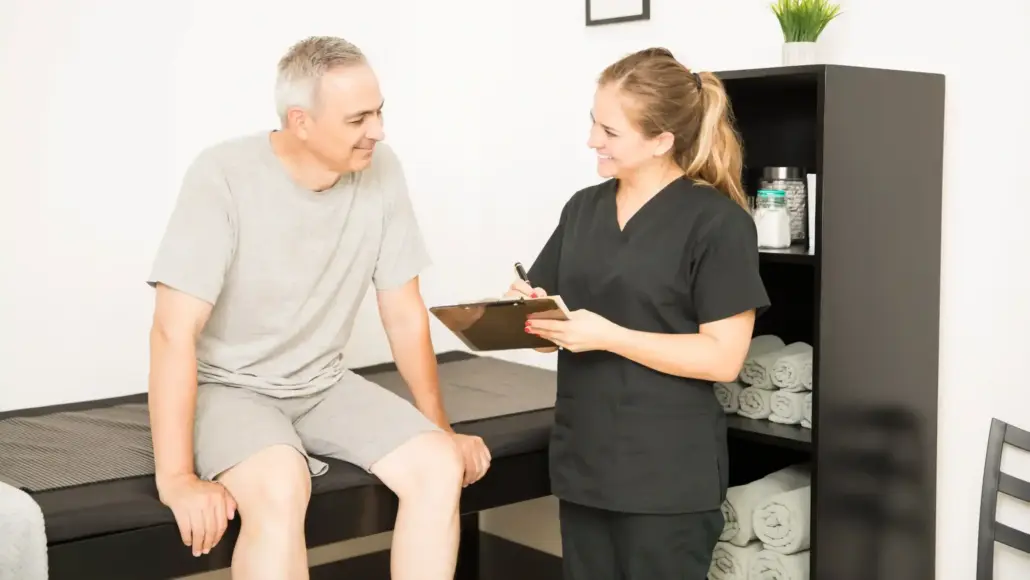
There’s also an operational upside worth naming directly. Non-pharmacological care rarely requires a prescribing physician at every touchpoint. Physical therapists, occupational therapists, and care coordinators can carry much of the workload themselves, spreading capacity across a team instead of bottlenecking everything through a single provider’s schedule.

Building Blocks of a Non-Pharmacological Pathway
Most programs draw from a familiar toolkit, though the way health systems combine these pieces varies quite a bit.
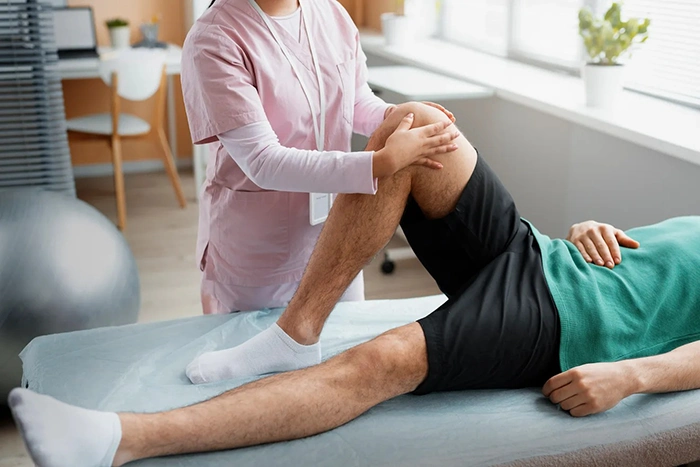
Structured physical therapy and supervised exercise still anchor the clinical side of things, since strengthening the muscles around the joint remains one of the more reliable ways to preserve function over time. Weight management counseling deserves its own line item as well. Even a modest reduction in body weight takes real pressure off a knee joint, and that benefit compounds over months and years.
Bracing and orthotic support fill a narrower but important role for patients dealing with mechanical instability, giving them a way to stay active without aggravating the joint further. Thermal and light-based therapies round things out. Heat and infrared applications are commonly used to relax tight muscle tissue and support circulation near the joint, and they tend to pair well with the exercise and bracing components already mentioned.
These pieces rarely work in isolation, and none are meant to replace physical therapy, surgery, or a physician’s clinical judgment. Think of them as scaffolding around the appointments a patient already has scheduled, not a substitute for those appointments.
Patient Education Ties the Whole Pathway Together
A pathway only works if patients actually understand it and stick with it. Programs that pair clinical treatment with genuine education, teaching patients to recognize flare patterns, adjust activity levels, and know when a symptom warrants a call to their care team, consistently outperform programs that hand patients a treatment plan and little else.
This is where a lot of health systems still leave value on the table. Education materials get printed once and are rarely updated. Patients leave an appointment with instructions they half remember by the time they get home.
Extending Care Into the Home
The hardest gap to close is what happens between scheduled visits. Most patients manage the bulk of their day-to-day symptoms at home, often improvising with whatever happens to be on hand.
Heat therapy has been recommended for joint stiffness for a long time, and infrared light is frequently paired with it to support circulation and take the edge off discomfort. A single device that combines both, something like a knee massager with heat, gives patients a repeatable way to apply the same therapy their care team already recommends, rather than reaching for a towel and a hot water bottle and hoping the timing works out.
For teams assembling discharge kits or building out home care plans, pointing patients toward a best knee massager for arthritis style option can genuinely support adherence between physical therapy sessions. Older patients in particular tend to stick with routines that ask less of them, and a device requiring nothing more than turning it on tends to survive longer in someone’s daily habits than a more complicated regimen ever does.
What Administrators Should Weigh Before Adopting a New Tool
Clinical evidence matters, but it isn’t the only factor worth weighing when a device gets added to a care pathway. Cost relative to expected adherence matters just as much. A cheaper device that ends up in a drawer after two weeks isn’t actually cheaper once that math gets done properly.
Ease of use for older patients deserves real weight too, since a tool that’s confusing or uncomfortable simply won’t get used, regardless of how well it performs on paper. In the United States, HSA and FSA eligibility can reduce friction meaningfully as well, especially for patients asked to purchase their own equipment rather than receive it as part of a covered benefit.
Staff training shouldn’t be overlooked either. A device only supports adherence if the clinical team can explain it with genuine confidence at discharge.
Where This Fits Into the Bigger Picture
None of this replaces a well-staffed physical therapy program, and none of it should delay a surgical referral when one is clinically indicated. What it offers instead is a low-cost, low-risk layer that supports something nearly every health system is already chasing: helping patients manage a chronic condition with fewer medications, better day-to-day function, and less strain on the parts of the system built to handle acute escalations.
For administrators building out osteoarthritis care pathways, that’s not a minor addition. It’s a practical piece of a much larger shift toward care models that measure success in outcomes and patient experience, not just prescriptions written.
This article is intended for general informational purposes for healthcare administrators and clinical leadership and does not replace clinical guidelines or a physician’s professional judgment.