







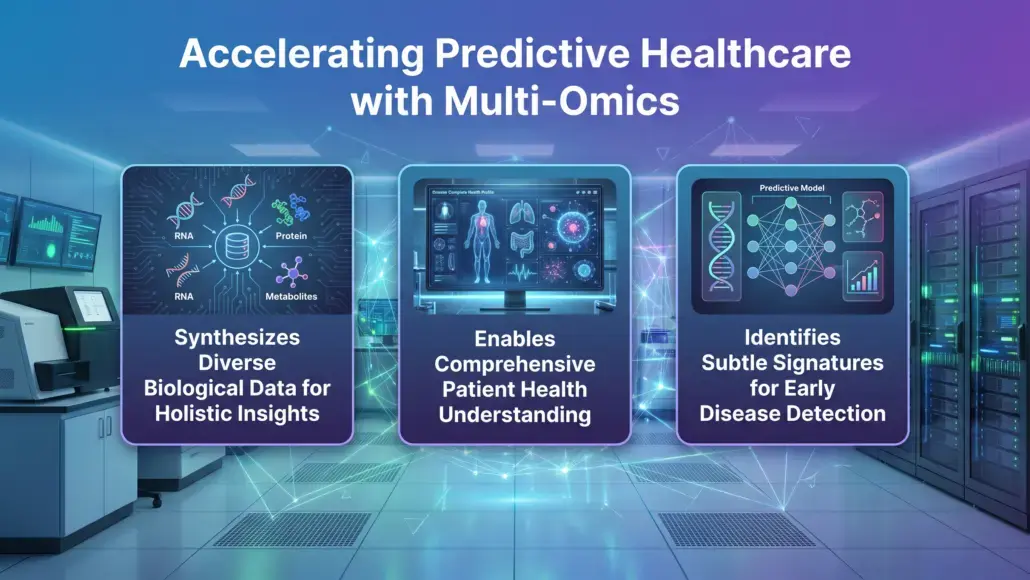
The clinical shift toward comprehensive biological modeling is accelerating as multi-omics integration establishes itself as a foundational pillar of modern predictive healthcare. By synthesizing data from genomics, transcriptomics, proteomics, and metabolomics, healthcare systems are moving beyond the limitations of single-modality diagnostics to a holistic understanding of patient health. This multidimensional approach allows for the identification of subtle biological signatures that precede the onset of clinical symptoms, providing a window for intervention that was previously inaccessible. The integration of these diverse data layers requires sophisticated computational frameworks capable of managing the vast volume and complexity of biological information, yet the potential for improved diagnostic accuracy and personalized treatment strategies is driving significant investment across the healthcare sector.
The Technical Architecture of Data Synthesis
At the core of this biological revolution is the development of advanced bioinformatics pipelines designed to harmonize disparate data types into a unified analytical model. Multi-omics integration relies on algorithms that can weight the relative importance of different molecular layers, identifying how a genetic variant might influence protein expression or metabolic output. This process is not merely additive: it is a synergistic analysis that reveals the flow of biological information within a cell or tissue. For instance, while a genomic scan might indicate a predisposition to a specific condition, the addition of transcriptomic and proteomic data can confirm whether that genetic potential is actually being realized in the patient’s current physiological state. This level of detail is essential for differentiating between benign variants and those that represent an active threat to the patient’s health.
The infrastructure required to support these analyses is substantial, involving high-performance computing and cloud-based storage solutions that can handle the terabytes of data generated by a single patient’s omic profile. Healthcare institutions are increasingly adopting standardized data formats and ontologies to ensure that information can be shared and compared across different clinical sites. This standardization is a critical step in building the large-scale datasets needed to train the predictive models that will guide future clinical decisions. By creating a common language for biological data, the industry is facilitating a more collaborative approach to research and care delivery, where the insights gained from one population can be applied to improve outcomes for others. The focus on interoperability is a testament to the recognition that the true value of biological data lies in its context and its connection to other clinical variables.
Enhancing Diagnostic Precision in Oncology and Rare Disease
The impact of multi-omics integration is perhaps most visible in the fields of oncology and rare disease, where the complexity of the underlying biology often defies traditional diagnostic methods. In cancer care, the ability to profile a tumor’s genome, transcriptome, and proteome simultaneously allows oncologists to identify the specific pathways driving malignancy and select the most effective targeted therapies. This approach moves away from the one-size-fits-all model of chemotherapy toward a more precise strategy that addresses the unique molecular characteristics of each patient’s disease. Additionally, the use of longitudinal omic monitoring can detect the emergence of resistance mutations in real-time, allowing for rapid adjustments to the treatment plan before the patient’s condition deteriorates.
For patients with undiagnosed rare diseases, the integration of multiple omic layers offers a new path to a definitive diagnosis. Many of these conditions are caused by complex interactions between multiple genes or by regulatory variants that are not easily captured by standard whole-exome sequencing. By examining the proteome and metabolome in conjunction with the genome, clinicians can identify functional abnormalities that point to the underlying cause of the patient’s symptoms. This diagnostic odyssey, which can often span years, is being shortened significantly by the application of these comprehensive analytical tools. The clarity provided by a molecular diagnosis not only guides immediate clinical management but also provides families with important information regarding prognosis and recurrence risk, illustrating the profound human impact of advanced biological data integration.
The Role of Predictive Modeling in Chronic Disease Management
Beyond acute care, multi-omics integration is playing a pivotal role in the management of chronic conditions such as diabetes, cardiovascular disease, and neurodegenerative disorders. These diseases are characterized by long preclinical phases where biological changes occur without obvious symptoms. Predictive models trained on multi-omic data can identify patients at high risk of progression, enabling lifestyle interventions or pharmacological treatments that can delay or even prevent the onset of clinical illness. For example, in cardiovascular health, the combination of lipidomics and proteomics can provide a much more accurate assessment of plaque stability and heart attack risk than traditional cholesterol testing alone. This allows for a more targeted approach to prevention, focusing resources on the individuals who will benefit most from intensive monitoring and care.
The shift toward proactive management is also being driven by the falling cost of sequencing and mass spectrometry, making these analyses more feasible for a broader segment of the population. As the database of omic signatures continues to grow, the ability to define “normal” biological variability is improving, allowing for the detection of even smaller deviations from a patient’s personal health baseline. This concept of the digital twin, a molecular model of an individual’s health over time, is a powerful tool for longitudinal care. By comparing a patient’s current omic profile to their historical data, clinicians can identify early signs of system failure and intervene with a high degree of confidence. This personalized approach to chronic disease is a fundamental component of the transition to a more sustainable healthcare system that prioritizes healthspan and prevention.
Navigating the Ethical and Regulatory Requirements
As healthcare systems adopt multi-omics integration, they must also address the complex ethical and regulatory questions that arise from the collection and analysis of deep biological data. The sensitivity of genetic and metabolic information requires the highest levels of data security and patient privacy protection. Ensuring that patients understand the implications of their omic profiles and how their data will be used is a significant challenge for clinical practitioners. Informed consent processes must evolve to keep pace with the increasing complexity of the information being generated, providing patients with a clear understanding of the risks and benefits of comprehensive biological testing. Also, the potential for these data to be used in ways that could lead to discrimination in insurance or employment must be strictly managed through legal and institutional safeguards.
From a regulatory perspective, the validation of multi-omic predictive models remains a significant hurdle. Unlike traditional single-analyte tests, these models often rely on complex algorithms that can be difficult to audit and verify. Regulatory bodies such as the FDA are developing new frameworks for the evaluation of software as a medical device, which will be essential for the widespread clinical adoption of these tools. These frameworks must balance the need for safety and efficacy with the desire to foster innovation in a rapidly evolving field. The development of clinical grade reference materials and proficiency testing for multi-omic labs will also be critical for ensuring the reliability of results across different testing platforms. By establishing a clear set of standards and expectations, the industry can build the trust necessary for these technologies to become a routine part of clinical practice.
Future Perspectives on Systemic Biological Integration
The future of healthcare lies in the continued refinement and expansion of multi-omics integration across all areas of medicine. As the cost of data acquisition continues to decline and computational power increases, the ability to perform these analyses in real-time will become a reality. This will enable a more dynamic approach to healthcare, where treatment plans are updated continuously based on the latest biological feedback from the patient. The integration of omic data with other sources of health information, such as electronic health records and wearable sensor data, will provide a truly 360-degree view of patient health. This systemic integration is the key to achieving the goals of predictive healthcare, where the focus shifts from treating symptoms to maintaining optimal biological function.
The training of a new generation of healthcare professionals who are fluent in both clinical medicine and biological data science will be essential for the success of this transition. Medical education must evolve to include a deep understanding of molecular biology and computational analysis, ensuring that clinicians can interpret and act on the complex information provided by multi-omic platforms. The collaboration between biologists, data scientists, and clinical practitioners will be the engine that drives innovation in this space, leading to new discoveries and improved outcomes for patients worldwide. Through a commitment to rigorous science and ethical practice, the healthcare industry can realize the full potential of systemic biological integration, creating a future where medicine is more precise, more effective, and more focused on the unique needs of every individual.