








Close
Digital Health & Ai Innovation summit 2026
Medical Taiwan 2026

Hospital and Data Center – Meeting Electronic Health Record and IT Needs

Note* - All images used are for editorial and illustrative purposes only and may not originate from the original news provider or associated company.

Subscribe

- Never miss a story with notifications

- Gain full access to our premium content

- Browse free from any location or device.

Media Packs

Expand Your Reach With Our Customized Solutions Empowering Your Campaigns To Maximize Your Reach & Drive Real Results!

– Access the Media PackNow

– Book a Conference Call

Leave Message for Us to Get Back

Related stories

Biotech Innovation Strengthening Clinical Pipelines

The discovery and development of next-generation therapies are being propelled by a fundamental leap in our understanding of molecular biology and cellular mechanics. By bridging the gap between laboratory research and clinical application, the life sciences sector is creating a robust stream of precision treatments that offer new hope for previously intractable conditions.

Regulatory Trends Shaping Medical Technology

The path from innovation to clinical implementation is governed by an increasingly complex and dynamic set of global standards. As digital health and artificial intelligence become integral to patient care, the frameworks that ensure safety and efficacy are evolving to address the unique challenges of software-based medical solutions and interconnected hardware.

Healthcare Supply Chains Driving Efficiency

The intricate network responsible for delivering life-saving medications and surgical instruments is undergoing a fundamental digital overhaul. By prioritizing transparency and resilience, medical institutions are moving away from reactive procurement toward a proactive logistical model that ensures essential resources are always available at the point of care.

Hospital & Healthcare Management/ Healthcare Technotrend/ Hospital and Data Center – Meeting Electronic Health Record and IT Need:-

Hospitals are aggressively competing to become compliant with the information technology platform proposed by the federal government. Currently IT communication platforms have a growth rate of 50% annually, and it’s estimated that more than 3 trillion bits of data are created every second. The spectrum of technology and standards for secure, intelligent, flexible and scalable systems can be overwhelming. The HITECH Act, part of the American Recovery and Reinvestment Act, mandates hospitals meet federal records security requirements.

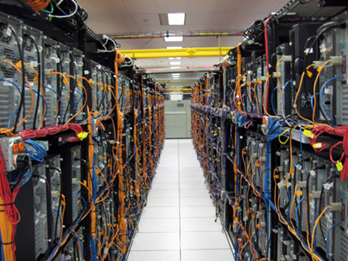
Progress West Healthcare Center recently completed a $30 million, 40,000 square foot facility, seen as a benchmark for data center maturity. The facility was built to accommodate the growing demand and utilization of automated hospital systems and electronic health records. The complex integration of 1,850 servers communicating through more than 425,000 feet of copper and fiber cablings, linking 345 databases exemplifies a forward thinking systematic preparation for ever-changing technology requirements anticipated for the next 20 years.According to Dave Goerke of Dave Goerke Associates , “It has been our experience that data centers created for healthcare information systems, because of the profound private information component, need to be held to a higher standard than other sectors we serve.” Many factors influence the design and physical location of such a proprietary structure. A prime example, and case study of a hospital implementing a state-of-the-art data center to house information technology needs are Progress West Healthcare Center in O’Fallon Missouri.

The proposition Progress West Healthcare Center is facing will become commonplace as health systems begin to renovate and construct new data centers. Transferring information from its current and primary data center will be a continuous and ongoing process expected to take several years. Project manager Brian Ronning said the transfer of 100-120 antiquated servers will be a phased-in approach. “The design and plans are developed in a modular approach to allow growth and to allow equipment to be moved to the new data center over time.”

As hospitals’ technological environments become more progressively sophisticated, asking purposely specific needs design questions is principal. It is imperative that the total breadth of the project be considered both from a physical and idealistic platform. The spectrum of professional consultation begins with the mechanical application from the physical plant considerations and travels through the “cloud” concepts of data storage management. The first step is to realize the overwhelming proposition created by healthcare information demands, and then to associate with experienced professionals in multiple disciplines to implement a methodical strategic process.

Latest stories

Related stories

Biotech Innovation Strengthening Clinical Pipelines

The discovery and development of next-generation therapies are being propelled by a fundamental leap in our understanding of molecular biology and cellular mechanics. By bridging the gap between laboratory research and clinical application, the life sciences sector is creating a robust stream of precision treatments that offer new hope for previously intractable conditions.

Regulatory Trends Shaping Medical Technology

The path from innovation to clinical implementation is governed by an increasingly complex and dynamic set of global standards. As digital health and artificial intelligence become integral to patient care, the frameworks that ensure safety and efficacy are evolving to address the unique challenges of software-based medical solutions and interconnected hardware.

Healthcare Supply Chains Driving Efficiency

The intricate network responsible for delivering life-saving medications and surgical instruments is undergoing a fundamental digital overhaul. By prioritizing transparency and resilience, medical institutions are moving away from reactive procurement toward a proactive logistical model that ensures essential resources are always available at the point of care.

Digital Health Systems Enhancing Patient Outcomes

The modern healthcare experience is no longer confined within the physical walls of a clinic or hospital. Through the deployment of sophisticated digital infrastructures, patient care is becoming a continuous, integrated journey that follows the individual into their daily life. This shift toward a technology-enabled ecosystem is dismantling traditional barriers to access and information, creating a more responsive and patient-centric model of wellness.

Subscribe

- Never miss a story with notifications

- Gain full access to our premium content

- Browse free from any location or device.

Media Packs

Expand Your Reach With Our Customized Solutions Empowering Your Campaigns To Maximize Your Reach & Drive Real Results!

– Access the Media Pack Now

– Book a Conference Call

Leave Message for Us to Get Back

Translate »