
















The manufacturing of sterile pharmaceuticals, particularly injectable drugs, represents the most technically demanding and highly regulated segment of the global drug industry. As the complexity of therapeutic molecules increases, the importance of maintaining an ultra-clean environment has never been more critical. The integration of sterile drug production and contamination control into a single, cohesive operational strategy is the only way to ensure that patients receive medications free from potentially life-threatening pyrogens or microbial contaminants. This process requires a sophisticated combination of advanced engineering, rigorous environmental monitoring, and a culture of uncompromising quality within the GMP facility.
The Evolution of Aseptic Processing and Cleanroom Standards
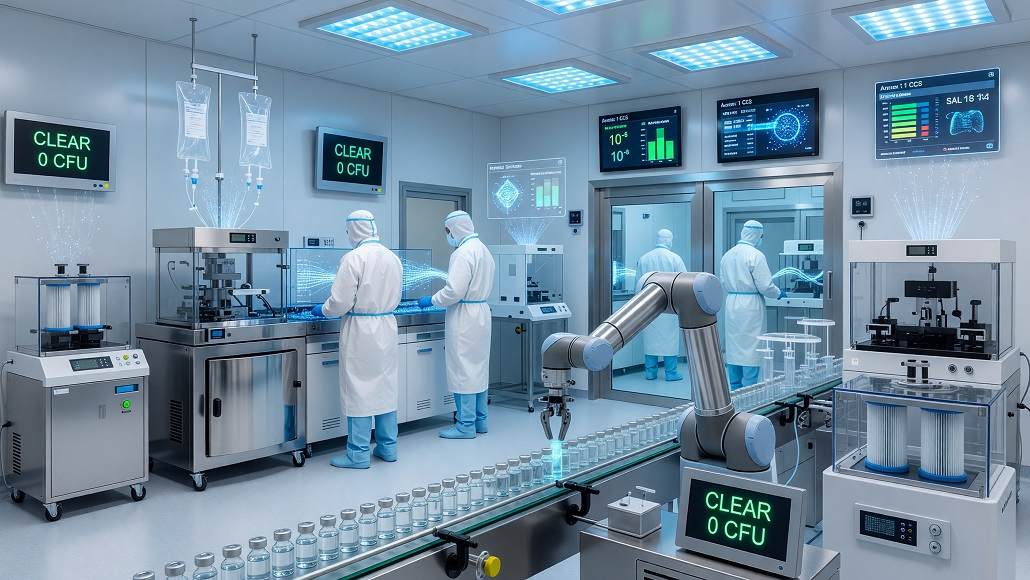
Traditional sterile manufacturing often relied heavily on human intervention, which remains the single largest source of contamination in a cleanroom. Modern aseptic processing has evolved to minimize this risk by utilizing advanced barrier technologies such as Restricted Access Barrier Systems (RABS) and isolators. These systems create a physical separation between the product and the operator, allowing for a much higher degree of environmental control. Within these environments, cleanroom standards are maintained through high-efficiency particulate air (HEPA) filtration and laminar airflow, which ensures that any airborne particles are swept away from the critical filling zone before they can settle on an open container.
Microbiological Monitoring as a Real-Time Diagnostic Tool
In a high-stakes environment like sterile drug production and contamination control, waiting for several days for the results of a microbial culture is no longer acceptable. The industry is rapidly adopting rapid microbiological methods (RMM), which use laser-induced fluorescence or other advanced techniques to detect the presence of microorganisms in real-time. By integrating these systems into the environmental monitoring program, manufacturers can identify a potential contamination event the moment it occurs, allowing for immediate corrective action. This proactive approach not only protects the product but also provides invaluable data for long-term trend analysis, helping to identify and eliminate the root causes of environmental variability.
Risk Mitigation Strategies for Injectable Drugs
The production of injectable drugs requires a multi-layered approach to risk mitigation that begins long before the first vial is filled. Contamination control is a fundamental part of the design of the entire manufacturing process, from the sterilization of raw materials to the final container-closure integrity testing. One of the most critical components of this strategy is the validation of sterilization cycles, such as steam sterilization (autoclaving) or sterile filtration. Each of these processes must be rigorously tested to ensure that they are capable of achieving a sterility assurance level (SAL) of at least 10^-6, meaning the probability of a single non-sterile unit is less than one in a million.
The Role of Quality Risk Management (QRM) in Sterile Manufacturing
Effective sterile drug production and contamination control is increasingly driven by the principles of Quality Risk Management (QRM) as outlined in ICH Q9. This involves a systematic process for the assessment, control, communication, and review of risks to the quality of the medicinal product across its lifecycle. In a sterile environment, this means identifying every potential “critical control point” where contamination could be introduced and implementing robust controls to mitigate that risk. This data-driven approach allows manufacturers to focus their resources on the most significant threats, leading to a more efficient and effective contamination control strategy.
Advanced Facility Design and the Modern GMP Facility
The physical layout of a GMP facility plays a crucial role in the success of sterile drug production and contamination control. Modern designs utilize a “concentric” layout, where the most sensitive activities take place in the highest-grade cleanrooms (Grade A), surrounded by progressively lower-grade areas. This design minimizes the risk of cross-contamination by ensuring that materials and personnel move through a series of airlocks and changing rooms, each with strictly controlled pressure differentials. Furthermore, the use of “single-use technologies” (SUT) disposable plastic components such as bags, tubing, and filters is becoming increasingly common. SUT eliminates the need for complex cleaning and sterilization validation of stainless-steel equipment, significantly reducing the risk of batch-to-batch carryover.
Automation and the Reduction of Human Intervention
As we look to the future of sterile drug production and contamination control, the trend toward full automation is accelerating. Fully autonomous filling lines, equipped with advanced robotics, can operate for extended periods without the need for human entry into the critical zone. These systems are not only more efficient but also provide a much more consistent level of environmental control. When humans are required to enter the cleanroom, advanced “gowning” protocols and behavioral training are essential to ensure that they do not introduce contaminants. The use of “cleanroom-grade” textiles and the implementation of rigorous personnel monitoring are standard components of any modern contamination control program.
Sterility Assurance and Container-Closure Integrity
The final step in sterile drug production and contamination control is ensuring that the product remains sterile throughout its shelf life. This is achieved through container-closure integrity (CCI) testing, which verifies that the seal between the vial and the stopper, or the syringe and the plunger, is absolute. Traditional methods like the “blue dye test” are being replaced by more sensitive, non-destructive techniques such as vacuum decay or high-voltage leak detection. These advanced methods allow for 100% inspection of the batch, providing a much higher level of assurance that no microbial ingress can occur during transport or storage.
Global Regulatory Alignment and the Annex 1 Update
The recent update to EudraLex Annex 1 has profoundly impacted how sterile drug production and contamination control is approached globally. This comprehensive regulation places a much greater emphasis on the Contamination Control Strategy (CCS) a holistic document that describes all the technical and organizational measures in place to prevent contamination. By requiring manufacturers to provide a high-level overview of their entire contamination control framework, regulators are pushing the industry toward a more integrated and proactive mindset. This alignment across global regulatory bodies ensures that the highest standards of sterility are maintained regardless of where a drug is manufactured or consumed.
The manufacturing of sterile pharmaceuticals is a process defined by precision, vigilance, and continuous improvement. The integration of advanced barrier technologies, real-time microbial monitoring, and robust risk management principles is essential for the successful delivery of injectable drugs. As the industry continues to innovate, the focus on sterile drug production and contamination control will remain the primary defense against the risks of microbial contamination. By investing in the latest technologies and fostering a culture of quality, manufacturers can ensure that their products meet the highest possible standards of safety and efficacy, ultimately protecting the health of patients around the world.