Close
Digital Health & Ai Innovation summit 2026
Medical Taiwan 2026

Carestreams DR Imaging Solutions Earn Top Rating in MD Buyline Reports

Carestreams DR Imaging Solutions Earn Top Rating in MD Buyline Reports

Carestream Health earned the highest position in TractManager’s MD Buyline User Satisfaction Ratings across three categories—portables, X-ray detectors and room-based digital radiography systems—during 2019 survey periods.

Carestream’s DRX-Evolution Plus and DRX-Ascend systems scored high marks for performance, reliability, installation and service. The DRX-Plus 3543 detector remains the panel of choice among healthcare providers. It can be paired with all of Carestream’s DRX-based systems via its unique X-Factor capability—which enables easy transfer of detectors across X-ray units and made possible by a common graphical user interface.

“The MD Buyline report validates our commitment to innovation and leadership in digital radiography. It underscores the breadth and strength of our DR portfolio,” said Charlie Hicks, General Manager, Premium Tier Solutions at Carestream. “These independent ratings are especially important as they come directly from the talented healthcare professionals who use our products every day.”

The image clarity and quality of Carestream’s imaging systems were key differentiating factors for customers surveyed by MD Buyline. Carestream received praise on detector durability, software functionality and ease of transferring data as well.

Carestream’s fully featured, reliable DR systems are designed to meet the needs of hospitals, clinics, urgent care centers and other imaging services providers across the globe. The DRX Plus detectors are fast, light and fully compatible across the company’s DRX family of X-ray solutions.

MD Buyline reports are based on user satisfaction ratings in the following categories: system performance, system reliability, installation/implementation, applications training, service response time and service repair quality.

About MD Buyline

MD Buyline, TractManager’s strategic sourcing division, has served the U.S. healthcare industry with integrity for more than 30 years, providing valuable market research, planning, budget management, and consulting services to healthcare organizations to improve purchasing decisions for capital equipment, healthcare consumables, and purchased services. Our suite of strategic sourcing solutions delivers the robust data hospitals need to ensure maximum ROI on every vendor quote. We are exclusively focused on healthcare purchasing.

Siemens Healthineers Introduces Teamplay Digital Health Platform

Siemens Healthineers Introduces Teamplay Digital Health Platform

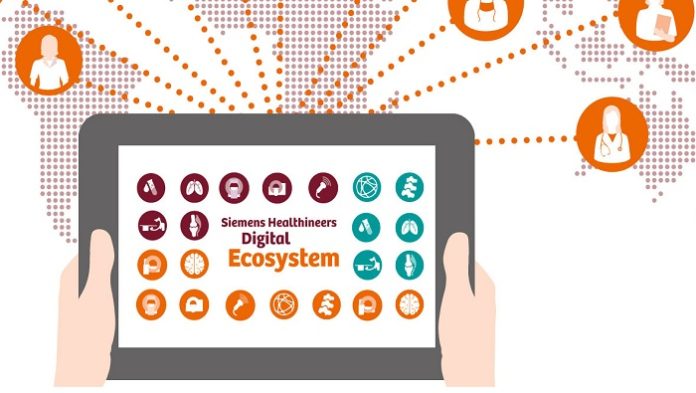
Siemens Healthineers announces market introduction of the teamplay digital health platform. With the teamplay digital health platform Siemens Healthineers paves the way for healthcare providers´ digital transformation – facilitating easy access to solutions for operational, clinical & shared decision support.

Supporting operational efficiency and clinical effectiveness, Siemens Healthineers offers a vendor-, system-, and device-neutral platform which fosters cross-departmental and cross-institutional interoperability. Users benefit from a broad experience in connecting devices and systems, in aggregating data from various sources, and in providing advanced analytics to gain actionable insights. teamplay digital health platform provides the comprehensive portfolio of digital applications and software solutions of Siemens Healthineers as well as applications from many curated partners. They can assist healthcare providers in making more informed decisions along the entire patient pathway – helping hospitals and clinics to streamline their operations management, supporting diagnostic and therapeutic decision-making or connecting care teams and patients with patient management solutions.

Enabling IoMT (Internet of medical things) the teamplay digital health platform benefits from more than 5,000 connected institutions and 23,000 connected systems in over 60 countries providing the technological infrastructure for already more than 10 million patient records. By offering interoperability, data integration, and multiple real-time insights, teamplay digital health platform can also help to reduce costs in daily business. The teamplay digital health platform makes healthcare providers future-ready by offering innovations in digital health, like AI or innovative partner solutions.

“Siemens Healthineers teamplay digital health platform connects data, people, institutions, systems, and applications; while supporting the digital transformation for healthcare providers and medtech companies combining flexibility and scalability with future readiness,” says Wido Menhardt, Head of Digital Health, Siemens Healthineers. “Our customers will not only be able to access our best-of-breed digital marketplace, but they will also benefit from the most advanced applications and best-in-class security.”

The teamplay digital health platform is a multifaceted foundation for all Siemens Healthineers offerings. Tangible parts of the platform include, a secure data sharing and connectivity service, a vendor-neutral, device-neutral, and system-neutral interoperability module, and a powerful marketplace. The digital marketplace will provide users seamless integration of a growing lineup of third-party AI applications, and a great selection of Siemens Healthineers decision support software.

Siemens Healthineers is introducing new applications to the digital health platform. These include teamplay Insights, AI-Rad Companion Chest X-Ray, AI-Pathway Companion Lung Cancer, and teamplay myCare Companion will each be enabled by the teamplay digital health platform. These new applications join the existing foundation of teamplay applications for performance management in healthcare that help institutions to make quick and well-informed decisions by offering a clear overview of performance data.

The new

Insights application is designed with drag and drop data visualization to create personalized dashboards in which data views can be freely combined to get insights necessary to solve a sophisticated challenge or to monitor progress. Institutions can quickly identify opportunities, such as how to reduce wait times for diagnostic imaging appointments, all the while managing patient backlog.

The Chest X-Ray is designed to help radiologists interpret images faster and more accurately, and to reduce the time involved in documenting results. The software assistant generates standardized, reproducible, and quantitative reports based on AI-supported analysis.

The Lung Cancer is a clinical decisions support system based on artificial intelligence that supports physicians in making diagnostic and therapeutic decisions along the clinical pathway. The AI-Pathway Companion provides transparency on the clinical status of each patient, based on data integration and artificial intelligence, and makes suggestions for next steps. This second oncology pathway will broaden the platform portfolio of the AI-Pathway Companion and strengthen our disease-specific approach, enabling physicians, such as oncologists or pulmonologists, to make better diagnoses and treatment decisions for each individual patient.

The teamplay myCare Companion supports patients impacted by chronic diseases such as heart failure, by actively engaging them in their care process and fostering adherence to treatment. teamplay myCare Companion is a telehealth solution that provides comprehensive and timely information to both care teams and patients, and supports care management programs which aim to reduce hospital readmissions.

Siemens Healthineers teamplay digital health platform also serves the need for Platform-as-a-Service (PaaS) scenarios for other medtech companies through secure end-to-end data sharing capabilities transferring data from a hospital environment to an outside network service and back – in a privacy by design and default approach. In addition to the important compliance to the HIPAA standard as well as our EuroPriSe seal, it was recently certified with the ISO27001 standard – a major requirement for CISOs for state-of-the-art platform technology.

The teamplay digital health platform also provides technological flexibility; the platform offers not only cloud or on-premise deployment, but also edge-computing based agile hybrid deployments. These options offer the convenience of a local on-premise installation in the hospital network combined with cloud-like update ability.

Siemens Healthineers AG  is shaping the future of Healthcare. As a leading medical technology company headquartered in Erlangen, Germany, Siemens Healthineers enables healthcare providers worldwide through its regional companies to increase value by empowering them on their journey towards expanding precision medicine, transforming care delivery, improving the patient experience, and digitalizing healthcare. Siemens Healthineers is continuously developing its product and service portfolio, with AI-supported applications and digital offerings that play an increasingly important role in the next generation of medical technology. These new applications will enhance the company’s foundation in in-vitro diagnostic, image-guided therapy, and in-vivo diagnostics. Siemens Healthineers also provides a range of services and solutions to enhance healthcare providers ability to provide high-quality, efficient care to patients. In fiscal 2019, which ended on September 30, 2019, Siemens Healthineers, which has approximately 52,000 employees worldwide, generated revenue of €14.5 billion and adjusted profit of €2.5 billion.


Orion Health Unveils New Predictive Intelligence Using Machine Learning to Help Save Billions in Healthcare Costs

Orion Health Unveils New Predictive Intelligence Using Machine Learning to Help Save Billions in Healthcare Costs

Orion Health announced its machine learning service, Amadeus Intelligence to help the health sector reduce operating costs and improve patient care. Led by ground-breaking research by Precision Driven Health (PDH), a New Zealand partnership between Orion Health, Auckland University and Waitemata District Health Board, the company is exploring meaningful ways to minimise wastage in the healthcare sector and help clinicians make more accurate decisions at the point of care.

More than $6.5 trillion is spent on healthcare each year globally, yet typically between 20-40% of spend is wasted on unnecessary services and excess administration. With an ageing population and a growing number of people with chronic illnesses growing globally, the issue is set to worsen.

Speaking from the HIMSS conference in Las Vegas, Ian McCrae, CEO of Orion Health said, “With more than 20-40% of wastage in healthcare on costly administration and avoidable hospital readmissions, data analysis combined with the rise of machine learning can help minimise this wastage. Orion Health’s Amadeus Intelligence will use machine learning models initially to predict patient costs and readmission risks, and analyse clinical and financial outliers. This will improve decision-making at the point of care and target resources including interventions, which will result in significant cost savings.”

“We’re yet to see the true impact of machine learning on healthcare. The last decade has been focused on integrating IT systems and capturing massive amounts of information about patients and their environments. The next decade will be to connect all that data and use machine learning for daily healthcare decisions, driving improved care, operational efficiencies, and cost effectiveness,” said Mr McCrae.

Unlike most current uses of machine learning, Amadeus Intelligence ingests and combines multiple datasets from diverse data sources to predict multiple outcomes – financial, operational and administrative.

“The key to making a meaningful impact on healthcare is in the accuracy of the prediction, and the ability to respond,” said Mr McCrae. “Tapping into the vast amounts of data available through many different sources – including relevant genomic, socio-economic and behavioural data, information from devices, and data based on demographics and climate – will engender better decision-making, drawing on information from entire populations to treat and manage a person’s health. Today healthcare organisations need more accuracy in their predictive analytics to reduce operational costs and improve patient care and outcomes.”

Readmission rates remain a costly challenge for healthcare organisations. With 17.6% of hospitalisations in the U.S. resulting in a re-hospitalisation within 30 days, an estimated 76% of those re-hospitalisations are potentially avoidable, costing $30 billion. PDH has completed research projects that use a breadth of data types and apply machine learning models to achieve greater predictive accuracy, calculating potential savings four times higher than current predictive models. Using machine learning techniques, healthcare can expect larger reductions in readmission rates achieved in a far more cost effective manner.

The Health Outcome Prediction Engine (HOPE) is another application where machine learning models will help to reduce the cost of healthcare and save lives. HOPE is designed to identify patients at risk of an Abdominal Aortic Aneurysm (AAA), a silent killer. Based on epidemiological studies, 800 New Zealanders were identified through data analysis of patient records as likely candidates for AAA during a precision screening trial. All the patients identified during the precision screening trial were contacted and 632 took up the offer of an ultrasound. 36 were found to have AAA, a prevalence rate of 5.5% and almost exactly the rate that was predicted by the data analysis.

“Precision screening presents a huge opportunity for the health sector, where data science can help target health interventions to those with the greatest need,” said Mr McCrae.

With more than 20 years’ experience building technology for the healthcare sector, Orion Health is initially working with select customers to apply machine learning to deeply mine the data within these organisations. While still in its infancy, data analysis combined with the rise of machine learning, will provide clinical and financial insights to accelerate precision medicine, improve personalised treatments and maximise cost effectiveness of interventions.

Machine learning is perfectly suited to Orion Health’s existing product set. Using Orion Health’s Amadeus Platform and Rhapsody to ingest and manage multiple data types in large volumes and Amadeus Analytics to create cohorts based on existing and new insights, Amadeus Intelligence will apply machine learning to the data on the platform to enhance precision and prediction.

Greater precision in identifying at risk populations will also transform the way clinicians work at the point of care. Unique to Orion Health, Amadeus Analytics and Amadeus Intelligence service connect seamlessly to its Amadeus Coordinate, care coordination tools including Care Plans and Pathways and Care Coordinator Activity Management which create actions and workflow to support identified patients.

CoNextions Inc. Announces FDA 510 Clearance of Coronet System, a Revolutionary Tenodesis Product

CoNextions Inc. Announces FDA 510 Clearance of Coronet System, a Revolutionary Tenodesis Product

CoNextions Inc. announced that it received a 510(k) clearance from the U.S. FDA for CoronetTM System, a tenodesis product intended for the fixation of tissue to bone and tissue to tissue. The Coronet’s novel design improves the soft tissue fixation strength of these repairs compared to conventional suture repairs. A streamlined delivery system allows for the simultaneous placement of the implant in the bone and soft tissue and provides a knotless repair.

This 510(k) furthers our mission at CoNextions while putting quality first, improving the lives of patients by revolutionizing soft tissue repair with safe, innovative, and easy to use medical devices,” said Jeffrey Barnes, CEO CoNextions Medical. “It is a clear example of our unwavering commitment to creating the most clinically effective and technologically innovative tendon repair solutions. We look forward to Coronet being the first of many exciting products to come.”

CoNextions Medical will begin marketing the Coronet in the United States in the second quarter of 2020. The device will be marketed by a network of orthopaedic distributors across the United States.

About CoNextions Inc.

Founded in 2011, CoNextions Inc. is a privately-held company located in Salt Lake City, Utah. They are an innovation-based medical device company dedicated to achieving safer, stronger, and more durable tendon repairs worldwide marked by faster rehabilitation, fewer complications, and lower long-term costs.

Philips receives Underwriters Labratories product cybersecurity certification

Philips receives Underwriters Labratories product cybersecurity certification

Royal Philips , a global leader in health technology announced that the company was named the first medical device manufacturer to receive a new Underwriters Laboratories (UL) product cybersecurity testing certification. Underwriters Laboratories (UL) is an independent global safety certification and testing company with locations worldwide. 

The UL IEC 62304 certification was designed by Underwriters Laboratories to provide an overall framework to evaluate the robustness and maturity of a medical device manufacturer’s cybersecurity controls and capabilities for product development.  

In support of the successful Philips firm registration for the security option of IEC 62304, UL performed a comprehensive audit of the Philips Security Center of Excellence. The Center was launched in 2015 to develop cyber-resilient products and services through security-by-design, risk assessment, vulnerability and penetration assessment, specialized trainings, and incident response. 

The audit reviewed and verified core Philips Security Center of Excellence product security processes, including security risk management and risk control measures, software security verification planning, change management and continuous improvement, and the Center’s laboratory quality management system.  

The UL certification combines cybersecurity testing elements of the established UL 2900-2-1 standard for Software Cybersecurity for Network-Connectable Products, which focuses on the demanding requirements of healthcare and wellness systems, as well as security principles from international standards (ISO 13485 and ISO 14971).

“For the Philips Security Center of Excellence to receive this certification from Underwriters Laboratories, a long-established global leader in standards creation and safety testing, is a strong validation of our program and an opportunity to advance healthcare and personal health product security even further,” said Michael McNeil, Global Product Security & Services Officer, Philips. 

“We’ve spent years building and investing in a robust end-to-end Security by Design program, embedding security principles and best practices throughout a product’s life cycle,” McNeil added. “At Philips, we understand that our customers have high and growing expectations for the security of the solutions that they rely on. In addition, global regulatory authorities have also increased the scope and scale of product cybersecurity compliance requirements to help protect patients and consumers. We look forward to continuing to meet these critical commitments.”

Royal Philips is a leading health technology company focused on improving people’s health and enabling better outcomes across the health continuum from healthy living and prevention, to diagnosis, treatment and home care. Philips leverages advanced technology and deep clinical and consumer insights to deliver integrated solutions. Headquartered in the Netherlands, the company is a leader in diagnostic imaging, image-guided therapy, patient monitoring and health informatics, as well as in consumer health and home care. Philips generated 2019 sales of EUR 19.5 billion and employs approximately 80,000 employees with sales and services in more than 100 countries.

Jvion debuts AI-powered social determinants of health technology

Jvion debuts AI-powered social determinants of health technology

Clinical artificial intelligence health IT vendor Jvion has released its new Social Determinants of Health system that identifies socioeconomic barriers driving an individual’s health risk and opportunities for investment in community benefit programs to address gaps in care.

WHY IT MATTERS

Leveraging Jvion’s peer-reviewed analytics layer and Microsoft Azure Maps, the SDOH system empowers health systems and hospitals to address underserved populations and inequalities in existing healthcare delivery, the company said. The system is designed to help caregivers go beyond a better understanding the impact of SDOH by offering individualized interventions that aid in aligning community benefits more effectively, the company added.

THE LARGER TREND

As alignment and access to community benefit programs continue to be the cornerstone of building healthier communities, providers need appropriate insight into their populations and individual healthcare needs, Jvion contends.

Hospitals spent $95 billion on community benefits in the most recent year data is available from the American Hospital Association. Increasingly, both federal and state regulators are seeking clarity on what benefits are being provided to communities with this spend and their impact.

Jvion’s SDOH system, the company explained, fulfills the federal and state assessment needs for healthcare organizations, but also strategically informs providers where to allocate their community benefit spend to have the greatest level of impact.

Jvion’s SDOH solution requires limited input from providers and none from patients. It relies largely on its AI approach, which leverages a global instance of de-identified patients to power the inferential outputs of the solution, the company explained. Through this approach, the community inherits the attributes of the individual versus traditional methods, which apply community qualities to the individual, the company added.

The SDOH system features an interactive map interface built using Microsoft Azure maps and a web-based portal.

ON THE RECORD

“Providers and healthcare executives recognize the growing role of socioeconomic insights in healthcare, especially in meeting the needs of underserved populations,” said Shantanu Nigam, CEO of Jvion. “To date, capturing that data and turning it into meaningful and actionable intelligence has proved elusive for many. Our approach turns socioeconomic, environmental and behavioral data into real clinical value that drives higher engagement, more tailored interventions, and greater alignment between need and risk, resulting in better outcomes for individuals and the community as a whole.”

“The Microsoft platform helps responsibly unify people, devices, apps and information by prioritizing compliance, security and trust,” said Gareth Hall, director of business strategy for worldwide healthcare at Microsoft. “Our partners are critical in helping healthcare organizations use technology to address industry challenges and seize opportunities to impact people’s lives in a positive way. The combination of the Microsoft platform and partner innovation is key to helping our industry transform.”

Huntington Hospital signs LoI to affiliate with Cedars-Sinai Health System

Huntington Hospital signs LoI to affiliate with Cedars-Sinai Health System

California-based Huntington Hospital has signed a letter of intent (LoI) to join Cedars-Sinai Health System. Cedars-Sinai Health System was set up in 2017 to bring together a collaborative network of healthcare institutions to share resources and expertise.

Presently, Cedars-Sinai Health System includes Cedars-Sinai and Torrance Memorial. Cedars-Sinai comprises the 890-bed Cedars-Sinai Medical Center and the 145-bed Cedars-Sinai Marina del Rey Hospital in addition to its network of physicians and medical offices throughout Southern California.

Torrance Memorial includes the 470-bed Torrance Memorial Medical Center, its network of physicians and medical offices throughout the South Bay.

The LoI provides sustained investment in enterprise information technology, ambulatory services and physician development of Huntington Hospital.

It also provides for continued local governance and ongoing community commitment to advancing Huntington’s existing mission and unique culture.

Huntington Hospital board of directors chairman Jaynie Studenmund said: “I am delighted to announce this first step toward creating an affiliation between Cedars-Sinai Health System and Huntington Hospital that will further strengthen the communities we serve.

“After reviewing a variety of alternatives, it became clear to our board that connecting our trusted brand of care to Cedars-Sinai Health System is the right choice to secure our future, enabling us to continue to provide high-quality care to the community for years to come.”

Huntington Hospital expects that the collaboration will be beneficial for its patients, doctors and associated clinical staff in several ways in the years to come. With the completion of the letter of intent, Cedars-Sinai Health System and Huntington Hospital will commence work on definitive agreement.

Huntington Hospital stated that the completion of the affiliation is subject to customary closing conditions, including securing necessary regulatory approvals. Cedars-Sinai Health System board of directors chairman Vera Gueri said: “Huntington Hospital’s longstanding commitment to the community, its reputation for quality and its outstanding physicians, nurses and other staff make it a very good fit for Cedars-Sinai Health System.

“Collaborations and sharing of resources throughout the health system will further strengthen Huntington’s ability to serve the community for decades to come.”

CIMC delivers mobile CT scan cabin to Huangzhou General Hospital to diagnose coronavirus

CIMC delivers mobile CT scan cabin to Huangzhou General Hospital to diagnose coronavirus

Health technology company Philips has signed a ten-year agreement with German Klinikum Stuttgart hospital to enhance the quality and cost-effectiveness of patient care. As part of the long-term deal, Philips will replace and procure new medical technology including diagnostic imaging and intelligent informatics solutions at the hospital.

The deal also covers the joint development of new workflows and connected care solutions. It will also improve the experiences for both patients and staff at the hospital.

Klinikum Stuttgart commercial director Dr Alexander Hewer said: “This partnership is an important step for us to further improve the quality and efficiency of the care we deliver to our patients.

“As the largest provider in the region we continue to grow. Together with Philips we will work on technical innovations and process improvements to further enhance our attractiveness for patients and employees.”

In addition, Klinikum Stuttgart is investing in new buildings and modern equipment as part of its restructuring process. It also includes the construction of new Katharinen hospital in Stuttgart, which is expected to be completed by the end of next year.

Following the completion of the first phase of construction, the Katharinen hospital will feature various new disciplines such as radiology, interventional neuroradiology, intensive care and endovascular surgery in new buildings.

The hospital is also focused on the implementation of networked care, and enhancing the processes. Klinikum Stuttgart medical director Jan Steffen Jürgensen said: “We have excellent clinicians and strong care delivery. With Philips, we now have a strong partner with a reputation for innovation leadership in medical technology and healthcare IT.

“With our combined expertise, we want to further improve our clinical processes and the safety of treatment for the more than 700,000 patients treated at the Klinikum Stuttgart every year.”

The Regenerative Clinic launches nSTRIDE autologous protein injections for the relief of knee osteoarthritis

The Regenerative Clinic launches nSTRIDE autologous protein injections for the relief of knee osteoarthritis

The Regenerative Clinic has added a new treatment called nSTRIDE Autologous Protein Injections to its portfolio of rejuvenating orthobiologic therapies. The nSTRIDE protein injection uses protein taken from the patient’s own body to treat osteoarthritis and other degenerative or trauma related musculoskeletal injuries.

nSTRIDE has been shown to provide pain relief in 70% patients with results recorded regularly throughout and up to 3 years following treatment. It is a day case procedure where blood is drawn from the patient’s arm, and then processed using a centrifuge that separates the platelet-rich plasma (PRP). The centrifuge further processes into a concentrated liquid protein. This solution is then injected back into the patient’s knee.

nSTRIDE adds to The Regenerative Clinic’s portfolio, which offers the latest advances in orthobiologic medicine. Simon Checkley, CEO, The Regenerative Clinic says; “Results to date with nSTRIDE are extremely impressive and we are proud to offer this very exciting treatment. Our mission is to continue to help people who are in the pervasive pain of osteoarthritis. nSTRIDE is a viable, safe and with treatment times of only an hour; a rapid treatment choice to reduce pain and delay the need for surgery. Our experienced team of 40 consultant surgeons and many more clinicians in six countries worldwide are dedicated to bringing people in pain the latest technologies in regenerative medicine.”

nSTRIDE has been the subject of a number of research papers which demonstrate good outcomes, especially for knee osteoarthritis. According to a recent study a 70% improvement in osteoarthritic knee pain was shown 2 years following a single injection.* The paper’s authors Kon E, Engebretsen L, Peter Verdonk P, Nehrer S and Filardo G, said; “A single intraarticular nSTRIDE APS injection is safe (similar to a saline injection) and continues to provide pain improvement at 1 year.” This measurement is based on the WOMAC scoring system, which is a much more stringent measurement than standard VAS scoring, so 70% is very positive.

nSTRIDE will be available at the flagship clinic at the Queen Anne Hospital in London’s Harley Street Medical area from March 2020, and at regional clinics to follow. Patients will be assessed by an expert consultant in their specific pathology to ascertain suitability for treatment.

The Regenerative Clinic has pioneered rejuvenating therapies around the world providing pioneering treatment for healing, pain relief and rejuvenation of joints and other tissues to restore mobility and function. Led by Professor Adrian Wilson the team of specialist Harley Street consultants, each one an expert in their own field (orthopaedic, radiology, gynaecological, spine, maxillofacial and cosmetic) have found that for the successful regeneration of tissues three components are important and need to be present. This includes a scaffold; cells that are able to reside within this scaffold; and the factor’s substances that allow the communication between the cells.

About The Regenerative Clinic

Established in 2016, The Regenerative Clinic brings a globally recognised treatment to the UK, and internationally in Italy, France, Spain, Pakistan, and UAE. FDA approved in the USA, and CE marked in the UK, The Regenerative Clinic uses pioneering Lipogems® technology, to harness the inherent rejuvenating properties of your own fat cells.

RAI Amsterdam to postpone the 2020 edition of Interclean Amsterdam

RAI Amsterdam to postpone the 2020 edition of Interclean Amsterdam

In view of the recent developments as a result of the global spread of COVID-19 and, after consulting its exhibition committee, key stakeholders, exhibitors and visitors of the cleaning and hygiene industry, Interclean Amsterdam will be rescheduled. The new dates will be confirmed by 20 March.

The rapid spread of the Corona virus around the world has led to increased travel restrictions from authorities. These restrictions, as well as those imposed within companies, will result in materially reduced attendance of the show. To maintain the international reach and quality of the event, a new date will be set.

International character

As the leading trade show in professional cleaning and hygiene, Interclean brings together parties from the entire industry as well as professionals from related industries. This includes professionals, associations and media from all over the world. To ensure this international character, the Interclean team, with the support of its key stakeholders, has now decided to postpone the event.

Through Interclean, RAI Amsterdam is strongly committed to playing its role as a meeting place for hygiene professionals and in building bridges for successful cooperation and expertise across the industry. This is even more important as organisations worldwide are looking to build consensus on how to tackle outbreaks like the Corona virus.

“By moving the exhibition to the Fall, we hope to offer our exhibitors the earliest possible time slot to present their innovations to a global audience and to initiate business,” says Bas Dalm, Executive Vice President Exhibitions & Sales. “In view of the global economic challenges triggered by the Corona virus in the first half of the year, moving the show to the Fall offers great opportunities. Thus, the world’s most important industrial trade fair can provide important impetus for the global economy at an early stage at a time when it much needed in view global health issues.”

About RAI Amsterdam

Personal meetings continue to be a powerful form of communication, and exhibitions are the ideal medium for connecting worlds, people and markets. With a portfolio of top brands, RAI Amsterdam creates inspiring events that blend context, content and communities. The focus on quality and target group has made RAI Amsterdam the market leader in a significant number of sectors. Wherever in the world, an event may take place, RAI Amsterdam’s focus is on generating business for exhibitors, visitors, sponsors and partners.

Translate »