













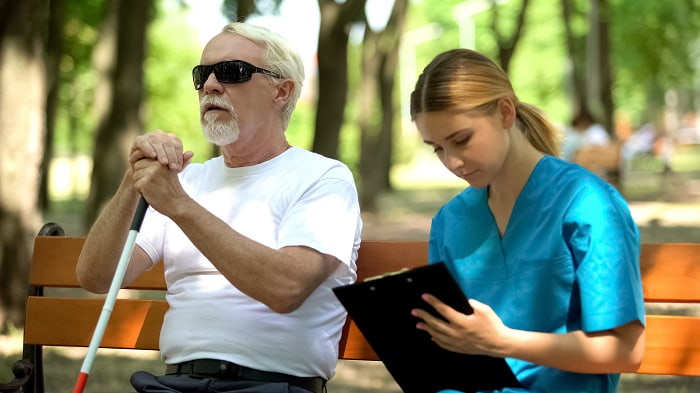
Deafblindness poses a big challenge not just to patients, but also to the people around them. Because of hearing and vision loss or restrictions, deafblind patients tend to be less mobile and more dependent on others. These situations may even lead to sufferers lacking of confidence and having low self-esteem. When these happen, deafblind individuals are likely to be left alone and be less independent.
Fortunately, there are healthcare services that could help patients and their families overcome the difficulties they meet. With the advancements in studies on deafblindness, appropriate techniques have been designed. If you have a deafblind family member who may need professional help, here’s an article about the different ways healthcare providers can best take care of them:
-
Communication-Based Learning
While deafblindness means loss of sight and hearing, most deafblind individuals could still learn to communicate as they still have some of their sense of hearing or sight left. With the trends in communication-based learning, deafblind patients could develop their communication skills. For instance, if you live in Australia or its nearby territories, you could learn more about deafblindness and the different ways patients can improve their communication skills through various organizations, such as Deafblind Information.
Meanwhile, some of the standard communication learning methods are the following:
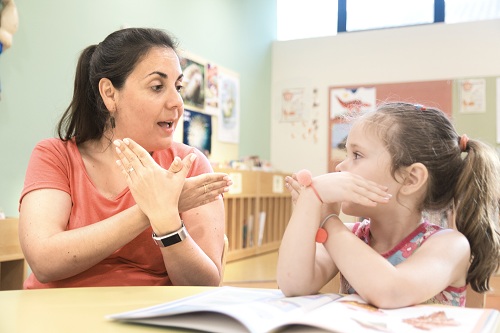
- Tactile-based language: In this method, deafblind patients put their hands over the signer’s to follow what’s communicated through movement and touch.
- Sign language: This could be one of the oldest forms of deafblind communication methods. Here, the signer uses facial expressions, gestures, body language, or other objects. In this method, the teacher relies on hand signs and visual images.
- Tactile fingerspelling: This also uses sign language, but focuses on spelling letter by letter. The deafblind patient learns by tracing the fingers of the signer who fingerspells.
- Print on palm: Signers ‘write’ on the patient’s hand so they could ‘read’ what’s ‘written.’
- Hand tracking: In this method, the patient interprets the signer’s hand, wrist, and forearm movements.
- Tadoma: The patient touches the signer’s face and familiarizes themselves with the facial expressions and movements.
- Braille: The patient ‘reads’ the raised dots through touching. This is the common method for individuals who are completely blind or have extremely low vision.
- Lipreading: Partially and completely deaf patients draw meaning from how the speaker talks and expresses their mind through movements and facial expressions.
-
Custom-Fit Care Plan
Deafblind healthcare providers offer activities that could improve the patient’s sensory functions for them to be more independent. For this purpose, they design deafblind-friendly facilities for in-house activities. These activities are based on the patient’s initial and mid-assessments. In some cases, the provider suggests using a guide dog or a long cane to help in the training.
The goal of custom-fit care planning is to help patients do their daily activities independently. Depending on the patient’s situation, healthcare providers assign the following aides to further improve the treatment:
- Communicator guide: ideal for patients who’ve been deafblind in the latter part of their lives
- Intervenor: more appropriate for patients who were born deafblind
- Interpreter: a healthcare worker focused on the communication learning and development
-
Support Group
Healthcare providers underscore the need to assist deafblind people holistically. Apart from the physical and mental development, healthcare workers also work on patients’ emotional wellbeing. For this purpose, they provide sessions that serve as avenues for patients to talk about themselves—their experiences, struggles, and aspirations. The insights and information gained in these sessions become bases for future assessments and activities for the welfare of the patients.
-
Medical Treatment
Some healthcare providers also offer hearing and vision treatments using surgery and medication, such as surgeries for cataract and macular surgeries for cataract and macular degeneration. Through such things, patients are still able to maximize any remaining hearing or vision they have. Coupled with other forms of treatment, deafblind patients could live like most people usually do, or, at least, close to it.
Wrapping Up
Deafblindness affects a significant portion of the world’s population. To help deafblind patients around the globe, many healthcare providers have started designing custom-fit treatments. This way, deafblind individuals will have a high chance of improving their efficiency and productivity. With the advancements in the field of healthcare, the use of specially designed instruments, surgeries, and sessions can contribute to achieving the goal of every deafblind patient, which is to live confidently and independently.
If you have a deafblind family member, you may use this article as your guide. The insights could, hopefully, help you decide whether or not to enroll your family member to a deafblind healthcare institution.