




The rapid evolution of medical technology has ushered in a new era of healthcare delivery, where the traditional boundaries between physical care and digital information are increasingly blurred. In this environment, the successful implementation of digital health integration in clinical operations has become the primary driver of efficiency, safety, and patient satisfaction. As healthcare systems grapple with increasing patient volumes and a global shortage of clinical staff, the shift toward smart clinical operations provides a necessary path forward. This transition involves more than just the adoption of new software; it requires a fundamental rethinking of how data flows through the care continuum and how it can be used to empower clinicians and improve patient outcomes in real-time.
The Foundation of Interoperability and Data Sharing
At the core of smart clinical operations is the concept of interoperability the ability of different digital health systems to exchange and use information seamlessly. For too long, healthcare data has been trapped in siloed applications, making it difficult for clinicians to get a complete picture of a patient’s health. The current move toward standardized data formats, such as Fast Healthcare Interoperability Resources (FHIR), is finally making true data sharing a reality. By ensuring that the electronic health record (EHR) can communicate with laboratory systems, imaging platforms, and pharmacy databases, hospitals can reduce the risk of clinical errors and ensure that the most up-to-date information is always available at the point of care.
Eliminating Data Silos for Better Decision-Making
When digital health integration in clinical operations is executed effectively, it creates a unified data environment that supports more informed clinical decision-making. Clinicians no longer have to spend valuable time searching for missing test results or manually reconciling medication lists. Instead, the system can automatically aggregate data from multiple sources and present it in a clear, actionable format. This not only improves the speed of diagnosis and treatment but also reduces the cognitive load on clinicians, allowing them to focus more of their attention on the patient rather than on the technology.
Clinical Workflow Automation and Operational Efficiency
One of the most significant benefits of digital health integration in clinical operations is the ability to automate routine administrative and clinical tasks. Clinical workflow automation can handle everything from patient scheduling and registration to the triggering of alerts based on abnormal lab results. By removing these repetitive tasks from the clinician’s plate, hospitals can significantly improve their overall efficiency and reduce the risk of burnout. Furthermore, automation ensures that clinical protocols are followed consistently, which is a key component of providing high-quality, standardized care across the entire institution.
The Role of AI in Optimizing Resource Allocation
Artificial intelligence (AI) is playing an increasingly important role in clinical workflow automation by helping hospitals optimize their resource allocation. Predictive algorithms can analyze historical patient data to forecast admission rates, allowing for more precise staffing and bed management. This ensures that the hospital has the right number of clinicians and equipment available to meet the expected demand, reducing wait times and improving the patient experience. In the emergency department, AI-driven triage systems can help prioritize the most critical patients, ensuring that they receive life-saving care as quickly as possible.
Remote Patient Monitoring and the Hospital at Home
The definition of clinical operations is expanding beyond the walls of the hospital through the use of remote patient monitoring (RPM) and telehealth. Digital health integration in clinical operations now allows for the continuous monitoring of patients in their own homes, using wearable devices and connected home health kits. This “hospital at home” model is particularly effective for managing chronic conditions such as heart failure or diabetes, as it allows for early intervention before a patient’s condition deteriorates. By moving some care into the home setting, hospitals can free up valuable inpatient beds for the most acute patients while also improving the quality of life for those with long-term illnesses.
Telehealth as a Scalable Care Delivery Model
Telehealth has transitioned from a niche service to a core component of digital health integration in clinical operations. It provides a scalable way to deliver specialty care to underserved or rural populations and allows for more frequent follow-up visits without the need for travel. When integrated into the clinical workflow, telehealth visits can be documented directly in the patient’s EHR, ensuring a seamless continuum of care. This hybrid model of care, which combines in-person and virtual visits, is becoming the new standard for many clinical specialties, providing patients with more convenient and accessible care options.
Ensuring Patient Data Security and Cybersecurity
As clinical operations become more digitized, the importance of patient data security and cybersecurity cannot be overstated. A single data breach can not only result in significant financial penalties but can also damage the trust between the patient and the healthcare provider. Digital health integration in clinical operations must include a robust cybersecurity framework that protects sensitive health information from unauthorized access. This involves implementing multi-factor authentication, end-to-end encryption, and regular security audits. Furthermore, hospitals must have a comprehensive incident response plan in place to mitigate the impact of a potential cyberattack and ensure the continuity of clinical services.
The Ethics of Patient Data Privacy and Consent
Beyond technical security measures, the ethical management of patient data is a critical component of digital health integration in clinical operations. Patients must have clear information about how their data is being used and must be able to provide informed consent for its sharing and analysis. As hospitals increasingly use patient data for research and AI training, maintaining transparency and patient control is essential for building and maintaining trust. Robust data governance policies ensure that information is used responsibly and that the privacy of every individual is protected throughout the entire clinical lifecycle.
The Path Toward Hospital Digitization and Beyond
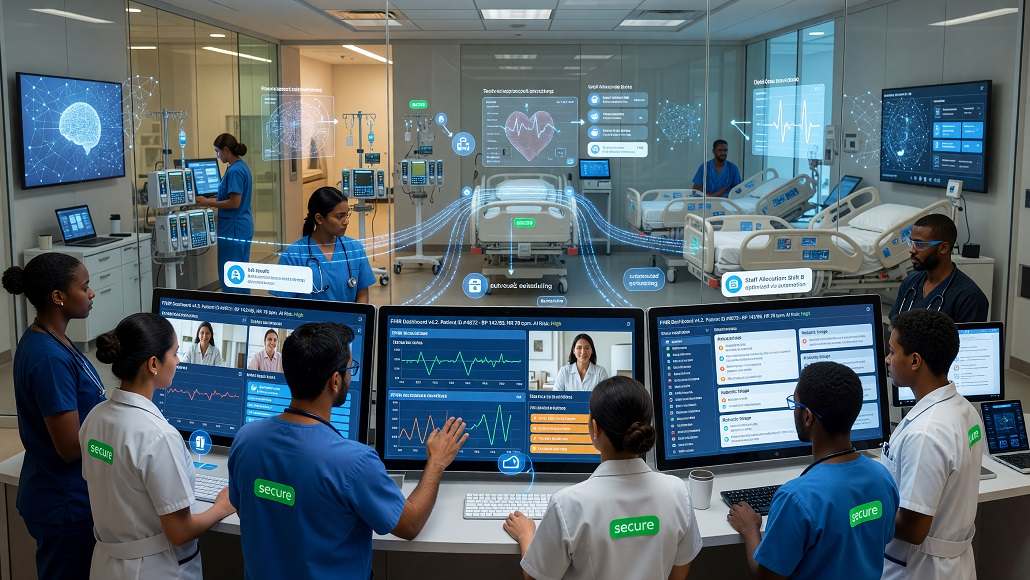
The final stage of this evolution is the total digitization of the hospital environment. In a “smart hospital,” every piece of equipment, from the infusion pump to the patient’s bed, is connected to a central network. This hospital digitization allows for real-time tracking of assets and provides a wealth of data that can be used to further optimize clinical operations. For example, if a critical piece of equipment fails, the system can automatically generate a maintenance request and identify the nearest available replacement. This level of connectivity ensures that the clinical environment is always operating at peak efficiency.
Preparing the Workforce for a Digital-First Future
The success of digital health integration in clinical operations ultimately depends on the people who use the technology. This shift requires a significant investment in workforce training and a culture that embraces digital innovation. Clinicians must be provided with the skills they need to navigate complex software systems and use data to inform their practice. At the same time, the technology itself must be designed with the user in mind, focusing on intuitive interfaces and minimizing “alert fatigue.” By fostering a partnership between clinical staff and IT professionals, hospitals can ensure that their digital health initiatives are successful and that the technology truly supports the mission of providing better care.
The integration of digital health into clinical operations is not a one-time project but a continuous journey toward a more efficient, patient-centered healthcare system. By focusing on interoperability, clinical workflow automation, and remote patient monitoring, hospitals can overcome the challenges of the modern healthcare landscape and provide higher-quality care to more people. As we move further into the digital age, the ability to leverage data and technology will be the defining characteristic of the most successful healthcare institutions. By embracing these changes today, we are laying the foundation for a future where healthcare is more accessible, more personalized, and more effective for everyone.