













Pharmaceutical companies are increasingly integrating digital health tools with traditional medicines as part of broader efforts to improve patient outcomes. One example of this approach comes from Daiichi Sankyo’s European faction, which has entered into a collaboration with health technology company GAIA to commercialise a digital therapeutic aimed at supporting adults with hypercholesterolaemia.
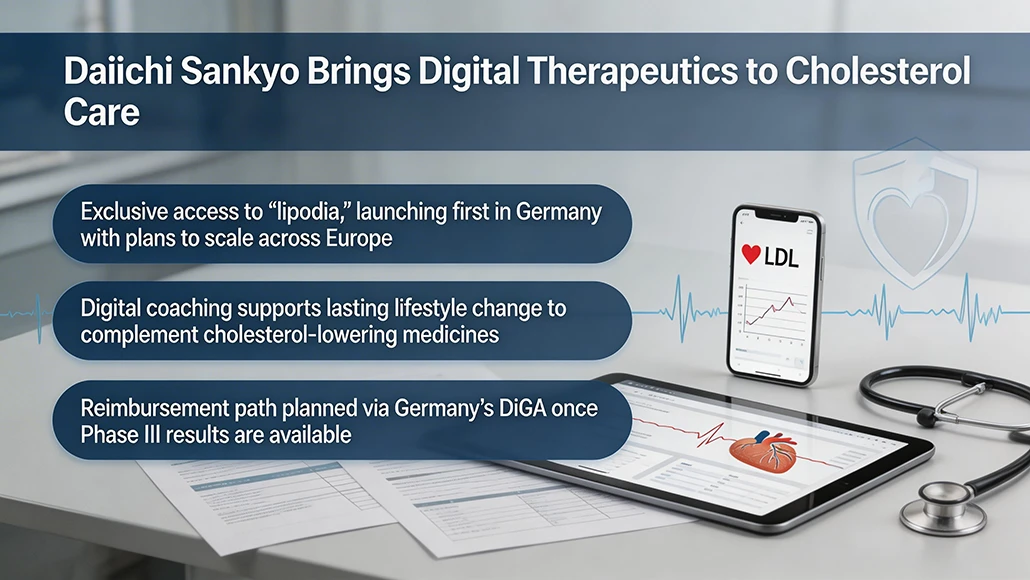
Under the agreement, Daiichi will obtain exclusive rights to the tool, known as lipodia, representing what could become the company’s first step in extending its cardiovascular portfolio into the digital health sector. The initial rollout of the partnership will focus on the German healthcare market, although the company intends to expand lipodia’s reach to “all major markets on the continent.” The digital solution works by integrating patient-specific, evidence-based behavioural health and psychotherapeutic strategies that guide users toward long-term lifestyle adjustments. Designed to complement pharmaceutical therapy, the system aims to encourage sustained behavioural change while helping reduce a patient’s risk of cardiovascular disease (CVD).
“Digital therapeutics represent an important next step in delivering holistic heart health,” said Oliver Appelhans, Daiichi’s head of EU speciality business. “By combining pharmaceuticals with evidence-based digital therapeutics, we can support patients beyond our medicines.” To support wider access to the therapy, GAIA intends to submit a reimbursement application for lipodia once results from its pivotal Phase III trial become available. Should the application receive approval, Germany’s public health insurers would reimburse the therapy through the country’s Digital Health Applications (DiGA) pathway.
The move reflects a broader trend in the pharmaceutical industry as companies explore how digital technologies can complement drug therapies. Although medications used to treat CVD have significantly improved outcomes, pharmacological treatments alone often do not address the behavioural changes needed for long-term prevention. Estimates suggest that around 80% of heart disease and stroke cases affecting European patients are preventable, highlighting the potential impact of early interventions and educational programmes designed to encourage sustained lifestyle changes. As a result, several pharmaceutical companies are evaluating ways to combine digital health tools and patient education platforms with existing therapies.
Activity in the cardiometabolic health segment illustrates this shift. Novo Nordisk has been exploring collaborations with digital health providers that could offer fitness and dietary guidance alongside treatment with its weight-loss medicine Wegovy (semaglutide). Meanwhile, Otsuka Pharmaceutical currently holds 16% of global revenue in regulator-approved digital health apps. Part of this position is supported by Rejoyn, an application developed with Click Therapeutics and launched in 2024 for patients with depression. The app works alongside the company’s pharmaceutical treatments for major depressive disorder (MDD), including Rexulti (brexpiprazole) and Abilify (aripiprazole).
According to recent analysis from GlobalData, regulator-approved applications are playing a central role in driving growth across the digital health segment, which remains “still in its early stages.” Regulators are also moving to facilitate wider adoption of these technologies. Both the US Food and Drug Administration (FDA) and the UK’s Medicines and Healthcare products Regulatory Authority (MHRA) have introduced policies aimed at encouraging the broader use of digital health tools throughout healthcare systems.