












Rising Need for Advanced Infection Control
The preservation of patient health within a clinical setting extends far beyond the administration of medicine or the performance of surgical procedures. It encompasses the fundamental requirement of providing a safe, sterile environment where the risk of secondary illness is minimized. Healthcare-associated infections (HAIs) have long been a significant burden on the global medical system, leading to prolonged hospital stays, increased costs, and, most tragically, avoidable loss of life. In response to this persistent threat, a new generation of infection control technologies strengthening patient safety has emerged, offering sophisticated layers of defense that go beyond traditional cleaning protocols.
Automated Disinfection Technologies Transforming Hygiene
For decades, the standard for hospital hygiene relied heavily on manual labor and chemical disinfectants. While these methods remain essential, they are inherently subject to human error and inconsistency. A missed surface or an improperly diluted solution can leave behind pathogens that thrive in a hospital environment. The shift toward automated disinfection systems represents a critical turning point. Technologies such as ultraviolet-C (UV-C) light robots and vaporized hydrogen peroxide (VHP) systems are now common in modern facilities. These machines can autonomously navigate a patient room, delivering a consistent and lethal dose of energy or chemical vapor to eliminate bacteria, viruses, and fungi on every surface. This objective level of cleanliness is a hallmark of how infection control technologies strengthening patient safety are redefining the clinical environment.
One of the most innovative developments in this field is the use of antimicrobial surfaces and coatings. Traditional hospital surfaces, such as bed rails, door handles, and tray tables, can serve as reservoirs for dangerous microbes like MRSA or C. difficile. By incorporating copper, silver, or specialized light-activated coatings into these high-touch objects, hospitals can create surfaces that actively kill pathogens on contact. Unlike a chemical disinfectant that works only at the moment of application, these materials provide 24/7 protection. The continuous action of these materials is a vital component of infection control technologies strengthening patient safety, acting as a passive yet powerful barrier against the spread of disease.
Digital Hand Hygiene Monitoring Systems
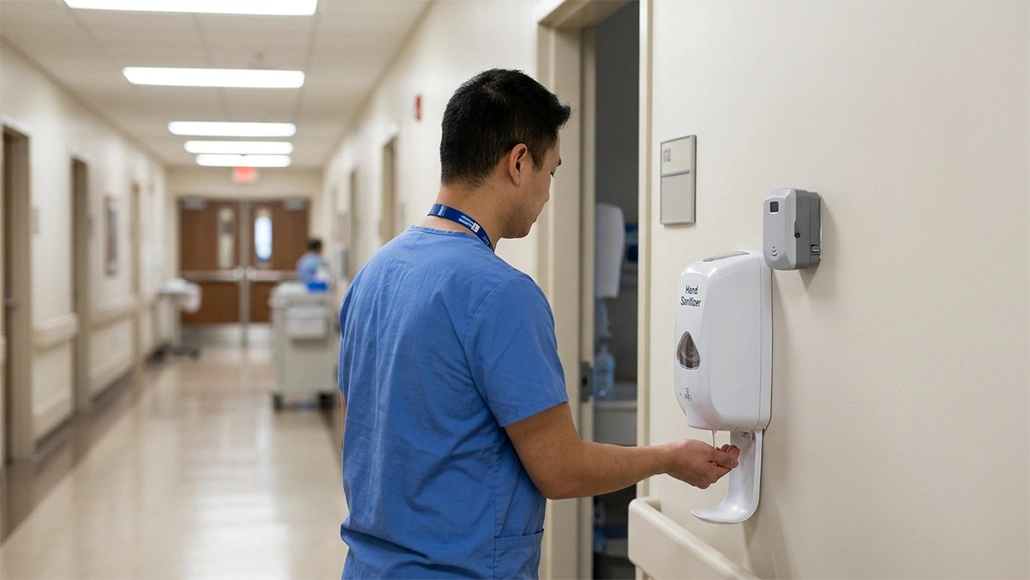
Hand hygiene has always been the primary defense against infection, yet ensuring 100% compliance among busy healthcare workers is notoriously difficult. To address this, digital hygiene monitoring systems are being deployed to provide real-time feedback and accountability. These systems use wearable sensors or camera-based AI to track when a clinician enters a room and whether they utilize the hand sanitizer or soap dispenser. The data is then aggregated to help hospital leadership identify departments that may need additional training or resources. By turning hygiene into a measurable metric, these infection control technologies strengthening patient safety are fostering a culture of transparency and continuous improvement.
Advanced Air Quality and Filtration Systems
Air quality management is another area where technology is making significant strides. In a hospital, the air can carry droplets and aerosols that transmit respiratory infections. Advanced filtration systems, including High-Efficiency Particulate Air (HEPA) filters and localized air purification units, are now being integrated into patient rooms and waiting areas. Some systems even utilize cold plasma technology to neutralize airborne pathogens without the need for filters that can become clogged. By treating the air as a potential vector for disease, infection control technologies strengthening patient safety are ensuring that the very atmosphere of the hospital contributes to the healing process rather than the spread of illness.
Smart Sterilization and Instrument Tracking
The sterilization of medical instruments is also undergoing a digital transformation. Modern sterile processing departments now utilize tracking systems that use RFID or barcodes to follow every instrument through the cleaning, sterilization, and delivery process. This ensures that no tool is used on a patient unless it has successfully passed through a validated sterilization cycle. Furthermore, new low-temperature sterilization methods are allowing for the safe reprocessing of delicate electronic and optical instruments that would be damaged by traditional steam autoclaves. These advancements in instrument management are essential infection control technologies strengthening patient safety, providing a guarantee of sterility for every surgical procedure.
Predictive Analytics for Infection Prevention
Data analytics and predictive modeling are providing a digital shield for hospitals. By analyzing electronic health records (EHRs), infection control teams can identify patterns that might indicate the early stages of an outbreak within a facility. If three patients in the same wing suddenly present with similar symptoms, the system can flag this immediately, allowing for rapid isolation and intervention. This proactive stance is much more effective than waiting for lab results to confirm an outbreak that has already spread. The use of big data to prevent infection is a prime example of how infection control technologies strengthening patient safety are moving from a reactive to a predictive model of care.
The challenge of antimicrobial resistance (AMR) also highlights the need for better diagnostic tools at the point of care. If a clinician can quickly determine whether an infection is viral or bacterial, they can avoid the unnecessary prescription of antibiotics. Rapid diagnostic tests that provide results in minutes rather than days are becoming more prevalent. By supporting antibiotic stewardship, these infection control technologies strengthening patient safety are helping to preserve the effectiveness of our most critical medicines for future generations.
Water System Safety and Monitoring
Water system safety is a frequently overlooked but vital aspect of hospital hygiene. Legionella and other waterborne pathogens can reside in the complex plumbing systems of large healthcare facilities. Real-time water monitoring sensors can detect changes in temperature, flow, and chemical levels that might indicate a risk of bacterial growth. Automated flushing systems and specialized filtration on faucets and showerheads add another layer of protection. These invisible safeguards are integral infection control technologies strengthening patient safety, ensuring that every point of contact with the facility’s infrastructure is secure.
Immersive Training Through VR and AR
Training and education are being enhanced through virtual reality (VR) and augmented reality (AR). Staff can now practice infection control protocols in a simulated environment where they can see virtual germs on surfaces and learn the most effective ways to remove them. This visual feedback is far more impactful than traditional lectures or videos. By improving the muscle memory and awareness of the workforce, these infection control technologies strengthening patient safety are translating high-tech solutions into better human behavior.
Building Safer Clinical Environments
In conclusion, the fight against healthcare-associated infections is a multi-front war that requires a combination of engineering, biology, and behavioral science. The suite of infection control technologies strengthening patient safety available today offers a comprehensive approach to this challenge. From autonomous robots that disinfect rooms to surfaces that kill germs on contact and digital systems that monitor human behavior, we are building a safer future for patients. As these technologies continue to evolve and become more integrated into the standard of care, the hospital will increasingly become a sanctuary of healing, defined by its cleanliness as much as its clinical expertise.