













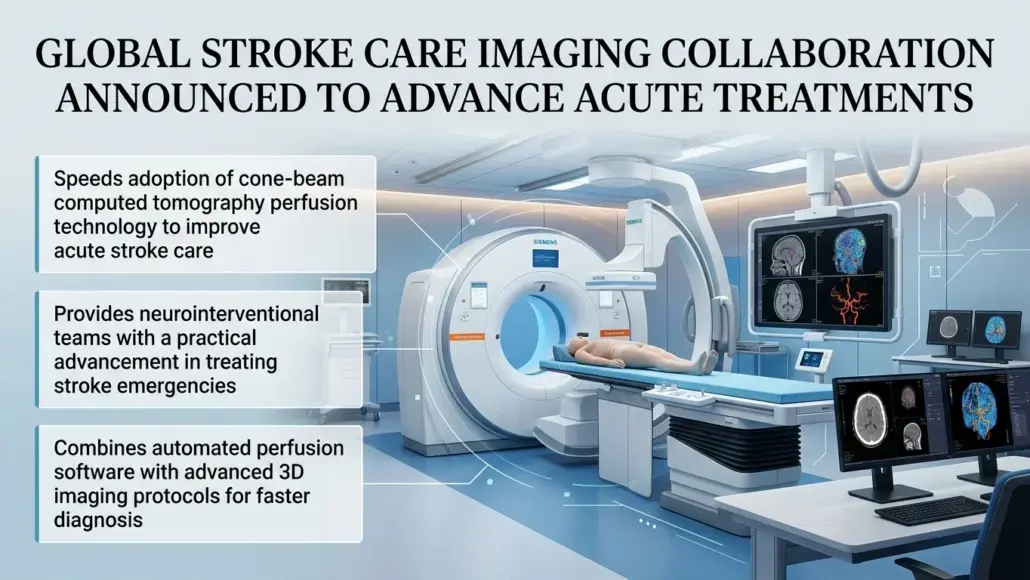
The Siemens Healthineers and Cercare Medical collaboration aims to speed up the adoption of cone-beam computed tomography perfusion technology, which serves as a practical step forward in acute stroke care.
The two companies have merged Cercare Medical’s automated perfusion software with multiphase 3D acquisition protocols from Siemens Healthineers. On a technical level, this setup uses the vendor-neutral Cercare Medical Neurosuite to read perfusion maps and metabolic metrics directly inside the angiography suite. By connecting this software to the Syngo DynaCT Multiphase system, operators can generate up to ten cone-beam computed tomography phases for immediate review.
With these tools in place, medical staff can complete detailed stroke care imaging without having to move the patient to a different wing of the hospital.
Keeping a patient in the angiography room removes the typical requirement to transport them for standard magnetic resonance or computed tomography scans during the most critical acute window.
- Cutting down on patient transfers directly reduces procedural delays.
Faster treatment decisions save millions of neurons that are otherwise lost each minute. - During a thrombectomy, having instant data about cerebral blood flow and tissue viability gives operators the exact metrics they need to modify their approach on the spot.
Quick access to stroke care imaging makes it much easier to evaluate brain tissue health. The combined technology shows exactly how well different regions of the brain are receiving oxygen and essential nutrients. Because of this, clinical teams can spot microvascular issues, no-reflow occurrences, and distal occlusions right alongside the main thrombectomy procedure.
Clinical researchers who helped establish the scientific groundwork for this solution point out that having direct imaging in the intervention space ensures treatment can carry on seamlessly, even when conventional imaging machines are occupied or unavailable. This immediate line of sight ultimately helps predict clinical outcomes and assess any residual complications as they happen.
With qualitative perfusion technology now holding necessary regulatory clearances, both companies plan to scale their specialized offering globally, aiming to standardize how hospitals handle time-sensitive neurological emergencies.