












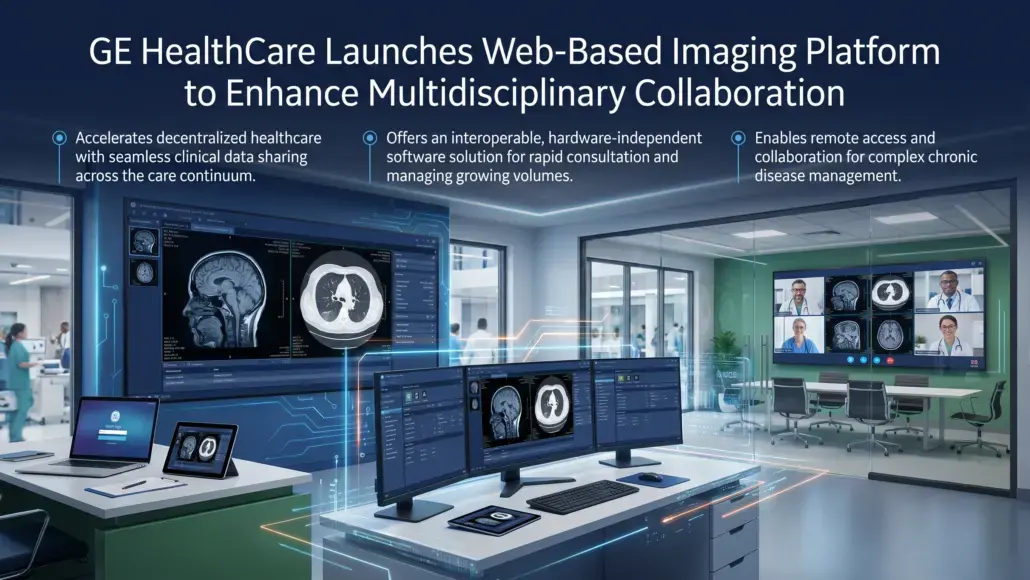

The acceleration of decentralized healthcare and the increasing complexity of chronic disease management are driving a significant shift in how clinical data is shared across the care continuum. As multidisciplinary teams face growing imaging volumes and the need for rapid consultation, the demand for interoperable, hardware-independent software solutions has reached a critical point. In response to these evolving clinical requirements, GE HealthCare has introduced MIM Anyware, a new remote access platform for imaging data. This browser-based solution is designed to provide secure, healthcare system-controlled access to imaging data without the need for local software installations, effectively decoupling advanced diagnostic tools from the traditional physical workstation.
The platform is engineered to facilitate real-time collaboration among various clinical specialists, including physicians, physicists, and dosimetrists. By allowing multiple authorized users to join the same MIM session simultaneously, the technology enables teams to perform routine clinical processing, review registrations, and manage dosage workflows together in a virtual environment. This capability is particularly vital in cancer care, where complex decision-making processes often require immediate input from across different departments. GE HealthCare notes that the solution supports the entire oncology workflow, ranging from initial consultations and referrals to medical education. By integrating the convenience of shared document technology into a clinical setting, the remote access platform aims to streamline the path from diagnosis to treatment.
Redefining Clinical Engagement through Virtual Environments
The development of MIM Anyware reflects a broader strategy to modernize how clinicians engage with medical imaging data. By hosting analysis tools directly within a web browser, the platform allows for seamless workflow deployment regardless of a clinician’s physical location. J. Anders, GM of MIM at GE HealthCare, emphasized that research consistently highlights the importance of multidisciplinary collaboration in delivering patient-centered care. “That’s why we designed MIM Anyware to redefine how clinicians engage with medical imaging data in virtual environments. By enabling seamless access to imaging data and MIM’s powerful analysis tools directly through a web browser, we’re helping clinicians stay focused on what matters most: patient care,” Anders stated.
From a clinical perspective, the ability to share data securely with external collaborators is seen as a major operational advantage. Jérémy Godart, a medical physicist at Erasmus MC, noted that care teams are facing increasingly complex patient needs that require input beyond a single organization. “Remote access platforms like MIM Anyware can help healthcare systems securely share imaging data with external collaborators, making it easier to seek expert input and support multidisciplinary consultation beyond a single organization. This can also create educational opportunities for medical students to explore, discuss and learn from real clinical cases,” Godart explained. This emphasis on accessibility and education suggests that the impact of the platform may extend into the academic and research sectors of healthcare.
Strategic Expansion of the MIM Software Portfolio
The introduction of MIM Anyware marks the latest addition to GE HealthCare’s expanding suite of digital solutions following its 2024 acquisition of the AI-based software developer. Since the acquisition, the company has aggressively scaled its MIM offerings to target specific clinical specialties. In 2024, GE HealthCare introduced a specialized MIM solution for prostate care, which was followed by the unveiling of the MIM Encore platform last year. More recently, the company received FDA 510(k) clearance for its MIM Contour ProtégéAI+ 2.0 software, signaling a continued commitment to integrating artificial intelligence into the oncology workflow.
This consistent rollout of new applications demonstrates a long-term investment in software-driven clinical excellence. By centralizing these diverse tools under a single, remotely accessible ecosystem, GE HealthCare is positioning itself to address the logistical challenges of modern hospital systems. The goal is to maximize the utility of imaging data while reducing the technical barriers that often slow down clinical decision-making. As imaging volumes continue to rise globally, the shift toward browser-based, collaborative platforms will likely become a standard requirement for health systems aiming to improve operational efficiency and patient outcomes in complex care environments.