














Orthodontic treatment looks dramatically different than it did a generation ago. According to the American Association of Orthodontists, clear aligner therapy now accounts for a substantial and growing share of orthodontic starts across all age groups — a shift driven not just by aesthetics, but by meaningful improvements in digital planning, material science, and clinical predictability. For anyone weighing treatment options in 2024, the conversation is no longer simply “braces or aligners” — it’s about understanding what aligners do well, where their limits lie, and whether those limits matter for your specific situation.
That question looks different depending on your age. A sixteen-year-old navigating high school cares about different things than a thirty-eight-year-old professional managing a crowded schedule around dental appointments. Both groups stand to benefit from clear aligner therapy, but the reasons — and the cautions — aren’t identical. Growth stage, compliance patterns, caries risk, restorative history, and social context all shift the calculus in ways that generic “aligners vs. braces” comparisons tend to flatten.
This article walks through how aligners actually work at a mechanical level, what that means for realistic expectations, how the benefits differ meaningfully between teenagers and adults, and where aligners fall short enough that another approach deserves serious consideration.
Why clear aligners matter today
Orthodontic treatment used to be something most people associated with adolescence — metal brackets, dietary restrictions, and monthly adjustments. That cultural script is changing. Adults now represent a significant and growing segment of orthodontic patients, and younger patients increasingly expect treatment options that don’t announce themselves at every social interaction. Clear aligner therapy emerged partly as a response to those priorities, but it’s stayed relevant because the clinical results, for appropriate cases, hold up.
The stakes aren’t purely cosmetic. Misaligned teeth create real functional problems: uneven wear patterns, difficulty cleaning interproximal spaces, and in some cases, bite-related stress on the temporomandibular joint. For teens, misalignment during active growth can compound over time if left untreated. For adults, crowded or rotated teeth often complicate restorative work — a dentist planning a crown or implant around misaligned adjacent teeth is working with less margin for error.
Social and psychological dimensions matter too, particularly for teenagers. Self-perception during adolescence is acutely tied to appearance, and orthodontic appliances that are visible during every conversation, every photograph, every school presentation carry a psychological weight that’s worth acknowledging. Adults in client-facing roles report similar concerns — appearing in videoconferences with visible brackets can feel professionally conspicuous in ways that matter to them personally.
What’s changed in the past decade isn’t just patient demand — it’s the clinical infrastructure that has made aligners viable for a much wider range of cases. Digital scanning, AI-assisted treatment planning, and improved attachment systems have pushed the boundary of what aligners can predictably accomplish. Understanding that infrastructure is the foundation for understanding what outcomes are actually realistic.
How clear aligners move teeth
The gap between a well-marketed product and a clinically reliable tool comes down to planning and biomechanics. Clear aligner therapy depends entirely on the quality of the digital treatment plan that precedes fabrication — the aligner itself is just a delivery vehicle for forces that were designed weeks or months earlier. That upstream process is where variability in outcomes originates.
Digital planning and fabrication
Treatment begins with a digital scan — either an intraoral scan or, in some workflows, a scan of physical impressions — which generates a three-dimensional model of the dentition. From that model, the treating clinician (often in collaboration with the manufacturer’s software platform) builds a virtual staging plan: a sequence of incremental tooth positions that maps the intended path from the patient’s current alignment to the target outcome.
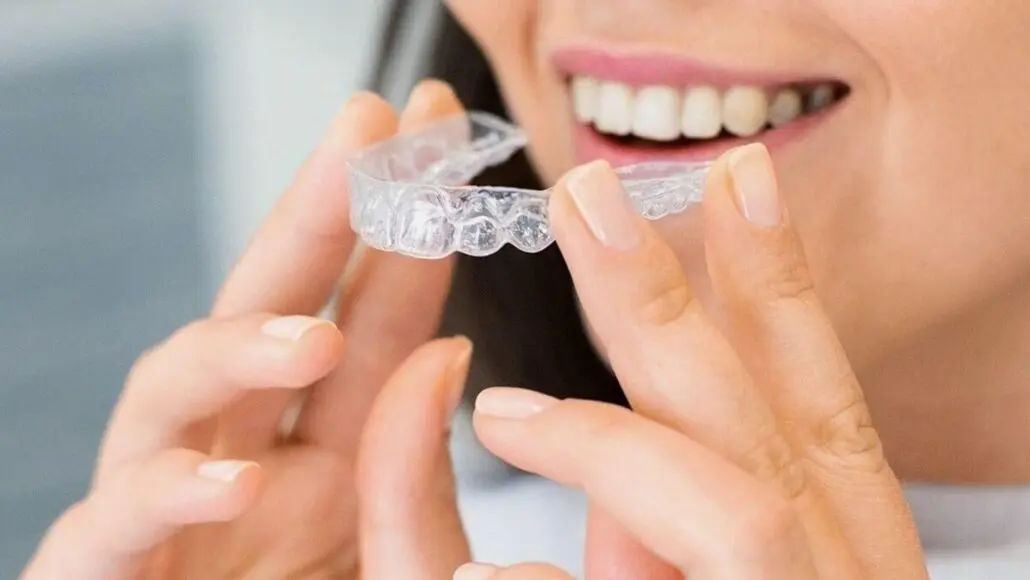
Each stage in that plan becomes a unique aligner tray, typically fabricated from thermoplastic polyurethane sheet material using pressure-forming or 3D printing processes. The number of aligners in a series varies considerably — simple cases might involve a dozen trays, while complex cases can run to sixty or more, often with refinement series added later.
What the digital workflow makes visible is exactly where sources of variability enter the process. Scan quality, software interpretation of tooth boundaries, the clinician’s decisions about staging speed, and the patient’s actual biological response all contribute to the final outcome. A technically accurate scan and a thoughtfully staged plan don’t guarantee biological compliance — teeth don’t always move exactly as predicted — but poor planning nearly always produces poor outcomes regardless of patient effort.
Biomechanics and staged movements
Aligners deliver orthodontic force through elastic deformation: each tray is manufactured slightly ahead of the current tooth position, and the tray’s attempt to return to its intended shape exerts a gentle, continuous force on the teeth. This force delivery differs from fixed appliance mechanics in important ways that affect what’s predictable and what isn’t.
Tipping movements — rotating a tooth around a fulcrum near its root — are generally well-controlled with aligners. Translation (moving the crown and root bodily in the same direction) requires attachments: small composite buttons bonded to specific teeth that give the aligner something to push against, generating more controlled force vectors. Without attachments, bodily translation is mechanically unreliable.
Rotational correction of round-rooted teeth (notably upper lateral incisors and lower premolars) is notoriously difficult. The aligner has minimal geometric leverage on a circular cross-section, and published research documents consistent overcorrection requirements — clinicians often plan for more rotation than needed, anticipating incomplete expression. Large vertical corrections, including significant intrusion and extrusion, are also challenging. These movement limitations directly inform case selection, which the final section addresses in detail.
Benefits for teens and adults
The core advantages of clear aligner therapy — discretion, removability, and reduced soft-tissue irritation — apply across age groups. But the weight those advantages carry, and the additional clinical considerations that attach to each group, diverge enough that they warrant separate discussion.
Benefits specific to teenagers
For teenagers, the most immediate benefit is psychosocial: aligners are functionally invisible during normal interaction, which removes a significant source of self-consciousness during years when peer perception carries outsized weight. That’s not trivial. Adolescents who feel less self-conscious about treatment in progress are more likely to cooperate with the full process.
Oral hygiene is a compelling clinical argument for aligners in teens. Adolescents with fixed appliances face a documented increase in plaque accumulation around brackets, raising decalcification and early caries risk — particularly in patients whose home hygiene is inconsistent. Removable aligners allow normal brushing and flossing, which lowers that risk meaningfully when patients actually remove the trays to eat and drink.
Growth is both an opportunity and a constraint. In patients who haven’t completed skeletal development, some movement patterns are more biologically responsive than in fully developed adults. At the same time, active growth can introduce unpredictability — tooth positions change as the jaw develops, and a treatment plan built on a scan taken at thirteen may not fully account for eruption patterns that emerge at fifteen. Orthodontists managing teen aligner cases typically monitor more frequently for this reason.
Parental involvement matters more in this group than in adults. Compliance with 20–22 hours of daily wear is the single biggest determinant of aligner outcomes, and teenagers benefit from structured accountability — whether that’s check-in conversations, wear-tracking features available in some aligner systems, or simply a shared understanding of why consistent wear matters.
Benefits specific to adults
Adults considering clear aligner therapy are often motivated by the same aesthetic concern that drives teen uptake — but the professional and social context differs. Wearing visible orthodontic appliances in a business setting, during client meetings, or in situations involving public speaking carries a particular professional self-consciousness that aligners effectively eliminate. For adults pursuing Invisalign treatment for a straighter smile, the ability to present professionally throughout the treatment period is frequently cited as the deciding factor.
Adult patients often have restorative complexity that teenagers don’t: existing crowns, bridges, implants, or veneers that influence treatment planning. A tooth with a full-coverage crown, for instance, has different biomechanical properties than a natural tooth and requires careful staging. Experienced orthodontists working with adult patients treat restorative history as a material planning variable, not a footnote.
Scheduling is a practical reality. Adults with professional obligations and family responsibilities often find the reduced appointment frequency of aligner therapy — check-ins every six to ten weeks rather than monthly adjustment visits — genuinely easier to sustain. Comfort also matters: no bracket irritation against cheek mucosa, no dietary restrictions, and discomfort that tends to peak briefly in the first day or two after switching to a new tray.
Limits, risks, and patient selection
Aligners are not a universal solution, and clinicians who present them as one do their patients a disservice. The biomechanics discussed earlier impose real constraints, and the clinical scenarios where those constraints matter most are predictable enough that they can be identified clearly before treatment begins.
When aligners are less suitable
Several case types are reliably difficult for aligner therapy, and patients with these presentations are often better served by fixed appliances or combined approaches:
Severe rotational corrections — particularly on round-rooted teeth — remain challenging even with optimized attachment design. While mild-to-moderate rotations respond well, cases requiring large rotational corrections have higher rates of incomplete expression, meaning the final result may fall short of the planned outcome and require extended refinement.
Significant vertical discrepancies present similar challenges. Large open bites requiring intrusion of posterior teeth, or deep overbites needing substantial incisor intrusion, push against the mechanical limits of aligner force delivery. These cases may need fixed auxiliary mechanics — temporary anchorage devices, for example — alongside aligners to achieve reliable results.
Skeletal discrepancies that require orthopedic correction rather than pure tooth movement are outside the scope of aligners entirely. A patient with a meaningful jaw-size mismatch needs growth modification or surgical correction; moving teeth within a misaligned skeletal framework addresses the symptom without the cause.
Large mesiodistal space management problems — significant crowding requiring strategic extractions with controlled space closure — are manageable with aligners in experienced hands, but demand more sophisticated planning and monitoring than simpler cases.
Common side effects and management
Aligner therapy’s side effect profile is generally mild, but patients benefit from knowing what to expect rather than being surprised. Transient discomfort when switching to a new tray is normal and typically peaks within the first 24–48 hours. Over-the-counter analgesics manage it effectively; pain that persists beyond three to four days warrants a clinical check, as it may indicate a staging issue or poor fit.
Attachment irritation affects some patients, particularly during the first few weeks. Composite attachments on posterior teeth can create pressure points against the buccal mucosa; orthodontic wax over the offending attachment usually resolves this during the adaptation period.
Transient speech changes — mild lisping or altered sibilant sounds — are common in the first one to two weeks and self-resolve as the tongue adapts to the appliance volume. Patients who present publicly or professionally should simply know to expect this early.
The most clinically significant risk is decalcification from inadequate oral hygiene, which tends to occur when patients don’t remove aligners before eating and snacking, or don’t clean their teeth before reinserting trays. Fluoride rinses and consistent tray hygiene manage this risk effectively. Any patient who develops white spot lesions should prompt a conversation about hygiene protocol before treatment continues.
Taken together, these considerations point toward a simple principle: the most important decision in aligner therapy happens before the first tray is fabricated. Honest case assessment — acknowledging what aligners can reliably deliver for a specific patient versus where limitations apply — determines whether the treatment that follows is predictable and satisfying or a prolonged series of refinements. Patients who seek evaluation from a provider willing to discuss those trade-offs directly are in a significantly better position than those who receive only enthusiasm.