
















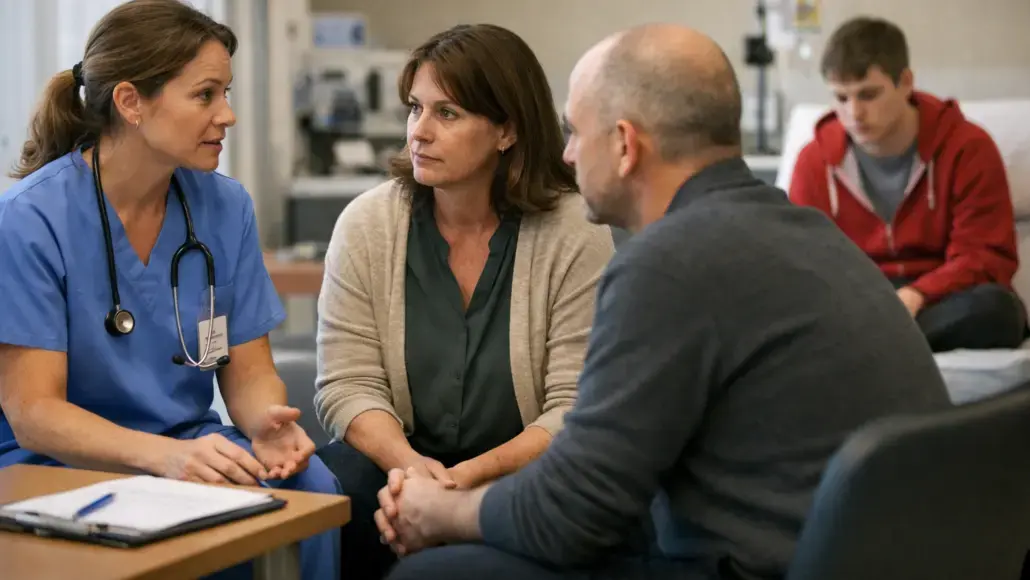

Ask a discharge planner about their hardest cases and a certain type of patient comes up fast. Medically stable, often for days. Autistic, or living with an intellectual disability, and prone to behaviours that worry the people around them. Nobody doubts they should go home. The question is whether home is ready for them.
When those discharges go well, it’s rarely luck. Usually the ward, the family and a community behaviour support practitioner have spoken to each other properly before the patient leaves. The people receiving them know what calms things down, what winds things up, and what to do on a rough afternoon. The patient goes home on time and, more importantly, stays home.
More hospitals are starting to plan for that on purpose. It helps patients and families first. It also takes the edge off a few pressures every health executive knows well: bed flow, readmissions and the safety of the staff on the floor.
Why some transitions stall
Behaviours of concern (aggression, self-injury, damage to property, shutting down completely) rarely come from nowhere. Pain can drive them. So can sensory overload, a broken routine, or simply not having a reliable way to say what’s wrong. A ward, with its alarms, rotating faces and bright lights at 3am, is close to a worst-case environment for all of that.
What follows is a familiar spiral. Behaviour escalates, staff step in with more restrictive measures to keep people safe, and within a few days the patient looks far more complex on paper than when they arrived. Then the placement hunt gets harder. Providers see the incident reports and hesitate, and the stay drags on.
That’s not a criticism of ward teams. They’re working in a setting built for acute medicine, not long-term behaviour support, and most would say so themselves.
What community behaviour support brings
Positive behaviour support, or PBS, starts from a simple idea: understand why a behaviour may be happening, then consider changes to the environment, communication and skills that could better support the person. The focus is on quality of life and reducing reliance on restrictive practices where possible.
For hospitals, community behaviour support can be part of a broader discharge process. A practitioner may gather information about what works for the person, communicate relevant strategies to the hospital team, and help families or support workers understand how to continue those approaches after discharge. This can give the people supporting the person at home or in supported accommodation a clearer picture of what they need once they leave hospital.
Good community support usually has a recognisable shape. There’s an assessment first, which may include a functional behaviour assessment looking at patterns, circumstances and the possible purpose of a behaviour. There’s a written plan designed around the person’s everyday environment, rather than a generic approach. And there may be training or guidance for families, support workers and other people involved in the person’s care, so everyone understands how to provide consistent support.
The aim isn’t for community practitioners to replace hospital care. It’s to make the transition between healthcare and ongoing disability support as coordinated as possible.
Restrictive practices and staff safety
Physical, chemical and environmental restraint, along with seclusion, are closely regulated in many places and should only be used where legally permitted and appropriately justified. Most health systems have committed to using them less.
Community support helps with that from both directions. A patient admitted with an up-to-date behaviour support plan, and carers who know it, gives the ward something useful to work from day one. Going the other way, when hospitals pass on what they learnt during the admission, it becomes less likely that a restriction brought in on the ward quietly becomes part of life at home.
Fewer escalations on the ward can also mean fewer staff getting hurt.
How the handover works in different systems
Every country organises this differently, though the core problem looks much the same.
In England, national programmes have spent years trying to reduce reliance on inpatient care for autistic people and people with a learning disability, with community teams expected to do more to prevent admissions and support discharge. Results have been mixed, and delayed discharges are still a well-known headache.
Across North America and much of Europe, access to specialist behaviour support tends to hinge on local funding, insurance cover and what services happen to exist nearby, which makes coordinated planning harder to count on.
Australia has its own approach to coordinating disability and behaviour support, including through the National Disability Insurance Scheme (NDIS). Depending on a person’s circumstances and available support, behaviour support may form part of their broader support plan. Practitioners involved in behaviour support work with the person and their wider support team to understand their needs and develop practical strategies that can be used in everyday settings.
Big cities add another layer, because so many services are involved. A discharge coordinator searching for positive behaviour support in Sydney, for instance, will turn up a range of providers. The most useful ones tend to deliver support face to face in homes, schools, supported accommodation and community settings, and work alongside the psychologists, occupational therapists, speech pathologists and support coordinators a participant may already have.
Hospitals don’t have to provide behaviour support themselves to support a well-coordinated transition. Small steps can help. Where appropriate, identify behaviour support needs early, so there is time to understand the person’s circumstances and plan for their transition. Where community practitioners are involved, sharing relevant information with them can help provide greater continuity of support after discharge.
Clear communication between hospital teams, families, support workers and community practitioners can also help ensure that everyone understands the person’s needs and the strategies that support them. The exact process will vary depending on the person, their support arrangements and the services available in their area.
A shared job
People with behaviour support needs may receive support from both health and disability services at different points in their lives. These systems have different roles, but communication between them can help make transitions more coordinated.
Hospitals remain responsible for providing appropriate healthcare, while community behaviour support can contribute to ongoing support in the person’s usual environment. Working alongside families, carers and other professionals can help ensure that the person’s needs and preferences remain part of the conversation as support continues after discharge.