












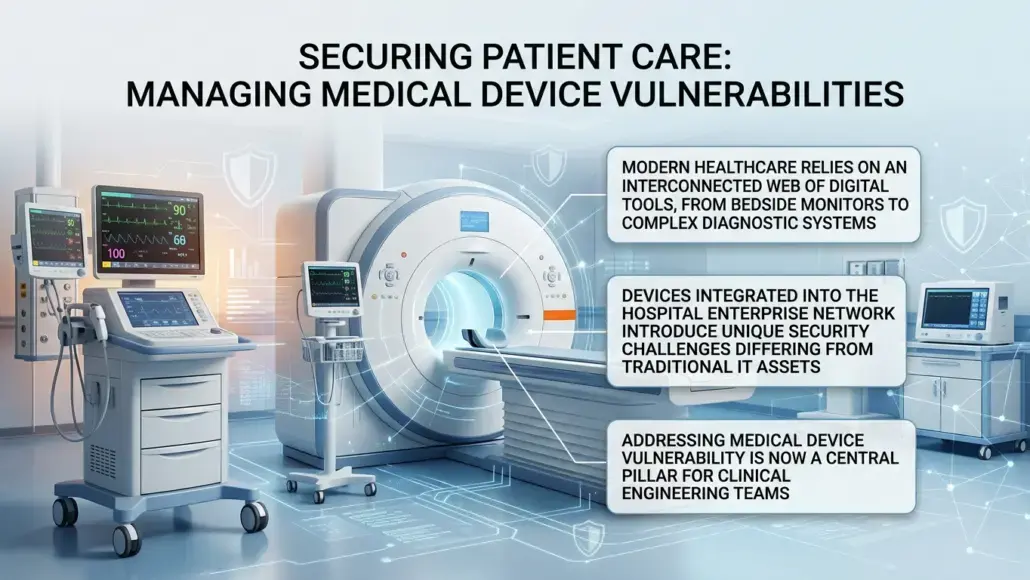

Modern healthcare delivery relies heavily on an interconnected web of digital tools, ranging from bedside monitors to complex diagnostic imaging systems. As these devices become increasingly integrated into the hospital enterprise network, they introduce a unique set of security challenges that differ significantly from traditional information technology assets. Addressing medical device vulnerability is no longer a secondary concern for clinical engineering teams; it has become a central pillar of patient safety and operational continuity. The convergence of Information Technology (IT) and Operational Technology (OT) in clinical settings means that a single unpatched infusion pump or an outdated ventilator can serve as an entry point for malicious actors looking to disrupt hospital services or exfiltrate sensitive patient data.
The complexity of the Internet of Medical Things (IoMT) ecosystem necessitates a specialized approach to risk assessment and remediation. Unlike standard workstations that can be frequently rebooted or updated with automated scripts, medical devices often run on proprietary operating systems or legacy software versions that are sensitive to downtime. Consequently, hospital leadership must balance the urgent need for security patches with the critical requirement for high availability in life-saving environments. Effective management of medical device vulnerability requires a collaborative effort between security professionals, biomedical engineers, and clinical staff to ensure that security protocols do not interfere with patient care workflows.
Understanding the Lifecycle of Clinical Asset Risks
The lifecycle of a medical device often spans a decade or more, frequently outlasting the support cycles of the underlying software components. This longevity creates a persistent gap where legacy hardware remains operational long after the manufacturer has ceased providing security updates. Identifying a medical device vulnerability in an older magnetic resonance imaging machine or a laboratory analyzer requires deep visibility into the software bill of materials. Without a clear understanding of the third-party libraries and components embedded within these devices, hospital security teams remain unaware of potential exploits that target well-known software flaws. This lack of transparency often places the burden of security entirely on the healthcare provider, who may not have the technical documentation needed to secure the device properly.
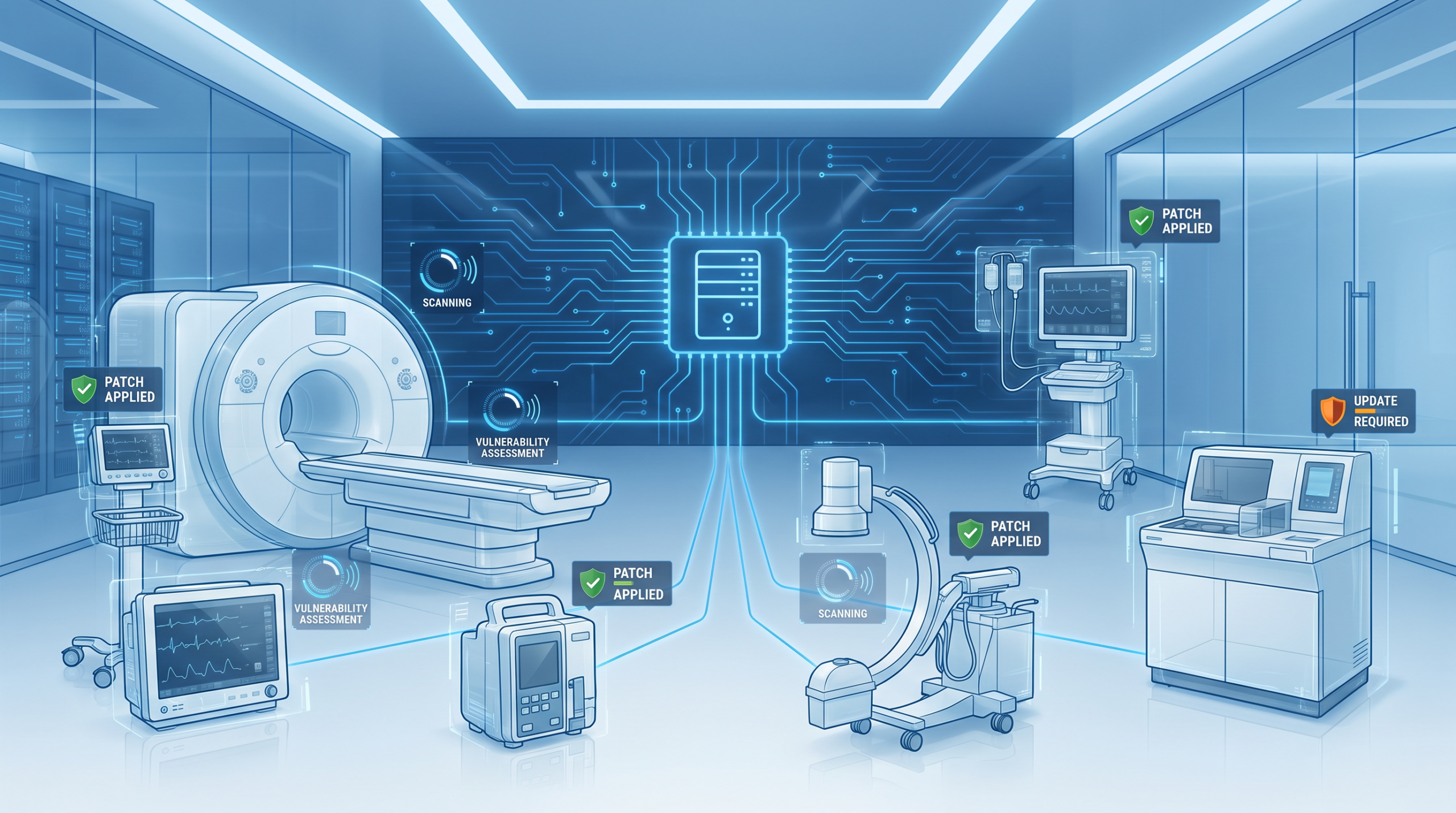
To mitigate these risks, hospitals are increasingly adopting automated discovery tools that passively monitor clinical traffic to identify assets and their associated versions. These tools allow security administrators to map the clinical environment without disrupting active sessions, providing a real-time inventory of every connected device. Once an inventory is established, the focus shifts to prioritization based on clinical criticality and exploitability. A vulnerability in a device directly connected to a patient carries a much higher risk profile than a similar flaw in a back-office administrative system. By categorizing assets according to their impact on patient outcomes, hospitals can allocate limited technical resources to the most pressing threats first. This prioritization ensures that the most dangerous entry points are secured before less critical systems are addressed.
Integrating Patching Protocols with Clinical Workflows
One of the most significant hurdles in managing medical device vulnerability is the coordination of patching windows. Clinical departments operate on tight schedules where equipment downtime directly translates to delayed procedures or reduced bed capacity. Establishing a formal protocol for security updates involves creating a liaison between the cybersecurity office and department heads. This ensures that patches are tested in a non-production environment before being deployed to live clinical units. Testing is essential because some security configurations can inadvertently disable critical medical functions or alter the data flow between the device and the electronic health record system. The risk of a failed patch causing a device malfunction is often viewed as being just as dangerous as the threat of a cyber attack itself.
In cases where a manufacturer has not yet released a patch, or where the device is too old to support new security headers, hospitals must implement compensating controls. These controls act as a digital shield around the vulnerable asset, preventing unauthorized access while allowing necessary clinical communication. Proactive risk mitigation often involves integrating clinical network segmentation to isolate legacy systems that cannot be patched immediately. By limiting the communication paths of a vulnerable device to only the necessary servers and services, the hospital reduces the overall attack surface and prevents lateral movement in the event of a compromise. This granular control over network traffic is vital for protecting assets that were never designed to operate on an open internet-facing network.
Regulatory Compliance and Manufacturer Accountability
The regulatory environment surrounding medical device security is evolving rapidly, placing more pressure on both healthcare providers and manufacturers. Recent updates to federal guidelines require manufacturers to provide comprehensive security documentation and support plans for the entire expected life of the device. For hospitals, this means that the procurement process must now include a rigorous evaluation of a vendor’s cybersecurity posture. Procurement teams are increasingly demanding software bills of materials and commitment letters for long-term security support before signing any purchase agreements. This shift in the market forces manufacturers to prioritize security during the design phase, rather than treating cybersecurity as an afterthought that can be addressed later.
Compliance with frameworks such as the Health Insurance Portability and Accountability Act also mandates that hospitals maintain an active risk management program that includes medical devices. Failure to address a known medical device vulnerability can lead to significant legal and financial repercussions if that flaw is exploited to access protected health information. Auditors now expect to see documented evidence of vulnerability assessments, patching logs, and incident response plans specifically tailored to the IoMT environment. Maintaining these records not only ensures compliance but also provides a roadmap for continuous improvement in the hospital’s security architecture. This documentation serves as a vital record during both internal reviews and external audits, demonstrating a commitment to due diligence.
Building a Culture of Shared Responsibility
Technical solutions alone are insufficient to secure the clinical environment; a shift in organizational culture is equally important. Clinical staff, including nurses and physicians, play a vital role in identifying suspicious device behavior or unauthorized physical access to equipment. Training programs should focus on the intersection of cybersecurity and patient safety, helping healthcare workers understand that a compromised device is a direct threat to the quality of care. When staff members view cybersecurity as a component of clinical excellence, they are more likely to comply with security measures such as strong authentication and proper device handling. Education efforts must be ongoing to keep pace with the sophisticated methods used by modern attackers.
The collaboration between biomedical engineering and IT security is the cornerstone of a successful program. Traditionally, these two departments operated in separate units, with biomedical teams focusing on hardware maintenance and IT teams focusing on the data network. However, as medical devices become more software-defined, these roles are merging. Joint task forces that meet regularly to review the current status of medical device vulnerability can identify emerging threats more quickly than either team could individually. This multidisciplinary approach ensures that security decisions are informed by both technical expertise and practical clinical experience. By working together, these teams can develop strategies that protect the hospital without hindering the speed or accuracy of medical treatment.
Enhancing Long Term Resilience through Continuous Monitoring
The dynamic nature of the healthcare threat environment means that a static approach to security is no longer viable. As new vulnerabilities are discovered daily, hospitals must move toward a model of continuous monitoring and real-time response. This involves the use of security information and event management systems that are specifically configured to recognize medical protocols such as DICOM or HL7. By monitoring the behavioral baseline of each device, security systems can flag anomalies that might indicate a compromised state. For example, if a patient monitor suddenly begins communicating with an external server in a foreign country, the system can automatically trigger an alert or quarantine the device until it can be inspected by a technician.
The following list outlines the essential components of a medical device security strategy:
- Automated asset discovery and inventory management to maintain visibility across the entire clinical network.
- Real-time vulnerability scanning tailored for sensitive clinical hardware that avoids traditional invasive probes.
- Formalized patch management workflows that include clinical department approval and rigorous pre-deployment testing.
- Implementation of compensating controls such as virtual patching and firewall rules to protect legacy hardware.
- Regular security training for clinical staff focused on device hygiene and identifying unauthorized hardware modifications.
- Contractual requirements for manufacturers to provide long-term security support and detailed software bills of materials.
Implementing a comprehensive program to manage medical device vulnerability is an ongoing journey rather than a one-time project. As new threats emerge and the clinical environment continues to digitize, hospitals must remain agile and proactive. Continuous monitoring, regular risk reassessment, and a commitment to interdepartmental collaboration will enable healthcare organizations to protect their most vital assets. By prioritizing the security of the IoMT, hospitals not only safeguard their digital infrastructure but also uphold their primary mission of providing safe and effective care to every patient. The integration of security into the very fabric of clinical operations ensures that the benefits of digital transformation are not overshadowed by the risks of connectivity.