













For many families, the path to an autism diagnosis feels less like a medical process and more like a marathon with no finish line. Between years-long waitlists and the pressure of “aging out” of early intervention windows, the search for answers is often defined by uncertainty.
However, a recent expansion from LinusBio is aiming to close that gap. The company announced that its biomarker-based test, ClearStrand™ASD, is now available for children up to age 10, moving well beyond its previous cutoff of 48 months. This shift comes at a critical time, as the CDC now estimates that 1 in 31 children in the U.S. are identified with autism spectrum disorder.
A “Biological Diary” in a Strand of Hair
The most striking thing about the test is the sample it requires: a single strand of hair. While traditional blood or urine tests only show a “snapshot” of a child’s health at one specific moment, hair acts as a longitudinal record.
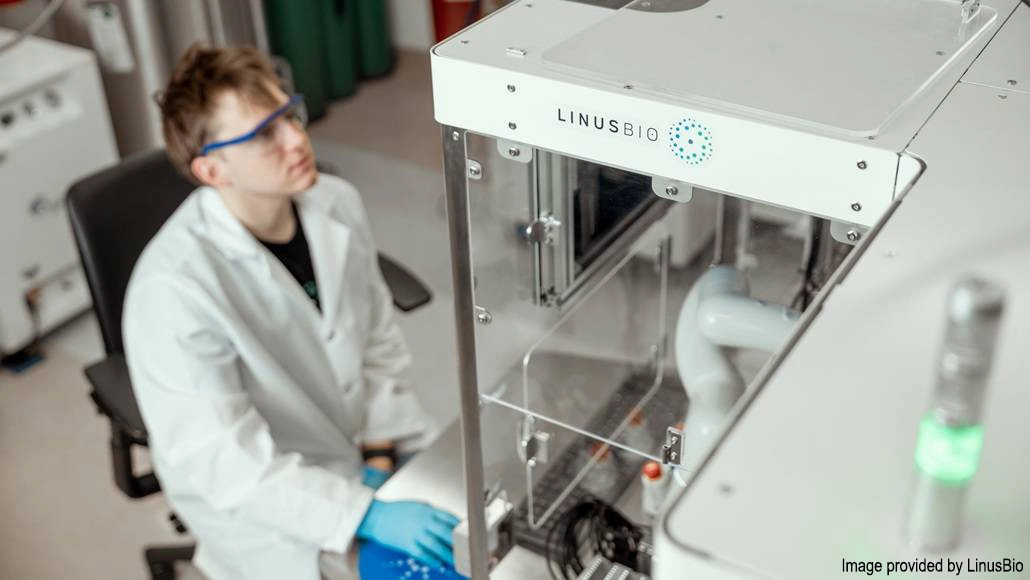
LinusBio uses a combination of robotics and laser-based analysis to “read” the elemental data deposited in the hair over time. This allows them to reconstruct a timeline of how a child’s biology has interacted with their environment, an approach they call “exposomic sequencing”. Remarkably, just one centimeter of hair can yield data equivalent to roughly 1,000 sequential blood measurements.
Streamlining the System
ClearStrand™ASD is designed as a “rule-out” test. With a 95% negative predictive value, it gives clinicians a high level of confidence to exclude autism as a diagnosis. In practice, this means families can be redirected toward the right care pathways immediately—such as speech therapy or sensory support—rather than waiting years for an evaluation they might not actually need.
The Scientist Behind the Breakthrough: Dr. Manish Arora
While his titles are impressive, he is the Edith J. Baerwald Professor and Vice Chairman at the Icahn School of Medicine at Mount Sinai, Dr. Manish Arora’s work is driven by a simple goal: providing families with clarity.
An environmental epidemiologist by trade, Dr. Arora pioneered the use of tooth and hair samples to look back in time at environmental exposures, even reaching back to the prenatal period. His career has been dedicated to moving away from purely behavioral assessments, which can be influenced by cultural context or access to care, and toward objective biological data.
Despite his international recognition as a researcher, Dr. Arora often notes that his roles as a husband and father are just as central to his work as his time in the lab. It’s this perspective that fuels his commitment to early detection, offering families the “transformative” power of timely intervention.