















The Hidden Engine of Modern Medicine: Optimizing the Flow of Care
While the spotlight in healthcare often falls on the latest surgical techniques or pharmaceutical breakthroughs, there is a quieter, equally critical revolution taking place behind the scenes. Healthcare supply chains driving efficiency are the silent architects of modern medicine, ensuring that every bandage, every vial of insulin, and every robotic surgical arm is in the right place at exactly the right time. For too long, the medical supply chain was treated as a secondary administrative function a series of manual orders and siloed warehouses. However, the global disruptions of recent years have highlighted the fragility of this model, prompting a rapid transition toward a highly digitized, transparent, and resilient logistical ecosystem.
The shift toward a more efficient supply chain is not just about saving money; it is a direct contributor to patient safety and clinical outcomes. When a hospital faces a shortage of a critical medication or a specific size of cardiac stent, the impact on patient care is immediate and potentially devastating. By embracing sophisticated data analytics and real-time tracking, healthcare systems are transforming their supply chains from a potential point of failure into a strategic asset that powers the entire institution.
Digital Procurement: From Paperwork to Predictive Analytics
The first pillar of this transformation is digital procurement healthcare. Traditionally, ordering medical supplies involved a labyrinth of paper forms, phone calls, and manual data entry, a process rife with opportunities for error and delay. Today, this is being replaced by integrated e-procurement platforms that connect hospitals directly to their suppliers’ inventory systems. This digital link provides real-time visibility into product availability, pricing, and shipping status, allowing procurement teams to make faster, more informed decisions.
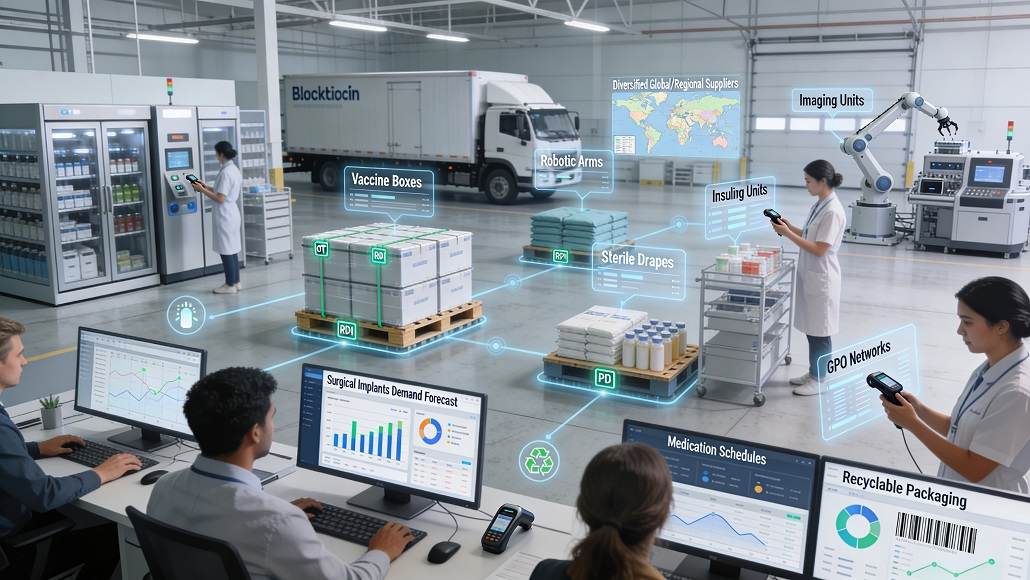
Beyond simple transaction processing, these digital platforms are now incorporating predictive analytics. By analyzing historical usage patterns alongside clinical data such as surgical schedules and seasonal disease trends AI-driven systems can forecast future demand with remarkable accuracy. This allows hospitals to move away from “just-in-case” hoarding toward a more efficient “just-in-time” model. When the supply chain knows that a surge in orthopedic surgeries is scheduled for next month, it can automatically trigger orders for the necessary implants and sterile drapes, ensuring that clinical workflows are never interrupted by a lack of materials.
Medical Logistics and the Power of Real-Time Visibility
Once an order is placed, the focus shifts to medical logistics. In the high-stakes world of healthcare, the “last mile” of delivery is often the most complex. Many medical products require strict temperature controls, sensitive handling, or rapid turnaround times. Healthcare supply chains driving efficiency are leveraging IoT sensors and blockchain technology to track products from the manufacturer’s floor to the hospital’s loading dock, and ultimately to the patient’s bedside.
This end-to-end visibility is vital for maintaining the integrity of the cold chain for vaccines and biologics. Sensors can monitor the temperature of a shipment in real-time, sending an immediate alert if a deviation occurs. This prevents the administration of compromised medications and reduces the massive financial loss associated with wasted products. Furthermore, blockchain provides an immutable record of a product’s journey, which is essential for verifying authenticity and preventing the entry of counterfeit medical devices into the system. This level of transparency is the foundation of a modern, high-trust healthcare environment.
Hospital Inventory Management and Point-of-Use Technology
Within the hospital walls, the challenge of supply management becomes even more granular. Nurses and technicians spend a significant portion of their shifts managing supplies searching for misplaced items or manually recording usage. Hospital inventory management is being revolutionized by RFID (Radio Frequency Identification) and automated dispensing cabinets. When an item is removed from a shelf or used in a procedure, the system automatically updates the inventory count and, if necessary, triggers a reorder.
This “point-of-use” technology ensures that clinicians always have the tools they need while simultaneously capturing accurate data for billing and clinical research. By automating these repetitive tasks, healthcare supply chains driving efficiency are returning valuable time to the clinical staff, allowing them to focus more on direct patient care. Moreover, accurate inventory data prevents the costly problem of expired products, ensuring that the hospital’s resources are used to their maximum potential. The result is a more leaner, more agile institution that can adapt to the changing needs of its patient population.
Resilient Sourcing: Building a Robust Medical Distribution System
The global pandemic served as a wake-up call regarding the dangers of over-reliance on single-source suppliers or specific geographical regions. In response, healthcare organizations are now prioritizing resilient sourcing strategies. This involves diversifying the supplier base and increasing the use of regional manufacturers to reduce the risk of international transit disruptions. A modern medical distribution system must be capable of absorbing shocks whether they be from natural disasters, geopolitical instability, or public health emergencies.
Collaboration is another key component of resilience. We are seeing an increase in group purchasing organizations (GPOs) and regional healthcare collaboratives that pool their data and purchasing power. By sharing information about stock levels and anticipated needs, these networks can balance supply across multiple facilities, ensuring that a sudden surge in demand at one hospital can be met by redistributing resources from another. This systemic approach to supply chain management is essential for maintaining the stability of the healthcare infrastructure during times of crisis.
The Role of Medical Device Distribution in Clinical Innovation
As medical technology becomes more complex, the role of medical device distribution is also evolving. Sophisticated equipment like robotic surgical systems or advanced imaging units requires not just delivery, but ongoing technical support, calibration, and specialized maintenance. Modern supply chains are becoming service-oriented, with distributors taking on a more active role in the lifecycle management of the equipment they provide.
This partnership approach ensures that the hospital’s investment in technology is protected and that the equipment is always functioning at peak performance. It also facilitates a faster rollout of clinical innovations. When a manufacturer releases a software update or a new component for a device, the connected supply chain can manage the deployment across the entire hospital network seamlessly. This integration between logistics and clinical operation is a primary driver of institutional excellence.
Sustainable Practices and the Future of Healthcare Supply Chains
Looking forward, the push for efficiency is increasingly being joined by a commitment to sustainability. The healthcare sector is a significant producer of waste, much of it originating in the supply chain. Healthcare supply chains driving efficiency are now exploring ways to reduce their environmental footprint through the use of recyclable packaging, optimized delivery routes to reduce carbon emissions, and the implementation of circular economy principles for medical equipment.
By choosing suppliers who prioritize ethical and sustainable practices, healthcare organizations can ensure that their operations are aligned with their mission of promoting health and well-being. The future of the medical supply chain is one that is not only digital and resilient but also responsible. As we continue to refine these systems, the focus remains on the ultimate goal: providing the best possible care to every patient, every time, without compromise.
The transformation of the healthcare supply chain is a journey toward a more intelligent and responsive medical ecosystem. By treating logistics as a core clinical priority, we are building a foundation of stability that will support the next generation of medical breakthroughs. In the end, a well-managed supply chain is more than just a logistical triumph; it is a vital expression of our commitment to the safety and health of the communities we serve.