






The Synthesis of Sight and Reason in Clinical AI
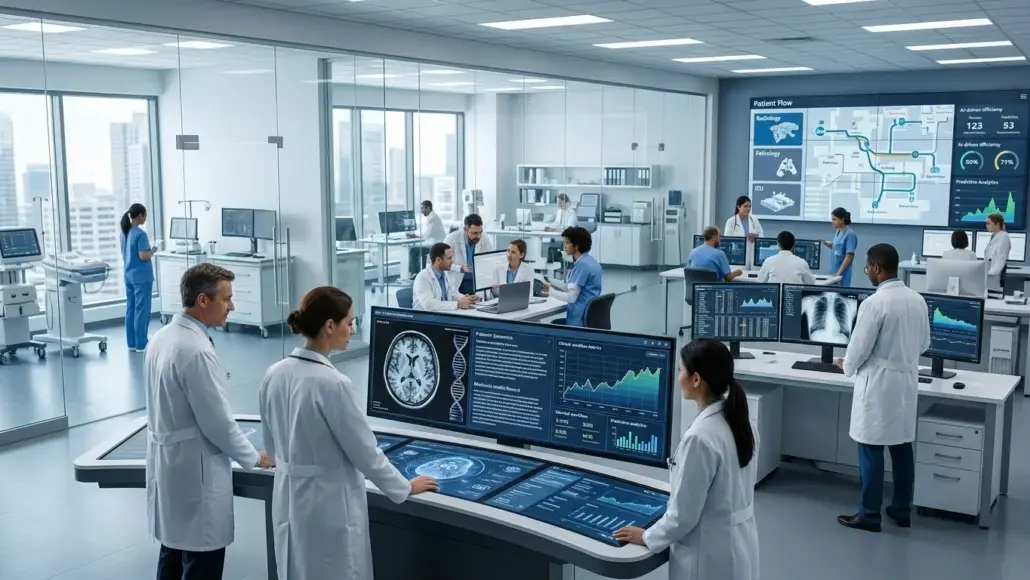
In the contemporary medical landscape, the primary challenge is no longer a lack of data, but the difficulty of integrating the massive volume of information generated by different clinical disciplines. Historically, a radiologist would look at a scan, a pathologist would review a slide, and a primary care doctor would read the EHR, often with very little shared context. The introduction of multimodal AI advancing next generation clinical workflows addresses this fragmentation by providing a single, unified “intelligence layer” that can process all of these inputs simultaneously. A multimodal AI model can analyze a chest X-ray while simultaneously considering the patient’s smoking history, current symptoms, and genetic predisposition to lung cancer. This holistic analysis provides a level of diagnostic certainty that is far greater than any single-modality approach, effectively mirroring the “complete picture” that the best human clinicians strive to build.
This synthesis is particularly transformative in the realm of clinical workflow automation. By automating the integration and summary of diverse data points, multimodal systems can provide clinicians with a pre-populated, high-fidelity view of the patient’s clinical status as soon as they open the chart. This reduces the time spent “searching for clues” across different systems and allows the provider to focus their energy on the complex interpretive and empathetic work that requires a human touch. This transition is not about replacing the clinician but about providing them with a more powerful and intuitive “digital partner” that can handle the heavy lifting of data integration. The result is a more fluid and efficient diagnostic process where the most critical insights are brought to the surface instantly. This level of operational excellence is a vital requirement for the modern hospital, ensuring that every minute of clinical time is used to its maximum potential.
Language Processing and Image Analysis in Harmony
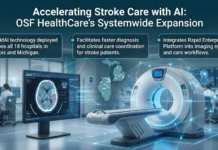
The true power of multimodal AI lies in the synergy between computer vision and natural language processing (NLP). Modern multimodal systems can “read” a clinical note and “understand” the visual features of an MRI scan in the same way a human expert does. For example, in the management of stroke patients, the AI can analyze the imaging data to identify a blockage while simultaneously reviewing the patient’s medication history for contraindications to clot-busting drugs. This real-time, cross-modal reasoning is a cornerstone of multimodal AI advancing next generation clinical workflows, as it provides the “just-in-time” insights needed for high-stakes decision-making. By breaking down the barriers between “visual” and “textual” data, we are creating a more intelligent and responsive healthcare system that is better equipped to manage the complexity of modern medicine.
Furthermore, this synergy is driving medical AI innovation in the field of clinical documentation. Multimodal agents can now “listen” to a patient-doctor interaction and “view” the physical examination to autonomously draft a comprehensive and accurate clinical note. This reduces the administrative burden on clinicians, which is a leading cause of burnout and professional dissatisfaction. More importantly, these automated notes are often more detailed and accurate than those drafted manually, as they can pull in relevant data from imaging and lab results automatically. This ensures that the medical record is a high-quality, comprehensive document that supports better care coordination and research. By making the documentation process a byproduct of the clinical encounter, rather than a separate chore, we are returning the clinician’s focus to where it matters most: the person in front of them. The technology serves as a silent and efficient scribe, capturing the essence of the healing interaction.
Integrating Genomics and Molecular Insights
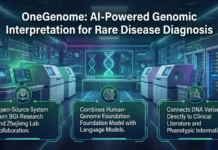
Beyond text and images, the next generation of multimodal AI is increasingly incorporating genomic and proteomic data into the clinical workflow. This move toward “pan-omics” integration is the ultimate goal of healthcare artificial intelligence, providing a truly holistic view of the individual’s biological and clinical state. For example, in precision oncology, a multimodal AI can analyze the tumor’s visual characteristics on a pathology slide, its molecular signature on a genomic sequence, and the patient’s clinical response to previous therapies. This allows for the identification of highly personalized treatment plans that are tailored to the specific drivers of the individual’s cancer. Multimodal AI advancing next generation clinical workflows is therefore a vital engine for the move toward “molecularly-guided” medicine, where every therapeutic decision is backed by a deep, multi-dimensional understanding of the disease.
This level of integration also has profound implications for clinical research and drug discovery. By analyzing the complex relationship between visual, clinical, and molecular data across millions of patients, multimodal systems can identify new “signatures” of health and disease that were previously invisible. This collective intelligence is accelerating the pace of medical progress, leading to the discovery of new therapeutic targets and the development of more effective diagnostic criteria. Multimodal AI is thus not just a tool for care delivery; it is a powerful platform for scientific discovery, ensuring that the healthcare system is constantly learning and evolving. As these systems become more integrated with the global research infrastructure, the “lessons learned” in one clinic can benefit patients everywhere. We are building a “global clinical brain” that is more powerful than the sum of its parts, powered by the best that science and technology have to offer.
Operational Insights and Hospital Management
The impact of multimodal AI extends beyond the clinic into the realm of hospital operations and management. By analyzing the multimodal flow of patients, supplies, and information, these platforms can provide a high-level view of the institution’s performance and identify opportunities for optimization. For example, a multimodal system could analyze surgical scheduling data, equipment sterilization cycles, and current staffing levels to suggest the most efficient use of the operating rooms for the coming day. This “intelligent orchestration” is a key driver of clinical workflow automation, ensuring that the logistical backend of the hospital is as sophisticated as the clinical frontline. By eliminating the “hidden” friction of hospital life, these systems allow for a more calm and focused environment for both staff and patients.
Furthermore, these platforms can be used to manage the safety and quality of the entire institution. By monitoring multimodal data from across the hospital including clinical outcomes, patient feedback, and operational metrics AI can identify the early warning signals of a systemic issue, such as a rise in hospital-acquired infections or a bottleneck in the emergency department. This proactive oversight allows for rapid intervention and continuous quality improvement, which is a hallmark of the modern healthcare IT trends. Multimodal AI advancing next generation clinical workflows is thus a vital tool for organizational resilience, ensuring that the hospital remains a safe and reliable sanctuary of healing in a complex world. The goal is to create a “transparent hospital,” where every data point is used to improve the care of the next patient. The technology provides the visibility and the intelligence needed to make this vision a reality.
Future Horizons: The Generative and Multimodal Era
Looking toward the future, the integration of generative AI with multimodal frameworks will lead to the rise of “clinical foundation models” intelligent systems that have been trained on almost all of medical knowledge and data. These models will be able to perform a wide range of tasks, from generating synthetic medical images for research to providing empathetic, multi-modal support for patients in their own homes. This level of hyper-intelligence is the ultimate expression of multimodal AI advancing next generation clinical workflows, moving the healthcare system from a collection of specialized tools toward a unified, sentient ecosystem. The future of medicine will be one where the AI “understands” the patient as a whole person, accounting for their biology, their story, and their personal goals. This is the ultimate promise of the digital age, ensuring that the best that science has to offer is delivered with a high level of humanity and care.
Furthermore, the rise of “explainable multimodal AI” will ensure that these systems are transparent and trustworthy. Future platforms will not only provide a diagnosis or a suggestion but will also be able to explain their reasoning by pointing to the specific features in the image, the clinical note, or the genomic sequence that led to that conclusion. This “collaborative reasoning” is essential for the successful integration of AI into the clinical environment, ensuring that the clinician remains the final arbiter of care. By prioritizing transparency and professional standards, we are building a healthcare system that is as ethical as it is intelligent. The future of clinical workflows is one of partnership, where the technology and the healer work in perfect harmony to achieve the best possible outcomes. This is the future of medicine, and it is a future we are building one multimodal insight at a time.
Conclusion: The Symphony of Data and Healing
The ongoing journey of multimodal AI advancing next generation clinical workflows is a testament to the power of integration and the pursuit of clinical excellence. We have moved from a time of fragmented, single-modality care to an era of high-tech digital synthesis. By prioritizing image analysis, language processing, and molecular insights into a unified framework, healthcare organizations are ensuring that their diagnostic and therapeutic processes are as sophisticated as the people they support. Multimodal AI is not just a technological trend; it is a fundamental redefinition of the clinical architecture, ensuring that the healing process is supported by a system that is as intuitive and responsive as the modern world.
Ultimately, the success of multimodal AI will be measured by its ability to improve the health of the population through better accuracy and more personalized care. When the system works perfectly, it provides a seamless and supportive environment where every piece of data is used to its maximum potential. This is the ultimate goal of all our technical and administrative efforts. By investing in the highest levels of integration and professional standards, we are safeguarding the future of healthcare, ensuring that the healing process is supported by the best that modern science and technology have to offer. This is the promise of multimodal AI, and it is a promise we are fulfilling every day, for every person. The next generation of workflows is here, and it is a future we are building together, one unified data point at a time.