







The Rise of Autonomy in Clinical Operations
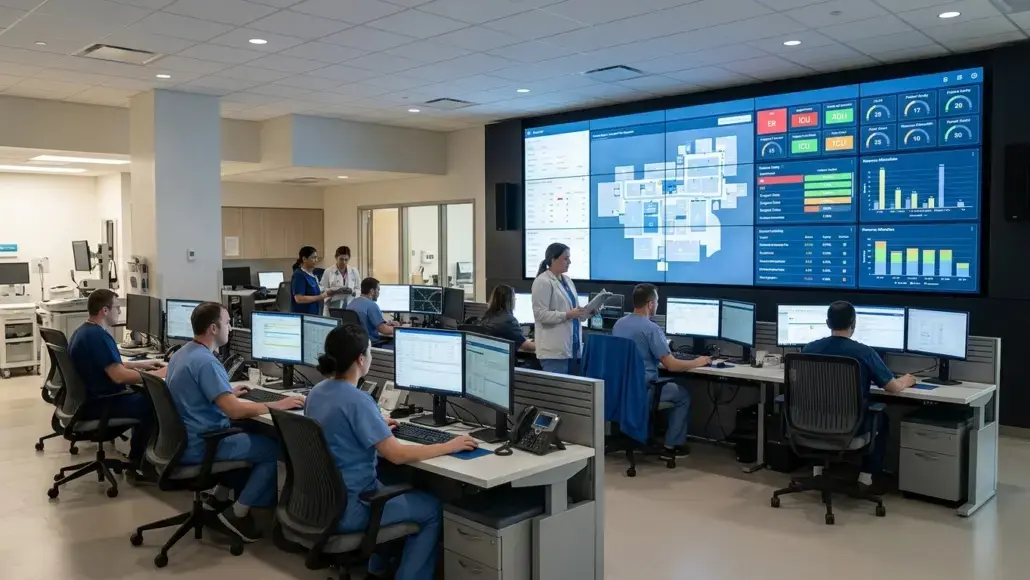
In the contemporary healthcare landscape, the volume of data generated by electronic health records, imaging systems, and patient monitors has far exceeded the capacity of any human team to process in real-time. This data saturation often leads to cognitive overload and delayed decision-making, which can have direct consequences for patient outcomes. The introduction of agentic AI platforms transforming hospital decision making addresses this challenge by providing a layer of intelligent agency that can operate across these data silos. Unlike simple automation, which follows rigid “if-then” rules, agentic AI uses sophisticated reasoning models to understand context, set goals, and determine the most efficient path to achieve them. This means that instead of a nurse manually checking for available beds and coordinating with the transport team, an AI agent can identify a discharge, verify the patient’s readiness, and autonomously schedule the cleaning and transport processes, all while keeping the relevant clinicians informed.
This level of autonomy is particularly valuable in the management of complex clinical workflows. For example, in the emergency department, where patient acuity and volume can shift in an instant, agentic systems can act as “operational air traffic controllers.” They can analyze incoming ambulance data, current waiting room status, and hospital bed availability to suggest or even execute real-time triaging decisions. By taking over these high-frequency, high-complexity logistical tasks, the technology allows the human clinical team to remain focused on the direct, hands-on care of the patient. The result is a more fluid and responsive environment where the “hidden” friction of hospital operations is minimized. This transition toward autonomous healthcare systems is not about replacing human judgment but about providing the infrastructure that allows that judgment to be applied more effectively and efficiently.
Workflow Orchestration and System-Wide Integration
The true power of agentic AI platforms transforming hospital decision making lies in their ability to interact with existing healthcare IT infrastructure. Historically, hospital systems have been notorious for their lack of interoperability, with clinical, financial, and logistical data often locked in separate repositories. Agentic platforms serve as a connective tissue, using advanced language processing and API integration to “read” and “write” across these systems. This allows for the creation of truly end-to-end automated workflows that span the entire patient journey. For instance, when a lab result indicates a critical finding, the agent doesn’t just send a notification; it can autonomously check the patient’s current medication list for contraindications, suggest a revised treatment plan based on the latest clinical guidelines, and draft a summary for the attending physician’s review. This level of orchestration ensures that no critical piece of information is lost in the gaps between departments.
Moreover, these platforms are becoming increasingly adept at managing the “back-office” functions that are essential for hospital sustainability. In the realm of revenue cycle management, AI agents can autonomously review clinical documentation to ensure accuracy and compliance before a claim is submitted. If a discrepancy is found, the agent can reach out to the relevant clinician for clarification or even correct simple errors based on the data in the EHR. This reduces the administrative burden on clinical staff and minimizes the risk of claim denials, which is a significant factor in the financial health of the institution. By automating these complex, multi-step processes, healthcare automation is proving that efficiency and quality are two sides of the same coin. The ability of agentic AI to handle both clinical and administrative tasks with equal precision is a testament to its transformative potential.
Intelligent Decision Support and Predictive Staffing
One of the most pressing challenges facing hospital leaders today is the management of the healthcare workforce. Staffing shortages and burnout have reached crisis levels, requiring a more sophisticated approach to resource allocation. Agentic AI platforms transforming hospital decision making are providing a new way to manage these human resources through predictive and autonomous staffing models. By analyzing historical patient volume, current acuity levels, and even local event data, these platforms can forecast staffing needs days or even weeks in advance. More importantly, they can then act on these insights by autonomously reaching out to per diem staff or suggesting shift adjustments to ensure that every unit is properly supported. This proactive management reduces the stress on the clinical team and ensures that the hospital can maintain its standard of care even during peak periods.
Beyond logistical staffing, agentic AI is also providing deeper clinical decision support. These platforms can act as “digital residents,” continuously monitoring a patient’s vital signs and lab results to identify the early warning signals of deterioration. When a risk is identified, the agent can autonomously trigger a rapid response protocol or call up a summary of the patient’s history for the attending physician. This “always-on” monitoring is a vital layer of safety in the modern hospital, where the sheer volume of patients can make it difficult for even the most vigilant human team to catch every subtle change. By providing real-time, actionable insights, AI decision support is helping to bridge the gap between data collection and clinical intervention, ensuring that every patient receives the attention they need at exactly the right moment.
The Human-in-the-Loop: Ethics and Accountability
As hospitals move toward a more autonomous model of operation, the question of ethics and accountability becomes paramount. The goal of agentic AI platforms transforming hospital decision making is not to create “unsupervised” systems, but to build tools that work in a transparent and collaborative partnership with human clinicians. This “human-in-the-loop” approach ensures that while the AI can handle the logistical and data-intensive aspects of care, the final responsibility for clinical outcomes remains with the human expert. It is essential that these platforms are designed with clear “guardrails” and transparency mechanisms, allowing clinicians to understand the reasoning behind every autonomous action or suggestion. This transparency is the foundation of trust, which is necessary for the successful integration of any new technology into the clinical environment.
Furthermore, addressing bias in AI algorithms is a critical concern that must be managed through continuous monitoring and diverse training datasets. If an AI agent is used to assist in triaging or resource allocation, it is vital that the system operates fairly across all patient populations. This requires a commitment from both technology developers and hospital leaders to implement rigorous auditing and bias-detection protocols. By prioritizing ethical design alongside technical performance, the medical community can ensure that the transition to agentic AI is one that improves equity and safety for everyone. The promise of autonomy must be balanced with the requirement for professional and moral integrity, ensuring that the technology serves as a force for good in the lives of both patients and the people who care for them.
Future Horizons: The Hospital as a Living Autonomous Entity
Looking toward the future, the integration of agentic AI will likely lead to the concept of the “living hospital” an environment where every sensor, device, and software system is part of a unified, autonomous nervous system. In this future, the hospital will be able to sense its own internal and external state and adjust its operations accordingly. For example, during a mass casualty event or a public health crisis, the hospital’s AI platform could autonomously clear elective surgeries, ramp up supply chain orders, and reconfigure clinical spaces to meet the sudden surge in demand. This level of organizational resilience is the ultimate expression of agentic AI platforms transforming hospital decision making, moving the institution from a collection of departments toward a single, cohesive, and intelligent entity.
Moreover, the data captured by these autonomous agents will provide an unprecedented look at the “hidden” patterns of hospital life. By analyzing millions of autonomous interactions and decisions, researchers will be able to identify the most effective clinical pathways and operational models with a level of precision that was previously impossible. This will lead to a new era of evidence-based hospital management, where every decision is backed by the collective intelligence of the entire system. As these platforms continue to evolve, they will become more intuitive and better at anticipating the needs of the clinicians they support. The future of hospital decision-making is not just about smarter data; it is about smarter action. By embracing the power of agency, we are building a healthcare system that is more responsive, more resilient, and more dedicated to the pursuit of health than ever before.
Conclusion: Navigating the Autonomous Frontier
The ongoing journey of agentic AI platforms transforming hospital decision making is a testament to the power of human ingenuity and the pursuit of operational and clinical excellence. We have moved from a time of manual coordination to an era of high-tech autonomy. By prioritizing agency, orchestration, and ethical integration, healthcare organizations are ensuring that their decision-making processes are as sophisticated as the medical science they support. The AI agent is no longer just a tool; it is a vital member of the team, providing the logistical and analytical support that allows the human healers to do what they do best. This partnership is saving lives, reducing burnout, and ensuring that the healthcare systems of the future are prepared for any challenge.
Ultimately, the success of agentic AI will be measured by its ability to fade into the background, providing a seamless and supportive environment where the right decisions are made every time. This is the ultimate goal of all our technical and administrative efforts. By investing in the highest levels of autonomy and professional standards, we are safeguarding the future of healthcare, ensuring that the healing process is supported by the best that modern science and technology have to offer. This is the promise of agentic AI, and it is a promise we are fulfilling every day, for every patient and every provider. The autonomous frontier is here, and it is a future we are building together, one intelligent decision at a time.