














Close
Digital Health & Ai Innovation summit 2026
LiGHT26

CMS TAVR Coverage Update Benefits Edwards, Medtronic, Abbott

Note* - All images used are for editorial and illustrative purposes only and may not originate from the original news provider or associated company.

Subscribe

- Never miss a story with notifications

- Gain full access to our premium content

- Browse free from any location or device.

Media Packs

Expand Your Reach With Our Customized Solutions Empowering Your Campaigns To Maximize Your Reach & Drive Real Results!

โ€“ Access the Media PackNow

โ€“ Book a Conference Call

โ€“ Leave Message for Us to Get Back

Related stories

Saint Peterโ€™s Healthcare System Advances Patient...

Saint Peter's Healthcare System in New Brunswick, NJ, has...

CMS Outlines Stricter Anti-Fraud Measures in...

The Centers for Medicare and Medicaid Services (CMS) unveiled...

Sterilization Technologies Improving Medical Device Safety

Advanced sterilization methodologies and rigorous validation protocols ensure patient safety by effectively eliminating microbial contaminants from complex medical instrumentation and single-use devices.

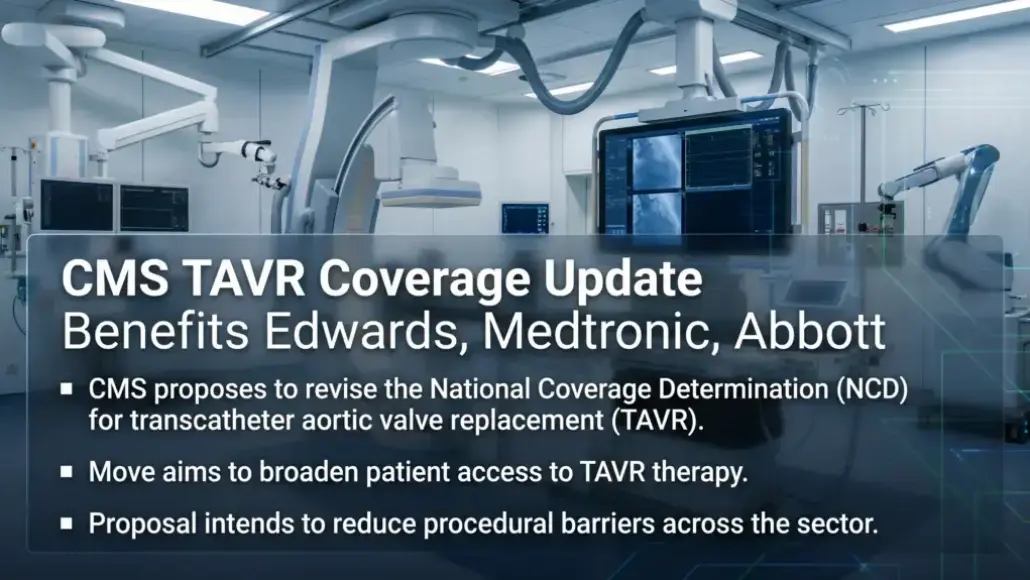
The U.S. Centers for Medicare and Medicaid Services (CMS) has put forward a proposal to revise its National Coverage Determination (NCD) for transcatheter aortic valve replacement (TAVR) therapy, a move that could broaden patient access and reduce procedural barriers across the sector. The agency began its review in December 2025 after accepting a request from Edwards Lifesciences, a leading player in the market, seeking an update to the existing coverage framework.

Under the proposal, which is scheduled for completion on Sept. 13, 2026, CMS would extend coverage to asymptomatic procedures while removing the coverage with evidence (CED) requirement currently applied to symptomatic TAVR procedures. The proposal also eliminates hospital volume requirements and removes specific operator criteria for newly established TAVR programs. The changes represent a significant update to the reimbursement landscape and are expected to simplify access to treatment for both providers and patients. The TAVR Coverage proposal maintains a CED requirement for asymptomatic procedures, a measure that BTIG analysts Marie Thibault, Alexandra Pang and Sam Eiber said was largely anticipated. They also noted that the volume thresholds required for TAVR programs remain attainable and should not create meaningful operational burdens.

According to the analysts, the proposed revisions are favorable not only for Edwards but also for other companies active in the space, including Medtronic and Abbott. They added that the broader TAVR market could benefit as well, potentially extending to Boston Scientific, which recently indicated plans to re-enter the market through an investment in MiRus. Discussing the impact of the proposal, the analysts said: โ€œThese are all positive changes that we expect will remove barriers and can eventually lead to higher TAVR procedure volumes.โ€ They further stated: โ€œWe think this proposal is a good thing for TAVR volumes and if finalized, will serve as a tailwind for TAVR market leader [Edwards].โ€ If adopted, the TAVR Coverage changes could help support greater procedure volumes across the industry.

Never miss a healthcare headline

Healthcare moves fast โ€“ stay on top of it with our must - read briefings.

  • The top hospital and healthcare stories, straight to your inbox
  • The biggest news, features, interviews, and analysis
  • Dedicated coverage of the key developments transforming global healthcare management
MEDICAL FAIR ASIA 2026
MEDICAL FAIR CHINA

Latest stories

Related stories

CMS Outlines Stricter Anti-Fraud Measures in 2027 Home Health Payment Proposal

The Centers for Medicare and Medicaid Services (CMS) unveiled...

Sterilization Technologies Improving Medical Device Safety

Advanced sterilization methodologies and rigorous validation protocols ensure patient safety by effectively eliminating microbial contaminants from complex medical instrumentation and single-use devices.

Cold Chain Systems Protecting Medical Product Quality

Maintaining the integrity of temperature-sensitive pharmaceuticals requires a robust cold chain infrastructure, combining advanced monitoring, specialized logistics, and strict regulatory adherence to ensure patient safety.

Subscribe

- Never miss a story with notifications

- Gain full access to our premium content

- Browse free from any location or device.

Media Packs

Expand Your Reach With Our Customized Solutions Empowering Your Campaigns To Maximize Your Reach & Drive Real Results!

โ€“ Access the Media Pack Now

โ€“ Book a Conference Call

โ€“ Leave Message for Us to Get Back

Translate ยป