














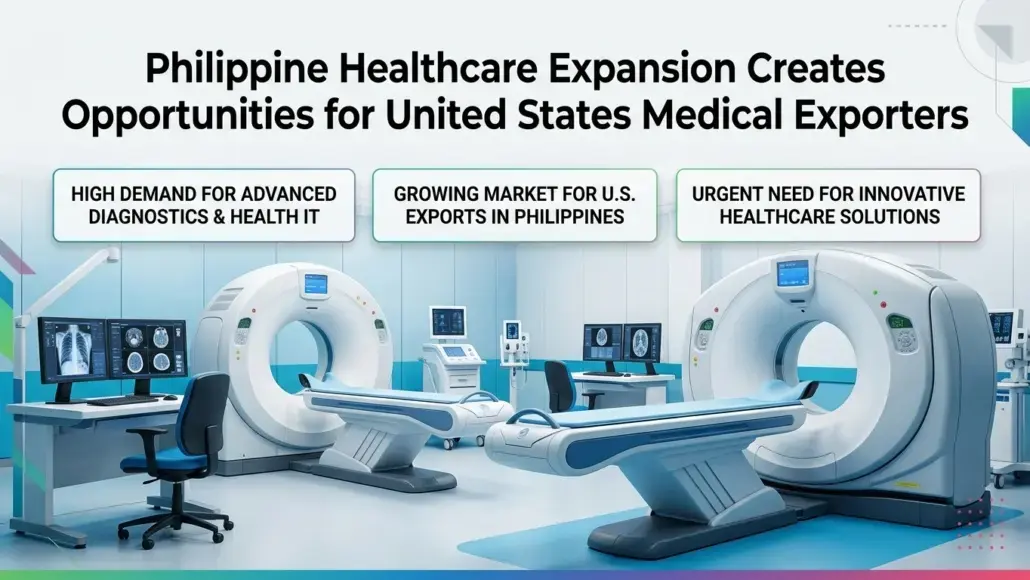
The Philippine healthcare market is emerging as a primary export destination for American companies, fueled by a rising need for health information technology and advanced diagnostics. According to a report by the United States Commercial Service, the trade promotion arm of the International Trade Administration, the sector is experiencing significant growth due to substantial private sector investment. This environment is generating a strong demand for high-value equipment and innovative solutions as the nation modernizes its medical infrastructure. The United States Commercial Service estimates that approximately 99 percent of medical devices in the country are imported. While the United States holds a 12.3 percent market share, American exporters are well-positioned to expand their presence by providing innovative solutions to facilities seeking to upgrade their specialized services.
Digital Transformation and Infrastructure Development
Beyond hardware, the Philippine healthcare market offers substantial potential in the field of health IT, particularly regarding electronic medical records. While urban private hospitals have largely adopted digital systems, many facilities in rural regions still rely on manual documentation. The United States Commercial Service notes that while internet connectivity remains a challenge for rural regions, it presents an opportunity for US providers. “While internet connectivity remains a challenge for provinces and rural regions, this presents an opportunity for US service providers to develop EMR systems that can be transmitted easily, are scalable, and can be integrated into current systems,” it said. Expansion is also viable through the public-private partnership model. “Numerous healthcare projects under the PPP center exist, ranging from the design, construction, and operation of urban hospitals to hemodialysis centers, as well as the procurement of capital equipment and hospital expansions,” it added.
Strategic Market Entry and Competitive Positioning
To ensure sustainable growth, the United States Commercial Service suggests that American firms should appoint a local distributor to manage regulatory permits and after-sales support. A local distributor can also handle in-country marketing and sales to navigate the specific needs of the local sector. Given the high out-of-pocket costs in the country, competitive pricing remains a critical factor for any firm viewing the country as an export destination. Major industry players such as Baxter, Johnson & Johnson, Medtronic, GE Healthcare, and Varian are already established in the region. By focusing on advanced diagnostics and high-value equipment, US companies can effectively support the modernization of the local sector. Engaging in a public-private partnership can further solidify a company’s standing in the market. Ultimately, the success of American firms will depend on their ability to provide scalable technology that meets the specific needs of both urban and rural regions.