
















Close
Digital Health & Ai Innovation summit 2026
Medica Compamed 2026

University of Nottingham team develops new probe for disease diagnostics

Note* - All images used are for editorial and illustrative purposes only and may not originate from the original news provider or associated company.

Related stories

Norton Healthcare Launches $30 Million High-Tech...

Norton Healthcare has officially opened a new $30 million...

OSF HealthCare Expands RapidAI Platform Across...

OSF HealthCare is expanding its deployment of advanced stroke...

Innovaccer and Mastek Form Strategic Healthcare...

Innovaccer and Mastek have announced a strategic healthcare AI...

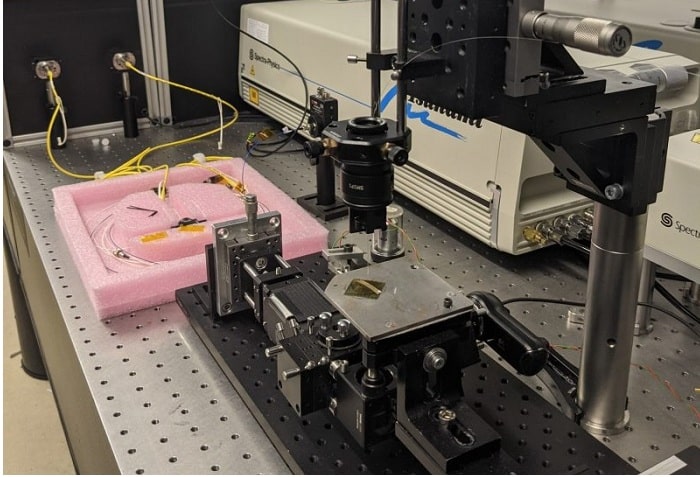
Researchers at the University of Nottingham in the UK have created an ultrasonic imaging system, which can be inserted into the human body for three-dimensional visualisation of cell abnormalities.

Presently in prototype stage, the non-invasive imaging tool called ‘phonon probe’ will be positioned on the tip of a hair-thin optical fibre.

It could be inserted into a standard optical endoscope, a thin tube with a light and camera at the end. This can be steered into the body to detect, assess and operate on cancerous lesions, as well as several other diseases.

Delivering microscopic and nanoscopic resolution images, the technology can potentially aid doctors in assessing cells in hard-to-reach body parts, such as the gastrointestinal tract. It is also expected to provide better diagnoses for various diseases, including gastric cancer and bacterial meningitis.

Scientists noted that merging optical and phonon technologies could accelerate the clinical workflow process and cut down invasive test procedures for patients.

Funded by the Engineering and Physical Sciences Research Council, the phonon probe is a compact system with a performance level that is currently achievable only in research labs with large scientific instruments, the researchers said.

The probe can be deployed in clinical settings to enhance patient care and can lower the requirement of standard fluorescent labels.

Fluorescent labels, which are chemicals used for analysing cell biology under a microscope, can harm human cells in high doses.

University of Nottingham Engineering faculty Dr Salvatore La Cavera III said: “We believe the system’s ability to measure the stiffness of a specimen, its bio-compatibility, and its endoscopic potential, all while accessing the nanoscale, are what set it apart.

“These features set the technology up for future measurements inside the body; towards the ultimate goal of minimally invasive point-of-care diagnostics.”

The team now plans to work with the Nottingham Digestive Diseases Centre and the Institute of Biophysics, Imaging and Optical Science to design various biological cell and tissue imaging applications for the development of a viable clinical tool.

Never miss a healthcare headline

Healthcare moves fast – stay on top of it with our must - read briefings.

  • The top hospital and healthcare stories, straight to your inbox
  • The biggest news, features, interviews, and analysis
  • Dedicated coverage of the key developments transforming global healthcare management

Subscribe

- Never miss a story with notifications

- Gain full access to our premium content

- Browse free from any location or device.

Media Packs

Expand Your Reach With Our Customized Solutions Empowering Your Campaigns To Maximize Your Reach & Drive Real Results!

– Access the Media PackNow

– Book a Conference Call

Leave Message for Us to Get Back

MEDICAL FAIR ASIA 2026
MEDICAL FAIR CHINA

Latest stories

Related stories

Norton Healthcare Launches $30 Million High-Tech Automated Pharmacy Hub

Norton Healthcare has officially opened a new $30 million...

OSF HealthCare Expands RapidAI Platform Across 18 Hospitals to Speed Stroke Care

OSF HealthCare is expanding its deployment of advanced stroke...

Innovaccer and Mastek Form Strategic Healthcare AI Partnership

Innovaccer and Mastek have announced a strategic healthcare AI...

Chinese Researchers Develop OneGenome Genomic AI System for Rare Disease Diagnosis

Chinese researchers have introduced an open-source genomic AI system...

Subscribe

- Never miss a story with notifications

- Gain full access to our premium content

- Browse free from any location or device.

Media Packs

Expand Your Reach With Our Customized Solutions Empowering Your Campaigns To Maximize Your Reach & Drive Real Results!

– Access the Media Pack Now

– Book a Conference Call

Leave Message for Us to Get Back

Translate »