












The Impact of AI in Healthcare Industry
AI Technology has become one of the game-changing technologies in different human activities, but it is the most transformative in the domain of healthcare. Combining the power of advanced algorithms, machine learning, and data analytics, AI in Healthcare Industry is reshaping how healthcare providers deliver patient care, conduct diagnoses, improve efficiencies, and create new treatments. The global healthcare AI market is expected to be worth $188 billion by 2030, and that’s why AI has become a critical component of modern healthcare in this evolving world. This revolutionary technology closes gaps, eliminates inefficiencies and opens up new opportunities for patient care.
How AI is Transforming Healthcare Delivery
The greatest advantage that AI in healthcare industry has is its capability to process immense amounts of medical data quickly and accurately. Analyzing patient records, diagnostic scans, and medical histories using traditional manual approaches is time-consuming and prone to human error. Enter AI, which can comb through terabytes of data in seconds, recognizing patterns and insights that might evade all but the most experienced clinicians or health care providers.
Consider, for example, AI-enhanced diagnostic tools. Similarly, AI-enabled algorithms in settings such as radiology and oncology have achieved tremendous successes identifying diseases, including cancer at earlier, more treatable stages. Deep-learning models, which can interpret imaging data with extraordinary accuracy, are now being deployed to find anomalies in X-rays, MRIs, and CT scans. In a comparative study, more than 95% accuracy rates were noted with AI tools, significantly better than traditional diagnostic methods. Such high levels of sophistication have compelled hospitals to implement AI-powered diagnostic tools with great frequency, thus shrinking error margins in life-or-death scenarios.
AI and Personalized Medicine
AI in healthcare industry brings personalized medicine, a concept once thought of as science fiction, into the realm of the possible. The technology allows healthcare providers to create personalized treatment plans that take into account factors like a person’s genetic profile, medical history and real-time physiological data. The technology uses machine learning to comb through massive datasets of genomics data to predict how an individual patient might respond to certain treatments or forms of medication, thereby reducing the trial-and-error process of prescribing.
Another use case included in the report states that AI platforms such as IBM Watson for Oncology recommend treatment protocols based on evidence-based medicine by using patient-specific data. Just as AI in healthcare industry is revolutionizing pharmacogenomics – the study of how particular genetic variations affect responses to drugs. Thus, precision medicine is going from the edges to the mainstream of health care, providing therapies that are incredibly effective and also least invasive.
Streamlining Hospital Operations
AI aspires to improve the operational efficiency of healthcare facilities significantly. AI is being introduced in hospitals across the world to streamline workflows, improve resource management, and increase patient satisfaction. Exiting AI Tools Predict Hospital Admission Rates, Helping Administrators Allocate Beds, Staff and Equipment More Efficiently An example of this would be the Mater Hospital in Dublin, which has integrated AI-based models that enhance patient flow and reduce wait times during peak hours.
Moreover, AI-based chatbots and virtual assistants are increasingly crucial in automating administrative responsibilities. From scheduling patient appointments to verifying insurance claims, these tools automate repetitive tasks, enabling healthcare providers to focus on on direct patient engagement. Hospitals that have adopted AI Especially in Operational Tools, have reported 30% decrease in administrative workload leading to better service delivery and customer satisfaction.
Revolutionizing Drug Discovery
One of the most exciting applications of AI in healthcare industry may come in the form of drug discovery. It used to take a decade and billions of dollars to bring a drug to market. But AI is significantly shortening this lengthy timeline. AI systems can analyze molecular structures and biological pathways to pinpoint viable drug candidates with unprecedented speed and cost efficiency.
A prime example of an AI to drug candidate applied even to a world where drugs already exist is Atomwise, an AI driven system that upon analyzing existing drug databases of known drugs, found two drugs that might be effective against Ebola virus. It would have taken years of research to accomplish what AI did in one single day. Likewise, AI is allowing for the implementation of virtual clinical trials and predictive modeling, allowing pharmaceutical companies to test how drugs will interact with human biology — before they are used on real patients.
Telemedicine and Virtual Health
The COVID-19 pandemic accelerated the adoption of telemedicine, a trend exacerbated by developments in AI. AI-driven virtual health assistants have emerged as a vital component of remote patient care, providing services like symptom checking, medication reminders, and health monitoring. A fledgling in this field, Babylon Health, is among the platforms that use AI in healthcare industry to provide patients with credible medical advice instantly based on what the symptom is and their medical history.
In addition, AI in healthcare industry is also improving video consultations by allowing for on-the-spot transcription and summarization of doctor-patient interactions. Innovative use of natural language processing enables AI to automatically convert speech data into structured documentation, saving time for healthcare professionals. As we head into a future where virtual healthcare is on the rise, AKAI will remain a constant force in maintaining accessibility and efficiency.
Challenges and Ethical Considerations
While AI in healthcare industry holds immense potential, the integration of AI health emerges with its own set of challenges. Among the many pressing concerns are data privacy and security issues. Not only does this mean AI systems need tons of patient data to function, but the fact is these systems are vulnerable to both theft and abuse. Regulations such as the GDPR in Europe and HIPAA in the United States must be strictly followed to protect sensitive information.
Moreover, another issue is the ethical question behind AI-based decision making. And while AI may improve diagnostic precision, it cannot replace the human interaction that is critical to addressing patients’ emotional and psychological needs. Additionally, the opacity of AI algorithms can complicate accountability when something goes wrong or leads to negative results.
In response to these concerns, there is an ongoing global dialogue to create ethical frameworks for integrating AI into healthcare. Governments, healthcare providers, and technology companies are working together to establish transparency and accountability in the way AI is applied to medical practice. The FDA’s Digital Health Innovation Action Plan is one example of an initiative to regulate how AI technologies can be deployed safely and effectively in clinical settings.
Future Prospects of AI in Healthcare
There are endless possibilities how ai can reform the healthcare. New technologies, such as generative AI and natural language processing (NLP) are poised to further improve diagnostic capabilities and patient interactions. By using AI-powered wearables and IoT devices these will enable preventive care by collecting real-time indicators of vital signs and informing users of potential problems.
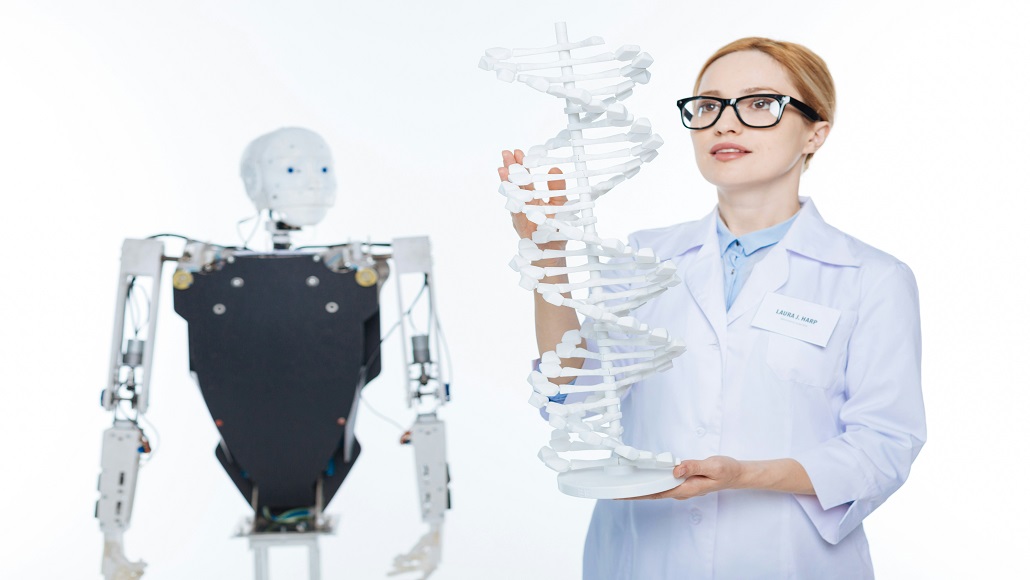
Furthermore, the fusion of AI and robotics is opening new doors for minimally invasive surgical techniques. AI-assisted robotic surgical systems are allowing surgeons to carry out procedures with unprecedented precision, faster recovery times, and better patient outcomes.
With its progression, AI has the ability to revolutionise health care. The tech is set to revolutionise healthcare — from improving patients experiences to speeding up medical discoveries.
Conclusion
AI in healthcare industry has a huge impact. AI is changing the delivery of medical services, the management of diseases, and how patients receive care with the use of data, algorithms, and automation. There is a disparity between AI’s benefits and drawbacks although several challenges involving ethics, privacy and industry application remain. As the technology keeps advancing, it will definitely be a bigger and bigger part of enhancing health care outcomes — making the industry more efficient, accessible and patient-centered than ever before.