











The modern clinical laboratory is the quiet engine of the healthcare system, providing the critical data that informs nearly 70% of all medical decisions. As the volume and complexity of diagnostic tests continue to grow, the traditional manual workflows of the past are no longer sufficient to meet the demands of modern medicine. The integration of advanced diagnostics and laboratory management systems is currently driving a total transformation of this sector, replacing labor-intensive tasks with high-speed automation and sophisticated digital tools. This evolution is not just about speed; it is about achieving a level of clinical accuracy and operational efficiency that was previously unimaginable, ensuring that patients receive the right diagnosis at the right time.
The Rise of Total Laboratory Automation (TLA)
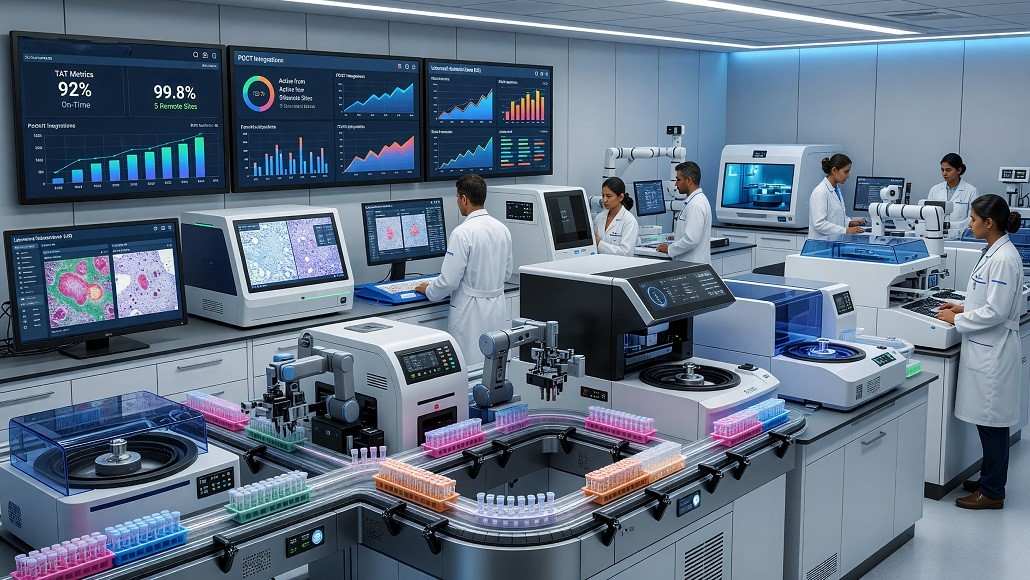
At the center of this transformation is the move toward Total Laboratory Automation (TLA). In a TLA environment, a single interconnected system handles everything from specimen sorting and centrifugation to the final analysis and archiving. This integration is a core component of modern advanced diagnostics and laboratory management, as it minimizes the need for human handling of potentially hazardous samples. By removing manual touchpoints, laboratories can drastically reduce the risk of pre-analytical errors the most common source of diagnostic mistakes. Furthermore, TLA allows for 24/7 operation, providing the rapid turnaround times that are essential for critical care environments like emergency departments and intensive care units.
Digital Pathology and the Shift from Glass to Screen
Pathology is undergoing its most significant change in a century with the shift from traditional glass slides to digital imaging. Digital pathology involves scanning tissue samples at high resolution, allowing pathologists to view and analyze them on a computer screen rather than through a microscope. This advancement in advanced diagnostics and laboratory management allows for easy collaboration between specialists in different locations and facilitates the use of computer-aided diagnostic tools. By utilizing digital slides, laboratories can also build vast archives of cases that can be used for research and the training of artificial intelligence models, further enhancing the diagnostic capabilities of the future.
The Impact of Molecular Diagnostics and Precision Medicine
The explosion of molecular diagnostics has added a new layer of complexity to the clinical laboratory. Tests for genetic markers, infectious diseases, and cancer biomarkers require highly specialized equipment and a high degree of technical expertise. Modern advanced diagnostics and laboratory management systems are designed to handle these complex workflows, integrating Next-Generation Sequencing (NGS) and Polymerase Chain Reaction (PCR) technologies into the daily routine. This capability is the cornerstone of precision medicine, allowing clinicians to tailor treatments to a patient’s unique genetic profile and monitor their response to therapy with unprecedented sensitivity.
Point-of-Care Testing (POCT) and Decentralized Diagnostics
While centralized laboratories handle the bulk of testing, there is a growing trend toward bringing diagnostics closer to the patient. Point-of-Care Testing (POCT) allows for immediate results in settings such as clinics, ambulances, or even a patient’s home. Advanced diagnostics and laboratory management now involve the coordination of hundreds of these small devices across a healthcare network. Ensuring that POCT results are accurate and are automatically uploaded to the patient’s central medical record is a major logistical challenge. However, the benefits in terms of faster treatment decisions and improved patient convenience make this a critical area of ongoing innovation.
Improving Lab Efficiency through Laboratory Information Systems (LIS)
The “nervous system” of any modern lab is the Laboratory Information System (LIS). This software platform manages the entire lifecycle of a test, from the initial order to the final reporting of results. Within the framework of advanced diagnostics and laboratory management, the LIS is essential for maintaining “sample chain of custody” and ensuring that every result is correctly matched to the right patient. Modern LIS platforms are increasingly cloud-based, allowing for greater scalability and easier integration with the hospital’s electronic health record (EHR). By streamlining the flow of information, these systems reduce the administrative burden on lab staff, allowing them to focus on the more technical aspects of diagnostic testing.
Data Analytics and the Optimization of Lab Workflows
The vast amounts of data generated by a modern laboratory provide an incredible opportunity for process optimization. Advanced diagnostics and laboratory management now utilize sophisticated data analytics tools to monitor performance metrics such as “turnaround time” and “test cost.” By identifying bottlenecks in the workflow, lab managers can make data-driven decisions about staffing levels, equipment upgrades, and inventory management. Furthermore, predictive analytics can be used to forecast future testing volumes, allowing the laboratory to prepare for seasonal surges in demand, such as during a flu outbreak or a public health emergency.
Maintaining Quality Standards and Regulatory Compliance
Quality assurance is the absolute foundation of clinical diagnostics. Laboratories must adhere to strict regulatory standards, such as the Clinical Laboratory Improvement Amendments (CLIA) in the United States or ISO 15189 internationally. Modern advanced diagnostics and laboratory management systems integrate quality control into every step of the process. For example, automated analyzers can perform “QC runs” at regular intervals and will automatically halt testing if any deviation is detected. This continuous monitoring ensures that the laboratory consistently produces accurate, reliable results that can be trusted by clinicians and patients alike.
The Role of AI in Diagnostic Interpretation
Artificial intelligence is becoming an invaluable partner to the laboratory professional. In fields like radiology and pathology, AI algorithms can pre-screen thousands of images, highlighting areas of concern for the human expert to review. This “augmented intelligence” approach is a key component of modern advanced diagnostics and laboratory management, as it helps to manage the increasing workload and reduces the risk of human fatigue. Beyond image analysis, AI can also be used to identify complex patterns in multi-parametric lab data, helping to uncover subtle signs of disease that might be missed by traditional analysis methods.
Future Challenges: The Lab Workforce and Cost Pressures
Despite the benefits of automation, the laboratory sector faces significant challenges, particularly regarding the shortage of qualified laboratory scientists. The role of the lab professional is changing from a manual technician to a data-savvy specialist who can manage and troubleshoot complex automated systems. Furthermore, laboratories are under constant pressure to reduce costs while maintaining high quality. Advanced diagnostics and laboratory management must therefore focus on maximizing the “value” of every test, ensuring that diagnostic resources are used appropriately and that the laboratory continues to provide a strong return on investment for the healthcare system.
Conclusion: The Future of the Connected Laboratory
The future of laboratory management lies in the total integration of diagnostic data across the entire care continuum. As laboratories become more connected, the data they produce will become even more valuable for population health management and the development of new therapies. By embracing advanced diagnostics and laboratory management, healthcare institutions can ensure that their laboratories remain at the cutting edge of science and continue to provide the essential data that saves lives every day. The journey from a manual, siloed lab to a fully automated, data-driven diagnostic hub is a complex one, but it is the only way to meet the challenges of 21st-century medicine.