













Close
Digital Health & Ai Innovation summit 2026
Medical Taiwan 2026

Europe Immunohematology Market Size to Exceed USD 442 Mn By 2024

Note* - All images used are for editorial and illustrative purposes only and may not originate from the original news provider or associated company.

Subscribe

- Never miss a story with notifications

- Gain full access to our premium content

- Browse free from any location or device.

Media Packs

Expand Your Reach With Our Customized Solutions Empowering Your Campaigns To Maximize Your Reach & Drive Real Results!

– Access the Media PackNow

– Book a Conference Call

Leave Message for Us to Get Back

Related stories

Healthcare Wearables Driving Preventive Care Strategies...

Healthcare wearables are profoundly reshaping the landscape of modern medicine, moving the focus from reactive treatment to proactive prevention. This article explores how these sophisticated devices, through real-time health tracking, advanced wellness monitoring, and early risk detection, empower individuals and medical professionals alike to implement smarter, more effective preventive care strategies, ultimately fostering a healthier, more informed populace.

Digital Health Technologies Enhancing Modern Care...

Digital health technologies are fundamentally reshaping how healthcare is delivered, moving beyond traditional models to offer more efficient, accessible, and patient-centered solutions. From the widespread adoption of telehealth platforms to the seamless integration of Electronic Health Records (EHR) and the proactive insights gained from remote patient monitoring, these innovations are not merely incremental improvements but represent a profound healthcare digital transformation. This article delves into how these advanced digital health technologies are enhancing care delivery, optimizing clinical workflows, and fostering a new era of proactive, personalized patient care, ultimately driving better outcomes for individuals and healthcare systems alike.

AI Powered Diagnostics Improving Clinical Accuracy...

AI powered diagnostics are revolutionizing healthcare by significantly enhancing clinical accuracy. Through advanced medical image analysis, early disease detection, and robust data-driven clinical decisions, these diagnostic AI tools are transforming patient outcomes and empowering clinicians with unprecedented precision. This article delves into how artificial intelligence is becoming an indispensable force in modern diagnostics, ensuring a future of more reliable and effective healthcare.

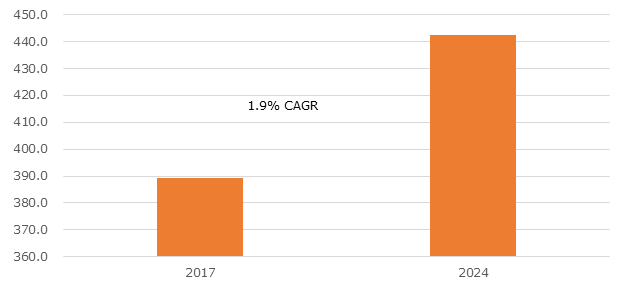
According to the Graphical Research new growth forecast report titled “Europe Immunohematology Market By Product (Analyzers, Reagents), By Technology (Biochips, Gel Cards, Microplates, PCR, Erythrocyte-magnetized Technology), By End-use (Hospitals, Diagnostic Laboratories, Blood Banks) Industry Analysis Report, Regional Outlook (Germany, UK, France, Spain, Italy, Russia, Poland, Czech Republic, Hungary, Switzerland, Denmark, Ireland, Netherlands, Bulgaria, Sweden, Austria), End-use Potential, Competitive Market Share & Forecast, 2018 – 2024”, exceed to exceed USD 442 million by 2024.

Rising prevalence of hematology disorders in European countries will foster industry growth. A stupendous rise in prevalence of hematological disorders including sickle-cell, leukemia and thalassemia is a major contributing factor driving demand for immunohematology analyzers. Thalassemia is an inherited blood disorder that results in an inadequate amount of hemoglobin production. The disorder results in destruction of large number of red blood cells causing anemia. Such patients need recurrent blood transfusions that proves beneficial for the industry growth.

Technological advancements in immunohematology analyzers is projected to drive the industry growth throughout the analysis period. Increasing focus of industry players on developing advanced immunohematology technologies will elevate the demand for immunohematology devices. For instance, several companies have launched a fully automated and high-throughput system for immunohematology. Advanced immunohematology systems can be used in

grouping, antibody screening, phenotyping, donor antibody screening, identification and cross-matching. Availability of such technologically advanced products will stimulate the industry growth. However, stringent regulatory scenario for immunohematology devices may hamper the business growth to some extent.Reagents segment held more than 65% revenue share in 2017 and will witness lucrative CAGR by 2024. This significant growth can be attributed to increasing number of haematological disorders that will surge the need for recurring blood testing. Additionally, diagnostic centres prefer reagents that provide results with high specificity.  Above mentioned factors will escalate the segmental growth.
Microplates segment was valued around USD 60 million in 2017 and is projected to show similar growth during the forecast period. Significant segmental growth can be attributed to advancements in microplates. Technologically upgraded microplates provide several advantages including cost-effectiveness, reusability, easy and rapid washings for antiglobulin tests. Furthermore, microplate testing is reliable with relatively small amount of reagents as compared to tube testing and thus, its adoption will increase in the coming years.

Blood banks segment accounted for substantial revenue in 2017 and will experience 1.7% growth over the analysis timeframe. Blood banks are gaining traction and have the potential to escalate sales of immunohematology devices as number of blood transfusions is increasing annually. Growing awareness regarding blood donation and increase in the number of voluntary donors will render significant impact on the business growth.

Few major industry players include Abbott, ANTISEL S.A., Beckman Coulter, Becton Dickinson, Bio-Rad Laboratories, Diagast, Grifols, Hologic, Immucor, Roche Diagnostics, Siemens Healthcare and Thermo Fisher Scientific. These key industry players adopt several strategic initiatives to enhance their revenue share. Approvals for new products will also prove beneficial for the industry growth. For instance, In October 2016, Immucor announced that its U.S. FDA approval for PreciseType HEA test to screen Sickle Cell Trait. The test provides clinicians and blood banks with the complete genetic matching information they need to reduce the risk of alloimmunization. The move will help to expand company’s existing product line.

MEDICAL FAIR ASIA 2026

Latest stories

Related stories

Healthcare Wearables Driving Preventive Care Strategies Today

Healthcare wearables are profoundly reshaping the landscape of modern medicine, moving the focus from reactive treatment to proactive prevention. This article explores how these sophisticated devices, through real-time health tracking, advanced wellness monitoring, and early risk detection, empower individuals and medical professionals alike to implement smarter, more effective preventive care strategies, ultimately fostering a healthier, more informed populace.

Digital Health Technologies Enhancing Modern Care Delivery

Digital health technologies are fundamentally reshaping how healthcare is delivered, moving beyond traditional models to offer more efficient, accessible, and patient-centered solutions. From the widespread adoption of telehealth platforms to the seamless integration of Electronic Health Records (EHR) and the proactive insights gained from remote patient monitoring, these innovations are not merely incremental improvements but represent a profound healthcare digital transformation. This article delves into how these advanced digital health technologies are enhancing care delivery, optimizing clinical workflows, and fostering a new era of proactive, personalized patient care, ultimately driving better outcomes for individuals and healthcare systems alike.

AI Powered Diagnostics Improving Clinical Accuracy in Healthcare

AI powered diagnostics are revolutionizing healthcare by significantly enhancing clinical accuracy. Through advanced medical image analysis, early disease detection, and robust data-driven clinical decisions, these diagnostic AI tools are transforming patient outcomes and empowering clinicians with unprecedented precision. This article delves into how artificial intelligence is becoming an indispensable force in modern diagnostics, ensuring a future of more reliable and effective healthcare.

Advanced Rehabilitation Technologies Supporting Faster Recovery

The landscape of rehabilitation is undergoing a profound transformation, driven by cutting-edge advancements. This article explores how advanced rehabilitation technologies are revolutionizing patient recovery, offering unprecedented precision, personalization, and engagement. From sophisticated robotic systems and immersive virtual reality environments to smart wearables and AI-driven insights, these innovations are significantly enhancing therapeutic outcomes, making recovery journeys more efficient, accessible, and motivating for individuals striving to regain function and independence.

Subscribe

- Never miss a story with notifications

- Gain full access to our premium content

- Browse free from any location or device.

Media Packs

Expand Your Reach With Our Customized Solutions Empowering Your Campaigns To Maximize Your Reach & Drive Real Results!

– Access the Media Pack Now

– Book a Conference Call

Leave Message for Us to Get Back

Translate »