











Close
Digital Health & Ai Innovation summit 2026
Medical Taiwan 2026

Non-Surgical Autopsy Technique Set to Revolutionize Post-Mortem Practice

Note* - All images used are for editorial and illustrative purposes only and may not originate from the original news provider or associated company.

Subscribe

- Never miss a story with notifications

- Gain full access to our premium content

- Browse free from any location or device.

Media Packs

Expand Your Reach With Our Customized Solutions Empowering Your Campaigns To Maximize Your Reach & Drive Real Results!

– Access the Media PackNow

– Book a Conference Call

Leave Message for Us to Get Back

Related stories

Healthcare Wearables Driving Preventive Care Strategies...

Healthcare wearables are profoundly reshaping the landscape of modern medicine, moving the focus from reactive treatment to proactive prevention. This article explores how these sophisticated devices, through real-time health tracking, advanced wellness monitoring, and early risk detection, empower individuals and medical professionals alike to implement smarter, more effective preventive care strategies, ultimately fostering a healthier, more informed populace.

Digital Health Technologies Enhancing Modern Care...

Digital health technologies are fundamentally reshaping how healthcare is delivered, moving beyond traditional models to offer more efficient, accessible, and patient-centered solutions. From the widespread adoption of telehealth platforms to the seamless integration of Electronic Health Records (EHR) and the proactive insights gained from remote patient monitoring, these innovations are not merely incremental improvements but represent a profound healthcare digital transformation. This article delves into how these advanced digital health technologies are enhancing care delivery, optimizing clinical workflows, and fostering a new era of proactive, personalized patient care, ultimately driving better outcomes for individuals and healthcare systems alike.

AI Powered Diagnostics Improving Clinical Accuracy...

AI powered diagnostics are revolutionizing healthcare by significantly enhancing clinical accuracy. Through advanced medical image analysis, early disease detection, and robust data-driven clinical decisions, these diagnostic AI tools are transforming patient outcomes and empowering clinicians with unprecedented precision. This article delves into how artificial intelligence is becoming an indispensable force in modern diagnostics, ensuring a future of more reliable and effective healthcare.

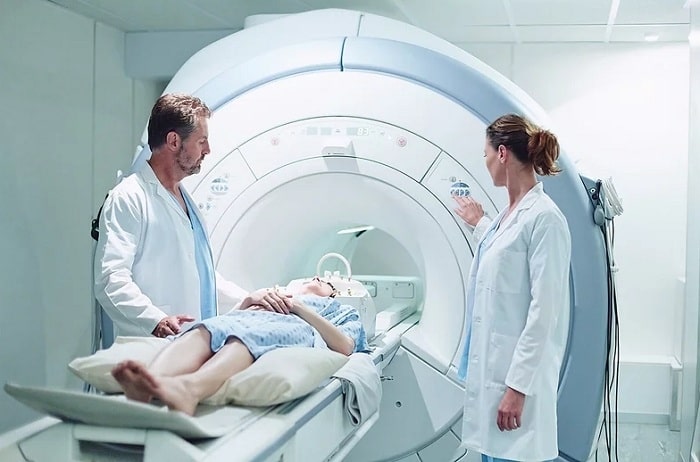
Hospital & Healthcare Management/ Healthcare Technology Advancements & Trends/ 04th March 2011 :- A new non-surgical post-mortem technique that has the potential to revolutionise the way autopsies are conducted around the world has been pioneered by forensic pathologists and radiologists at the University of Leicester in collaboration with the University Hospitals of Leicester NHS Trust.

The technique developed by a team in the East Midlands Forensic Pathology Unit, at the University of Leicester, has been published March 1 in International Journal of Legal Medicine. This paper presents the development of the methodology and protocol for this technique from independent research commissioned by the National Institute for Health Research (NIHR).

The study has taken another step towards a minimally invasive autopsy for natural and unnatural deaths, for either single cases or mass fatalities. It could also potentially allay qualms from certain faith groups that object to autopsies.

Professor Guy Rutty, Chief Forensic Pathologist to the East Midlands Forensic Pathology Unit, which is part of the Department of Cancer Studies and Molecular Medicine, University of Leicester, said the pilot study had demonstrated the potential of the technique to change the future of post-mortem procedures.

He said: “Autopsies are not popular with the general public and are viewed with great distaste. There are a number of faith groups who voice objections to the autopsy. The development of a minimally invasive autopsy technique would reduce the overall number of invasive autopsies performed in the UK but would still provide a service to the Coroner and determine the cause of a person’s death. Currently, without the use of angiography, cardiac related death cannot be reliably diagnosed using a post mortem CT (Computed Tomography) scan so we needed to develop a system that could do this.”

“In collaboration with the radiology team, lead by Professor Bruno Morgan, we have successfully developed a quick and simple technique of ‘minimally invasive targeted coronary angiography’ where we inject contrast into the body of a deceased person through a small incision in the neck and then perform a full body CT scan. Using this method we are able to determine the cause of death in up to 80% of cases (in the series analysed to date).

“Basically, the technique is used to highlight and examine the vessels of the heart in people who have died. The technique is inexpensive, easy to use and applicable to natural and unnatural death, both single and mass fatalities.”

Professor Rutty explained the technique was novel because it uses catheterisation, contrast and imaging techniques that have not been reported previously. “Developing a new catheterisation system and using two different types of contrast to highlight the coronary vessels (air and standard coronary radio-opaque contrast media) sets us apart from other research groups,” he said.

Professor Rutty added: “We were the first Unit in the world to our knowledge to propose targeted angiography as the way forward, and are now the first to describe the development, methodology and protocols involved for cadaver cardiac CT angiography. Other groups have done whole body angiography which is time consuming and expensive and is unlikely to be implemented in the UK for everyday autopsies.

“We are incredibly excited about the potential of this new research. This technique could see the beginning of a permanent change in autopsy practice in the UK, with fewer autopsies being performed. This technique could be used in other centres across the world.”

MEDICAL FAIR ASIA 2026

Latest stories

Related stories

Healthcare Wearables Driving Preventive Care Strategies Today

Healthcare wearables are profoundly reshaping the landscape of modern medicine, moving the focus from reactive treatment to proactive prevention. This article explores how these sophisticated devices, through real-time health tracking, advanced wellness monitoring, and early risk detection, empower individuals and medical professionals alike to implement smarter, more effective preventive care strategies, ultimately fostering a healthier, more informed populace.

Digital Health Technologies Enhancing Modern Care Delivery

Digital health technologies are fundamentally reshaping how healthcare is delivered, moving beyond traditional models to offer more efficient, accessible, and patient-centered solutions. From the widespread adoption of telehealth platforms to the seamless integration of Electronic Health Records (EHR) and the proactive insights gained from remote patient monitoring, these innovations are not merely incremental improvements but represent a profound healthcare digital transformation. This article delves into how these advanced digital health technologies are enhancing care delivery, optimizing clinical workflows, and fostering a new era of proactive, personalized patient care, ultimately driving better outcomes for individuals and healthcare systems alike.

AI Powered Diagnostics Improving Clinical Accuracy in Healthcare

AI powered diagnostics are revolutionizing healthcare by significantly enhancing clinical accuracy. Through advanced medical image analysis, early disease detection, and robust data-driven clinical decisions, these diagnostic AI tools are transforming patient outcomes and empowering clinicians with unprecedented precision. This article delves into how artificial intelligence is becoming an indispensable force in modern diagnostics, ensuring a future of more reliable and effective healthcare.

Advanced Rehabilitation Technologies Supporting Faster Recovery

The landscape of rehabilitation is undergoing a profound transformation, driven by cutting-edge advancements. This article explores how advanced rehabilitation technologies are revolutionizing patient recovery, offering unprecedented precision, personalization, and engagement. From sophisticated robotic systems and immersive virtual reality environments to smart wearables and AI-driven insights, these innovations are significantly enhancing therapeutic outcomes, making recovery journeys more efficient, accessible, and motivating for individuals striving to regain function and independence.

Subscribe

- Never miss a story with notifications

- Gain full access to our premium content

- Browse free from any location or device.

Media Packs

Expand Your Reach With Our Customized Solutions Empowering Your Campaigns To Maximize Your Reach & Drive Real Results!

– Access the Media Pack Now

– Book a Conference Call

Leave Message for Us to Get Back

Translate »