Close
Digital Health & Ai Innovation summit 2026
Medical Taiwan 2026

Intelivation Technologies Launches Advantage C PEEK Cervical Interbody Fusion Device

Intelivation Technologies Launches Advantage C PEEK Cervical Interbody Fusion Device

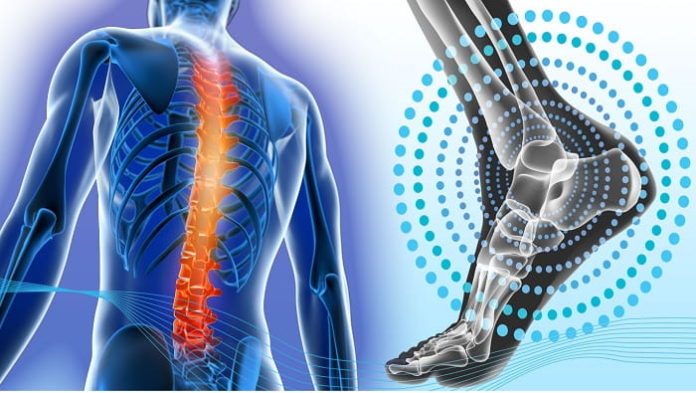
Intelivation Technologies, a medical device company with a growing product portfolio announced that they are officially launching the Advantage-C™ PEEK Interbody Fusion Device during the 36th Annual NASS Meeting in Boston September 29-October 2, 2021.

The Advantage-C™ device is designed to be used in skeletally mature patients in levels C2-T1 in conjunction with fixation for ACDF (anterior cervical discectomy and fusion) procedures. Advantage-C™ was developed to optimize fusion, while maintaining elasticity that is similar to bone and radiolucency of the cage body. President Amit Sinha stated, “We are looking forward to a successful launch of Advantage-C™ and the myriad of efficiencies this device will bring to both surgeons and hospital systems.

Advantage-C is the basis for our rapidly growing interbody platform that will see continued innovation and product releases over the next year.” CEO Rob Anderson added, “Our growing line of interbody devices further drives home our commitment to bring cost-effective spinal solutions that consistently provide superior clinical results to the market. On behalf of the executive team, I am very impressed how quickly our R&D team worked to bring this device to market.”

About Intelivation Technologies

Intelivation Technologies, dedicated to research and development, is focused on bringing game-changing products to market that make patients’ lives better.

First Procedure in Asia-Pacific Performed with Medtronic Hugo Robotic-Assisted Surgery System

First Procedure in Asia-Pacific Performed with Medtronic Hugo Robotic-Assisted Surgery System

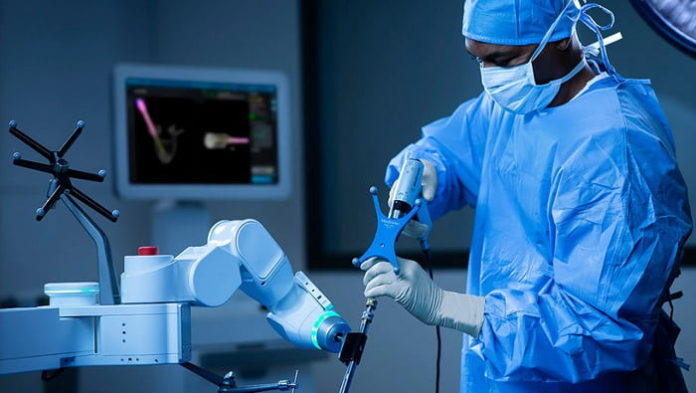
Medtronic plc and Apollo Hospitals Group announced the first clinical procedure in Asia-Pacific with the Hugo™ robotic-assisted surgery (RAS) system. The robotic prostatectomy was performed on September 17 by Dr. N Ragavan, consultant urologist, uro-oncologist and robotic surgeon, at Apollo Hospitals, Greams Road, Chennai, India.

“Here in India, nearly 70% of surgeries are performed as open procedures1 — we feel confident that the Hugo RAS system will enable us to change that statistic and bring the benefits of minimally invasive surgery to more patients than ever before,” said Dr. Ragavan. I am incredibly proud to launch this new era of possibility for our hospital and the patients we serve with the very first clinical procedure in the region with the Hugo RAS system.

As a form of minimally invasive surgery, robotic-assisted surgery offers the potential for fewer complications, shorter hospital stays, faster return to normal activities, and smaller scars.2–4,†

“Today we’re taking another exciting step forward to bring the benefits of minimally invasive surgery to more people in more places,” said Megan Rosengarten, president of the Surgical Robotics business, which is part of the Medical Surgical Portfolio at Medtronic. “That’s possible thanks to a shared vision with Apollo Hospitals, the many surgeons and hospital leaders who have partnered with us on this journey, and our dedicated Surgical Robotics team in India and around the globe.”

The Hugo RAS system — Medtronic’s solution to historic cost and utilization barriers that have kept surgical robotics out of reach for many hospitals — is a modular, multi-quadrant platform designed for a broad range of soft-tissue procedures. It combines wristed instruments, 3D visualization, and Touch Surgery™ Enterprise, a cloud-based surgical video capture and management solution, with dedicated support teams specializing in robotics program optimization, service, and training. Earlier this year, Medtronic announced that the first urologic and gynecologic procedures with the Hugo RAS system took place in Latin America. Those procedures marked the beginning of the Hugo RAS system patient registry, which is collecting clinical data from those systems as well as the system placed in India to support regulatory submissions around the world.

With the availability of the Hugo RAS system in India, we know the future of surgery is here,” said Madan Krishnan, vice president and managing director, India Medtronic Pvt Ltd. “Medtronic is creating robotic-assisted surgery solutions that are optimized for what clinicians need today and that can be upgraded as the technology evolves and usage expands in the years to come. We’re grateful for the opportunity to partner with Apollo Hospitals on this exciting milestone and are looking forward to collaborating in advancing access to the latest therapies for patients.”

As the region’s leading healthcare provider, we are dedicated to bringing the very latest in medical technology to our patients,” said Dr. Prathap C. Reddy, founder and chairman, Apollo Hospitals Group. The addition of the Hugo RAS system to our robotic surgery program — and our place in history as the first hospital in Asia-Pacific to use this new technology — reinforces that dedication and the pride we at Apollo Hospitals have as a premier destination for minimally invasive surgery. This technology will complement the excellent clinical expertise garnered by our physicians over the years and is designed to help us enhance patient care.”

“We’re committed to providing the most advanced and innovative care possible for our patients and are proud to partner with a company that shares our values and vision,” said Ms. Preetha Reddy, executive vice chairperson, Apollo Hospitals Group. “There is an urgent need to improve treatment options for surgeries by leveraging technology. Today, robotic technology has come a long way, helping perform some of the most complicated surgeries with precision, and Apollo has always been on the forefront in bringing the most advanced technology to India.”

The Medtronic Hugo RAS system is commercially available in certain geographies. Regulatory requirements of individual countries and regions will determine approval, clearance, or market availability. The Hugo RAS system is pending CE mark for the EU. In the US, the Hugo RAS system is an investigational device not for sale. Touch Surgery Enterprise is not intended to direct surgery, or aid in diagnosis or treatment of a disease or condition.

About Apollo Hospitals
Apollo Hospitals was established in 1983 by Dr. Prathap C Reddy, renowned as the architect of modern healthcare in India. As the nation’s first corporate hospital, Apollo Hospitals is acclaimed for pioneering the private healthcare revolution in the country. Apollo Hospitals has emerged as Asia’s foremost integrated healthcare services provider and has a robust presence across the healthcare ecosystem, including Hospitals, Pharmacies, Primary Care & Diagnostic Clinics and several retail health models. Since its inception, Apollo Hospitals has been honoured by the trust of over 150 million individuals who came from 140 countries. At the core of Apollo’s patient-centric culture is TLC (Tender Loving Care), the magic that inspires hope amongst its patients.

About Medtronic
Medtronic plc, headquartered in Dublin, Ireland, is among the world’s largest medical technology, services and solutions companies – alleviating pain, restoring health and extending life for millions of people around the world. Medtronic employs more than 90,000 people worldwide, serving physicians, hospitals and patients in more than 150 countries. The company is focused on collaborating with stakeholders around the world to take healthcare Further, Together.

GE Healthcare to Acquire BK Medical, Expanding Ultrasound Portfolio into Surgical Visualization

GE Healthcare to Acquire BK Medical, Expanding Ultrasound Portfolio into Surgical Visualization

GE has entered into an agreement to acquire BK Medical, a leader in advanced surgical visualization, from Altaris Capital Partners for a cash purchase price of $1.45 billion.

BK Medical is an innovator in global intraoperative imaging and surgical navigation, used to guide clinicians during minimally invasive and robotic surgeries and to visualize deep tissue during procedures in neuro and abdominal surgery, and in ultrasound urology. BK Medical is headquartered in Boston and Copenhagen with more than 650 employees and is delivering double-digit revenue growth.

GE Healthcare President and CEO Kieran Murphy said, “Ultrasound today forms an integral part of many care pathways, and BK Medical is a strategic and highly complementary addition to our growing and profitable Ultrasound business. This transaction helps GE Healthcare continue to expand beyond diagnostics into surgical and therapeutic interventions, simplifying decision-making for clinicians and equipping them with greater insights to deliver faster, more personalized care for their patients—representing another step toward delivering precision health.”

BK Medical President and CEO Brooks West said, “We are immensely proud of the organization and of the life-changing technology that we have built at BK Medical, and look forward to our future as part of the GE Healthcare family. Combining our expertise in intraoperative imaging and surgical navigation with GE Healthcare’s many strengths and global presence will accelerate our mission to change the standard of care in surgical interventions. Our mission to help surgeons make critical decisions using active imaging aligns well with GE Healthcare’s mission to help physicians make more informed decisions and improve patient outcomes, and we are eager to begin this new chapter.”

GE Healthcare Ultrasound President and CEO Roland Rott said, “Adding the fast-growing and relatively new field of real-time surgical visualization to GE’s pre- and post-operative Ultrasound capabilities will create an end-to-end offering through the full continuum of care—from diagnosis through therapy and beyond. GE Healthcare and BK Medical share a passion for clinical innovation, and I’m excited to welcome BK Medical to our team.”

This transaction is expected to create value by further strengthening BK Medical, including through significant synergies with the benefit of GE’s technology and commercial scale. This transaction enables BK Medical’s Active Imaging platform to reach new customers and new markets around the world, and the combination of GE Healthcare’s diagnostic imaging technology with BK’s ability to enable decision-making and surgical visualization in intervention will allow better decision-making throughout the care continuum. GE Healthcare expects BK Medical to deliver rapid revenue growth as well as margin expansion and free cash flow growth. GE Healthcare also expects high-single-digit return on invested capital by year five.

Evercore acted as exclusive financial advisor to GE on the transaction. Gibson, Dunn and Crutcher acted as legal advisor to GE. J.P. Morgan Securities LLC served as lead financial advisor, Morgan Stanley & Co. LLC served as financial advisor, and Latham Watkins LLP and Schiff Hardin LLP acted as legal advisor to BK Medical.

About GE
GE rises to the challenge of building a world that works. For more than 125 years, GE has invented the future of industry, and today the company’s dedicated team, leading technology, and global reach and capabilities help the world work more efficiently, reliably, and safely. GE’s people are diverse and dedicated, operating with the highest level of integrity and focus to fulfill GE’s mission and deliver for its customers.

About GE Healthcare:
GE Healthcare is the $17 billion* healthcare business of GE. As a leading global medical technology, pharmaceutical diagnostics and digital solutions innovator, GE Healthcare enables clinicians to make faster, more informed decisions through intelligent devices, data analytics, applications and services, supported by its Edison intelligence platform. With over 100 years of healthcare industry experience and around 47,000 employees globally, the company operates at the center of an ecosystem working toward precision health, digitizing healthcare, helping drive productivity and improve outcomes for patients, providers, health systems and researchers around the world.

Brainomix partners with Wallaby Medical to bring the most comprehensive AI stroke imaging solution to China

Brainomix partners with Wallaby Medical to bring the most comprehensive AI stroke imaging solution to China

Brainomix, a UK-headquartered company that specializes in the creation of AI-powered imaging biomarkers and software solutions that enable precision medicine for better treatment decisions, and Wallaby Medical, a rapidly growing medical device company focused on developing and commercializing medical device products for treating stroke, announced the signing of a new distribution agreement. As part of the agreement, Wallaby will distribute Brainomix’s e-Stroke software to stroke centres across Greater China.

Stroke accounts for over 1.79 million deaths[1] annually in China and is one of the leading causes of adult disability. Wallaby’s mission is to become the medical technology company which saves the greatest number of lives of people affected by stroke, and Brainomix’s leading-edge AI diagnostic tool is an important addition to the full range of products and solutions that Wallaby provides to physicians treating stroke. “We are dedicated to improving stroke patient care and understand the importance of speed and precision. With this partnership, Wallaby will bring the most comprehensive AI stroke imaging software solutions to support fast and accurate treatment decisions in Chinese hospitals. We are excited to enable our physician community to deliver the best possible outcome for their patients,” said Michael Alper, CEO, Wallaby Medical.

Brainomix’s e-Stroke is an AI-powered software platform that supports physicians across a stroke network by providing real-time interpretation of brain scans to help guide treatment and transfer decisions for stroke patients, allowing more patients to get the right treatment, in the right place, at the right time. Consisting of three modules – e-ASPECTS, e-CTA and e-CTP – the e-Stroke platform can support all imaging-based needs, enabling full network solutions, from simple imaging to more advanced assessments.

e-Stroke has already received the support of Chinese physicians. Dr. JIAO Liqun’s team at Xuanwu Hospital, Capital Medical University in Beijing commented: “Brainomix’s e-Stroke platform is a powerful and effective AI diagnostic support software to assess early ischemic signs on stroke patients’ plain CT brain scans. It helps to identify appropriate patients for thrombectomy and leads to improved patient outcomes. Brainomix AI analysis and thrombectomy are the ‘perfect couple’ to combine together for the best treatment for stroke patients.”

“We are excited to launch this partnership with Wallaby, who have demonstrated a strong track record of success in China, with a commitment to providing best-in-class solutions for their customers. We see tremendous potential in China and look forward to working with Wallaby to deliver our innovative e-Stroke platform to hospitals and networks as a way of expanding access for more Chinese stroke patients to life-saving treatments,” said Dr. Michalis Papadakis, CEO and co-founder of Brainomix.

Health Gorilla Expands Its Interoperability Platform by Connecting to eHealth Exchange

Health Gorilla Expands Its Interoperability Platform by Connecting to eHealth Exchange

Health Gorilla is proud to announce a new connection to eHealth Exchange, one of the oldest 501(c)3 non-profit healthcare information networks in the United States. The eHealth Exchange membership will connect Health Gorilla’s customers to a vast array of other members and care sites and enables Health Gorilla to expand their healthcare interoperability services for patients, providers, and digital health developers.

Health Gorilla’s membership with eHealth Exchange will allow them and their customers to access and exchange healthcare data with 75% of all U.S. hospitals, 70,000 medical groups, 4,000+ pharmacies, and 61 state and regional Health Information Exchanges (HIEs) and their customers. They also now have access to participating federal agencies including the U.S. Department of Veterans Affairs (VA), the Department of Defense (DoD), the Social Security Administration (SSA), and the Indian Health Service (IHS).

“Our team is excited to expand our partners’ quantity and quality of data with eHealth Exchange,” said Steve Yaskin, CEO and Co-founder of Health Gorilla. “As a new member of the eHealth Exchange network, we’re building mutually-beneficial connections with hundreds of other members through a single hub, quickly scaling connectivity and bridging the interoperability gap across the country.”

Since integrating with eHealth Exchange, Health Gorilla has seen very promising results, with some customers seeing as much as a 30% increase in data available while maintaining outstanding query return times.

“HousecallMD has been a long-time user and supporter of Health Gorilla and we’re thrilled to pioneer their new eHealth Exchange membership,” said Omar Salah, CEO of HousecallMD. “Since the integration with eHealth Exchange, we’ve received much richer data sets from broader geographic ranges, specifically from more rural parts of the country which will empower our providers and patients to make more informed clinical decisions.”

eHealth Exchange members can now request patient data from Health Gorilla’s customers, including a breadth of digital health companies supplying data that can contribute to social determinants of health.

eHealth Exchange started as a federal program initiated by the Office of the National Coordinator for Health IT (ONC). They are now an independent, non-profit health information network and have created a rapidly growing community of exchange partners across the US while remaining the principal way federal agencies share patient data.

Health Gorilla passed rigorous testing and security requirements to connect directly with eHealth Exchange and is excited to offer the convenience of this connection to new and existing customers using their Patient360 service. Now that the relationship is in place, Health Gorilla customers will be able to bypass the need for an individual connection with eHealth Exchange and can begin leveraging the network’s comprehensive data through existing integrations with Health Gorilla.

About Health Gorilla
Founded in 2014, Health Gorilla is a secure interoperability solution that enables the entire health care ecosystem – patients, payers, providers, digital health solutions, and labs – to seamlessly share health data and aggregate each patient’s entire clinical history in one place. With enterprise-grade clinical data APIs, HIPAA-compliant user authentication, and an unparalleled master patient index, the Health Gorilla network makes it easy for providers to pull their patient’s information from any clinical records system while ensuring adherence to the 21st Century Cures Act and to the Trusted Exchange Framework and Common Agreement (TEFCA) standards that will go into effect in early 2022.

About eHealth Exchange

The eHealth Exchange, a 501(c)3 non-profit, is among the oldest and largest health information networks in America and is most well-known as the principal way the federal government shares data between agencies and with the private sector. The eHealth Exchange network, which is working in 75 percent of all US hospitals, is leveraged by more than 30 electronic health record (EHR) technologies and 61 regional or state health information exchanges (HIEs). Four federal agencies (Department of Defense, Department of Veteran Affairs, Social Security Administration and Indian Health Service) participate in the network to share patient information with private sector partners as well as other agencies. In all, the eHealth Exchange supports secure exchange of the records of more than 120 million patients.

How Care Homes Can Keep Residents Safe from Covid

How Care Homes Can Keep Residents Safe from Covid

Care homes have come under a lot of pressure since the beginning of the covid epidemic.  Their residents are elderly and infirm and have a much higher risk of contracting and dying of the illness.  It is important that the virus is kept to a minimum, and hopefully not brought into care homes at all, but how realistic is this when they house the most vulnerable people in society? Here is a guide to how care homes can keep residents safe from covid.

Personal Protective Equipment

Care home staff should always wear personal protective equipment to protect themselves and the care home residents. Using a level 2 isolation gown with a mask and gloves will save lives.  Staff should use disposable equipment and change it every time they deal with a different patient to avoid cross-contamination and keep everyone safe.  Visitors to the care home should not be admitted to the building unless they are wearing the right equipment, whether they are tradespeople, family members, or staff.

Cleaning

It stands to reason that the cleaner an environment is, the less likely it is that viruses can spread in the area.  There is a difference between keeping a care home clean in normal times and keeping it clean during a pandemic. More care and attention will need to be paid to wiping down surfaces and disinfecting areas and this will need to be carried out more regularly too. This may take the staff more time, but it is worth it to protect the residents.

Hand Washing

Hand washing is one of the greatest defences we have against covid, and staff should wash their hands regularly with soap and water for at least 20 seconds at a time.  Residents can also be encouraged to do this.

Hand sanitiser should be placed between each room in the care home and residents and staff should be encouraged to use this every time they go through a door unless they are wearing a clean pair of gloves.  This will help to stop the virus from spreading.

Testing

Staff have to live their lives outside work but unfortunately, this could lead them to pick up covid without realising and bringing it into the care home. It is estimated that up to 60% of people have covid but do not display any symptoms.  Of course, care home staff are usually fit and healthy while residents are infirm and elderly.  This means that if residents catch covid they are more likely to be affected by it than staff.  To combat this, staff should be tested for the virus regularly and not allowed to enter the care home unless they can prove that they have a clean bill of health.

Covid is an incredibly infectious virus, and nobody can be sure just how safe they are from it.  However, these methods will help to keep care home residents safe from covid and will mean that they can live happier, healthier lives for longer.

Does Medicare Cover Walkers and Wheelchairs?

Does Medicare Cover Walkers and Wheelchairs?

The answer is Yes, partially, and under certain conditions. Walkers and wheelchairs are considered durable medical equipment, a category of reusable medical supplies. Medicare offers Durable Medical Equipment (DME) coverage under Part B– Medical Insurance that covers a specified list of medical supplies, doctor services, and preventive care.

When you first apply for Medicare at age 65, you will automatically enroll in Part A. It covers hospital stays, some skilled nursing and rehabilitation services (as in a nursing home or rehab facility), and hospice care. Most people do not pay premiums for Medicare Part A, but there are deductibles.

What Is Part B?

Medicare Part B is a type of health insurance that requires payment of a base monthly premium. Higher-income individuals will pay more depending on their earnings. If you need a help enrolling into Medicare, you can do that by going to ClearMatch Medicare. Besides the monthly premium, medicare recipients pay an annual deductible. They also are responsible for a percentage of the medical expenses for doctor visits and other outpatient services.

If you are already collecting Social Security benefits when you turn 65, the Social Security Administration will handle the enrollment. They will sign you up automatically for both Part A and Part B. The monthly premium will be deducted automatically from your social security benefits.

If you are still employed when you turn 65 and apply, enrollment in Part B is automatic unless you decide to opt-out. If you still have health coverage through your employer or spouse, you may want to defer signing up for Part B. If you have no other insurance when you first enroll and do not sign up for Part B, you may be stuck with higher premiums when you enroll later.

Coverage Of Durable Medical Equipment

Part B covers DME (durable medical equipment) along with doctor visits, certain outpatient services, diagnostic screening, lab tests, and ambulance transportation. The plan requires that a physician deems the DME medically necessary, and it’s part of the health care supplies list that meets their accepted standard of medicine.

The plan will help to rent or purchase approved DME. A doctor or other medical provider must first prescribe the DME. The approved list includes canes, crutches, walkers, manual wheelchairs, and scooters. Walkers, including rollators, are covered by the plan if your physician declares them a necessity and prescribes them for use in your home.

The same rules apply to wheelchairs and scooters. Part B covers manual wheelchairs and power-operated scooters if prescribed for use inside the home. Manual wheelchairs and motorized scooters only for use outside the home are not approved and, therefore, not covered by the plan.

Power-Operated Wheelchairs

Part B will not help pay for a power-operated wheelchair unless certain requirements are met. The patient must be examined face-to-face by a doctor and have a written prescription. Additionally, power-operated wheelchairs must be for use inside the home. Wheelchairs for use only outside the home are not approved medical equipment.

Also, for certain types of power wheelchairs, prior authorization (pre-approval) may be required. There are currently at least 40 models of power wheelchairs that Part B will not cover without this prior authorization.

The DME supplier will handle the prior authorization request for the patient. When the physician provides a prescription for a power wheelchair, the DME supplier will submit an authorization request with all the required documentation to the plan on behalf of the patient.

The plan may deny the authorization request if they decide that a power wheelchair is not medically required. It also may deny it if there is any information missing. In this case, the DME supplier can resubmit the prior authorization request.

Important Things To Know

The prescribing doctor and medical equipment supplier must be enrolled in Medicare for the DME to be covered. The supplier needs to be approved by the plan and issued a supplier number.

It is best to ask each of them if they participate in the plan before ordering any DME. If the doctor and supplier are enrolled, they must accept “assignment” from Medicare. Assignment means they agree to be paid directly by the plan and can only bill the patient the coinsurance and the approved Part B deductible.

If they do not participate in the plan and do not accept assignment, they can bill without limitation instead of the amount approved. If either the doctor or the supplier is not enrolled, Part B will not pay any claims submitted by them.

Medicare Advantage

In addition to Parts A and B, there is the option to add Advantage. This additional insurance can potentially offset the out-of-pocket costs for DME. As of 2021, Plan B coinsurance is 20% of the approved amount.

Med Advantage was created in 1995 by the federal government to offer people more options. Private health insurance companies sell these plans, and the federal government regulates them.

Because the Advantage plan is provided by private insurance companies, the coverage and costs will vary. If you are part of an Advantage plan, you can contact your plan’s primary care provider to ask if DME is covered.


Functional Medicine in Mental Health Care

Functional Medicine in Mental Health Care

Mental health has been a hot topic in recent years, with weeks and days dedicated to boosting awareness. Currently, the provision of mental health care involves some form of talk therapy alongside a cocktail of sertraline. Conventional psychiatry can be effective and has its place in the world of medicine, but more times than not, something more needs to be done. Therefore, we are seeing the emergence of functional medicine in application to mental health care. This type of medicine works to find underlying biological symptoms that may cause illnesses in the brain. Below, we will outline the limitations of current psychiatric practices and take a look at functional medicine.

What Is Functional Medicine?

Functional medicine practitioners utilize their training to work out the underlying cause of complicated illnesses. Rather than treating a patient based on a set of symptoms, they will look at the body holistically, often considering hormonal changes, diet, genetics, and any other lifestyle choices. The whole-body outlook is perfect for those suffering from chronic mental health conditions that aren’t getting better through traditional medicine.

If you feel like this is something you can benefit from, you should check out this functional medicine expert. At the Ruscio Institute, your symptoms will be examined to find underlying causes. You can be seen through their telehealth platform or in person, so you have full flexibility.

Why Does Traditional Psychiatry Sometimes Fail?

Before we look further, let’s discuss the issues with traditional practices. Studies carried out by the CDC found that despite an increase in treatment and the provision of anti-depressants, the prevalence of mental health illnesses remained the same over a 20-year window.

There are a couple of reasons why traditional practices aren’t that effective. First, traditional mental health diagnostics relies on a hefty manual named the DSM-V. Within the book, which is in its fifth edition, it details mental disorders as a product of clinical symptoms. Although the book has been useful in building a common lexicon for practitioners, the diagnostic methods are outdated and in need of change.

As mentioned, one of the most commonly prescribed medications for mental health problems is sertraline. In the 1990s, when the medication began circulating, practitioners thought them to be revolutionary because they caused few side effects and were effective. However, we’ve come some 30 years since then, and studies have found that anti-depressants aren’t that effective for the majority of people.

Current Practices in Traditional Psychology

  • Diagnoses are only based on symptoms
  • The use of the DSM-V is oblivious to psychosocial problems
  • Only analyzes imbalances in brain chemicals
  • Testing is pretty much ignored – standard reference is used
  • Treatments are limited to sertraline and talk therapy
  • Treatments are only based on brain research

Traditional psychiatric practices are helpful in the fight against mental health illnesses. However, to overcome the drawbacks, the root cause of the illness needs to be diagnosed. Therefore, functional medicine comes into play.

How Does Functional Psychiatry Diagnose Mental Illnesses?

Functional medicine psychiatry moves away from examining brain chemical imbalances and takes a look at the entire body. To do this, it applies the most updated research techniques in the diagnostic field. For example, brain mapping, which takes a patient’s brainwave activity and compares it to a library of healthy brains. By comparing the brainwave maps, practitioners can see which areas of the brain are working too much or too little.

In standard psychiatry, testing is put on the sidelines. Typically, diagnostics is carried out through a questionnaire during referral. With functional medicine, there is a heavy focus on testing. In particular, the tests are broader and will search for overlooked issues including chronic infections and deficiencies. Further, the tests utilize optimal range, which refers to the comparison of test results with those of optimal health.

Finally, functional medicine acknowledges that the brain is intrinsically connected to the rest of the body. Most significantly, the immune system, endocrine, and GI systems. With this in mind, functional medicine firmly believes that diagnosis can only be made by analyzing the whole body. For example, stress can be deduced by finding the hormone imbalance in cortisol. Further, the gastrointestinal (GI) system can bring an onset of mental health issues in times of inflammations and imbalances.

Mental health illnesses are still treated with outdated medicinal practices for the most part. Studies have shown that these methods aren’t making any changes in the number of people suffering from chronic illnesses like depression. Although thought to be a silver bullet, sertraline is fairly ineffective in treating the majority of people. Functional medicine seeks to diagnose mental health issues by examining the entire body. After all, the brain is the messenger for the whole body. Through rigorous research and optimal range testing, functional medicine can treat the underlying biological issues that cause mental health problems.

Hospital and healthcare federations join forces to strengthen healthcare leadership in Africa

Hospital and healthcare federations join forces to strengthen healthcare leadership in Africa

The International Hospital Federation (IHF) and Africa Healthcare Federation (AHF) announced that they have entered into a partnership to increase the participation of healthcare leaders from African countries in the IHF and other global hospital and healthcare initiatives.

Speaking from the IHF’s Secretariat office in Geneva, Switzerland, Ronald Lavater, CEO, emphasized the significance of this partnership in advancing the IHF’s vision of improving global healthcare through excellence in hospital leadership:

“The IHF is pleased to be partnering with AHF to increase our activities and membership in Africa, an important strategic initiative for us.”

The IHF connects members from over 100 organizations, comprising more than 20,000 hospitals and healthcare services around the world. AHF’s community of non-state healthcare stakeholders has representation in 27 countries from all regions of Africa. The IHF and AHF’s partnership will include projects related to collaborative working, conferences and events, and professional training programs. The joint goal is to increase the participation of African healthcare leaders in international activities focused on knowledge exchange, good practice, and collaboration in healthcare delivery and hospital management.

From its headquarters in Nairobi, Kenya, Dr Amit N. Thakker, President of AHF, expressed his belief in the benefits of a unified approach:

“Collaboration is vital in strengthening health systems and improving healthcare service delivery. As we enter into this partnership with IHF, we are excited and optimistic that, by working together, we can accelerate progress toward universal health coverage.” – Amit N. Thakker, AHF President

The IHF looks forward to welcoming more hospital and health service organizations from African countries to international events, in particular the World Hospital Congress 2021, which is a hybrid event taking place in Barcelona (8–11 November) with full virtual attendance possible. Registrations are also open for a virtual knowledge exchange on green hospitals and sustainability in healthcare on 7 October.

About the International Hospital Federation (IHF):

Established in 1929, the IHF is an international not-for-profit, non-governmental membership organization with the vision of “A world of healthy communities served by well-managed hospitals and health services where all individuals reach their highest potential for health.” Its members are worldwide hospitals and healthcare organizations having a distinct relationship with and contribution to the provision of healthcare. IHF provides its members with a platform for the exchange of knowledge, strategies and experience as well as opportunities for international collaborations with different actors in the health sector. IHF recognizes the essential role of hospitals and health care organizations in providing healthcare, supporting health services and offering education. Its role is to help international hospitals work towards improving the standard, quality and level of their service delivery to the population with the primary goal of improving the health of the society.

About the Africa Healthcare Federation (AHF):

The Africa Healthcare Federation (AHF) is the private health sector umbrella organization for non-state healthcare stakeholders in Africa. It is a collaborating partner to the African Union Department of Social Affairs on matters related to the private health sector on the continent. Founded in 2016, the federation has an active membership of 27 countries across the five regions on the continent. The federation has strong relationships with World Health Organization (WHO), World Bank, United Nations (UN) and several other development partners. AHF won the prestigious “Association of the Year” award in 2019 presented by the Association Awards Africa.

Assessing The Four Basic Principles Of Web Accessibility for Medical Clinics

Web accessibility has become a hot topic in recent years, made evident by the rising number of digital lawsuits filed by new plaintiff law firms taking aim at websites that fail to meet basic accessibility standards. As a matter of fact, we are currently on pace to set the record for the most web accessibility lawsuits filed in one year.

The American Disabilities Act clearly states that people with disabilities are entitled to “full and equal enjoyment of the goods, services, facilities, privileges, advantages, or accommodations,” offered by businesses, and now, these categories have been acknowledged to encompass public websites.

According to the California Medical Association, ADA lawsuits have recently been targeting California physicians. So what does that mean for your medical clinic and its website?

WCAG 2.1 – Four Basic Principles

Since the ADA does not set out any clear guidelines on web accessibility standards, the responsibility has been taken up by the World Wide Web Consortium (W3C) who launched Web Accessibility Initiative (WAI) to help enable people with disabilities to participate equally in the Web. The Web Content Accessibility Guidelines (WCAG) 2.1 was created through this initiative, covering a wide range of recommendations for making digital content accessible.

For the most part, these are the universal standards that businesses are held up against when legally determining whether or not their website has made sufficient provisions/accommodations for their disabled users.  As a result, the WCAG identifies four critical aspects of website accessibility that organizations must follow to achieve complete compliance. These criteria are perceivability, operability, understandability, and robustness. Let’s take a more in-depth look at each of these areas.

Perceivable

Starting with the most fundamental requirement, your medical clinic website must be perceivable by all users. In other words, users must be able to process information, which necessitates making allowances for those who require assistance, such as presenting text or audio. It doesn’t mean that every text should be read aloud, but it does indicate that the material should be compatible with screen readers and other assistive devices. Websites and apps that solely rely on sight or sound will fail the perceivability test.

Operable

All users must be able to operate your website and its applications using a wide variety of tools. Some users are unable to operate a mouse, which means that keyboard navigation should be available. Animations and media should be controllable, and time limitations for completing actions should be generous or changeable to enable users to navigate the website unimpeded. Sites and applications should, above all, be forgiving. Everyone makes errors. To assist all users, provide second chances when filling out forms or entering passwords, clear instructions, cancellation options, and cautions where necessary.

Understandable

Even if users can perceive and operate your website, it doesn’t imply that they comprehend it. Websites that are easy to understand utilize clear, succinct language and provide simple functionality. When a user performs a task, the link between the action and the outcome should be apparent, and your site’s navigation should be consistent throughout. Forms should have a logical flow and have clearly labeled fields. If a user must complete a procedure, such as a checkout, appropriate instructions should be supplied.

Robust

Users should be permitted to mix and match the technology they use on your website to their own liking. This means that websites should function across platforms, browsers, and devices to accommodate personal preferences and user requirements. While website visitors should not expect a website to support outdated technology or obscure tools, your medical clinic should not impose restrictions on the technologies that your visitors can utilize. When websites specify which technological platforms are supported, this denies access to all of the non-conforming users. Try and keep things as simple as possible so your website and its content will function more reliably across platforms.

Making Your Medical Clinic’s Website Accessible

People tend to underestimate the complexity of making a website accessible for their users. Think about it. There are a wide range of disabilities, ranging from sight and hearing impairments to mobility and cognitive impairments, and if you want to accommodate all users, then you must make adequate provisions to your site’s content and continuously ensure that new content is accessible as well. One option for this is to employ a professional web developer who will do all of the hard work for you; although, depending on the size of your website, this could end up costing several thousand dollars. Another downside of this is that humans make mistakes, and you’re running the chance of a developer missing an element or more.

A better option has recently appeared on the market: accessiBe’s automated web accessibility solution acts as a more straightforward and cost-effective option. The accessiBe team has created a platforms that leverages powerful AI technology and machine learning to modify your website’s content to ensure that it is always compliant and accessible. In fact, their AI technology combs over your website every 24 hours, looking for newly added material that may be inaccessible, ensuring that you are never sued for ADA or WCAG breaches. Their interface allows users to adjust certain elements to their preference, whether that be pausing flashing ads or adjusting colors.

Final word

When modifying the website for your medical clinic, be sure to keep the four WCAG principles in mind so that you can minimize the chances of ADA lawsuits being filed against you. And don’t forget- as a healthcare clinic you have a duty to make both your clinic’s website and your physical clinic accessible to all patients.

Translate »