








Close
Digital Health & Ai Innovation summit 2026
Medical Taiwan 2026

Philips introduces new HealthSuite solutions to drive healthcare’s digital transformation

Philips introduces new HealthSuite solutions to drive healthcare's digital transformation

Royal Philips , a global leader in health technology, announced the introduction of two new Philips HealthSuite solutions that are secure, cloud-based and intended to break down barriers across patient care in a scalable, cost-effective model. During HIMSS21, Philips will showcase and introduce Philips Patient Flow Capacity Suite and Philips Acute Care Telehealth, key HealthSuite solutions that allow health systems to integrate informatics applications that can be combined and scaled up or down according to emerging needs. Philips HealthSuite solutions help health systems deliver on the quadruple aim through a connected, protected, future-ready and cost-predictive single cloud infrastructure and Software-as-a-Service (SaaS) model.

Driving connected, future-ready care
As care settings expand beyond the hospital, health systems are seeking new ways to manage the influx of data while addressing challenges with IT resources and budgets. The adoption of platform-based IT models is on the rise, with more than 30% of global economic activity expected to be mediated by digital platforms in six years, yet experts estimate only 3% of companies have adopted an effective platform strategy [1]. Philips HealthSuite securely stores critical healthcare data and provides both advanced analytics and AI capabilities, while delivering industry-leading interoperability to help enable precision care and provide care anywhere. With these new HealthSuite solutions, health systems can liberate data from silos and connect it in a way that enables care teams to turn data into actionable insights and collaborate to better serve patients.

“Health systems today must continue to evolve to meet the needs of patients and providers, ensuring care is connected across settings and that care can be delivered anywhere – all of which requires agile and secure platforms that will allow them to innovate and scale as demands shift,” said Roy Jakobs, Chief Business Leader, Connected Care, Philips. “Our cloud-based HealthSuite solutions are a milestone in how they support the acceleration of digital transformation in health systems to deliver better, patient-centric care, while reducing costs and resources.”

New HealthSuite solutions

The two new HealthSuite solutions introduced during HIMSS21 are:

  • Patient Flow Capacity Suite: A patient logistics solution that helps manage the patient journey across the entire care continuum. By taking a holistic approach to care coordination and combining clinical and operational data, the solution helps to provide the visualization and machine learning supported analytics that can enable more informed patient flow decisions. Care is orchestrated in a structured manner across the entire healthcare network, including affiliate networks as well as post-acute settings. Patient Flow Capacity Suite connects the front lines with hospital enterprise operations to systematically predict demand, make patient transition decisions, and spot patient flow bottlenecks.
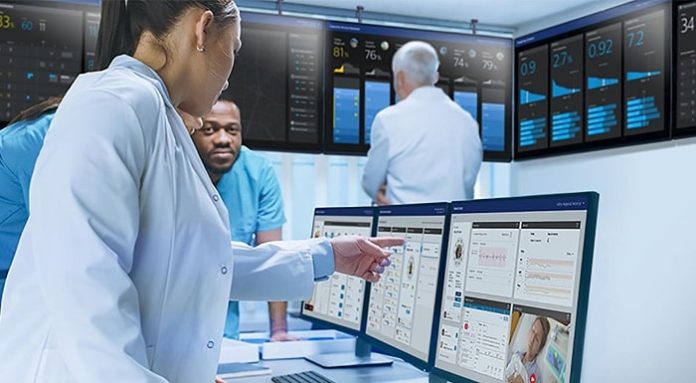
  • Acute Care Telehealth: Building on Philips’ decades-long expertise in Tele-ICU solutions, Acute Care Telehealth provides a configurable and flexible solution to help health systems realize their virtual care and wider enterprise telehealth ambitions. The solution’s scalability allows health systems to deploy Acute Care Telehealth in a centralized command center, or a decentralized model of telehealth dependent on their needs. By allowing customers to add additional hospitals, clinical units or beds, Acute Care Telehealth grows as each organization’s telehealth strategy evolves.

Additional clinical and operational solutions will be added to Philips HealthSuite. Next, updates are planned for Philips Electronic Medical Record and Philips Acute Care and Anesthesia Workspace.

A modular approach for tailored, flexible solutions

A modular approach offers flexible solutions and services to solve specific customer needs, making solutions easy to implement, install, maintain, and use. All solutions benefit from the same SaaS model, which can help to lower initial deployment costs and relieve ongoing IT resource strains. Additionally, the new HealthSuite solutions are:

  • Connected: allowing for easy access to data across care pathways with purpose-built ecosystem services, such as integration with third-party partners.
  • Protected: secure by design, meeting privacy and security requirements and ensuring systems are always up to date with continuous vigilance.
  • Future-Ready: enabling faster adoption of innovation, allowing health systems to scale solutions within the enterprise and to add solutions according to need.
  • Predictable: the adoption of new innovations requires less initial investment and creates a transparent total cost of ownership. Philips is responsible for all updates and upgrades, allowing IT to focus on new strategic initiatives rather than maintaining the life cycle of software products.

Supporting health systems in their digital transition
Philips’ informatics solutions are an integral part of Philips Care Collaboration [2], a collaborative approach to supporting a healthcare organization’s digital transformation. As health systems seek to manage, coordinate, orchestrate and synchronize care across the health continuum, each organization’s digital journey will be unique. Through Care Collaboration, Philips acts as a partner to healthcare organizations to gain a deep understanding of their challenges and determine how Philips’ advanced HealthSuite solutions can help them support data and workflows to deliver enhanced care to the right patient, in the right setting, at the right time.

About Royal Philips

Royal Philips is a leading health technology company focused on improving people’s health and well-being, and enabling better outcomes across the health continuum – from healthy living and prevention, to diagnosis, treatment and home care. Philips leverages advanced technology and deep clinical and consumer insights to deliver integrated solutions. Headquartered in the Netherlands, the company is a leader in diagnostic imaging, image-guided therapy, patient monitoring and health informatics, as well as in consumer health and home care. Philips generated 2020 sales of EUR 17.3 billion and employs approximately 77,000 employees with sales and services in more than 100 countries.


 

Philips showcases integrated health informatics solutions across the care continuum during HIMSS21

Philips showcases integrated health informatics solutions across the care continuum during HIMSS21

Royal Philips a global leader in health technology, will showcase its latest intelligent, secure, interoperable and collaborative informatics solutions virtually during the HIMSS21 Global Health Conference & Exhibition, taking place from August 9-13 in Las Vegas, NV. Philips will showcase its deep clinical and operational expertise and introduce Philips HealthSuite solutions that foster care collaboration, help enable precision care and provide care anywhere.

While the COVID-19 pandemic has forced many healthcare leaders to focus on immediate needs and preparing for future crises, findings from the recently published 2021 Future Health Index reveal that leaders working on healthcare informatics have a positive outlook on building a resilient future, with telehealth and artificial intelligence (AI) high on their investment list. While accelerated acceptance and usage of telehealth has laid the foundations for digitalization, healthcare leaders are beginning to also focus on predictive healthcare technologies such as AI, with 84% saying they want to invest in this technology within the next three years.

Chief Business Leader Connected Care, Philips.
“Over the past year and a half, health systems have been challenged to innovate and adapt how they deliver care and focus resources to meet patient needs. Continuing to embrace this digital transformation will help health systems thrive, while ensuring patients remain at the center of care,” said Roy Jakobs, Chief Business Leader Connected Care, Philips. “During HIMSS21, we are spotlighting our commitment to helping healthcare organizations embark on this new era of connected care and showcasing our integrated informatics solutions that help customers drive improvements in quality and efficiency of care across the continuum.”
Spotlighting Philips’ solutions that illuminate a new path through the care continuum

During HIMSS21, Philips will focus on the following 2021 key informatics themes: Care Collaboration, Virtual Care, Precision and Acute Care, Business Models, and Digital Transformation. Philips HealthSuite solutions available across these areas enable precise, collaborative, interoperable and virtual care to address the quadruple aim of better health outcomes, improved patient and staff experience, while lowering the cost of care.

At the center of any digital transformation work is Philips Care Collaboration [1], which is a collaborative approach to support a healthcare organization’s digital transformation. As health systems seek to manage, coordinate, orchestrate and synchronize care across the health continuum, each organization’s digital journey will be unique. Through Care Collaboration, Philips acts as a partner to healthcare organizations to gain a deep understanding of their challenges and determine how Philips’ advanced HealthSuite solutions can help them support data and workflows to deliver enhanced care to the right patient, in the right setting, at the right time. Philips solutions included within this approach are acute patient management, diagnostic informatics and virtual care. During the conference, Philips will introduce these new cloud-based HealthSuite solutions for patient journey management and acute care telehealth.
Philips’ virtual presence

Throughout the week, Philips will be featuring presentations and talks from Philips executives, customers and industry leaders discussing the latest topics in health informatics and health IT including digital transformation, virtual care, and more. A complete list of presenters, topics, dates, and times is available here.

Philips will offer a virtual HIMSS presence, the Philips Health Informatics Experience, allowing visitors to participate in on-demand sessions. Attendees can explore the 3D environment and view in-depth solution demos of the latest innovations from Philips. The experience will remain open to visitors until spring 2022.

About Royal Philips

Royal Philips is a leading health technology company focused on improving people’s health and well-being, and enabling better outcomes across the health continuum – from healthy living and prevention, to diagnosis, treatment and home care. Philips leverages advanced technology and deep clinical and consumer insights to deliver integrated solutions. Headquartered in the Netherlands, the company is a leader in diagnostic imaging, image-guided therapy, patient monitoring and health informatics, as well as in consumer health and home care. Philips generated 2020 sales of EUR 17.3 billion and employs approximately 77,000 employees with sales and services in more than 100 countries.

Telstra Health acquires MedicalDirector for the digital future of health care

Telstra Health is announcing that we expect to acquire leading GP clinical and practice management software company MedicalDirector for $350m, taking a key step in our vision to create a connected and improved digital health experience for all.

Bringing MedicalDirector into the Telstra Health family will add an important capability in desktop and cloud-based software for GPs and other specialist medical practitioners, joining our existing network of digital health services for hospitals, pharmacies and the aged care sector.

In health care, patient care journeys move back and forth across home, clinics, hospitals, aged care and pharmacies. When this happens, the patchwork of systems currently used means that critical data may not be shared between providers, and our vision is to connect them and improve the experience for patients and providers of care alike.

MedicalDirector is a leader in software for electronic health records, patient and practice management, billing, scheduling, care coordination, medicines information and clinical content for GPs and other specialists in the Australian health care sector. Its software solutions are used to deliver more than 80 million consultations a year and support approximately 23,000 medical practitioners.

This acquisition helps realise our vision to connect and coordinate across the continuum of care, enabling smoother experiences for those who need care as well as for providers of care. With digital solutions across the entire spectrum of health and aged care, we can better support patients and providers by removing siloes between sectors to improve the delivery of quality health care.

We expect to complete the transaction shortly and certainly within this financial quarter.
Supporting a digital future across the entire spectrum of health care

Telstra Health has transformed substantially over the last five years, focusing on combining a range of solutions and platforms across different health and aged care sectors to create a sophisticated and comprehensive offering of digital health solutions. Crucially, our strengths in innovation and our focus on the safety, security and privacy of our solutions put Telstra Health in a unique position to enable more effective care across the entire patient care journey.

Bringing these complementary platforms and specialised services together gives Telstra Health the ability to work with health and aged care providers to tailor solutions for their needs, with access to technology and innovation to quickly and efficiently scale services to meet the growing demand for digital healthcare.

Following our acquisition we will significantly increase investment in MedicalDirector so that we can provide GPs, other specialists and allied health practitioners with the best digital solutions, across desktop and cloud, to support the future delivery of primary health care.

This move follows our recent announcement that Telstra Health would acquire a majority stake in global healthcare organisation PowerHealth, a specialist provider in billing, clinical costing and revenue solutions, budgeting, safety and quality, decision support and application integration solutions for hospitals and other healthcare enterprises.

Just as PowerHealth’s established international reach across Asia and North America supports Telstra Health’s global growth strategy, the deep expertise of MedicalDirector in digital solutions for clinical and practice management will play an important part in our vision to be a leading partner to the health and aged care sectors.


Lumeon Commended by Frost & Sullivan for Enabling Digital Transformation in Healthcare

Lumeon Commended by Frost & Sullivan for Enabling Digital Transformation in Health

Based on its recent analysis of the North American digital health market, Frost & Sullivan recognizes Lumeon with the 2021 North American Customer Value Leadership Award. Lumeon’s care journey orchestration platform and suite of solutions help health systems and providers automate digital care delivery. By automating communication, tasks, decisions and activities across patients and care teams, the platform allows health systems to reduce the burden on staff while offering comprehensive, convenient consumer experiences.

“Lumeon’s orchestration platform helps providers guide patients and care teams through a proactive and adaptive care plan, ensuring appropriate interventions at the right time,” said Srinath Venkatasubramanian, Industry Analyst, Transformational Health. “It acts as an agility layer for an electronic health record (EHR) system, extending workflow to wherever the patient is, with the ability to create continuous patient experiences and matching care team workflows from referral to recovery. By deeply integrating with the EHR, Lumeon ensures that all participants in the patient’s care journey have awareness of the patient’s current situation, status, issues and know the next best action, while keeping the health record up to date.”

Rather than only addressing siloed use cases, Lumeon’s solutions are designed to join up the care journey while automatically adapting it to address patients’ evolving situations. Its configurable orchestration engine proactively creates orders, schedules and tasks for care teams and engages patients on their own terms, personalizing the engagement to meet them where they are. These capabilities are core to any care journey because they provide patient context, optimize care, and prioritize deteriorating conditions.

The COVID-19 pandemic presented Lumeon with an opportunity to demonstrate the effectiveness of its technology and customer-centricity. The company launched COVID-19 rapid response solutions, such as screening tools, patient communications, and remote patient monitoring, in addition to other features, such as the instant delivery of COVID-19 test results and clinic virtual check-ins. Lumeon’s remote monitoring solution has allowed hospitals to screen and enroll symptomatic patients digitally into an intelligent COVID-19 home monitoring program, reducing pressure on emergency departments and enabling clinicians to focus on those most in need.

“Lumeon is intensifying focus on its orchestration engine because of the potential to quickly realize benefits for clients that not only adapt to their rapidly changing needs but are sustained for the long term” noted Venkatasubramanian. “The company is also remarkable for the depth of additional solutions used by its clients.This speaks to a company focused on building strong client relationships that contribute to its sustainable growth. Its solutions are currently deployed by more than 70 U.S.- and European-based clients.

Each year, Frost & Sullivan presents this award to the company that has demonstrated excellence in implementing strategies that proactively create value for its customers, with a focus on improving the return on the investment that customers make in its products and services. The award recognizes the company’s unique focus on augmenting the value that its customers receive, beyond simply good customer service, leading to improved customer retention and customer base expansion.

Frost & Sullivan Best Practices Awards recognize companies in a variety of regional and global markets for demonstrating outstanding achievement and superior performance in areas such as leadership, technological innovation, customer service and strategic product development. Industry analysts compare market participants and measure performance through in-depth interviews, analyses, and extensive secondary research to identify best practices in the industry.

About Frost & Sullivan

For six decades, Frost & Sullivan has been world-renowned for its role in helping investors, corporate leaders, and governments navigate economic changes and identify disruptive technologies, Mega Trends, new business models, and companies to action, resulting in a continuous flow of growth opportunities to drive future success. Contact us: Start the discussion.

About Lumeon

The leader in care journey orchestration, Lumeon delivers intelligent automation to transform how care is delivered – improving financial, clinical and human outcomes for health organizations, their care teams, and their patients.

Lumeon’s award-winning technology platform proactively navigates patients along a personalized adaptive care plan, automating care processes, tasks, and adherence monitoring, providing actionable insights that augment care decisions, and coordinating care teams to ensure seamless and predictable care delivery across every care setting.

Partnering with more than 70 innovative health organizations across the U.S. and Europe, Lumeon’s solutions address the needs of hospitals, payers, ambulatory care, and population health, empowering care teams to operate at the top of their license, reducing costs for providers, and creating the coordinated and convenient digital experiences that patients and care teams deserve.

GE Healthcare Announces Strategic Collaboration Agreement with AWS to Transform Care Delivery and Help Clinicians Improve Patient Care

GE Healthcare announced a strategic collaboration with Amazon Web Services (AWS) to deliver AI and cloud-based imaging solutions, integrated data, and clinical and operational insights to hospitals and healthcare providers. GE Healthcare plans to offer its AI-based imaging applications and Edison Health Services platform* on AWS, a move that positions the company to lead the way in helping to transition healthcare providers globally from the traditional care delivery model provided in the hospital setting to a more decentralized model that is virtual and distributed. This trend was accelerated by the pandemic, and the transformation is enabled by the cloud.

An overwhelming majority of physicians say that access to the right data at the right time will help them improve care.[2] Currently, hospitals perform 3.6 billion imaging procedures and produce 50 petabytes of data a year worldwide (97% of that goes unused). Clinicians need analytics that help generate clinical, operational, and financial insights providing them with a more holistic view of the patient to further support precision health. GE Healthcare’s Edison Health Services platform will give hospital customers the ability to integrate and assimilate significant amounts of data from disparate sources using the cloud with an aim toward increasing clinical efficiency and productivity and helping clinicians improve patient care.

“As the world moves towards a more virtualized and distributed care delivery model with home care, remote patient management, and increased use of AI, radiologists and other clinicians need easy access to data that is seamlessly integrated, aggregated, and visualized in applications and services across modalities and within their existing workflows, said Amit Phadnis, Chief Digital Officer at GE Healthcare. “By doing this at scale, we are helping to drive clinical outcomes and achieving our goals of transforming healthcare to be more efficient and personalized.”

GE Healthcare aims to help providers scale their ability to securely and compliantly aggregate all healthcare data types and formats to extract insights, while providing easier access to regulatory cleared AI algorithms and applications by integrating them into existing workflows – breaking down data silos and supporting healthcare providers in their pursuit of delivering the best care possible.

“This is an exciting opportunity to combine the forces of GE Healthcare and AWS to help customers improve patient care. Hosting patient data in proven applications, coupled with advanced analytics and AI, leveraging the most secure, reliable and agile cloud, will enable care givers to deliver better and more personalized experiences for their patients,” said Dr. Rowland Illing, Director, International Public Sector Health at AWS.

The first AI-enabled imaging solution to be available on the AWS offering from this collaboration is GE Healthcare’s Edison TruePACS,[3] Picture Archive and Communication System (PACS). This medical imaging storage system provides hospitals with an AI-enabled, diagnostic imaging cloud solution, and a low cost, secure alternative to help improve access to care and deliver clinical insights.

In addition, GE Healthcare will offer its Edison data aggregation and AI analytics platform on AWS to help developers access the platform, making it easier to build, test, and validate new AI models, while facilitating the adoption of novel applications into clinical workflows. The company also plans to make additional products within its imaging portfolio available on AWS including AI-based advanced image processing applications that radiologists use

Upgrading PACS systems has traditionally been a slow and expensive undertaking for hospitals and imaging centers. Leveraging a cloud-based PACS solution will reduce the need for complicated and lengthy PACS upgrades in the future and help to ensure that radiologists always have the latest tools to benefit their patients while ultimately lowering the total cost of ownership, and keeping pace with the growing workloads and complexity that occurs within the hospital.

“By allowing GE Healthcare and AWS to handle the backups and duplication of the data, we can reduce our backup workload on site while knowing our data is secure,” said Richard Duemmling, Chief of Business Operations at Neuro Imaging in Winter Park, Florida. “From our perspective, this presents an opportunity for significant savings by eliminating the costs associated with onsite hosting and data storage.”

GE Healthcare will enable hospitals and imaging centers to adopt cloud and hybrid (cloud and on-premises) implementations, thereby offering full deployment flexibility as healthcare providers accelerate their journey to the cloud.

With more than 200 digital and image-based applications, GE Healthcare is a leading vendor of AI-enabled medical imaging applications worldwide.[4] The company manages over four million devices and creates more than two billion scans each year.

*Edison Health Services is GE Healthcare’s secure intelligence platform, which helps healthcare providers aggregate across different data types in healthcare in order to extract insights, while also providing easier access to market-ready algorithms and applications by directly integrating them seamlessly into existing workflows.

About GE Healthcare:

GE Healthcare is the $18 billion healthcare business of GE. As a leading global medical technology, pharmaceutical diagnostics and digital solutions innovator, GE Healthcare enables clinicians to make faster, more informed decisions through intelligent devices, data analytics, applications and services, supported by its Edison intelligence platform. With over 100 years of healthcare industry experience and around 47,000 employees globally, the company operates at the center of an ecosystem working toward precision health, digitizing healthcare, helping drive productivity and improve outcomes for patients, providers, health systems and researchers around the world.

TeamViewer and Siemens Healthineers form partnership to enable new remote scanning service WeScan for diagnostic imaging

TeamViewer and Siemens Healthineers form partnership to enable new remote scanning service WeScan for diagnostic imaging

Siemens Healthineers has recently started offering its customers WeScan1. WeScan is a new service that helps healthcare providers to perform magnetic resonance imaging (MRI) examinations if they lack qualified radiology staff. With the WeScan service, customers may seek access to a pool of skilled remote imaging technologists who help operate the MRI scanner using syngo Virtual Cockpit2, the remote scanning software of Siemens Healthineers.

As Siemens Healthineers assists its customers via WeScan from outside their own IT-network, real-time data transmission across the internet and high security standards are central requirements. Therefore, Siemens Healthineers has formed a new partnership with TeamViewer. TeamViewer’s remote connectivity technology is now incorporated as part of the WeScan service offering because of its high security standards, powerful data transfer performance, and ease of operation.

Thanks to the interaction of TeamViewer with syngo Virtual Cockpit, and the global remote connectivity infrastructure of Siemens Healthineers, Smart Remote Services3, it is now possible to support the scanning process on demand from outside a customer network meeting all the relevant security & performance requirements. WeScan generates high volumes of data that have to be exchanged between IT networks in real time. This is where the TeamViewer technology plays out its strengths as known across industries for various use cases. Additionally, TeamViewer’s Conditional Access feature enables rule-based and very granular access management and helps achieve the degree of security that’s vital in the healthcare industry.

“TeamViewer has been an important partner for many years,” says Wolfgang Heimsch, Head of Customer Services at Siemens Healthineers. “The number of use cases in a hospital environment for which we need to gain secure, high-performance access to our systems is on the rise. That makes our partnership with TeamViewer increasingly important, and we believe it offers great potential.”

Lukas Baur, EVP Solution Sales at TeamViewer, comments: “With WeScan, Siemens Healthineers is offering a highly innovative service that provides genuine added value for its customers. We’re pleased that TeamViewer can make a crucial technological contribution to this novel solution, and thus also to the further digitalization of the healthcare sector. The shortage of highly qualified employees is a huge challenge for many industries. We recognize that remote-access solutions can be a key element in overcoming this challenge, since both the employees and the devices to be operated are globally interconnected, and this means they can be leveraged much more efficiently now.”

Siemens Healthineers has been using TeamViewer for several years on many tens of thousands of its imaging and laboratory diagnostic devices worldwide, such as MRs and CTs, in hospitals and doctors’ offices to remotely maintain them and support clinical staff around the world. With WeScan, the company is now moving a step forward, making additional services available to improve device capacity utilization and expand patient access to healthcare, in addition to the established remote support for maintenance and repair scenarios.

Siemens Healthineers AG is shaping the future of healthcare. As a leading medical technology company headquartered in Erlangen, Germany, Siemens Healthineers enables healthcare providers worldwide through its regional companies to increase value by empowering them on their journey towards expanding precision medicine, transforming care delivery, improving the patient experience, and digitalizing healthcare. Siemens Healthineers is continuously developing its product and service portfolio, with AI-supported applications and digital offerings that play an increasingly important role in the next generation of medical technology. These new applications will enhance the company’s foundation in in-vitro diagnostics, image-guided therapy, in-vivo diagnostics, and innovative cancer care. Siemens Healthineers also provides a range of services and solutions to enhance healthcare providers’ ability to provide high-quality, efficient care to patients. In fiscal 2020, which ended on September 30, 2020, Siemens Healthineers generated revenue of €14.5 billion and adjusted EBIT of €2.2 billion. Following the acquisition of Varian Medical Systems, Inc. the company has approximately 66,000 employees worldwide. Further information is available at www.siemens-healthineers.com.

About TeamViewer
TeamViewer is a leading global technology company that provides a connectivity platform to remotely access, control, manage, monitor, and repair devices of any kind – from laptops and mobile phones to industrial machines and robots. Although TeamViewer is free of charge for private use, it has more than 600,000 subscribers and enables companies of all sizes and from all industries to digitalize their business-critical processes through seamless connectivity. Against the backdrop of global megatrends like device proliferation, automation and new work, TeamViewer proactively shapes digital transformation and continuously innovates in the fields of Augmented Reality, Internet of Things and Artificial Intelligence. Since the company’s foundation in 2005, TeamViewer’s software has been installed on more than 2.5 billion devices around the world. The company is headquartered in Goppingen, Germany, and employs more than 1,400 people globally. In 2020, TeamViewer achieved billings of EUR 460 million. TeamViewer AG (TMV) is listed at Frankfurt Stock Exchange and belongs to the MDAX.


https://www.siemens-healthineers.com/press/releases/wescan
>>>

About RightEye

RightEye is an eye movement behavior biomarker company using advanced eye-tracking technology to
revolutionize vision care. RightEye technology assesses patients’ binocular vision, visual impairment,
reading disorders, and performance issues by following an evidence-based, metrics-driven methodology.
Using a cloud-based platform, RightEye provides data-rich reports that offer an objective, measurable
way to view the quality of a person’s eye movement and monitor the success of various
treatments. RightEye customers include recognized eye care providers, professional and amateur sports
teams, hospital systems, rehabilitation facilities, and the U.S. military.


The ‘responsible business’ of healthcare

The responsible business of healthcare
How an innovative balance of the clinical with the commercial can be the route to
delivering
quality care

Today healthcare faces juxtaposing forces. It relies on a workforce that views quality healthcare as a right and the profession as a vocational calling, while it faces pressures to reduce costs, optimize performance and deliver care as efficiently as possible.

And yet in the battle to transform healthcare and deliver the Quadruple Aim (of better health outcomes, improved patient experiences, improved staff experiences and lower costs of care) of value-based care, the poles arguing that healthcare should or should not be considered a business have, perhaps, missed a middle ground possibility. That is that there is an opportunity for healthcare to operate as a ‘responsible business’ which combines the best of these both worlds: clinical expertise with operational excellence. The challenge, of course, is how to bring together these two worlds to create modern healthcare systems that are both fit for purpose and purposeful.

Dawn Bruce, Services & Solutions Delivery Lead at Philips and an advocate of positive partnerships and purposeful business explains why this disruptive approach has considerable merit:

“Business and healthcare have long had an uneasy relationship but a modern, innovative approach to healthcare transformation doesn’t have to be the ruthless commercialization of care. Instead, the adoption of effective business models and business practices can realize the best of organizational and operational strategy and fuse it with the high practice standards of those passionate about the Hippocratic Oath. Clinical professionals should absolutely be focusing their time on the medicine part, but hospital operations have to be run like a business.”

What is responsible business?

Over the past 10 years, multinational companies have made important changes to their corporate social responsibility (CSR) policy, to prioritize purpose as well as profit. The emergence of responsible business can therefore be seen as much an opportunity for healthcare transformation as digitization and new technologies are.

From business to better healthcare: Where to start and what to borrow from business

“Imitation is the greatest form of flattery” and, according to Dawn Bruce, clever borrowing from responsible business starts by considering impact; working out where and what innovative approaches proven to work in business will deliver the most value. She believes that there are several key areas and ways in which healthcare facilities can adopt processes and practices from responsible business and partner to drive improvements without impacting the integrity of care.Here are her ‘share and reapply’ starter recommendations:

        ➢ Start in operations, the control center of any hospital

Dawn Bruce’s recommendation is to focus operationally and apply operational management principles. She explains: “Hospital operations is central to operational efficiency. Hospital operations was transforming pre COVID-19 but now it is in the hot seat as innovation in this area can clearly be seen as offering a new way to deliver value-based care since perceived customer value = total benefits / total costs.”

        ➢ Adopt a holistic, integrated approach fusing people, process and technology

Dawn Bruce and her team help healthcare systems to apply and embed innovative operational management and improvement strategies by using the Philips Operational Intelligence approach of the partnership of continually synchronized people, processes and technology.

        ➢  Innovate the customer experience

“I look to hospitality as a guide on customer-centricity. Think Disney, think Marriot and Ritz-Carlton. Any kind of hospitality organization puts the customer at the center of everything that they do. No matter what the end result is, the customer’s experience is prioritized and we need to think the same way in healthcare,” advises Dawn Bruce.

        ➢ Embrace collaborative leadership, including servant leadership

A well-run organization makes an impact on how care is delivered, and modern approaches to leadership at all levels plays a key part in care outcomes. In healthcare, it can be difficult to step back from the immediate ‘point-of-care’ role and think operationally. Servant leadership inverts the norm. Instead of the people working to serve the leader, the leader exists to serve the people.

        ➢ Adopt highly effective business processes including Lean, Agile as well as systems thinking and design thinking

Waste is a recurring problem in the existing healthcare system. It accounts for $760 billion to $935 billion annually in the US, or 25% of total medical spending, according to the JAMA[1]. According to Dawn Bruce, healthcare is adopting lean business principles such as Lean Six Sigma to create more operationally intelligent health systems, to focus on their customers[2] through targeting eight key wastes[3].

        ➢ Complement KPIs with OKR

“We use both KPIs and OKRs as performance indicators, but in healthcare, we find it particularly useful to track OKRs as they are more specific with quantifiable results.  Utilizing the two offers the opportunity for macro and micro operational visibility. OKRs are tied to business goals and objectives, rather than employees’ work. KPIs on the other hand can be tied directly to an employee’s day-to-day work — they’re designed for achieving success in the workplace,” advises Dawn Bruce.

        ➢ Adopt disruptive innovation

Much of the frustration linked with the scale and pace of change within healthcare is not linked to effort, talent or resources. Instead, it stems from attempts to make the current healthcare model fit the demands now expected of it. Dawn Bruce suggests that one of the most positive learnings healthcare can make from business is to utilize businesses’ own learning from transformation and the innovations processes that have facilitated it.

She explains: “In addition to being a responsible business propelled by our purpose to make life better, one of the most compelling reasons to partner with a company like Philips is the benefit of shared learnings in addition to shared values. We’ve spent the past 7 years transforming to be a future forward health technology organization, working to address many of the operational challenges that our hospital partners are also facing.”

Tools for innovation include the importance of multidisciplinary teams, design thinking capabilities and other systematic innovation processes that prioritize empathy and customer-centricity. These soft skills should be coupled with systems thinking capabilities. 

         ➢ Embrace technology and drive for interoperability but learn from business that achieving this is a cultural, rather than a technical shift

For every healthcare institution, technology is a significant investment and an essential component in quality healthcare delivery.

Dawn Bruce explains how the strategic management of technology can break down some of the misconceptions of technology and equipment purchase, even to the point of highlighting that buying the best isn’t always the best choice:

“Healthcare organizations in Canada and many other parts of the development work can typically want to buy the Rolls-Royce of everything because they don’t know when they’re next going to get funding. It’s a feast or famine approach. And yet a partnership established as equals on the same team makes it possible to open up new ways of thinking about planning, purchasing and maintaining and puts in place a strategic approach to managing technology.

For example, we were able to ask our partners, ‘Do you really need the Rolls-Royce? What if you go for a lower level or a different configuration that frees up budget in order for you to spend somewhere else. You could even buy two of them for example.’

This type of business minded approach establishes the foundation of a different type of problem-solving dialogue-based relationship that unpicks the true challenges and opportunities amid the complexity. It prevents purely transactional relationships, removes ‘catalogue-based thinking’ and drives true vendor agnostic solutions thinking.”

It’s clear that there is a lot that business can offer to healthcare, so long as the partners involved have their purpose and priorities aligned.

For more information on combining care and the commercial and to discover how Philips is partnering with global health providers and systems to apply its innovative Operational Intelligence approach to hospital operations management and innovation, visit https://www.philips.com.au/healthcare/services/operational-intelligence/discover-operational-intelligence

Reference

[1] JAMA, https://jamanetwork.com/journals/jama/article-abstract/2752664
[2] Purdue University, Lean Six Sigma Online
https://www.purdue.edu/leansixsigmaonline/blog/healthcare-advancement-with-lean-six-sigma/#:~:text=Using%20Six%20Sigma%20to%20improve,turnaround%20time%20for%20lab%20results
[3] NEJM Catalyst, https://catalyst.nejm.org/doi/full/10.1056/CAT.18.0193

ScriptAbility Is Now Available on Epic App Orchard

ScriptAbility Is Now Available on Epic App Orchard

ScriptAbility is now available via Epic App Orchard. The ScriptAbility Application, created by En-Vision America, provides users a way to create accessible prescription labels for anyone that has difficulty reading standard medication labels. The accessible solution encompasses multiple label styles, including ScripTalk Talking Labels, ScriptView Large Print Labels, ScriptView Dual Language/Translated Labels, Controlled Substance Safety Labels (CSSLs) and Braille Labels.

Individuals who are blind, low-vision, dyslexic, or non-English speakers, oftentimes have difficulty reading and/or understanding their prescription labels provided by the pharmacy. ScriptAbility gives the pharmacy the freedom to provide medication labels that patients can truly understand.

Now, ScriptAbility interfaces with a customer’s Epic instance to automatically retrieve and populate prescription data, rather than requiring that data be manually keyed in.

“We’re excited to be listed in the App Orchard gallery to make our accessible labeling solution available to even more pharmacies,” says David Raistrick, president of En-Vision America. “More than 12 million individuals in the U.S. have a visual impairment, according to the CDC. Ensuring medication safety and adherence is at the heart of what we do at En-Vision America.”

About En-Vision America

En-Vision America is a company providing high-tech products aimed at solving problems for individuals with disabilities. The company has spearheaded many innovations relating to labeling including voice-enabled products like i.d. mate, the talking bar code reader, and ScriptAbility, which includes talking prescription labels, Braille, large print, dual language/translated and Controlled Substance Safety Labels (CSSLs). Originally founded by Philip C. and David B. Raistrick in 1996, the cornerstone of the company is based on one single premise: To provide those with disabilities equal access and greater independence through technology. Today, more than 20,000 individuals are using ScripTalk.

RightEye Launches Eye Care’s First Automated Sensorimotor Exam for Binocular Vision Testing

RightEye Launches Eye Care's First Automated Sensorimotor Exam for Binocular Vision Testing

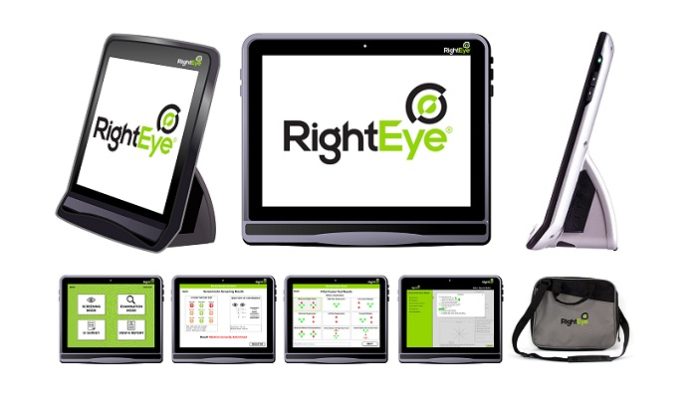
RightEye LLC, an advanced eye-tracking technology company, has launched the world’s first automated, quantitative sensorimotor exam system.

RightEye Sensorimotor is an easy-to-use, all-in-one examination system that optometrists and ophthalmologists can perform on every patient, allowing them to objectively identify and quickly address binocular vision issues and oculomotor dysfunction. The complete hardware-and-software solution is easily integrated into the practice’s existing patient flow, requiring little to no unbillable doctor time. And, because it is insurance reimbursable, it can add substantial incremental revenue to a practice.

Sensorimotor is an examination of the basic eye motor component of an optometric or ophthalmic exam and detects, assesses, monitors, and/or manages strabismus and oculomotor conditions. The importance of this test is emphasized by the American Medical Association which lists a quantitative sensorimotor exam as a required element of a comprehensive eye exam. Sensorimotor exams are also recommended by the American Ophthalmology Association, the American Academy of Ophthalmology, and the American Association for Pediatric Ophthalmology and Strabismus.

“RightEye Sensorimotor was designed to integrate seamlessly into an eye care provider’s pre-test and exam lanes,” said Keith Smithson, OD, Northern Virginia Doctors of Optometry. “By running RightEye Sensorimotor on every patient, eye care doctors are able to elevate their care and identify previously unaddressed binocular vision and oculomotor dysfunction.”

Studies show that 30% of people have binocular vision issues or oculomotor dysfunction. All doctors understand the importance of running sensorimotor exams on their patients to identify these issues, but until now, traditional manual exams were time-consuming and did not provide the quantifiable data or precise reports that facilitate diagnosis and treatment.

The industry-leading eye-tracking technology incorporated in RightEye Sensorimotor allows doctors to efficiently offer an invaluable patient service that differentiates their practice from their competition. Screenings can be conducted in less than 30 seconds by a technician. If the patient fails the screening, and the doctor identifies medical necessity, the fully automated sensorimotor exam can be run in less than 5 minutes. Data-rich test results are produced in seconds allowing doctors to immediately develop and deliver their diagnosis to the patient.

“We worked hand-in-hand with insurance billing experts and the nation’s leading eye care doctors to develop this revolutionary technology,” said Adam Gross, CEO and Co-Founder of RightEye. “I am so excited to be able to bring this to the market so that doctors can provide enhanced care to their patients – quickly, accurately, and profitably.”

About RightEye

RightEye is an eye movement behavior biomarker company using advanced eye-tracking technology to revolutionize vision care. RightEye technology assesses patients’ binocular vision, visual impairment, reading disorders, and performance issues by following an evidence-based, metrics-driven methodology.
Using a cloud-based platform, RightEye provides data-rich reports that offer an objective, measurable way to view the quality of a person’s eye movement and monitor the success of various treatments. RightEye customers include recognized eye care providers, professional and amateur sports teams, hospital systems, rehabilitation facilities, and the U.S. military.

These 6 Injuries Are The Major Threats To Motorcycle Riders

These 6 Injuries Are The Major Threats To Motorcycle Riders

Motorcyclists are constantly at risk of sustaining injuries due to the inherent dangers that come with riding a motorcycle. Whether it’s an accident or another rider, here is a list of six major injuries that can happen while you’re on your bike. This article will cover some tips for prevention and recovery if you are unfortunate enough to have one of these accidents. Be careful out there!

1. Head Injuries

One of the most serious injuries you can sustain on a motorcycle is a head injury. In fact, an accident in which your head is injured is one of the leading causes of death among motorcyclists. Head injuries include cuts and bleeding on or inside the skull, brain damage, and even paralysis or loss of feeling in parts of your body that are caused by it being stretched or torn during an accident. In very severe cases, it can cause permanent disability or death after just one accident. That’s why it’s important to wear a helmet whenever you’re riding your bike!

2. Neck Injury

Perhaps one of the most common injuries in motorcycle accidents is a neck injury. About 80% of people who die due to motorcycle accidents in Texas have this kind of injury. Injuries sustained from an accident that causes your neck to break or be stretched beyond its limits can include either damage to or even complete severance of the spinal cord. In this case, rehabilitation would be necessary to regain control of the part of your body affected by the injury. In any case, it’s extremely important to seek medical attention as soon as possible and get yourself checked out or even hospitalized if necessary.

3. Spinal Cord Injury

A serious injury, damage to, or severing of the spinal cord is a common occurrence in motorcycle accidents. If the spinal cord is severed, your ability to control and feel any part of your body below the point of severance will be lost. According to a spinal cord injury lawyer in Texas, a specialized lawyer can help accident survivors with the much-needed support and guidance to get the full compensation. Significant injuries, such as spinal cord damage and head trauma, can lead to significant rehabilitation needs. It can be difficult to bear the burden of increased costs of treatment and therapies. A good lawyer can assist you in tough times by helping you pay medical bills and tackle legal processes.

4. Brain Damage

The most dangerous injury that can be sustained in a motorcycle accident is brain damage. In many cases, severe brain damage from a serious head injury can be fatal to an individual soon after or even later on due to complications such as pneumonia or other infections caused by bodily fluids leaking into your body through broken bones in your skull.  It is possible for you to sustain head injuries even if your helmet does not crack or show any visible signs of impact t! In serious cases like this, emergency surgery would need to be performed in order to relieve pressure and save your life.

5. Damage To The Lungs, Heart, And Other Internal Organs

Injuries caused by being thrown through the air on your bike can cause damage or even complete severance of your organs including the heart, lungs, and other internal organs. A fractured vertebra can even cause bleeding in the brain that could lead to death because no blood vessels are leading directly to it. In these types of situations, immediate medical attention is required as well as hospitalization for surgery if necessary. In addition, although most organ injuries are easily treatable with proper care, some may be fatal if left untreated!

6. Fractures In The Arms And Legs Or Spinal Cord

Severe accidents involving motorcycles can lead to fractures in the arms and legs or spinal cord due to direct impact from another object such as a car or truck during an accident or by being thrown through the air as a result of colliding with another object. In serious cases like this, the spine may be fractured and even separated from the rest of your body by trauma or impact from another object during an accident. In cases like these, it’s very important that you seek immediate medical care to prevent further damage to your body and limbs!

Injuries sustained in motorcycle accidents are very serious and can lead to death or disability. In this article, we’ve provided a list of the most common injuries that could occur during an accident involving motorcycles as well as tips on how you should seek medical attention if you sustain any of these types of injuries.

Translate »