










Close
Digital Health & Ai Innovation summit 2026
Medical Taiwan 2026

How Can We Reimagine Medicare Star Ratings for a Post-Covid Population?

How Can We Reimagine Medicare Star Ratings for a Post-Covid Population?

Like so much else last year, Covid-19 interrupted business as usual for Medicare’s STARS program. The decision to withhold ratings was an intuitive one amid the chaos caused by the pandemic. Facilities were overwhelmed by Covid-positive cases; other enrollees were canceling their elective appointments en masse even as providers raced to put socially-distanced protocols in place.

Ultimately, the Centers for Medicare and Medicaid Services (CMS) opted to put a temporary hold on ratings to “address the expected disruption to data collection and measure scores posed by the COVID-19 pandemic and also to avoid inadvertently creating incentives to place cost considerations above patient safety.”

But now, nearly a year into the pandemic, it’s time to not only restart the rating process but also reconsider how it might be evolved to better suit a post-Covid enrollee base.

CMS established the rating system in 2007 to help consumers identify high-quality Medicare Advantage plans during the annual enrollment period. Today, the STARS program gauges plan and provider performance by assessing quality measures relating to health outcomes, plan operations, and member satisfaction. Each rating takes a health plan’s administrative performance and compliance with CMS operations standards into account, as well as specific quality metrics such as how often members receive recommended vaccines, preventative care, and screenings.

As you might imagine, high star ratings generally correlate to better care and, by extension, improved health outcomes. In February, a study published in Health Affairs found that those enrolled in plans with high star ratings were 3.4 percent more likely to use highly-rated hospitals, 2.6 percent less likely to experience 90-day readmission, and 20.8 percent less likely to leave their plan for traditional Medicare or an alternative MA. Researchers attributed these improved clinical outcomes to network design; generally, highly-ranked MA programs tended to have higher-quality provider networks.

The benefits afforded by well-ranked plans aren’t only applicable to enrollees though. Research indicates that programs with 4, 4.5, or 5 stars generally bring in an additional 5 percent (roughly $500) per member per year. Highly-ranked MA plans also tend to be more efficient than traditional fee-for-service (FFS) plans, offering Parts A and B benefits at roughly 90 percent of the cost of FFS coverage. Five-star plans also enjoy the added perk of enrolling new beneficiaries year-round and aren’t restricted to the usual two-month enrollment period.

The clear benefits afforded to patients and payers alike have made reaching for lofty star ratings a no-brainer. As one writer for McKinsey recapped of the matter, “On average, the plans’ scores have risen substantially, both overall and on the 22 individual quality measures that have been used consistently since the program’s inception. The percentage of MA members enrolled in high-performing plans (those with 4 or more Stars) has also increased significantly.”

The logic behind the rise is simple — the rating system aligns payers, providers, and patients by incentivizing plans to offer high-quality care at the lowest possible cost. That said, it would be a mistake to think that the STAR program is as effective as it can be.

2020 was a pivotal year for healthcare. Amid social distancing restrictions and the pressing anxieties of a global pandemic, patients’ expectations of and need for care have evolved.

“There’s a lot of reimagining going on,” NCQA founder and President Margaret O’Kane notes. “Sites of care are going to change, at-home care is becoming more of a preference. We need to reimagine what a healthcare plan can do to support enrollees’ complex needs in 2021 and beyond.”

A prime example of the emerging complexity O’Kane refers to is senior loneliness. During the pandemic, health authorities counseled vulnerable elders to isolate themselves. The majority did; according to one survey conducted in April of 2020, 83 percent of surveyed people aged 70 and older said that they were “prepared to self-isolate for several months, if required, to stay healthy and safe and to protect others.”

But within a few short months, it became clear that those protective measures came at a mental health cost. In June of 2020, another survey found that over half (56 percent) of surveyed people over 50 “sometimes” or “often” felt isolated from others — a rate more than double the one recorded in 2018. Researchers also noted that half of the respondents who experienced isolation felt less motivated, 41 percent felt more anxious, and 37 percent say their loneliness has made them feel depressed.

It’s worth noting, too, that loneliness has roughly the same impact on health as smoking a pack of cigarettes a day — research indicates that socially-isolated seniors tend to experience high rates of depression, anxiety, and suicide. They also face a 50 percent increased risk of dementia, 29 percent increased risk of heart disease, and 32 percent increased risk of stroke.

Given this context, there can be no doubt the pandemic-prompted uptick in senior loneliness will significantly impact seniors. But as matters stand, the STARS system may not be fully equipped to address the impact loneliness and isolation are having on seniors’ health and wellness post-Covid. As we move further into 2021, it may well be worth considering how the system can be changed to incentivize plans to be more proactive in supporting isolated seniors.

There are already examples of how plans might accomplish this. In April of 2020, Cigna developed new programs and funding to address senior social isolation via its Medicare Advantage programs. As reported by Health Payer Intelligence: “Seniors have the option to receive a follow up call from the same Cigna representative, for the purpose of expanding on that relationship to meet seniors’ social needs, as well as their physical and clinical ones. […] [A] partnership with Bring Smiles to Seniors also involves a grant from Cigna Foundation to help support socially isolated seniors.”

Of course, as we consider changes to the STARS program, we can’t only look forward — we must also reflect on what is and isn’t working.

“Medicare Advantage plans recently decreased the weight of clinical measures in favor of patient satisfaction,” O’Kane points out as an example. “Prioritizing positive health outcomes for chronic care patients used to matter a whole lot more for health plans. Now, the focus is more on how the patient likes their health plan. Satisfaction matters, of course, but you aren’t going to get the same results if you stop focusing on clinical metrics.” The renewed emphasis on quality and accountability is particularly important in these times when an increasing number of MA plans are leveraging a fully delegated provider model and there is a clear separation of responsibilities and functions between the MA plan and the at risk provider delivering the care.

As we recover from the pandemic, we need to realign our metrics to fully acknowledge where care is being managed and how effectively the patient’s needs are being addressed. The Medicare STAR system has proven its ability to incentivize better care at a lower cost — but there is more that we can do to improve it.


An Ultimate Guide on Surgical Masks. How to wear, protect and Dispose of them?

An Ultimate Guide on Surgical Masks. How to wear, protect and Dispose of them?

The world these days is grasped with the dread of Coronavirus and face covers are a vital segment to save us from getting contamination. Due to the pandemic, the world is confronting a deficiency of these masks. Therefore, sensible utilization of face mask is principal. Alongside social distance and hand sanitizing, masks are the basics. Surgical masks are a powerful approach to moderate the spread of COVID-19.

The most effective method to Safely Put On and Remove Face Masks 

  • Clean/disinfect your hands prior to putting on a mask and in the wake of contacting it.
  • Spot the mask all over and haul the ties behind your ears.
  • Extend the mask with the goal that it covers your mouth, nose, and jawline. It ought to be sufficiently free to permit you to inhale yet tie down enough to remain set up.
  • Ensure you can talk effectively and that the mask doesn’t bother you. So you are not enticed to contact it or haul it awkward, which would lessen its viability.
  • On the off chance that you contact the front of the mask, promptly disinfect your hands.
  • To drop your pre-owned mask, hold just the ear circles/lashes.
  • Discard the mask in a garbage bin, or store and wash it in case it’s a reusable face covering.
   Tips for utilizing medical clinic gave surgical masks: 
  • Surgical masks should be worn with the blue side looking out.
  • Squeeze the metal edge of the mask so it presses tenderly on your nose connect.
  • Intersection the ear circles to make a circle for your ears to go in may help the mask fit better.

Why Surgical Masks are Useful?

Surgical Masks are dispensable because they cover your nose, mouth, and jawline. They’re normally used to:

  • Shield the wearer from showers, sprinkles, and huge molecule drops.
  • Forestall the transmission of irresistible respiratory discharges from the wearer to other people.
  • Surgical masks can change in plan. Yet the casual mask is regularly level and rectangular fit with creases or overlap. The highest point of the mask contains a metal strip that can be shaped to your nose.

Use of Surgical Masks in Operating Room (OR)

In the operating room (OR) there are strategies set up proposed to decrease irresistible material exchange between staff and patients. Surgical masks give an actual obstruction between microorganisms of the or pharyngeal and nasopharyngeal. Also at the beginning and an open patient injury. Wearing a surgical mask in the Operating Room is the most long-standing precaution. Besides it, these surgical masks secure staff protecting them from liquid sprinkled by patients. Furthermore, these masks are intended to shield the wearer from airborne irresistible particulates.

FAQ

How to Reuse a Face Mask?

Most surgical masks are expendable and are for one-time utilize as it were. Do not use these masks when they are grimy or the inward covering gets sodden. Once in a while, they can be sanitized for restricted reuse. Assuming you need to reuse the mask, you should keep it dry so it can keep going long. While taking out the mask kindly don’t put it under the jaw so germs there won’t append to the cover. Kindly don’t leave utilized covers on any surface as it will be a wellspring of contamination. They should appropriately save for later use.

How to dispose of a Face Mask after using?

Various germs can stay alive on a pre-owned mask for various spans. Specialists believe that uncovered infections can survive within a couple of hours. So do not toss the pre-owned mask in lifts, parks, work environments, and homes. They appear a potential wellbeing risk to individuals who interact with such masks. Additionally, a few groups are getting them for re-use and placing their life in harm’s way. The tainted masks have respiratory emissions on them. Moreover, they can scatter or transfer through the air. Along these lines, kindly be delicate. Continuously wash your hands previously, then after the fact removing the mask.

How can you protect a Face Mask?

It is dry and has maintained its shape and layers place it in a zip lock pocket with a parched gel. The gel retains dampness and keeps the cover dry. If the mask feels unblemished and not torn, you can reuse it for 3 days. In case it’s ragged by a contaminated individual and then avoid reusing it as it can be harmful.

InterSystems Recognised as a Leader by Independent Research Firm in Multimodel Data Platforms Evaluation

InterSystems, a creative data technology provider dedicated to helping customers solve the most critical scalability, interoperability and speed problems, announced that Forrester has recognised the InterSystems IRIS® data platform as a leader in The Forrester Wave™: Multimodel Data Platforms, Q3 2021.

Forrester evaluated 15 vendors based on 26 criteria across three categories: current offering, strategy and market presence. In the evaluation, InterSystems received the highest possible score in deployment, performance, scalability, analytics/search, workloads, technical support, install base, use cases and transactions criteria, with one customer saying they are “using it in a mission-critical application for over 10 years and are overall happy with performance and features and reliability.”

InterSystems IRIS® data platform enables organisations to rapidly develop, deploy and execute data-intensive analytic applications. By making it easier to build high-performance, machine learning-enabled applications that connect data and application silos, InterSystems IRIS simplifies architectures and powers the smart data fabrics required to meet modern business demands.

With solutions such as InterSystems IRIS Adaptive Analytics and IntegratedML, InterSystems IRIS enables easier development for augmented transactions. InterSystems IRIS is available on multiple public cloud marketplaces, including Amazon Web Services, Microsoft Azure, Google Cloud Platform, and has been deployed across the globe.

“We believe that being named a leader in this Forrester Wave further validates the role of the InterSystems IRIS data platform in powering the applications and analytics behind today’s digital organisations,” said Scott Gnau, Vice President of Data Platforms at InterSystems. “InterSystems IRIS accelerates the journey to a modern data architecture, harmonising dissimilar, distributed data from across the organisation to enable more intelligent decisions, better customer experiences and ultimately improved outcomes.”

Last month, InterSystems announced the latest release of the InterSystems IRIS® data platform, which now includes self-service analytics capabilities coupled with expanded functionality for implementing data fabric initiatives that provide business users with unparalleled access and exploration of distributed enterprise data.

InterSystems IRIS data platform is in use by organisations ranging from Epic and the UK Ministry of Defence to the U.S. Department of Veterans Affairs.

About InterSystems

Established in 1978, InterSystems provides innovative data solutions for organisations with critical information needs in the healthcare, finance, and logistics sectors and beyond. Our cloud-first data platforms solve interoperability, speed, and scalability problems for organisations around the globe. InterSystems also develops and supports data management in hospitals through the world’s most proven electronic medical record, as well as unified care records for health systems and governments through a powerful suite of healthcare data integration solutions. The company is committed to excellence through its award-winning, 24×7 support for customers and partners in more than 80 countries. Privately held and headquartered in Cambridge, Massachusetts, InterSystems has 25 offices worldwide. For more information, please visit InterSystems.com/au.

Quickly Get Rid Of Cellulite With These Tips From Beauty Pros

Quickly Get Rid Of Cellulite With These Tips From Beauty Pros

Cellulite is a harmless skin condition that occurs due to fat deposits under the skin. It appears most commonly on the thighs, hips, abdomen and buttocks and causes the skin in that area to look bumpy, lumpy and dimpled. Around 90% of women will experience cellulite at some point in their lives and the unfortunate reality is that neither a change in diet nor exercise can solely solve this problem. While it is a perfectly normal phenomenon it can drive a lot of people up the wall and make women feel self-conscious about their appearance. If you can relate to this feeling then look no further as this post will go through tips from beauty pros.

Here are 5 ways to quickly get rid of cellulite.

1.  Use Cellulite Creams

One of the more inexpensive ways to treat cellulite is to frequently use cellulite creams. There is an abundance of creams available and so it is worth taking the time to research the options before committing to buying one. Check out reviews and if a cream is consistently getting good feedback then you know that you are less likely to waste your money on an ineffective product. Cellulite creams use ingredients from plants and some use caffeine to help tighten your skin quickly. For the best effects, you need to massage the cream into your skin and not rush the process. This will need to be done daily and you are likely to see results as quickly as in two weeks – but that is only if you stick to the moisturising and massaging routine properly. Also, as a side note, it is worth putting a small amount of the cellulite cream on your skin first before slathering it on just to make sure you do not have an allergic reaction.

2.  Quick And Easy-Laser Treatments

Another quick and easy way to remove cellulite is to use laser or radiofrequency methods that use heat, massage and suction to smooth out any bumps on your skin. Treatments provide instant results and can last for six months and potentially even longer. There are several institutions, such as Medspa that offer cellulite treatments that are non-invasive so that you do not have to worry about pain or long recovery periods. It is likely that you will need a couple of visits for the best results and is also one of the more expensive methods for tackling cellulite, but that expense shows in the effective results laser treatments achieve.

3.  Use Exercise To Target Specific Areas

While exercise alone cannot completely eradicate your cellulite, it can help to reduce their appearance. This is because stronger muscles under dimpled areas make your skin look more even. Consider doing a mixture of cardiovascular based exercises, such as swimming, running or cycling and combine this with some strength training of the problematic areas. So this will typically include working out your abs, legs and buttocks.

4.  Daily Massage

Another easy and inexpensive way to reduce the appearance of cellulite is to spend a few minutes each day massaging the cellulite heavy areas on your body. The best time to do this is either in the shower with body soap or after your shower with body lotion. Be firm with it and make sure you cover all areas as this will improve blood flow and reduce excess fluid, which makes lumpy skin less noticeable. This method will only really work if you stick with it, there is no point doing it every once in a while as you will not achieve the goals you want. After doing it for a while this will quickly become a regular part of your daily routine.

5.  Experiment With Suction Cups

Another common way women reduce their cellulite is by using suction cups, also referred to as vacuum cups. These work by stimulating circulation in the body which helps to break down the fat deposits that cause dimpled and bumpy skin. Women are often put off by this method because they are worried that it will cause bruising on their skin, however, cellulite specific vacuum cups are designed to avoid bruising while still being strong enough to suction the skin. You simply place oil on the affected area and rub the vacuum cup in circular motions around the skin. These are available at a wide range of prices with some as cheap as £5 and some as expensive as £100. Use these regularly and consistently for the best results but equally do not expect them to perform miracles!

Don’t let your cellulite get you down. It is a perfectly normal phenomenon and one that affects most women. If you are keen to reduce your cellulite then any one or a combination of these 5 methods will help you to achieve this.

Tele ICU in Rural Areas: Impact Story of Mira Bhayandar, Maharashtra

Tele ICU in Rural Areas: Impact Story of Mira Bhayandar, Maharashtra

As of June 2021, the confirmed cases of COVID19 in India have reached 3.03 Crore whereas this devastating disease led to the deaths of 3.98 Lac people throughout the country. Maharashtra is the most affected state with a total of 60.4 Lac cases and 1.22 lac deaths reported. In which, most of the moderate cases in the rural areas of the state-required dedicated critical care but due to lack of critical care specialists, they remain untreated.

The Challenge

As a result of the surge, hospitals were running out of oxygen, intensive care beds, healthcare professionals, and ventilators. The rural regions of Maharashtra lack medical professionals to treat high-risk patients.

Due to the shortage of intensivists and skilled critical care staff, Govt. mandated untrained junior doctors and nurses to work in COVID-ICUs in response to the pandemic. The death rate in these critical care units has risen due to non-availability of intensivists and trained critical care nurses.

Only a critical care specialist or an Intensivist can early detect the deterioration of a critically ill patient. The degree of sickness is directly connected to the prognosis, early diagnosis of high-risk and critically ill patients remains one of the most fundamental and important measures for improving outcomes.

The Emergency of Tele-ICU

Nonetheless, with the emergence of Tele ICU systems in recent years, the situation has almost completely altered. For instance, during the years between 2002-2010, the number of hospitals using Tele-ICU increased from 16 to 203.

During the same period, almost 11% of ICU beds were being managed by the same technology as well. As the number of the same has increased massively over the years, now patients in remote areas are able to receive quality critical care from skilled and trained intensivists.

The Solution: eNext ICU: The pioneers of Tele ICU in India

Maharashtra Government looked into ways to improve patient care in its ICUs in rural areas. They thought that providing 24-hour monitoring services via Tele ICU capacity, in which their patients would be remotely monitored by a qualified intensivist and trained critical care nurses, would be a value-added option that would improve patient outcomes, best practice compliance, and bedside staff satisfaction.

“A Tele ICU is a 24*7 monitoring system through which experienced intensivists and trained critical care nurses can monitor critically ill patients remotely and provide them with the first line of treatment via two-way audio-visual technology; hence, saving the lives of many in the golden hours while utilizing the skills of the already present workforce at the spoke hospital.”

If a hospital or medical centre wants to reach its timeframe and quantitative result targets, they needed a Tele ICU partner with a proven track record of unhindered deployments and positive clinical outcomes.

With that in mind, the Maharashtra state government has partnered with eNext ICU to develop the Tele ICU for Covid patients treated in Temba Hospital providing another technological armour to Maharashtra doctors fighting the Covid-19 pandemic. To achieve maximum success, the project required a collaborative effort to effectively activate several facilities in several areas on time and on schedule.

The Outcome

With the help of funding organization like ACT Grants, the team of eNext ICU was able to convert around 40 ICU beds into Tele ICUs in Temba Hospital, Mira Bhayandar, Maharashtra on November, 2020.

The following are the overall outcomes that were documented post Tele ICU setup:

How Has the Implementation of Tele ICU Impacted on the Overall Quality of Critical Care in Mira Bhayandar?

eNext ICU have documented its positive clinical outcomes due to Tele ICU:

Around 1,389 Critically ill patients have been seen so far in a capacity of 40 ICU beds via Tele ICU by the team of eNext ICU, whereas, more than 36,600 intensivist rounds and nursing rounds have been done.

The Tele ICU intervention resulted in a substantial 50% reduction in ICU mortality .

Continuous vigilance was provided even during the night hours due to which many patients were managed in an emergency.

The team of eNext ICU was able to provide critical care training to 1800 doctors and nurses present in different spoke hospitals through Tele ICU technology.

Through the Tele ICU capability, specialized supervision, advice, and treatment have been offered to Covid-19 patients undergoing treatment in the Intensive Care Unit (ICU) which has improved patient care, provide quality of care, and helps to reduce mortality rates.

How to Ensure Your Brain Health and Performance Is Top Notch

How to Ensure Your Brain Health and Performance Is Top Notch

As we get older, our brains begin to change. It’s inevitable. Mental decline is very common. Cognitive impairment, however, doesn’t have to be. This article will tell you a few ways that you can ensure that you keep your brain healthy and functioning the way that it’s meant to:

Supplements

One of the best ways to improve your cognitive function is to take supplements. The most popular nootropic supplements are Prevagen and Neuriva. Choosing between Prevagen vs Neuriva can be difficult, so you should do your research and find the right one for you. Ask your physician for their opinion, and read reviews. Supplements can be very useful if you pick the right ones.

Mental Stimulation

Scientists have discovered through extensive research that activities like reading, chess, and puzzles can stimulate connections between nerve cells and help to generate new cells. Be sure to perform as many mentally stimulating activities as you can, and it will benefit you as you get older.

Exercise and Diet

Exercising is a great way to keep both your physical and your mental health in check. With lockdown restrictions mostly reduced, people are able to get back outdoors and enjoy exercising again. Whether you go to a gym, exercise at home, or go out for runs, make sure that you do exercise.

Your diet can have a huge bearing on your mental health. If you want to keep your brain functioning properly, then eat well. Both the Japanese and Mediterranean diets have been proven to extend the length of a person’s life and improve their cognitive abilities. However, you do not necessarily need to follow a strict diet – just eat healthily.

Blood Sugar and Blood Pressure

Something that is unknown to many people is that diabetes can put you at a greater risk for dementia. By keeping your diet in check and your blood sugar at a reasonable level, you reduce your chances of diabetes and dementia.

Similarly, high blood pressure can increase your chances of cognitive decline. Live a healthy life, eat well, and exercise, and you should be able to keep your blood pressure down. You also need to try and de-stress as often as you can.

Alcohol and Tobacco

Both alcohol and tobacco can contribute to cognitive decline. You should avoid tobacco in all of its forms. You should reduce alcohol consumption to only on special occasions, or at the very least, two drinks a day. Drinking can put you at risk of dementia and other illnesses.

Protect Your Brain!

When you are exercising, playing sports, or just walking around your house, you need to protect your brain. Head injuries can contribute to cognitive impairment. You should always wear a helmet when riding a bicycle and playing contact sports.

Your Emotions

People who are always sleep-deprived, anxious, and depressed, are more likely to experience some kind of cognitive impairment or decline. It’s important to look after your mental health. It’s also important to get lots of sleep.

If you do not get enough sleep, you are far more likely to experience mental decline. Eating healthier, drinking lots of water, and exercising can all be great ways to improve the quality of your sleep.

Looking after our brains is very important. Conditions like dementia can ruin your life. With this handy guide, you’ll be able to keep your brain functioning well into your old age.

Aptamer Group partners with top five global pharmaceutical company to support innovative vaccine development

Aptamer Group partners with top five global pharmaceutical company to support innovative vaccine development

Aptamer Group, the developer of Optimer™ therapeutics and diagnostics, has secured a contract with a top five global pharmaceutical company to develop Optimers to support the development of a novel vaccine candidate for neurodegenerative disease.

The agreement includes an initial upfront payment to Aptamer Group with long term recurring licensing fees for over 10 years upon implementation of the assay into the partner’s global vaccine manufacturing processes.

Aptamer Group will isolate Optimer reagents and incorporate them into an analytical assay with the aim of enabling the vaccine candidate currently in clinical trials to achieve regulatory compliance. The Optimers will be used to develop a potency assay for essential evaluation of the final vaccine. The Optimer reagents are expected to help overcome cross-reactivity issues and allow specific detection and quantification of the active vaccine component within the vaccine additives.

Optimer reagents, which are nucleic acid-based affinity reagents, can bind specifically to a target molecule and act as an antibody alternative. Their ability to fold into distinct secondary or tertiary structures gives them high target affinity and specific binding properties. They are emerging as promising alternatives to antibodies in a range of applications.

Dr Arron Tolley, Chief Executive Officer, of Aptamer Group, commented: “I am delighted to have established this long-term partnership to further develop the potential of the Optimer platform in biomanufacturing processes that will potentially generate recurring revenues for over 10 years for Aptamer Group. We will be working closely with our partner to support the development and implementation of the Optimer assay to provide effective solutions for vaccine production.

“The increased interest in pursuing Optimer technology as a critical part of clinical programmes offers a strong endorsement of the technology. Optimer reagents are ideal affinity ligands for the detection and quantitation of biological products within complex mixtures, as they are highly specific and offer advantages in cost-effectiveness and consistency for use at scale.”

About Aptamer Group

Aptamer Group is a world-leading provider of Optimer™ reagents for use in research, diagnostics and therapeutics. The Company strives to deliver transformational solutions, that meet the needs of researchers and developers across the life sciences through the use of its proprietary Optimer technology.

Optimers are next-generation aptamer molecules derived from nucleic acids that function as an antibody alternative. Despite many well-recognised problems with antibodies, the global antibody market is currently worth over $130 billion. Optimers are engineered to address many of the issues found with alternative affinity molecules, such as antibodies, and offer new, innovative solutions to bioprocessing, diagnostic and pharmaceutical scientists.

At Aptamer Group, we have successfully delivered projects for global pharma companies, diagnostic development companies, and research institutes covering a range of targets and applications with the objective of establishing royalty-bearing licenses. Through our proprietary technology and processes, we enable scientists and collaborators to make faster, more informed decisions that support discovery and development across the Life Sciences.

6 Important Things To Do Before Going Into Labor

6 Important Things To Do Before Going Into Labor

Whether it’s your first or third kid, giving birth can be an emotional roller coaster. While having a new baby is fantastic, it can also be demanding and overwhelming. Due to lack of time, stamina, or both, previously ordinary duties may become difficult for you, particularly during the newborn stage.

When the big day approaches, you have to be ready and take all the necessary measures to ensure a safe and healthy labor day for you and your baby. As you prepare to meet your child for the very first time, here’s a list of important tips to keep in mind:

1. Improve Your Health

You must maintain a healthy lifestyle before and during your pregnancy. It’s also time to take control of your chronic health problems should you have any. Get in touch with obstetricians (OBs) to ensure that you’re in the best shape. They’ll help you figure out what practices would be most beneficial for you and your child, whether it’s stopping smoking, managing your weight, scheduling a nutrition consultation, or coping with stress through a mindful movement class.

2. Prepare The Baby’s Essentials

Numerous items should be purchased, set up, and tested before the baby’s birth in order for you to verify that they function well and that you understand how to utilize them. When it comes to baby gear, you should adopt the ‘less is more’ mentality. Among the most critical items are a properly installed car seat and a secure sleeping environment for the newborn, such as a bassinet or crib.

Additionally, any necessary equipment such as an infant swing or a changing table should be constructed well. While some equipment won’t be used until the child is older, you might as well assemble what you can now if you have enough space for them in the house.

Decorating and furnishing the nursery doesn’t have to be difficult. You can always go for a simple or minimalist design to save time, money, and effort. When some women are pregnant, they experience ‘nesting’ urges, and the baby’s room is the ideal spot to channel that energy. You’ll also have peace of mind if your nursery is adequately stocked with seasonal clothing, diapers, and wipes.

3. Engage In Relaxation Exercises

Breathing exercises might help alleviate discomfort and calm your anxiousness. You can practice them throughout your pregnancy to ensure that you’re prepared to do them once labor begins. Meditation, yoga, and visualization exercises may assist you in staying relaxed during your pregnancy and delivery. Even if your labor doesn’t quite go according to plan, you’ll still be able to put the skills you’ve acquired to good use later on.

4. Discuss Your Delivery Options With Your Doctor

You’ll see your OB frequently throughout your pregnancy. While these meetings may be scary, make an effort to use them as opportunities to discuss your delivery strategies. Because there are doctors who can admit privileges at many hospitals, you’ll want to choose the option that’s right for you—whether it’s the one that’s nearest to your home or the one with a specialized birthing center.

Additionally, you’ll want to discuss your birth plan with your partner to ensure that you’re both on the same page regarding medication, induction possibilities, and interventions, which will help ensure that there are fewer surprises on delivery day.

5. Prepare Meals

It’s prudent to stock your refrigerator with nutritious food before your due date, much like people do before a severe storm. Some pregnant women prepare casseroles and lasagnas ahead of time and freeze them in preparation for the hectic first weeks with a newborn. However, it’s fine to cook simpler dishes or order ready-to-eat meals if you’re already overworked.

6. Recognize Early Warning Signs Of Imminent Labor

Certain women may experience a gradual accumulation of minor discomfort or cramps that’re similar to menstruation cramps. Labor begins gradually and irregularly for many women, with sporadic contractions hours or days before the delivery.

There are pregnant women who experience a rupture of the fluid-filled amniotic sac containing the fetus—this event is referred to as ‘water breaking.’ If this happens, you may observe a constant trickle of liquid or a more visible surge of liquid. This, however, occurs only in a small percentage of women and doesn’t always indicate that you’re in labor. If your water bursts before the onset of contractions, your doctor may opt to induce labor.

The water may burst before or concurrently with the onset of contractions. If you’re experiencing painful contractions five minutes apart in a regular, consistent pattern lasting more than an hour, you’re probably in active labor.

Takeaway

While it’s natural to feel scared about going into labor, anticipating the unexpected and being prepared will help you have a smooth delivery. Making sure that your body’s ready for delivery is critical since the entire process of labor involves strength and stamina. Planning is equally crucial so you can give birth to your child without running into problems along the way.

IGEL and LG Enable Kaleida to Standardize the Employee Digital Experience

IGEL and LG Enable Kaleida to Standardize the Employee Digital Experience

Bringing secure, easy to manage, and high-performance access to cloud workspaces for Kaleida Health’s clinical and back office support teams, IGEL OS and LG’s All-in-One Thin Clients standardize and simplify the on-site and remote desktop experience with Citrix VDI.

Kaleida Health was looking to modernize the digital experience for its clinicians and back office support staff. Aging and inconsistent desktop hardware and evolving Windows OS support requirements were taxing the organization’s internal IT resources. Further, the desire to standardize on Citrix VDI for both on-site and remote workers meant the healthcare organization needed to identify a new software and hardware solution that would support simple and secure access to cloud workspaces.

IGEL AND LG ENABLE KALEIDA TO STANDARDIZE THE EMPLOYEE DIGITAL EXPERIENCE

Kaleida Health began the process by evaluating all of the major thin client OS vendors. “We determined IGEL to be the leader for multiple reasons. IGEL is hardware agnostic, stable and has a small footprint based on Linux OS. Next, IGEL offers a great management platform, the IGEL UMS, for both on-site users and remote access,” said Kevin Conable, Director, IT Infrastructure, Kaleida Health.

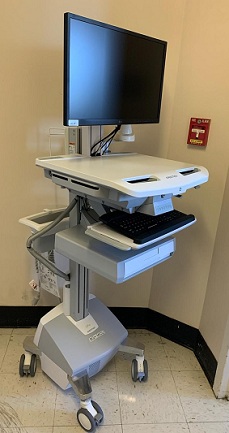
“We selected LG thin client monitors early on because the All-in-One form factor supports both back office teams and more importantly, clinical areas including WoW carts,” he added. “We also liked the idea that LG thin clients let our medical professionals securely log in and access information and resources from one, protected data center.”

The healthcare organization’s experience with IGEL and LG has been very good, according to Conable. “Overall, the endpoints have been very stable and provide a tremendous opportunity to standardize our employees’ digital experience with the multiple vendors and the Windows OS issues we face today,” he continued.

The healthcare organization also reports that by using the automated management capabilities ofIGEL OS, time spent patching and updating Windows OS has been reduced. This has improved efficiency, productivity and security, and freed up internal resources to focus on more strategic projects and initiatives.

DRAMATIC COST-SAVINGS SOLIDIFIES IGEL AND LG’S POSITION ON KALEIDA’S STRATEGIC PLAN

The deployment of IGEL and LG began with clinical users, and the plan is to extend it to the entire organization. Currently, Kaleida has approximately 300 LG endpoints powered by IGEL OS in its hospitals and clinics, with about 50 of those endpoints being used remotely to access cloud workspaces. Kaleida plans to acquire an additional 1,500 IGEL OS licenses and LG endpoints.

“IGEL OS and LG All-in-One thin clients have been selected as our endpoint technologies of choice as part our five-year strategic plan,” said Conable. “IGEL OS has improved the stability of our endpoints, enabled secure access to cloud workspaces for our clinicians and staff members, and streamlined Windows patching and management, which we estimate will lead to $2 million in savings for our organization over the next three years.”

LG AIOs have been verified for IGEL OS through the IGEL Ready program. IGEL Ready is an ecosystem of cutting-edge hardware, software and peripheral solutions that have been verified for use with IGEL OSto deliver a powerful, productive, and secure user experience. You can view the LG partner profile in the IGEL Ready Showcase.

“IGEL OS has dramatically changed the way in which organizations like Kaleida Health approach end user computing,” said Stephen K. Hu, Senior Director at LG Business Solutions USA. “We are proud to teamwith IGEL to help Kaleida improve their digital experience, and it’s gratifying to see how the healthcare organization is driving productivity and efficiency with our combined solution.”

LG’s AIO thin client solution (model 24CK550N), a 23.8-inch model with full HD resolution, IPS panels and a dual-core processor, is an ideal workstation for demanding healthcare environments. This thin client model offers the healthcare professionals at Kaleida exceptional performance and cloud-ready connectivity for virtually any environment they’re working in.

Kindred Healthcare Continuing To Expand Rehabilitation Services In Its Long-Term Acute Care Hospitals

Kindred Healthcare Continuing To Expand Rehabilitation Services In Its Long-Term Acute Care Hospitals

Kindred Healthcare, LLC announced it is adding acute inpatient rehabilitation units (“ARUs”) within three of the Company’s long-term acute care hospitals (“LTACHs”). The hospitals are Kindred Hospital Denver, Kindred Hospital Melbourne, and Kindred Hospital Philadelphia – Havertown. The ARUs, with a total of 33 beds, are expected to begin serving patients in September 2021.

In August 2020, Kindred opened five ARUs within Kindred Hospital North Florida, Kindred Hospital Bay Area – St. Petersburg, Kindred Hospital South Florida – Ft. Lauderdale, Kindred Hospital Houston Medical Center and Kindred Hospital Sugar Land.

Inpatient rehabilitation helps patients recover from conditions that include stroke, brain injury, spinal cord injury, orthopedic injury, neurological conditions, amputation and trauma. The new ARUs will provide the intensive, interdisciplinary clinical and rehabilitation services necessary for improved function and independence, facilitating patients’ recovery so they can be discharged and return to their homes. Patients will receive a minimum of three hours of therapy each day for at least five days a week under the direction of a physiatrist, a doctor specialized in rehabilitation and physical medicine, and 24/7 nursing care. The Kindred ARUs will provide services to both patients in Kindred LTACHs as well as patients from other healthcare providers in their communities.

The new units will be managed and staffed by Kindred Rehabilitation, which delivers clinical success and outstanding patient outcomes for hospital-based programs nationwide. Kindred Rehabilitation treats more than 118,000 patients each year and is the largest contract manager of hospital-based acute rehabilitation programs in the nation. Approximately 100 hospitals in 30 states partner with Kindred Rehabilitation to manage ARUs within their facilities.

“The ARUs complement the care provided in our LTACHs and enable Kindred to offer a continuum of care for patients who require high-intensity rehabilitation services to continue their recovery so they can be discharged and return to their homes,” said Mike Warrington, President of Kindred’s Hospital Division.

“Kindred’s Hospital Division and Kindred Rehabilitation are working collaboratively to meet a growing need for inpatient rehabilitation services in our communities,” said Russ Bailey, President of Kindred Rehabilitation. “These ARUs enable us to provide greater access and enhanced capabilities, expertise, and clinical integration to patients requiring these rehabilitation services.”

About Kindred Healthcare

Kindred Healthcare, LLC is the nation’s leading specialty hospital company delivering acute health services in its long-term acute care hospitals, inpatient rehabilitation hospitals, acute rehabilitation units, and behavioral health line of business, all specializing in treating the most medically complex patients. Based in Louisville, Kentucky, and ranked as one of Fortune magazine’s Most Admired Healthcare Companies for nine years, Kindred’s mission is to help our patients reach their highest potential for health and healing with intensive medical and rehabilitative care through a compassionate patient experience. For more information, go to www.kindredhealthcare.com. You can also follow us on Facebook, LinkedIn, and Twitter.

Kindred Healthcare, LLC (“Kindred” or the “Company”) today announced it is adding acute inpatient rehabilitation units (“ARUs”) within three of the Company’s long-term acute care hospitals (“LTACHs”). The hospitals are Kindred Hospital Denver, Kindred Hospital Melbourne, and Kindred Hospital Philadelphia – Havertown. The ARUs, with a total of 33 beds, are expected to begin serving patients in September 2021.

In August 2020, Kindred opened five ARUs within Kindred Hospital North Florida, Kindred Hospital Bay Area – St. Petersburg, Kindred Hospital South Florida – Ft. Lauderdale, Kindred Hospital Houston Medical Center and Kindred Hospital Sugar Land.

Inpatient rehabilitation helps patients recover from conditions that include stroke, brain injury, spinal cord injury, orthopedic injury, neurological conditions, amputation and trauma. The new ARUs will provide the intensive, interdisciplinary clinical and rehabilitation services necessary for improved function and independence, facilitating patients’ recovery so they can be discharged and return to their homes. Patients will receive a minimum of three hours of therapy each day for at least five days a week under the direction of a physiatrist, a doctor specialized in rehabilitation and physical medicine, and 24/7 nursing care. The Kindred ARUs will provide services to both patients in Kindred LTACHs as well as patients from other healthcare providers in their communities.

The new units will be managed and staffed by Kindred Rehabilitation, which delivers clinical success and outstanding patient outcomes for hospital-based programs nationwide. Kindred Rehabilitation treats more than 118,000 patients each year and is the largest contract manager of hospital-based acute rehabilitation programs in the nation. Approximately 100 hospitals in 30 states partner with Kindred Rehabilitation to manage ARUs within their facilities.

“The ARUs complement the care provided in our LTACHs and enable Kindred to offer a continuum of care for patients who require high-intensity rehabilitation services to continue their recovery so they can be discharged and return to their homes,” said Mike Warrington, President of Kindred’s Hospital Division.

“Kindred’s Hospital Division and Kindred Rehabilitation are working collaboratively to meet a growing need for inpatient rehabilitation services in our communities,” said Russ Bailey, President of Kindred Rehabilitation. “These ARUs enable us to provide greater access and enhanced capabilities, expertise, and clinical integration to patients requiring these rehabilitation services.”

About Kindred Healthcare

Kindred Healthcare, LLC is the nation’s leading specialty hospital company delivering acute health services in its long-term acute care hospitals, inpatient rehabilitation hospitals, acute rehabilitation units, and behavioral health line of business, all specializing in treating the most medically complex patients. Based in Louisville, Kentucky, and ranked as one of Fortune magazine’s Most Admired Healthcare Companies for nine years, Kindred’s mission is to help our patients reach their highest potential for health and healing with intensive medical and rehabilitative care through a compassionate patient experience.

Translate »