Close
Digital Health & Ai Innovation summit 2026
Medical Taiwan 2026

Healthcare organization selects BIO-key identity and access management for remote authentication

Nonprofit healthcare organization Partners in Health (PIH) has selected biometrics and access control provider BIO-key’s PortalGuard Identity and Access Management (IAM) solution to improve its authentication options for secure access to enterprise applications and cut down on ongoing difficulties related to password resets, according to a company announcement.

Boston-based PIH provides medical care and support in underserved communities or geographic regions, and found managing password resets for a global userbase often located in remote areas to be one of the primary challenges facing its staff. A portion of its mobile users do not have access to smartphones, cellular signal coverage or the internet, making a flexible IAM solution with different secure user authentication options necessary.

The digital identity project was therefore taken on to provide the userbase with a password reset solution that was easy to deploy and user-friendly enough to support self-service. The scope was then extended to provide PIH employees with a single sign-on solution for access to Office 360, Zoom, Salesforce, Atlassian, and several proprietary applications.

“Deploying advanced access management capabilities to a remote global userbase comes with extraordinary challenges and requires a well-architected security product,” states PortalGuard President Mark Cochran. “Inefficient password management processes create security risks, cause work stoppages, and can negatively affect the user experience. In healthcare, access to patient records and being able to process medical transactions is critical. PortalGuard was the perfect IAM solution to help PIH quickly and easily manage an international group of employees with unique needs and lower its operational costs.”

PortalGuard was also recently deployed by Eastern Florida State College, among a raft of institutions signing up with BIO-key since it acquired the solution in the PistolStar acquisition announced this past June.

Kaiser Permanente launches virtual-first health plan in Washington

DarioHealth Enters UK Remote Patient Monitoring Market Through Agreement with Williams Medical

In response to increasing patient demand for telehealth, Kaiser Permanente this week announced the launch of a new “virtual-first” healthcare plan in Washington state.

The plan, which will be available January 1, 2021, through Kaiser Foundation Health Plan of Washington’s direct to employer groups and consumers, will center telehealth as a foundational modality of care for patients with nonurgent issues.

“Virtual care is the health care of today and tomorrow,” said Dr. Paul Minardi, president and executive medical director of Washington Permanente Medical Group, in a statement.

“The pandemic has reinforced the need to provide care in the most convenient, accessible, and safe way for our members, and that’s what Virtual Plus does,” he said.

WHY IT MATTERS

As with other providers, Kaiser Permanente says it saw a huge uptick in telehealth use since the start of the pandemic. According to the company, it was one of the first healthcare organizations to deliver the majority of care via telemedicine.

The system’s options include its Consulting Nurse Service, Care Chat online messaging, video and phone visits. About 65% of appointments are now conducted virtually.

The new health plan will allow members to reach out via phone, online chat, video or email for nonurgent issues. According to the company, patients will see the same doctors and clinicians as they would at any Kaiser Permanente facility, with their data available through electronic health records.

Members can get in touch with their clinicians virtually, with the option to come in person for follow-up visits, says the organization.

They have access to Kaiser Permanente pharmacists via telehealth and can get medications delivered in one to two days.

“With this new plan, we are innovating to give our members more convenient care options at a more affordable cost, respecting their choices and preferences,” said Joseph Smith, vice president of sales and business development, Kaiser Foundation Health Plan of Washington, in a statement.

THE LARGER TREND

Although much attention has been paid of late to any upcoming physician fee schedules for telehealth under Medicare and Medicaid, some private payers have also taken strides to center virtual care in the future of their coverage.

This summer, Blue Cross Blue Shield of Tennessee announced that it would make in-network telehealth services permanent.

Telehealth “has opened up another opportunity for people to get care in a different way,” said BCBS Tennessee SVP and Chief Medical Officer Dr. Andrea Willis. “We are continuing this expansion for our commercial population because it feels like it’s the right thing to do.”

ON THE RECORD

“We are excited to offer another care option to our members that continues our commitment of providing high-quality, convenient, and affordable health care,” said Smith.

Qualtrics Announces Partnership With Safe & Reliable Healthcare to Accelerate Healthcare Experience Transformation

Qualtrics Announces Partnership With Safe & Reliable Healthcare to Accelerate Healthcare Experience Transformation

Qualtrics, the creator of the experience management (XM) category, announced a partnership with Safe & Reliable Healthcare (S&R), a leading provider of patient safety and high reliability technologies and services to more than 700 healthcare organizations. Leveraging the Qualtrics XM Platform, S&R will provide healthcare systems with a holistic view of the impact that their culture and experience has on patient safety and other operational outcomes. Together, S&R and Qualtrics will provide actionable strategies for health systems to improve overall employee and provider engagement and ultimately, patient care.

S&R is a recognized pioneer in the field of healthcare improvement, having assessed culture and burnout across the largest health systems and led transformation efforts for systems such as Mayo Clinic, Kaiser Permanente, and AdventHealth. With more than 150 years of collective experience in designing, leading, and supporting related improvement efforts, S&R has demonstrated an inextricable link between patient safety and experience with organizational culture.

“Qualtrics’ leadership in experience management brings a best-in-class technology platform that can manage multiple complex hierarchies and capture both employee and patient experience, as well as operational data, all in one place,” said Allan Frankel, MD, CEO of Safe & Reliable Healthcare. “This will allow us to more seamlessly deliver integrated action plans to our healthcare clients so they can truly drive lasting transformation.”

The Safe & Reliable and Qualtrics partnership will benefit healthcare systems by:

  • Delivering improved outcomes that affect ratings, reimbursements, and patient satisfaction
  • Proactively predicting areas of risk across various aspects of patient care, highlighting where leaders must act to support the care team and their patients
  • Engaging and retaining employees and providers by capturing culture and experience data across the entire provider and employee lifecycle
  • Improving brand perceptions among providers, employees, and patients
  • Meeting the highest standards of Magnet and Leapfrog as tangible outcomes of transforming culture and improving safety with a single integrated study that covers culture, engagement, and nursing satisfaction to reduce respondent fatigue
  • Predicting CMS Star Ratings, enabling course corrections in key areas of care, culture and experience
  • Applying cultural expertise and technology to achieve >70% response rates, streamline survey mapping efforts and access evidence-based strategies to drive improvement
  • Offering searchable and scientifically validated benchmarks to compare against peers to enable learning and informed goal setting

“Safe & Reliable has been instrumental in improving the patient experience and safety for some of the largest healthcare providers in the U.S.,” said Susan Haufe, Chief Industry Advisor for Healthcare at Qualtrics. “By combining our technology and S&R’s expertise in patient safety, we have the unique ability to help healthcare systems increase accountability, build a culture of trust, and create mechanisms for discovering and taking action on root causes within the patient experience. We will partner closely with S&R to continue transforming experiences in healthcare at scale.”

Daman and Microsoft collaborate to introduce AI-powered Health Bot to fight COVID-19

Daman and Microsoft collaborate to introduce AI-powered Health Bot to fight COVID-19

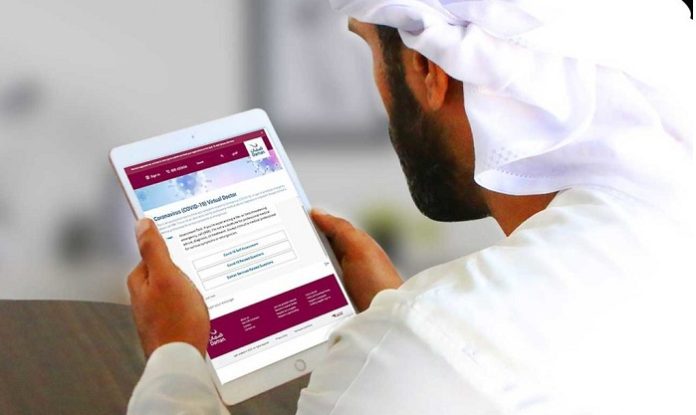
Daman, the UAE’s leading national health insurance company has collaborated with Microsoft to deploy the Daman Health Bot, an AI powered tool that will assist patients to conduct self-assessment on COVID-19 symptoms and guide them to the appropriate level of care. The Daman Health Bot is bilingual and able to provide expertise including patient assessment for the disease, triage and symptom checking, offering general medical information, and making medical recommendations.

The health bot will ask patients a defined set of questions and follow specific protocols, and accordingly advise them to connect with Abu Dhabi Department of Health (DoH), UAE Ministry of Health & Prevention (MOHAP) and the Dubai Health Authority for further assistance.

“We have a very important social responsibility to play during the pandemic crisis and protect the health and safety of people.  The Daman Health Bot speaks to that effort by addressing queries and reducing person to person engagement,” says Hamad Al Mehyas, Daman’s CEO. “Partners such as Microsoft are empowering us with the right technology to better engage the public and provide the right level of guidance. The Daman Health Bot will reduce patient visits to hospitals, lessen workload on call centres, enhance patient experience and encourage them to proactively manage their health condition.”

“Technology is playing a key role in helping patients assess their situation quickly and conveniently,” said Sayed Hashish, General Manager, Microsoft UAE. “Our Healthcare Bot service empowers organisations like Daman to build and deploy AI-powered conversational healthcare experience at scale. With our mission to empower every person and organization to achieve more, Microsoft is committed to bringing its tools and innovations to support healthcare organizations provide the best possible care.”

Daman has long been investing in digitalization and already uses artificial intelligence for its claims handling as well as robotic process automation for a variety of administrative tasks. Microsoft and Daman are also planning to integrate the health bot to other customer services such as digital consultations and lifestyle related advise.

The Daman Health Bot  is available on company’s website and mobile application with the aim to reach its network of over 2.5 million members.


Key Benefits of MOSES Technology for BPH and Stones

Key Benefits of MOSES Technology for BPH and Stones

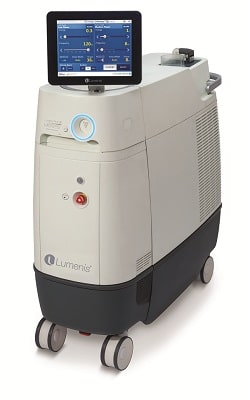
With several years’ experience treating benign prostatic hyperplasia (BPH) and kidney stones with the Lumenis MOSES Pulse 120H holmium laser with MOSES Technology, I have seen very meaningful benefits for my patients in terms of both outcomes and recovery. The technology has been so influential that it has actually allowed us to change BPH surgery from an overnight stay to an outpatient procedure.

To appreciate the difference, consider how patients with BPH present before surgery. Some have variable symptoms (slow or intermittent urine stream, frequent urination, the need to push to urinate), while others with significant obstructing prostate have urine retention, which requires catheterization and can lead to severe complications (repeated bladder and kidney infections, urethral strictures). The condition is deleterious to both patients’ health and their quality of life. I choose to perform holmium laser enucleation of the prostate (HoLEP) using the Holmium laser because, with it, my outcomes are highly predictable and superior to any other BPH procedure. From the patient’s perspective, objective AUA symptom scores show an average increase of 15 points – a significant improvement in the quality of life after HoLEP. This approach gives them relief from urinary symptoms as well as an easy recovery, thanks to these key benefits:

  • Less bleeding, less damage, less pain, and irritation – Patients experience no pain after HoLEP. Irritation is minimal and usually related to the catheter. We can attribute these benefits to the holmium laser’s precision and coagulation. This cutting tool has a shallow depth of penetration into the tissue, so we can work very precisely, in contrast to other technologies such as a green light laser that can cause charring of the tissue. In addition, the holmium laser cuts and coagulates at the same time, so bleeding is minimal. This makes it a safe choice for patients taking anti-coagulants.
  • Same-day discharge – With MOSES Technology minimizing bleeding, about 70% of our HoLEP patients go home the same day. That number is likely to increase as we continue to improve outpatient optimization, including the right use of continuous bladder irrigation after surgery. This has been a rewarding advance because patients recover better and feel happier at home.
  • Normal urination the next day – About 95% of my patients can urinate normally one day after HoLEP surgery. This has been true even for patients whose conditions were advanced before surgery, including those with urine retention and with limited bladder contraction capacity. And because patients can urinate normally, we can remove the urinary catheter on day one. What’s more, HoLEP does not have any effect on erectile function.
  • Safe, effective option for very large prostates and complex cases – For patients with prostates at or above 100cc, the options are limited. They can have open simple prostatectomy with a 10-15cm incision in the bladder or a robotic simple prostatectomy, which is less invasive than the open alternative but still requires a hospital stay and at least 7 days with a catheter. HoLEP is by far the least invasive choice and can be done on an outpatient basis with less catheter time and no pain. HoLEP’s efficient, minimally destructive nature also makes it the preferred safe treatment for patients with comorbidities such as obesity and cardiovascular disease (patients taking anti-coagulant therapy).

MOSES for Kidney Stones

For patients with kidney stones, the efficiency of lithotripsy with MOSES Technology means less time under anesthesia, which is beneficial for their health. The technology also prevents stone retropulsion, so even large or hard stones do not bounce away from the laser energy. This improves safety because there is less chance for the laser to injure surrounding tissue, such as a ureter or kidney. Using the same holmium laser and MOSES Technology that is so beneficial for patients with BPH, we help ensure the same themes of effective treatment with faster, healthier recovery.

Change Healthcare Awarded Multi-Year Contracts by Vizient

Change Healthcare Awarded Multi-Year Contracts by Vizient

Change Healthcare announced that it has been awarded two multi-year contracts with Vizient, Inc., the largest healthcare purchasing group in the country. The agreements give Vizient members access to contract savings for Change Healthcare Enterprise Imaging™ and Cardiology Hemo, a hemodynamic monitoring solution.

Vizient’s diverse membership and customer base includes academic medical centers, pediatric facilities, community hospitals, integrated health delivery networks, and non-acute healthcare providers––representing more than $100 billion in annual purchasing volume.

“With these agreements, the 95% of academic medical centers and more than 50% of acute care providers in the U.S. that are Vizient members can enjoy enhanced savings for Change Healthcare’s Enterprise Imaging and Hemodynamic solutions,” said Aaron Green, senior vice president and chief growth officer, Enterprise Imaging at Change Healthcare. “This is a tremendous opportunity to educate more providers about the benefits they can realize with these solutions.”

Taken together, Enterprise Imaging and Cardiology Hemo make up the Change Healthcare Enterprise Imaging Network™ and provide the following:

The Change Healthcare Cardiology Hemo™ solution is an integrated hemodynamic monitoring system for cardiology departments that need to aggregate hemodynamic data, waveforms and images in one cardiac patient record.

To learn more about Change Healthcare Enterprise Imaging™, please visit the Enterprise Medical Imaging Solutions page. To learn more about the company’s hemodynamic monitoring solution, visit the Change Healthcare Cardiology Hemo™ solutions page.

For more information on Change Healthcare, please visit our website, hear from our experts at Insights; Follow us on Twitter; Like us on Facebook; Connect with us on LinkedIn; and Subscribe to us on Libsyn, Apple Podcasts, Google Podcasts, and YouTube.

About Change Healthcare

Change Healthcare (Nasdaq: CHNG) is a leading independent healthcare technology company, focused on insights, innovation, and accelerating the transformation of the U.S. healthcare system through the power of the Change Healthcare Platform. We provide data and analytics-driven solutions to improve clinical, financial, administrative, and patient engagement outcomes in the U.S. healthcare system.

Jio Platform funded venture, KareXpert launches AI enabled Digital Healthcare Platform for Hospitals

Digital Health

KareXpert, a Jio Platform funded venture, has built an AI-led, Cloud-based Digital Healthcare Platform for Hospitals. This platform brings all the healthcare modules together as a pre-integrated stack at fraction of the cost. This includes Advanced HIMS, EMR/EHR, LIMS, RIS/PACS, Pharmacy, Telemedicine, Medical IoT, Advanced BI, Connected Ambulance, and many more

After working for more than two decades in the healthcare industry, CIO KK Singh of KareXpert realized that hospitals are struggling to manage their siloed and distributed healthcare IT systems. A typical 50-300 bedded hospital in India today faces many of these challenges.

Most of the hospitals today are running on 5-10 different IT solutions, for e.g. HIMS, EMR/EHR, LIMS, PACS, Pharmacy, QMS, and so on. These siloed and point solutions in a hospital are expensive and slow the pace of innovation due to continuous integration across vendors. These are also vulnerable to most of the security and privacy with no encryption at database level”, said KK Singh, CIO at KareXpert.

Cumulatively, these issues are causing broken patient journeys, loss of revenue, poor operating efficiency, and substantial hidden costs. It also affects the ability of the hospital to give a higher quality of care to patients and make it more affordable.

In order to solve these issues, KareXpert did 2 years of research and then developed the DIGITAL HEALTHCARE PLATFORM using a limitlessly scalable technology stack rather than a legacy product and integrated approach. The platform-based approach comes with pre-integrated and ready to service full-stack solutions for Hospitals.

Coupled with Digital Healthcare Platform based technology, KareXpert brings a SaaS-based commercial model approach where hospitals simply pay a fixed monthly fee. The solution comes with Cloud Gateway for the medical equipment (Lab, Radiology, etc.) and IoT devices connectivity to the platform directly.

Besides disruptive technology and SaaS-based commercial model, KareXpert has also built the holistic Managed Services model for the Hospitals serving both onsite and offsite support needs bringing complete peace of mind to the customer.

“Using our Patient-First and Mobile-first approach, the Digital Healthcare Platform will revolutionize the Hospital IT as it brings the speed of business with innovation using most modern software technologies at a fraction of cost. This will solve most of the chronic issues of currently siloed systems in the Hospital. Even hospitals affected by COVID-19 budget cuts can now start deploying the latest Healthcare technologies without any upfront investments,” said Nidhi Jain, Founder, and CEO of KareXpert.

The platform is already being used in some of the top hospitals across India, helping them streamline their operations.

SNUBH develops AI model predicting patients at risk of cerebral aneurysm

SNUBH develops AI model predicting patients at risk of cerebral aneurysm

Researchers at Seoul National University Bundang Hospital (SNUBH) have developed an artificial intelligence (AI) model that can predict the risk of a cerebral aneurysm in patients.

Professor Kim Taek-gyun of the Department of Neurosurgery of Seoul National University Bundang Hospital and his research team have developed an AI model that can predict patients at risk of a cerebral aneurysm. (SNUBH)

A cerebral aneurysm is a vascular disease, in which a part of a cerebral artery swells abnormally like a lump as a small crack occurs in the cerebral blood vessel wall. When a cerebral aneurysm suddenly bursts, blood bursts like a spider web between the brain and spinal cord, causing subarachnoid hemorrhage. The disease has a fatality rate of 30 to 50 percent.

Due to such a high fatality, the number of cases of performing cerebrovascular imaging tests at the time of health check-up is increasing recently, increasing the diagnosis of unruptured cerebral aneurysms. Tests, such as cerebrovascular angiography and brain MRI, are needed to determine the presence or absence of disease accurately. However, the country has yet to reimburse cerebral aneurysm and hospitals do not recommend screening tests unless it is the case.

“Nevertheless, considering that cerebral aneurysms are much more common in those who are not subject to screening recommendations, there is a growing need for appropriate screening tests to predict the risk of developing cerebral aneurysms in individuals,” the hospital said.

To resolve this issue, the team, led by Professor Kim Taek-gyun, developed a machine learning-based cerebral aneurysm risk prediction model using the examination data of about 500,000 people who had undergone national health checkups between 2009 and 2013.

The cerebral aneurysm incidence prediction model included well-known risk factors for cerebral aneurysms such as age, blood pressure, diabetes, heart disease, family history, and 21 other factors, which can be checked through health examinations such as body mass index, waist circumference, and blood test values.

Afterward, the team applied a machine-learning algorithm to increase the accuracy of prediction. The research team applied machine learning algorithms, including deep neural networks, which have been actively studied recently, to national examination data, and constructed an AI model that shows higher predictive power than classical statistical methods.

As a result of comparing the predicted performance by classifying the risk of developing a cerebral aneurysm into five stages, the incidence rate of the group predicted as the lowest risk was 3.2 per 100,000 people annually, while the incidence rate of the group predicted as the highest risk was 161 per 100,000 people.

Also, by evaluating each patient’s risk contribution, the team found that the risk of developing a cerebral aneurysm increased as age, waist circumference, blood pressure, and blood sugar increased in both men and women. However, body mass index and risk factors for hyperlipidemia were found to have more influence in women than in men.

“This study is meaningful in that it is a study that has determined which groups are at risk for cerebral aneurysms in the general population based on large-scale screening data at the national level,” Professor Kim said. “We plan to build a more personalized and precise risk prediction model by reinforcing data such as patients’ medical use records and medication history.”

Based on such data, if the guidelines for screening for cerebral aneurysms can be revised, it is expected that major improvements in the primary prevention of cerebrovascular diseases can be achieved, he added.

DeWitt Hospital remotely installs cloud-based EHR that helps with COVID-19 care

DeWitt Hospital remotely installs cloud-based EHR that helps with COVID-19 care

DeWitt Hospital is a critical access hospital in DeWitt, Arkansas. It provides emergency and outpatient services for rural Southeastern Arkansas. The hospital is equipped with a radiology department, a laboratory department, a respiratory department and an emergency room. It also operates a nursing home attached to the hospital, the Ferguson Rural Health Clinic, and the local ambulance and paramedic services.

THE PROBLEM

When Brian Miller joined DeWitt Hospital as CEO in January 2019, the hospital’s existing EHR from CPSI was sunsetting and the facility had nine months to find a replacement. Miller and staff knew they needed a system that was light on maintenance, updates and support; was able to adjust to different workflows and care levels; and was supported by a team willing to be a partner to the hospital, rather than just another vendor.

“It also was really important for us that our new EHR would be interoperable and could connect to the statewide SHARE health information exchange,” Miller explained. “We often transfer patients to other hospitals, and their medical data needs to transfer with them. On top of that, a lot of our patients have chronic conditions and receive health services from multiple providers, and their data is fragmented across each provider they receive treatment from.”

It is absolutely essential to continuity of care that clinicians have easy access to their patients’ medical records, no matter where the patient is coming from or where they have been treated in the past. By connecting to the SHARE HIE, DeWitt staff could access a unified longitudinal patient record, allowing clinicians and others in the state to make more informed decisions and improve the quality of care, Miller said.

PROPOSAL

For an EHR, DeWitt decided on vendor Azalea Health. Azalea came in with a cloud-based system that minimized IT spend and lift, reduced the need for training and expensive consulting services, and offered an interoperable approach that enabled DeWitt to connect to the SHARE HIE, while also connecting its facilities, so it could easily share patient data across its own network, Miller explained.

“The idea was simple: Azalea would deliver a system that limited the amount of upfront and long-term spend, empowered our hospital staff to customize the solution based on their clinical workflow, and unlocked our data so that we could have a unified view of the patient regardless of the care setting,” he said.

We were coming from an on-premise system that demanded time and dollars to maintain,” Miller said. “The interface was old and workflows were static. The idea of a cloud-based solution that we could quickly integrate into our existing technology ecosystem with very little lift was something totally new for the organization. And it was an approach we very much needed.”

MARKETPLACE

There are many vendors with electronic health records systems on the health IT market today, including Allscripts, athenahealth, Cerner, eClinicalWorks, Epic, Greenway Health, HCS, Meditech and NextGen Healthcare.

MEETING THE CHALLENGE

Right as DeWitt was moving from the integration stage of the EHR implementation into the support stages, COVID-19 hit.

“We were forced to finish the implementation remotely,” Miller said. “But it’s gone smoothly. Azalea simplified the process and worked to ensure integration into our existing radiology and lab solutions. They worked across our groups, including nursing, registration and IT, to make sure everyone was aligned, informed and prepared on Day One. Azalea has been a very supportive and attentive partner, and we still meet with them twice a week.”

The EHR vendor also played a big role in connecting DeWitt to the SHARE HIE. DeWitt is part of the Arkansas Rural Health Partnership (ARHP), a network of 14 rural hospitals that pools resources to better meet the unique needs of patients in their rural communities. When the pandemic started, Arkansas Blue Cross Blue Shield came to ARHP and provided the funding to connect all the rural hospitals in the partnership to the SHARE program.

For DeWitt, Azalea was instrumental in facilitating its connection to the SHARE HIE. With the vendor’s help, DeWitt became one of the first providers in Southern Arkansas to be connected to the SHARE program.

“The SHARE program has led to more informed care transitions between DeWitt and other local community clinic providers,” Miller explained. “We use the exchange to share episodic admission/discharge/transfer data, discharge summaries, radiology reports, image narratives, laboratory results, prescribed medications and clinical procedures. Our clinic gets 24-hour daily reports on all our patients, and we get notified in real time when any patient has an ED or inpatient discharge or if they test positive for COVID-19.”

RESULTS

Azalea also has supported DeWitt in testing the community for COVID-19. As one of the only places in the area to get tested, DeWitt had a lot of people coming to the clinic to get tested. One day the hospital had more than 100 tests, and that went on for about two weeks.

“What draws a lot of people is that they can get their test results in 15 minutes at our clinic instead of waiting a week,” Miller said. “This appeals a lot to local businesses. When the business is open and one employee tests positive, they need to test everybody. They don’t want to have to shut down for a long time, so rapid results are ideal.”

Testing kits were reallocated by HHS in late July. DeWitt still is testing people who come into the hospital. But the removal of these tests means that DeWitt does not have the resources to help local businesses test their employees. It’s an added strain to an already stressful situation.

“At its peak, the number of people coming in to get tested was more than double our normal patient volume,” Miller said. “With so many new people coming into our hospital, Azalea’s EHR has been a valuable tool for keeping track of new patients. Having this broader pool of patients in our records will be helpful for our recovery once we can ramp up elective procedures again.”

ADVICE FOR OTHERS

“The landscape has changed to the point where it’s difficult for smaller hospitals to stand alone and survive,” Miller remarked. “Larger hospitals have more access to funding and get better deals when purchasing equipment, but everything costs more for critical access hospitals. We’ve been fortunate enough to leverage our connection with Jefferson Regional Medical Center in Pine Bluff to use their buying power and save a lot of money on supplies.”

DeWitt is working to get the ARHP to a similar place, where the hospital can share resources between the 14 hospitals to secure grants, centralize staffing and acquire supplies at lower rates. Rural hospitals are in a tough place right now, and solidarity between hospitals might be the only way forward, Miller said.

It’s also important to understand the different kinds of solutions that are out there, the benefits and risks to each, and scalability to future demands, he added.

“We never would have anticipated COVID-19 and the resulting impact that it had on our hospital operations and data,” he concluded. “We made the right decision to go with a cloud-based EHR that helped us pivot to meet new demands for testing and tracking. And we have been fortunate to be part of the SHARE program, which is helping draw insights into the impact of COVID-19 on our community and the broader hospital network that serves Southeastern Arkansas.”


Lehigh Valley Hospital-Schuylkill using ultraviolet light technology to sanitize facility

Lehigh Valley Hospital-Schuylkill using ultraviolet light technology to sanitize facility

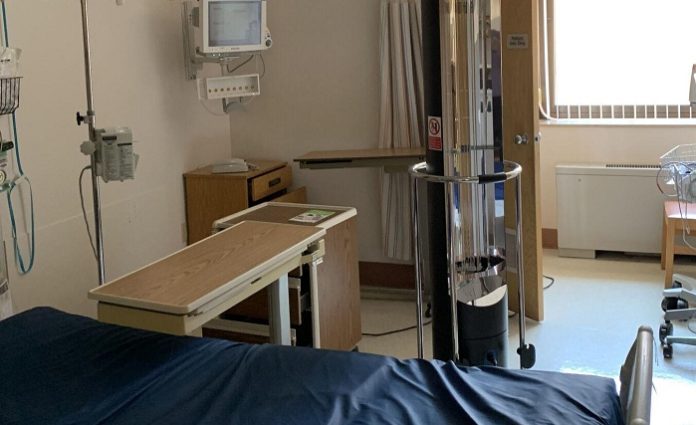
The SURFACIDE Total Room Disinfection device delivers UV-C energy to sanitize a hospital or treatment room in as little as 15 minutes without chemicals. A triple emitter configuration allows the system to ensure full eradication of any pathogens on surfaces or in the air. No known bacteria or viruses can survive UV-C energy technology which includes the new coronavirus and methicillin-resistant staphylococcus aureus.

The device is used in patient rooms and other areas of the hospital after regular cleaning and sanitizing has been completed.

“This technology provides an extra measure of protection for patients and staff,” said William Reppy, LVH–Schuylkill president. “We are very fortunate to have this technology here and now in Schuylkill County. In fact, when you enter our facilities, you can be assured that we do not just look clean, we are clean.”

Other LVHN facilities also use UV light technology to supplement their cleaning and sterilization practices. LVH-Schuylkill is the only hospital in Schuylkill County using SURFACIDE technology, according to Lehigh Valley Health Network officials.

“At a time when everyone is so rightly concerned about germs and proper sanitation, it is absolutely essential that we are able to make this technology available here at our Pottsville facilities,” said Terry Wagner, director of EVS. “Infection prevention is the reality of clean.”

LVH-Schuylkill’s unit uses a system equipped with three emitters or towers, which allows the unit to cover more surface area than single emitters during a single cycle. This allows for safer, more efficient cleaning of areas within the hospital that require supplemental disinfection. LVH-Schuylkill is using the unit in patient rooms, operating suites, exam rooms, restrooms and other areas.

Translate »