Close
Digital Health & Ai Innovation summit 2026
Medical Taiwan 2026

BWH Receives First NICU Installed MRI System in the U.S

BWH Receives First NICU Installed MRI System in the U.S

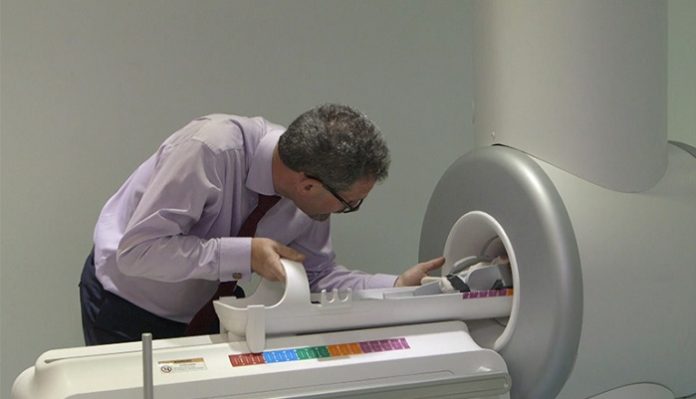
A new MRI system providing high-quality scans and specifically designed for safe imaging of newborns in a Neonatal Intensive Care Unit (NICU) arrived in the Department of Pediatric Newborn Medicine at Brigham and Womenโ€™s Hospital. The unit will expand neurocritical care at BWH and is the first FDA-approved, NICU-dedicated MRI system in the U.S.

โ€œThe installation of the state-of-the-art, neonatal MRI system will greatly enhance the research capabilities of BWH and elevate and expand neurocritical care for our littlest patients,โ€ said Terrie Inder, chair of the Department of Pediatric Newborn Medicine. โ€œLocating this technology within the NICU will reduce time and patient risk associated with transporting newborns to a traditional MRI and allow MRI access from the first hours of life through the challenging, sometimes life threatening, time within the NICU.โ€

Babies undergoing scans will be in a temperature-controlled self-contained incubator bed which minimizes the childโ€™s movement while allowing for better control of the babyโ€™s environment and continuous monitoring of its vital signs. Information gained from the MRI can inform the care team and the family as to whether brain injury has occurred, and in the future, guide which treatments may assist in preventing disability.

โ€œThis new MRI system, designed with a single use โ€“ scanning of the newborn โ€“ will enhance the care we provide for our NICU patients and provide an empowering technology that will complement existing MRI scanners and improve efficiency by offering imaging to our tiniest patients within the controlled confines of the NICU,โ€ said Srinivasan Mukundan, Jr., PhD, MD, medical director of Magnetic Resonance Imaging at BWH.

The neonatal MRI system is quieter than traditional whole-body scanners and uses lower power consumption. The self-shielded, permanently magnetic system has been specifically designed for the NICU, an area that would be typically size- and risk-prohibitive for an MRI.

Initially, the neonatal MRI system, the EMBRACE โ„ข, manufactured by Aspect Imaging, will be used exclusively for applied medical research. Upon its arrival, it was hoisted via crane from Francis Street through a roof hatch into the NICU and moved into the room designed to house the new MRI.

Early Experiences with MoLEP for BPH

Early Experiences with MoLEP for BPH

The prevalence of benign prostatic hyperplasia (BPH) gives us the opportunity to continually hone our approach to treatment through many repetitions. Our experience has led us to embrace holmium laser enucleation of the prostate (HOLEP).

HoLEP enables us to work toward our goals for safe, highly effective BPH treatment and a rapid return to normal activities. During surgery, we want to approach zero risk of blood transfusion. We want hospital stays to be as short as possible, moving closer and closer to outpatient treatment (Most stays for HoLEP are less than 24 hours and some only a few hours.) We want patients back on their feet immediately and back to work in less than a week. Now these goals are within reach for most patients.

Recently, we had the opportunity to use Lumenisโ€™ MOSES Technology in a new approach called MOSES laser enucleation of the prostate (MoLEP). Here, we share the advantages of HoLEP and how, based on our early experiences, we think MoLEP may strengthen those advantages.

HoLEPโ€™s Significant Benefits Over TURP
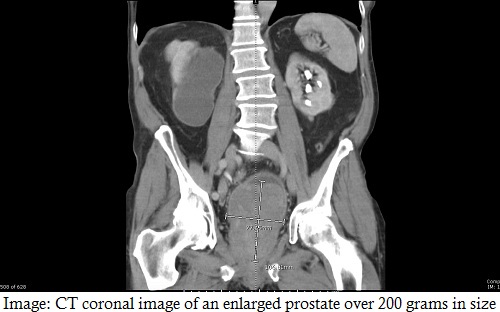
HoLEP has many well-documented advantages over transurethral resection of the prostate (TURP) in both outcomes and efficiency. One advantage familiar to many urologists is the ability to tackle very large prostates with HoLEP . Instead of treating prostates 80 cc and over with an open or robotic suprapubic prostatectomy, we can perform a transurethral HoLEP with the lowest postoperative morbidity, least blood loss, and shortest catheter dwell time.1
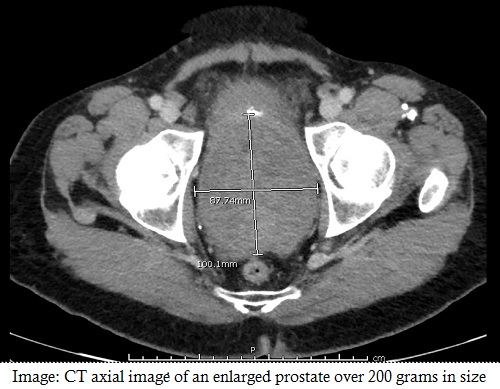
Itโ€™s a misconception, however, that HoLEP is an option reserved for large prostates. We use the procedure to treat BPH regardless of prostate volume. Early head to-head studies showed improved postoperative IPSS scores, superior voiding metrics, and lower retreatment rates immediately and five, even ten years after surgery.2 Additionally, the versatility of holmium technology to treat nephrolithiasis and BPH exemplifies its range of benefits. The addition of MOSES technology to the holmium platform further highlights the benefits of HoLEP over alternative transuretheral procedures like TURP.

There is significantly less bleeding with HoLEP compared to other treatment options because the laser allows us to not only enucleate the prostate, but also to precisely cauterize the bleeding vessels. With our initial experience in more than 50 cases using the Lumenis MOSES laser system, we can appreciate a unique tissue interaction with the laser energy, which results in better coagulation. Controlled bleeding improves visualization, obviates transfusion, and makes the procedure safe for patients taking anticoagulants โ€“ a major advantage in an age group where comorbidities like heart disease are common.3 We also use saline as our fluid irrigant, which eliminates any risk of TUR syndrome associated with TURP.

Perhaps the biggest advantage of HoLEP over TURP is its exceptionally low long-term retreatment rate. About 1 to 4 percent of HoLEP patients require retreatment at 10 years,4 compared to a TURP retreatment rate of up to 30 percent at just 5 years.2 With this degree of durability, most patients will never require additional BPH treatment.

Despite the added attention around preserving antegrade ejaculation after BPH surgery, we find that with appropriate counseling, our patients are highly satisfied after HoLEP even with the high rates of retrograde ejaculation. Other side effects of the surgery include transient urinary incontinence, which is very common in men (up to 40%) after HoLEP, but resolving with persistent incontinence estimated at 1-2% 3 months after surgery. There is a low risk of urinary tract infection (again, lower than TURP because catheters are used for fewer days), prolonged catheterization, need for transfusion, or postprocedural urinary retention.5 Now, with the improved efficiency and hemostasis we are seeing with MoLEP, we are performing more true outpatient surgeries where patients are discharged home immediately after HoLEP with instructions for at-home, patient-performed foley catheter removal and void trial.

MoLEP May Take Another Step Forward
After the launch of MOSES Technology, our team trialed it for approximately 3 months. In our experience, we found that MoLEP markedly improved efficiency over standard HoLEP by stabilizing the laser, reducing laser fiber break back, and cauterizing more effectively during enucleation.

One of the advantages of using a newer high-powered laser unit for HoLEP is that there are two pedals that can be present with independent energy settings. We use one for incisions and one for cautery, cutting first and then cauterizing the tissue. In MoLEP, the MOSES laser simultaneously cut and cauterize. Because we do not need to pause to cauterize a vessel, we can focus on dissection without losing the plane, controlling bleeding as we go. The MoLEP procedure is also more efficient at cutting through adenomas tissue, so we can get to the desired plane and proceed faster. Our initial objective data show the technology reduces cutting time 30 to 40 percent and cuts cautery time by 50 percent compared to other laser fibers.
Anecdotally, patients appear to have less bleeding from MoLEP, compared to standard HoLEP. Burning or discomfort appear to be about the same in our small sample. To date, we only have this 3-month experience with MoLEP, and we need higher-volume, long-term data to better understand the effects of MoLEP procedure.

We Hope Colleagues Join Us
With all the advantages of HoLEP for our patients, we are working to get more physicians to perform this procedure. It has been described as being difficult to learn, but with appropriate mentorship, most surgeons feel comfortable after about 30 to 50 cases, which possibly could be further reduced with the MOSES Technology. Fellowship learning opportunities can be inconvenient for many surgeons, however, we hope to see more surgeons who perform HoLEP become teaching contacts for observation and discussion, and more companies organizing proctors, courses and workshops.

The procedure takes some time and dedication, but it is well worth the effort and investment for patients and surgeons alike. As we continue to learn more about MoLEP and other advances in treatment of BPH, we hope more colleagues will join us.

Amy E. Krambeck, MD, is the Michael O. Koch Professor of Urology at Indiana University School of Medicine in Indianapolis.



Tim Large, MD,
is joining Dr. Krambeck as Assistant Professor of Urology at Indiana University School of Medicine in Indianapolis where he completed his fellowship in endourology.


References

  1. Kuntz RM, Lehrich K, Ahyai SA. Holmium laser enucleation of the prostate versus open prostatectomy for prostates greater than 100 grams: 5-year follow-up results of a randomised clinical trial. Eur Urol. 2008 Jan;53(1):160-6.
  2. Gilling PJ, Wilson LC, King CJ, Westenberg AM, Frampton CM, Fraundorfer MR. Long-term results of a randomized trial comparing holmium laser enucleation of the prostate and transurethral resection of the prostate: results at 7 years. BJU Int. 2012 Feb;109(3):408-11.
  3. Rivera M, Krambeck A, Lingeman J. Holmium Laser Enucleation of the Prostate in Patients Requiring Anticoagulation. Curr Urol Rep. 2017 Oct;18(10):77.
  4. Elmansy HM, Kotb A, Elhilali MM. Holmium laser enucleation of the prostate: long-term durability of clinical outcomes and complication rates during 10 years of followup. J Urol. 2011 Nov;186(5):1972-6.
  5. Cornu JN, Ahyai S, Bachmann A, et al. A Systematic Review and Meta-analysis of Functional Outcomes and Complications Following Transurethral Procedures for Lower Urinary Tract Symptoms Resulting from Benign Prostatic Obstruction: An Update. Eur Urol. 2015 Jun;67(6):1066-1096.


 

XP Power Launches New AC-DC Power Supplies for Medical Devices

AC-DC Power Supplies for Medical Devices

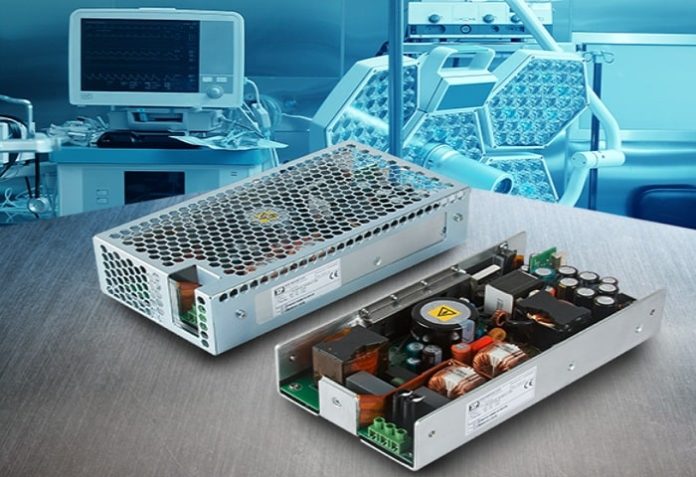
XP Power has announced two new ranges of ac-dc power supplies that provide BF class insulation for healthcare applications where excellent EMC performance is a key requirement. The PBR500 and PBR650 series offer power levels up to 500 W and 650 W, respectively. Both series accept a very wide, universal input range of 80 to 264 V ac at 47 to 63 Hz and offer a total of eight single output voltages (12, 15, 18, 24, 28, 36, 48, and 57 V), giving system designers the flexibility to cover many applications with the same series.

Both series offer efficiencies of 90%, reducing the heat generated during operation and prolonging the lifetime. The PBR500 is available in two formats: The U channel format provides 350 to 400 W when convection cooled and 450 to 500 W with external forced air cooling. The covered version, including a variable speed integral cooling fan for low audible noise, provides a complete 450 to 500 W solution.

The PBR650 provides 600 to 650 W in an enclosed supply which also includes a variable speed integral fan with low audible noise.

The products have very low earth and patient leakage currents, providing 2 x MOPP from input to output and 1 x MOPP from both input to ground and output to ground. Input to output isolation is rated at 4,000 V ac with input to ground and output to ground isolation rated at 1,500 V ac. Both conducted and radiated emissions are class B and both series are compliant with IEC/ES/EN 60601-1 edition 3.1 and 60601-1-2 edition 4

Both series include a 5 V standby supply, overvoltage and overcurrent protection, remote sense, and thermal shutdown. Also included is an โ€œac OKโ€ signal and remote on/off control. The u channel version of the PBR500 also provides a 12 V, 0.3 A output suitable for powering system cooling fans.

The PBR500/PBR650 are priced from $179.63 for 500 pcs orders.

Canopy Health Set to Expand Health Net SmartCare

Canopy Health Net SmartCare

Canopy Health announced an expansion of its collaboration with Health Net. Through this expansion, Health Netโ€™s SmartCare HMO product will be offered to CalPERS-eligible members who live in San Mateo, Santa Clara, and Santa Cruz Counties. Individuals who choose this plan will then have access to nearly 5,000 Bay Area primary care physicians and specialty providers through Canopy Health

โ€œAt Health Net, weโ€™re driven every day by our core purpose to transform the health of our communities, one person at a time,โ€ said Jenn Moore, Commercial Officer of Health Net. โ€œBy offering expanded healthcare options to CalPERS members enrolled in the SmartCare HMO plan, we will help more people live healthier lives and strengthen the families and neighborhoods of San Mateo, Santa Clara, and Santa Cruz Counties.โ€

The new plan will go into effect on Jan. 1, 2020. CalPERS members can sign up for the Health Net SmartCare HMO plan during open enrollment and throughout the year with a qualified life event.

โ€œThe expansion with Health Net demonstrates our commitment to CalPERS members, allowing them expanded access to premier providers in their communities,โ€ said Mike Robinson, CEO of Canopy Health.

About Canopy Health
Canopy Health is a physician- and hospital-owned medical alliance that focuses on delivering a refreshing approach to healthcare and providing transparent, affordable care from a network of exceptional providers

Incorporated inย March 2015ย as an affiliation between UCSF Health and John Muir Health, Canopy Health aims to provide a top-quality continuum of care across the Bay Area through partnerships with primary care providers, top-tier academic medical facilities, community hospitals, and medical groups.

In addition to its founding members, Canopy Health currently includes five physician groups โ€”John Muir Health Physician Network, Meritage Medical Network, Hill Physicians Medical Group Santa Clara County IPA (SCCIPA) and Dignity Health Medical Network โ€“ Santa Cruz. Canopy Health also includes 19 participating medical centers across nine Bay Area counties โ€” includingย Alameda,ย Contra Costa,ย Marin,ย San Francisco,ย San Mateo,ย Santa Clara,ย Santa Cruz, Solano, andย Sonoma.

About Health Net
At Health Net, we believe every person deserves a safety net for their health, regardless of age, income, employment status or current state of health. Founded 40 years ago, we remain dedicated to transforming the health of our community, one person at a time. Today, Health Netโ€™s 3,000 employees and 85,000 network providers serve more than three million Californians. Thatโ€™s one in 13 residents throughout every county in the State. We provide health plans for individuals, families, employers, people with Medicare and people with Medi-Cal โ€” coverage for every stage of life. We also offer access to behavioral health services, substance abuse prevention programs, managed healthcare services for prescription drugs and employee assistance programs. We offer these health plans and services through Health Net, LLC and its subsidiaries: Health Net of California, Inc., Health Net Life Insurance Company and Health Net Community Solutions, Inc. These entities are wholly owned subsidiaries of Centene Corporation (NYSE: CNC). For more information, visitย HealthNet.com.

Sunway Group opens RM320mil medical centre in Sunway Velocity

Sunway Group opens RM320mil medical centre

The Sunway Group expanded its healthcare facilities with the opening of its RM320mil hospital in the integrated development of Sunway Velocity.

It said the Sunway Medical Centre Velocity hospital is a comprehensive tertiary care private hospital which will provide a range of facilities, amenities and services to the Cheras and KL South communities.

These include inpatient and outpatient care, 24-hour emergency services, various physician specialist clinics and diagnostic imaging facilities, as well as medical and surgical capabilities.

The hospital with an area size of 33,000 square metres has a designed capacity of 240 beds, 77 consultation suites, six operating theatres and a catheterisation laboratory. SMCV is also equipped with a UPS system and reserve generator for uninterrupted power supply.

Its team of consultants and surgeons includes cardiologists, gastroenterologist, gynaecologist, ophthalmologists, orthopaedics and paediatricians, most of whom will run specialist clinics from 8.30am to 5pm on weekdays and 8.30am to 1pm on Saturdays.

The hospitalโ€™s emergency medical services include an ambulance service and CPR guidance via telephone.

Construction of the hospital began in May 2017 and was completed in June 2019.

The medical centre is part of the Sunway Groupโ€™s extensive expansion plans for healthcare and one of Sunway Velocityโ€™s five key components of retail, healthcare, residential, hospitality, education and commercial.

Sunway Medical Centre Velocity CEO Choo Voon Chee, said the hospital hopes to make a significant difference in healthcare in the KL South area and we are pleased to be able to provide the Cheras community and its surrounding neighbourhoods easier access to Sunway Medicalโ€™s specialty services.

โ€œSunway Medical is commited to bringing quality medical care to Malaysian neighbourhoods and we look forward to serving our local communities and providing them with the assistance and care they require, โ€ he added.

Sunway Medical Centre is an Australian Council on Healthcare Standards (ACHS) accredited private hospital. Its teams of dedicated personnel including medical consultants, professional allied health staff as well as trained and dedicated nursing staff are the backbone of the medical group.

The 23-acre (9.3-hectare) Sunway Velocity development is the only new integrated development of its kind within KL South to encapsulate the five key components of retail, healthcare, residential, hospitality, education and commercial.

Mevion’s CBCT Imaging Solution from medPhoton Receives FDA Clearance

Mevion's CBCT Imaging Solution

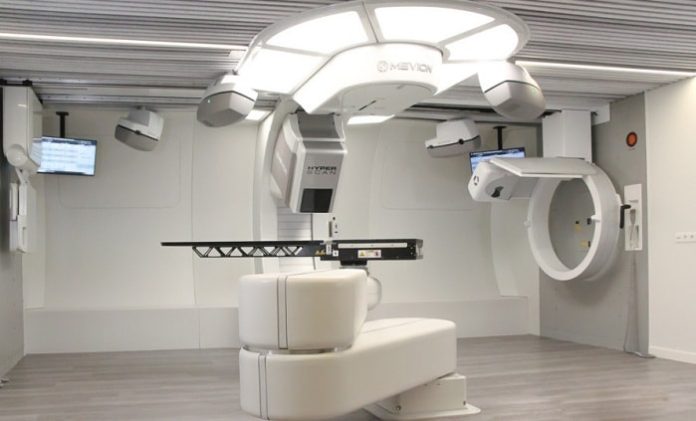
Mevion Medical Systems is pleased to announce its strategic partner, medPhoton GmbH, has received 510(k) clearance from the U.S. FDA for the ceiling-mounted ImagingRing, an innovative in-room cone-beam computed tomography (CBCT) imaging system. This advanced imaging solution is now available to MEVION S250 Series users in the U.S.

The new 102cm bore system with ceiling rail mounting is fully integrated into the Mevion proton therapy system to enable daily soft tissue localization to pair with the HYPERSCANยฎ Pencil Beam Scanning for precision radiation therapy treatments. The ImagingRing CBCT was integrated into the MEVION S250i Proton Therapy Systemยฎ at Maastro Proton Therapy in the Netherlands and has been in clinical use since February 2019.

โ€œWe are excited to receive FDA clearance for the ImagingRing,โ€ said Heinz Deutschmann, chief executive officer and founder of medPhoton. โ€œWe look forward to expanding the collaboration with Mevion and continuing the development of new capabilities and features to enhance the imaging tools and isocentric workflow for Mevion systems, including ultra-large field of view scans, dual-energy options, and 4D motion management.โ€

Geert Bosmans, managing director of Maastro Proton Therapy said, โ€œWe are using the CBCT system for daily tumor localization, for all our proton patients, in the workflow with the Mevion system. This imaging system is enabling our team to bring precision image-guided proton therapy to our patients in the south-west Netherlands region.โ€

While other proton therapy devices provide โ€œone-size-fits-allโ€ imaging systems, Mevion offers an open architecture with a full suite of the latest image-guided proton therapy (IGPT) solutions thatย allow customers to upgrade their treatment rooms with the latest imaging devices such as medPhotonโ€™s ImagingRing CBCT.

โ€œWe congratulate medPhoton on the 510(k) clearance of the ImagingRing,โ€ said Tina Yu, chief executive officer of Mevion Medical Systems.ย โ€œThe addition of the ImagingRing has been integral to our commitment to provide state-of-the-art proton therapy solutions to our customers.โ€

About Mevion Medical Systems

Mevion Medical Systems, Inc. is the leading provider of compact proton therapy systems for use in radiation treatment for cancer patients. Mevion is based in Littleton, Massachusetts, with a presence in Europe and China. For more information, please visit www.mevion.com.

Caterpillar provides Generators for Hospitals and the Healthcare Industry

Caterpillar Generators for Hospitals

Electric Power Industries Healthcare Designed to be trusted
Your facility powers equipment that sustains lives. Install a standby power generation system that delivers backup power you can count on. Catยฎ generators are ensuring critical life support power to some of the worldโ€™s largest hospitals, supported by Cat uninterruptible power supply (UPS) systems, automatic transfer switches (ATS), and switchgear.

Weโ€™ve engineered our generators for hospitals and the healthcare Industry to operate at peak efficiency and to meet EU and U.S. EPA emission standards.

It is essential for your hospital to have a backup generator you can trust when the power goes out. With our knowledge and experience we will configure a power system to match the ongoing demands of your healthcare facility and provide additional temporary power in emergencies. And our global product experts are available for installation and on-going maintenance โ€” giving you confidence in the patient care you offer.

Generators for Hospitals and the Healthcare Industry

Reliable Power For Essential Life Support
Edward Hospital & Health Services is a full-service regional healthcare provider that offers a wide variety of medical specialties and programming from 28 locations in 10 communities throughout the western suburbs of Chicago. Located in Naperville, IL, the main campus supports 4,700 employees, including 1,200 nurses and a medical staff of over 1,000 physicians.

โ€œWeโ€™ve seen many disasters strike hospitals throughout the U.S. Itโ€™s very important to have backup power and services available because when the power goes off for whatever reason, patients still need to receive their care,โ€ said Patti Ludwig-Beymer, vice president and chief nursing officer at Edward Hospital. โ€œPatients will die if we donโ€™t have the backup power available to them.”

About Caterpillar
For more than 90 years, Caterpillar Inc. has been making sustainable progress possible and driving positive change on every continent. Customers turn to Caterpillar to help them develop infrastructure, energy and natural resource assets. With 2018 sales and revenues of $54.722 billion, Caterpillar is the worldโ€™s leading manufacturer of construction and mining equipment, diesel and natural gas engines, industrial gas turbines and diesel-electric locomotives. The company principally operates through its three primary segments – Construction Industries, Resource Industries and Energy & Transportation – and also provides financing and related services through its Financial Products segment.

Heat and power plant proposed for St. Paul’s Hospital in Saskatoon

A $3-million heat and power plant could be installed at St. Paulโ€™s Hospital in Saskatoon to lower greenhouse gas (GHG) emissions, according to a city administration report.

The system uses natural gas to create electricity and heat at the same time, creating fewer GHG emissions than if both are produced separately, the report said.

The plant would consist of two 555 kilowatt-hour generators housed inside an enclosure roughly the size of a 12-metre shipping container with piping on its roof.

Annual GHG reductions over the plantโ€™s 15-year lifespan would be the equivalent of taking 723 cars off the road, according to administration.

Electricity would be produced for Saskatoon Light & Power, while the thermal energy would be used throughout the St. Paulโ€™s heating systems, Jose Cheruvallath, the cityโ€™s metering & sustainable electricity manager wrote in the report.

Saskatoon Light & Power purchases bulk power from SaskPower before itโ€™s moved through substations, distribution lines and transformers in Saskatoon. With the hospital plant creating electricity, it would lessen the amount of power bought from SaskPower.

Kaiser health care system earns EPA green energy award

Kaiser health care system

Kaiser Permanente the nation’s largest nonprofit, integrated health care system, has received a U.S. Environmental Protection Agency 2019 Green Power Leadership Award in recognition of its use of renewable sources of energy to power its 39 hospitals and more than 700 medical offices. The award recognizes a major renewable energy agreement that will enable Kaiser Permanente to become carbon neutral in 2020.

The EPA defines green power as zero-emissions electricity that is generated from environmentally preferable renewable resources, such as wind, solar, geothermal, biogas, eligible biomass, and low-impact hydropower. Kaiser Permanente uses more than 1 million megawatt-hours of green power annually, which includes approximately 60,000 MWh of solar power generated at its facilities. Kaiser Permanente’s 2020 commitment is to use green power for all the electricity it purchases, and carbon offsets to equal emissions from onsite equipment such as gas-fired boilers that heat its buildings.

The power purchase agreement that earned Kaiser Permanente this award was for the electricity from new utility-scale wind and solar farms, as well as the storage capacity from a new battery facility. It is part of a comprehensive portfolio of renewable energy solutions that are projected to be cost neutral, aligning Kaiser Permanente’s clean energy future with its mission to provide high-quality, affordable health care.

“Using renewable energy and doing the work to become carbon neutral is an easy choice as it allows us to improve the health of the communities we serve while simultaneously reducing utility cost, which ultimately helps to keep health care affordable,” said Ramรฉ Hemstreet, vice president of operations and chief sustainable resources officer for Kaiser Permanente. “We’re proud of this award and hope we can be an example for others to follow as more organizations embrace sustainable business practices.”

Kaiser Permanente’s commitment to using sustainable wind and solar electricity is among its efforts to reduce and eliminate the environmental causes of illness.

“From heat-related illnesses to air quality issues, and even the emotional trauma of frequent and severe natural disasters like wildfires and hurricanes, the negative health impacts of climate change are real, and they are already being felt,” said Kathy Gerwig, Kaiser Permanente’s environmental stewardship officer. “Using renewable energy is a sustainable and affordable way to work toward reversing that damage and create a healthier future for every community.”

The EPA previously named Kaiser Permanente a Green Power Leadership Award winner in 2013 and 2015 for its use of wind and solar power. The program, started in 2001, recognizes the achievement among EPA Green Power Partners who distinguish themselves through green power procurement, market leadership, overall green power strategy, and overall impact on the green power market.

About Kaiser Permanente
Kaiser Permanente is committed to helping shape the future of health care. We are recognized as one of America’s leading health care providers and not-for-profit health plans. Founded in 1945, Kaiser Permanente has a mission to provide high-quality, affordable health care services and to improve the health of our members and the communities we serve. We currently serve 12.3 million members in eight states and the District of Columbia. Care for members and patients is focused on their total health and guided by their personal Permanente Medical Group physicians, specialists and team of caregivers. Our expert and caring medical teams are empowered and supported by industry-leading technology advances and tools for health promotion, disease prevention, state-of-the-art care delivery and world-class chronic disease management. Kaiser Permanente is dedicated to care innovations, clinical research, health education and the support of community health.

New Technologies In The Transplant Industry

New Technologies In The Transplant Industry

Around 6,340 people are currently waiting for an organ transplant in the UK, 113,000 in the US and thousands upon thousands more across the globe, transplant technology has been under pressure to develop new, more effective strategies to improve the likelihood of a successful operation. In every area in transplant healthcare, innovation has driven the industry to introduce new technologies across the board.From technologies that reduce the hair transplant cost UK clinics charge, to the speed at which organs can be transported between hospitals, here are a few of the leading technologies transforming the industry.

Bio Printing
Bioengineers have been working on organ printing since 3D printing became possible. The technology has, thus far, successfully printed human cardiac tissue and produced a breathable organ similar to a lung.ย  The process requires layer-by-layer construction following the structure of the given organ, in order to form what is referred to as a call scaffold. From this, cells are placed onto the structure, from which theyโ€™ll grow, in a process called seeding.

For the most part, this can be done through any modified inkjet printer using a suspension of living cells and a smart gel and over time, the cells will begin to knit together to form tissue. The gel can then be washed away, leaving only the skin. In May this year, a bioprinted organ successfully took a full breath, which pushed the research past a hurdle they had previously kept hitting. Over time, this method could be used to craft bigger organs and, where possible, reduce the chance of organ rejection by using the patientโ€™s own cells.

ICE Hair Transplant
While hair transplants have relatively high success rates, this can vary dependant on the patient, their hair quality and other underlying factors like aftercare, damage caused during the transplant process and other hair loss related issues. For this reason, anywhere between 10 and 80% of all hair transplanted will actually take. A new method, named ICE hair transplants, aims to improve these rates for all patients.

The process involves extracting the follicles in the usual FUE-based method, before treating them in an IceGraft solution. This is a mixture of antioxidants, vitamins and other nutrients that are known to strengthen the follicle and the surrounding tissue, revitalising those that may be damaged. For surgeons, this offers a wider choice of hair follicles to extract, but also improves the results for the patient in the long term.

Drone Delivery
Drones have been used in every industry, from the military, to agriculture, and the healthcare industry have been testing these devices out too. Recently, there have been reports that drones could be used in the delivery of organs during transplants, to speed up the process and reduce human error. May this year saw the first kidney delivered by drone in the USA, using a specially-designed device that would maintain and monitor the organ throughout transit.

This innovation is set to not only speed up the process, but also broaden the distance and scope over which the organs can be delivered. Current transport methods have drummed up concerns over safety, but drones could see organs last better on longer flights, with reduced chances of damage or loss of viability.

Transplant technology has come on leaps and bounds, and the future of the industry continues to look bright. From the way in which organs can be not only transported, but also obtained, to the success of hair transplants, the industry is changing vastly and weโ€™re looking forward to seeing just how far it can go.

Translate ยป