















Close
Digital Health & Ai Innovation summit 2026
Medical Taiwan 2026

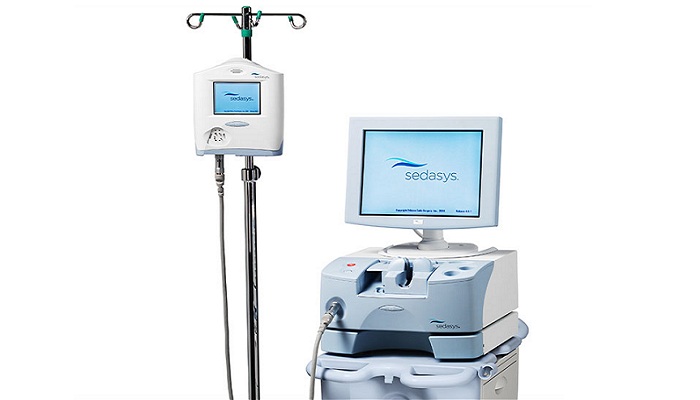
Computer-Assisted Personalized Sedation System from Johnson & Johnson

Note* - All images used are for editorial and illustrative purposes only and may not originate from the original news provider or associated company.

Subscribe

- Never miss a story with notifications

- Gain full access to our premium content

- Browse free from any location or device.

Media Packs

Expand Your Reach With Our Customized Solutions Empowering Your Campaigns To Maximize Your Reach & Drive Real Results!

– Access the Media PackNow

– Book a Conference Call

– Leave Message for Us to Get Back

Related stories

Regulatory Trends Shaping Medical Technology

The path from innovation to clinical implementation is governed by an increasingly complex and dynamic set of global standards. As digital health and artificial intelligence become integral to patient care, the frameworks that ensure safety and efficacy are evolving to address the unique challenges of software-based medical solutions and interconnected hardware.

Healthcare Supply Chains Driving Efficiency

The intricate network responsible for delivering life-saving medications and surgical instruments is undergoing a fundamental digital overhaul. By prioritizing transparency and resilience, medical institutions are moving away from reactive procurement toward a proactive logistical model that ensures essential resources are always available at the point of care.

Digital Health Systems Enhancing Patient Outcomes

The modern healthcare experience is no longer confined within the physical walls of a clinic or hospital. Through the deployment of sophisticated digital infrastructures, patient care is becoming a continuous, integrated journey that follows the individual into their daily life. This shift toward a technology-enabled ecosystem is dismantling traditional barriers to access and information, creating a more responsive and patient-centric model of wellness.
SEDASYS, a unit of Johnson & Johnson, has come up with acomputerised sedation unit that would deliver the drug Propofol for minimal-to-moderate sedation. The device would provide comprehensive patient monitoring and would limit the depth of sedation through adjusted drug delivery henceforth.
The SEDASYS System is actually a computer-assisted device,which administers Propofol into the blood stream of the patients through via intravenous IV infusion. The device also has the ability to recognise the symptoms of oversedation and can either stop or reduce infusion accordingly.
This is the first-of-a-kind device that would allow non-anesthesia professionals to administer Propofol during processes of colonoscopy and EGD procedures. However, they would have to meet with necessary training programs required for handling of the same.
Components
The system has four components, which are as follows:
  • Bedside Monitoring Unit (BMU) – This monitoring device stays with the patient from pre-operative through to post-operative recoveries. 
  • Procedure Room Unit (PRU) – These stay in the procedure room itself and provide additional patient monitoring.  This is the part which contains the Propofol infusion pump controller.
  • Display monitors and connectors. 
  • Disposable devices for single patient use.
  • The SEDASYS System is used in patients who are 18 years and older.

Latest stories

Related stories

Regulatory Trends Shaping Medical Technology

The path from innovation to clinical implementation is governed by an increasingly complex and dynamic set of global standards. As digital health and artificial intelligence become integral to patient care, the frameworks that ensure safety and efficacy are evolving to address the unique challenges of software-based medical solutions and interconnected hardware.

Healthcare Supply Chains Driving Efficiency

The intricate network responsible for delivering life-saving medications and surgical instruments is undergoing a fundamental digital overhaul. By prioritizing transparency and resilience, medical institutions are moving away from reactive procurement toward a proactive logistical model that ensures essential resources are always available at the point of care.

Digital Health Systems Enhancing Patient Outcomes

The modern healthcare experience is no longer confined within the physical walls of a clinic or hospital. Through the deployment of sophisticated digital infrastructures, patient care is becoming a continuous, integrated journey that follows the individual into their daily life. This shift toward a technology-enabled ecosystem is dismantling traditional barriers to access and information, creating a more responsive and patient-centric model of wellness.

Connected Healthcare Powering Smart Hospitals

The concept of a stand-alone medical facility is being replaced by a vision of a hyper-connected hub where data flows effortlessly between devices, clinicians, and patients. This digital nervous system is enabling a level of institutional intelligence that optimizes every aspect of the healthcare experience, from the moment a patient enters the building to their long-term recovery at home.

Subscribe

- Never miss a story with notifications

- Gain full access to our premium content

- Browse free from any location or device.

Media Packs

Expand Your Reach With Our Customized Solutions Empowering Your Campaigns To Maximize Your Reach & Drive Real Results!

– Access the Media Pack Now

– Book a Conference Call

– Leave Message for Us to Get Back

Translate »