













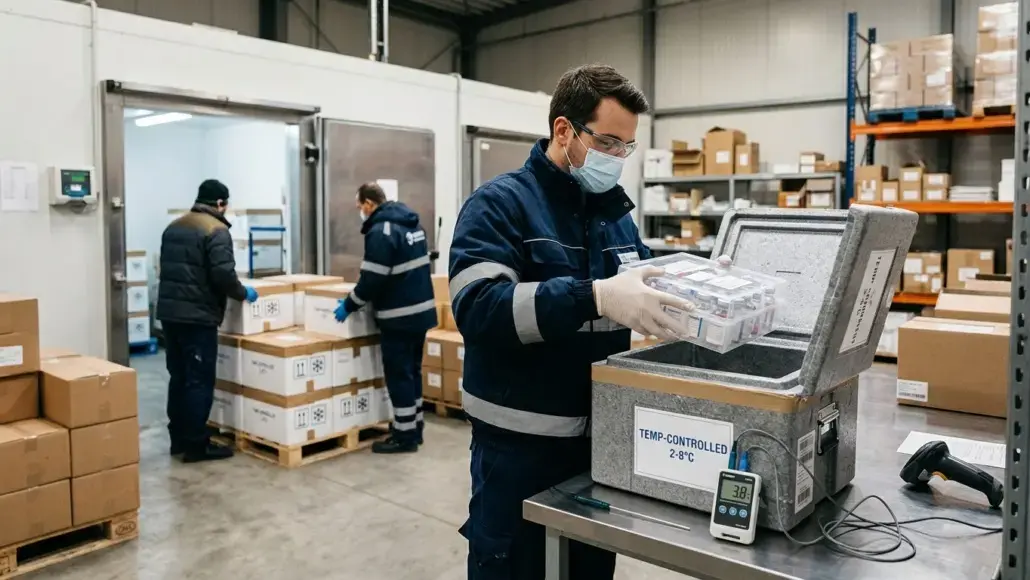

The global healthcare landscape is increasingly reliant on complex biological products, including vaccines, insulin, and monoclonal antibodies, all of which share a common vulnerability: extreme sensitivity to temperature fluctuations. The implementation of robust cold chain systems protecting medical product quality has therefore become a critical priority for pharmaceutical manufacturers and logistics providers alike. A single break in the temperature-controlled environment can lead to the denaturation of proteins or the loss of potency in life-saving medications, rendering them at best ineffective and at worst harmful to the patient. Consequently, the cold chain is no longer just a transportation challenge; it is a vital component of the therapeutic delivery system itself.
The Science of Stability in Medical Logistics
At its core, the necessity for cold chain systems protecting medical product quality stems from the inherent instability of modern biopharmaceuticals. Unlike traditional small-molecule drugs, biologics are large, intricate structures that are highly susceptible to their environment. Exposure to heat can cause these molecules to unfold or aggregate, while freezing can damage the cellular structures within live vaccines. Maintaining a steady range, typically between 2°C and 8°C, requires a sophisticated integration of insulated packaging, active refrigeration units, and real-time environmental sensors. This meticulous control ensures that the chemical and physical properties of the medicine remain unchanged from the moment it leaves the laboratory until it is administered in a clinical setting.
Implementing End-to-End Visibility
One of the most significant advancements in protecting these sensitive shipments is the move toward end-to-end visibility. Cold chain systems protecting medical product quality now utilize IoT-enabled data loggers that transmit temperature, humidity, and location data in real-time via cellular or satellite networks. This allows logistics managers to identify potential “hot spots” or delays before they result in a temperature excursion. For instance, if a refrigerated truck is delayed at a border crossing, the system can automatically alert the driver and the home office, allowing for corrective actions such as refueling the cooling unit or rerouting the shipment to a nearby cold storage facility.
The Role of Passive and Active Packaging Solutions
The choice of packaging is a fundamental decision in the design of cold chain systems protecting medical product quality. Passive systems, which rely on phase-change materials and high-performance insulation like vacuum-insulated panels, are often used for shorter durations or where power sources are unavailable. Active systems, on the other hand, function as mobile refrigerators, using battery or fuel-powered compressors to maintain precise temperatures over long-haul flights or oceanic crossings. The selection between these methods depends on a rigorous risk assessment that considers the duration of travel, the external climate of the transit route, and the specific sensitivity of the medical product being transported.
Regulatory Compliance and Quality Management
Global health authorities, including the World Health Organization and the FDA, have established stringent Good Distribution Practice (GDP) guidelines to standardize the operation of cold chain systems protecting medical product quality. Compliance is not optional; it requires detailed documentation of every temperature reading and a clear chain of custody. Quality management systems must include protocols for handling deviations, ensuring that any product exposed to out-of-range temperatures is quarantined and its stability re-evaluated by experts before release. This regulatory framework provides the necessary oversight to ensure that the rapid expansion of global medical distribution does not come at the expense of product safety or efficacy.
Challenges in Last-Mile Distribution
Perhaps the most difficult segment of the journey is the “last mile” the final delivery to pharmacies, clinics, and remote health outposts. In many parts of the world, infrastructure challenges such as unreliable power grids and poorly maintained roads can compromise cold chain systems protecting medical product quality. Innovative solutions, such as solar-powered vaccine refrigerators and drone-based delivery systems, are being deployed to overcome these obstacles. These technologies allow for the safe delivery of critical medical supplies to populations that were previously difficult to reach, demonstrating how logistics innovation can directly improve global health equity and patient outcomes.
Human Factors and Training in Cold Chain Operations
While technology plays a dominant role, the human element remains a critical link in the chain. Cold chain systems protecting medical product quality are only effective if the personnel handling the shipments are properly trained. This includes understanding the correct loading patterns for refrigerated containers to ensure adequate airflow, as well as knowing how to interpret data from monitoring devices. Continuous education and standard operating procedures (SOPs) are essential to prevent simple errors, such as leaving a shipment on a loading dock in direct sunlight or failing to check a temperature logger upon arrival. A culture of quality awareness is what ultimately sustains the technical infrastructure.
Data Analytics and Predictive Logistics
The future of medical distribution lies in the power of data analytics. By analyzing historical data from thousands of shipments, organizations can identify patterns and predict where cold chain systems protecting medical product quality might be at risk. Predictive models can account for seasonal weather changes, port congestion, and even geopolitical stability to recommend the safest and most efficient routes. This proactive approach minimizes waste and ensures that high-value medical products are available when and where they are needed most, further strengthening the reliability of the global healthcare supply chain.
Conclusion
Protecting the quality of medical products through advanced cold chain systems is a multi-layered responsibility that involves constant vigilance and technological sophistication. By combining real-time monitoring, high-performance packaging, and strict regulatory adherence, the industry can safeguard the integrity of the next generation of therapies. As biopharmaceuticals continue to dominate the medical landscape, the evolution of these systems will remain a cornerstone of patient safety, ensuring that every dose delivered is as effective as the day it was manufactured. The commitment to cold chain excellence is, fundamentally, a commitment to the patients who depend on these life-saving interventions.