











Close
Digital Health & Ai Innovation summit 2026
Medical Taiwan 2026

Flexible Gold Sensor – Australian Medical Implants Future

Note* - All images used are for editorial and illustrative purposes only and may not originate from the original news provider or associated company.

Subscribe

- Never miss a story with notifications

- Gain full access to our premium content

- Browse free from any location or device.

Media Packs

Expand Your Reach With Our Customized Solutions Empowering Your Campaigns To Maximize Your Reach & Drive Real Results!

– Access the Media PackNow

– Book a Conference Call

Leave Message for Us to Get Back

Related stories

$2.4bn I-MED Radiology Network Acquisition by...

Jardine Matheson has entered into an agreement to purchase...

Olympus Acquires BioProtect to Expand Oncology...

Olympus has finalized an agreement to acquire Israel-based BioProtect...

GE HealthCare Korea and ACK Partner...

GE HealthCare Korea has entered a memorandum of understanding...

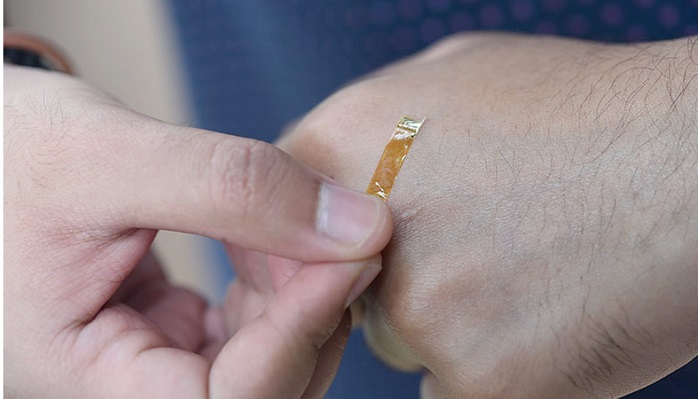
A flexible as well as thin gold sensor that has been engineered at the University of Queensland in Australia has the potential to unlock the next generation of implantable medical devices.

By way of using a novel engineering method, the scientists of the Australian Institute for Bioengineering and Nanotechnology under the aegis of the University of Queensland were able to come up with a small, film-like sensor that happens to be flexible as well as sensitive enough to help with a more streamlined future as far as electronic medical implants as well as real-time sensing applications are concerned.

The complex approach that is used by Dr. Mostafa Kamal Masud and Aditya Ashok, the PhD candidate, brings us to a breakthrough in the flexible nanoarchitecture field and goes on to suggest a fresh way to miniaturise and enhance medical devices when it comes to biological sensing, diagnostics, and also neurological exploration.

The film-like sensor happens to represent an innovative approach in the field of mesoporous materials, which happen to be highly porous elements with traits that can go on to benefit catalysis, drug delivery, and the diagnostics phase.

The flexibility teamed with the sensitivity of the gold film makes it an apt wearable system in terms of real-time monitoring of body glucose, and as per Dr. Masud, there is indeed a strong potential when it comes to implanted nerve recording applications. The demand for a simple but robust application process that comes with such flexible electronics is quite enormous, he adds.

Never miss a healthcare headline

Healthcare moves fast – stay on top of it with our must - read briefings.

  • The top hospital and healthcare stories, straight to your inbox
  • The biggest news, features, interviews, and analysis
  • Dedicated coverage of the key developments transforming global healthcare management
MEDICAL FAIR ASIA 2026
MEDICAL FAIR CHINA

Latest stories

Related stories

$2.4bn I-MED Radiology Network Acquisition by Jardine Matheson

Jardine Matheson has entered into an agreement to purchase...

Olympus Acquires BioProtect to Expand Oncology and Urology Provision

Olympus has finalized an agreement to acquire Israel-based BioProtect...

GE HealthCare Korea and ACK Partner to Advance Medical Data Systems

GE HealthCare Korea has entered a memorandum of understanding...

GC Biopharma Builds AI System for Hemophilic Arthropathy

GC Biopharma has been selected for Korea's Ministry of...

Subscribe

- Never miss a story with notifications

- Gain full access to our premium content

- Browse free from any location or device.

Media Packs

Expand Your Reach With Our Customized Solutions Empowering Your Campaigns To Maximize Your Reach & Drive Real Results!

– Access the Media Pack Now

– Book a Conference Call

Leave Message for Us to Get Back

Translate »