
















The integration of high-fidelity robotic systems into the clinical environment marks a profound transformation in how medical care is delivered and experienced. By combining the mechanical precision of robotics with the analytical power of artificial intelligence, healthcare providers are now able to perform complex procedures and manage logistical challenges with a level of accuracy that was previously unattainable. This technological shift is not merely about replacing human effort; it is about augmenting the capabilities of the medical team, ensuring that every intervention is targeted, every workflow is optimized, and every patient receives the benefit of precision medical robotics. As we move deeper into the 21st century, the role of healthcare robotics in supporting precision medical care is becoming the foundation of a more resilient and effective global health infrastructure.
The Evolution of Robotic Medical Systems in the Modern Hospital
The history of robotics in medicine is a journey of relentless innovation and a constant push for greater surgical and clinical precision. In the early decades, the use of mechanical arms was limited to experimental procedures and highly specialized academic centers. Today, robotic medical systems have become a standard feature in many leading hospitals, where they are utilized across a wide range of disciplines, from urology and gynecology to cardiothoracic surgery. This widespread adoption is driven by the realization that healthcare robotics supporting precision medical care can significantly reduce the physical strain on surgeons while providing a level of dexterity and stability that exceeds human capabilities. By filtering out tremors and providing 3D, high-definition visualization, these systems allow for more intricate maneuvers through smaller incisions, leading to better outcomes for patients.
However, the impact of robotics extends far beyond the operating room. The modern hospital is increasingly becoming an automated environment where robotic systems handle everything from the delivery of medications to the disinfection of high-touch surfaces. This logistical automation is essential for maintaining the high standards of safety and efficiency required in a busy clinical setting. By taking over routine and repetitive tasks, robotics allows the human staff to focus on the high-level cognitive and emotional work that is central to healing. This synergy between human expertise and mechanical efficiency is the hallmark of the modern healthcare facility, where precision is not just a clinical goal but an operational standard. As we continue to refine these tools, the potential for robotics to transform every aspect of the medical journey remains one of the most exciting frontiers in science.
Robotic-Assisted Surgery and the Quest for Accuracy
At the heart of precision medical robotics is the development of robotic-assisted surgical platforms. These systems represent the pinnacle of human-machine collaboration, where the surgeon’s judgment is combined with the robot’s precision. Through a console interface, the surgeon controls instruments that can rotate with a degree of freedom far greater than the human wrist. This allows for the precise dissection of tissue and the accurate placement of sutures in deep or narrow anatomical spaces. The result is a minimally invasive approach that reduces blood loss, decreases the risk of infection, and shortens the patient’s recovery time. For many patients, the use of healthcare robotics supporting precision medical care means the difference between a major open surgery and a targeted procedure that allows them to return to their daily lives within days rather than weeks.
The next generation of surgical robotics is incorporating real-time data analytics and machine learning to provide even greater levels of support. These “intelligent” systems can analyze the surgeon’s movements and provide feedback or warnings if they approach a critical structure, such as a nerve or a major blood vessel. Some platforms are even experimenting with semi-autonomous tasks, such as automated suturing or tissue retraction, allowing the surgeon to focus on the most complex parts of the procedure. This transition toward “smart” robotics is a key driver of clinical excellence, ensuring that the highest standards of safety are maintained even in the most challenging cases. As these technologies become more accessible, the benefits of robotic-assisted surgery will continue to reach a broader and more diverse patient population.
Rehabilitation Systems and Robotic Assistive Devices
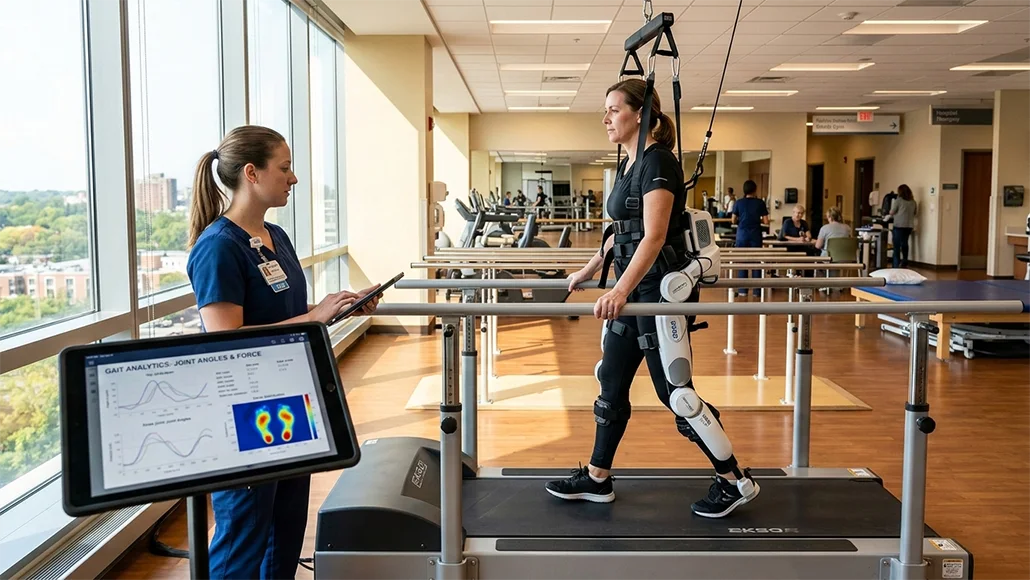
Beyond the immediate clinical intervention, robotics is playing a vital role in the long-term recovery and rehabilitation of patients. Robotic rehabilitation devices, such as exoskeletons and smart prosthetics, are helping individuals with mobility impairments regain their independence. These devices use sophisticated sensors to detect the user’s intent and provide the mechanical power required to complete a movement, whether it is walking, grasping an object, or performing a repetitive physical therapy exercise. By providing consistent and measurable support, healthcare robotics supporting precision medical care ensures that patients can perform their exercises with the correct form, which is essential for neuroplasticity and functional recovery. This level of precision is difficult to achieve with manual physical therapy alone, where the quality of the support can vary between sessions.
Furthermore, assistive robotics is increasingly being used to support patients with chronic conditions or those who are aging in place. Socially assistive robots can provide reminders for medication, monitor vital signs, and even provide a level of social interaction that reduces the feelings of isolation and loneliness. While these robots do not replace the need for human care, they provide a consistent and reliable layer of support that enhances the patient’s quality of life. The integration of precision medical robotics into the home environment is a testament to the versatility of these systems and their potential to address the complex needs of a global population that is living longer but facing more chronic health challenges. By bridging the gap between the hospital and the home, robotics is ensuring that precision care is a continuous rather than a sporadic experience.
Automated Logistics and Hospital Efficiency
The logistical efficiency of a hospital is a critical factor in its ability to provide high-quality care, and hospital robotics technology is at the forefront of this operational optimization. Autonomous mobile robots (AMRs) are now common in many facilities, where they navigate busy hallways to deliver supplies, linens, and meals. These robots use advanced lidar and sensor technology to avoid obstacles and interact safely with human staff and patients. By automating the “heavy lifting” of hospital logistics, robotics ensures that clinical staff are not diverted from their primary duties to handle simple transport tasks. This improvement in workflow is a vital part of healthcare robotics supporting precision medical care, as it ensures that the right supplies are always in the right place at the right time.
In the laboratory and pharmacy settings, robotics is ensuring that high-stakes tasks are performed with zero margin for error. Automated dispensing cabinets and robotic pill-pickers significantly reduce the risk of medication errors, which are a major cause of patient harm. Similarly, robotic systems in the laboratory can process thousands of samples with a level of speed and accuracy that is impossible for a human workforce to sustain. This precision is essential for the timely diagnosis and treatment of diseases, where a few hours can make a significant difference in the patient’s outcome. By building a robust and automated backend for hospital operations, robotics is providing the clinical team with a reliable foundation upon which they can build their care plans. The efficiency realized through these systems is not just an administrative benefit; it is a direct contributor to the safety and health of every patient.
The Integration of AI and Real-Time Data in Robotics
As the field of robotics continues to evolve, the integration of artificial intelligence and real-time data analytics is becoming the primary driver of innovation. Modern healthcare robotics supporting precision medical care is increasingly capable of “understanding” its environment and adapting its actions based on the current clinical context. For example, a robotic ventilator can analyze a patient’s respiratory patterns in real-time and adjust the pressure and flow of oxygen to match their exact physiological needs. This level of precision is essential for preventing lung injury and for speeding up the weaning process for patients on life support. By acting as an intelligent partner to the clinical team, robotics is ensuring that even the most complex physiological processes are managed with the highest level of care.
This data-driven approach also extends to the maintenance and optimization of the robotic systems themselves. Predictive maintenance algorithms can analyze the performance data of a robotic arm or a delivery robot to identify potential issues before they cause a failure. This ensures that these critical tools are always available when needed and that the hospital’s investment in technology is protected. Furthermore, the data captured by robotic systems during procedures can be used for large-scale clinical research, identifying trends and best practices that can be shared across the entire medical community. This collective intelligence is accelerating the pace of medical progress, leading to new robotic medical systems and more effective treatment protocols. The synergy between robotics, AI, and big data is creating a “virtuous cycle” of improvement that is the hallmark of 21st-century medicine.
Ethical and Operational Considerations for the Future
While the benefits of robotics are clear, the widespread adoption of these technologies also raises important ethical and operational questions. One of the primary concerns is the impact on the healthcare workforce. While robotics is designed to support and augment human effort, there is a need for ongoing training and education to ensure that clinical staff are comfortable and proficient in using these complex systems. Furthermore, the high cost of precision medical robotics can create disparities in access to care, where only the wealthiest institutions are able to offer the latest robotic procedures. Addressing these challenges requires a commitment to equitable access and a focus on the long-term value that robotics provides in terms of improved outcomes and reduced operational costs.
From an ethical perspective, the use of autonomous or semi-autonomous systems in healthcare requires clear guidelines regarding accountability and transparency. Patients must be fully informed about the role of robotics in their care, and there must be clear protocols for human intervention if a system behaves unexpectedly. Furthermore, the security of the data captured by these systems is of paramount importance, requiring robust cybersecurity measures to protect patient privacy. By addressing these issues proactively, the medical community can ensure that the transition to a more robotic-centric care model is built on a foundation of trust and professional integrity. The goal is to create a system where technology serves the human mission of medicine, rather than the other way around.
Conclusion: The Robot as a Partner in Healing
The journey of healthcare robotics supporting precision medical care is a testament to our relentless pursuit of clinical excellence. We have moved from a time when robots were a curiosity to an era where they are an essential part of the medical team. By embracing these tools, we are not just adding new technology; we are reimagining the very nature of healing. The robot is no longer just a machine; it is a partner that brings a level of precision, stability, and intelligence to the clinical environment that was previously unimaginable. This partnership is saving lives, reducing suffering, and ensuring that the healthcare systems of the future are prepared for any challenge.
As we look ahead, the potential for robotics to further transform medicine is limited only by our imagination. From nano-robots that can deliver medication directly to a tumor, to robotic companions that provide comfort to the elderly, the future of healthcare robotics is bright. By continuing to innovate and collaborate, the medical community is ensuring that every patient, regardless of where they are or what they are facing, can benefit from the highest standards of precision care. The legacy of this work will be a healthcare system that is more accurate, more efficient, and more profoundly human, powered by the best that science and technology have to offer. This is the future of medicine, and it is a future we are building together.