








Thanks to the advancement of technology, clinics can now use noninvasive procedures to identify early warning signs of nonalcoholic fatty liver disease (NAFLD) and nonalcoholic steatohepatitis (NASH). A combination of blood-based fibrosis scores and noninvasive imaging technologies such as MRI and FibroScan is available to help you assess liver health more quickly and comfortably.
Why Is Early Detection of NAFLD and NASH a Clinical Priority?
NAFLD is also known as metabolic dysfunction-associated steatotic liver disease and is now one of the most common causes of liver disease in the U.S. It affects an estimated 38% of the population a number that has climbed by 50% over the past 30 years. This growth brings a difficult reality, where many patients are living with liver diseases without knowing it.
Early-stage NAFLD causes little to no symptoms, meaning the disease can lead to its more severe form NASH. NASH can get worse and cause cirrhosis, fibrosis, liver cancer and liver failure. Timely diagnosis is important because intervention is most effective before irreversible liver damage occurs. However, despite the increasing burden of liver-related morbidity and mortality worldwide, NAFLD remains underdiagnosed.
When patients are identified later in the disease pathway, they usually need more intensive interventions, specialist referrals and long-term monitoring. Earlier detection gives you more opportunities to introduce lifestyle changes, monitor progression over time and potentially reduce the risk of severe complications before they become harder to manage.
The Problem With Traditional Liver Biopsies
For decades, liver biopsy has served as the gold standard for diagnosing NAFLD and NASH. Although the procedure can provide detailed histological information, it also presents several practical limitations that make it difficult to incorporate into routine screening or monitoring.
The most obvious challenge is invasiveness. During a biopsy, you need to insert a needle into the liver. This can be intimidating for many patients, even when you assure them that the area will be numbed using a local anesthetic. Some people may postpone testing or avoid it altogether because they’re concerned about discomfort, potential complications and recovery time. When you’re already dealing with a condition that generally develops silently, delays in evaluation can make timely intervention more difficult.
Liver biopsy can be expensive and resource-intensive, too. It usually requires specialized staff, additional procedural scheduling and post-procedure observation. If your healthcare system is already managing increasing patient volumes, relying heavily on invasive testing may delay diagnosis and follow-up care.
Additionally, it can be difficult to monitor disease progression over time with a liver biopsy. This procedure isn’t ideal for frequent assessments due to its invasive nature.
What Are the Best Noninvasive Liver Assessment Devices for a Specialty Clinic?
If you want to identify early signs of NAFLD or NASH without relying on invasive procedures, today’s liver assessment technologies offer several noninvasive options that can fit into routine clinical workflows. Most of these fall into two main categories blood-based assessments and imaging-based technology.
Some clinics begin with routine blood testing. Elevated alanine aminotransferase and aspartate aminotransferase levels can signal possible liver disease, while scoring systems such as FIB-4 or APRI help estimate the likelihood of advanced liver fibrosis using existing laboratory results.
Imaging technologies can provide more insight into liver health. These include:
- Abdominal ultrasound: You may use this as the first imaging test when you suspect liver disease. It uses painless sound waves to create images of the liver’s structure.
- MRI and CT scans: These can give you more detailed images and may be better at detecting excess liver fat and cirrhosis.
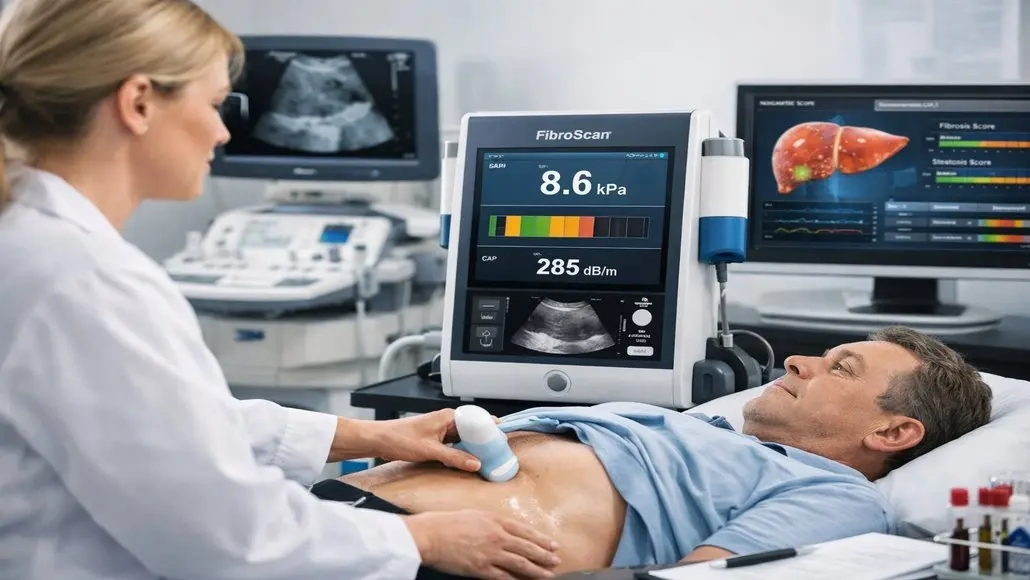
- Elastography (FibroScan): This noninvasive test uses a handheld transducer and sound waves to quickly and painlessly assess liver stiffness and steatosis.
The biggest advantage of these technologies is that they make earlier liver assessments more accessible. The devices can help evaluate patients faster, improve comfort during testing and make ongoing monitoring more practical within everyday outpatient settings.
How Does FibroScan Compare to Other Noninvasive Liver Tests?
Among noninvasive technologies available, FibroScan from Echosens has become one of the most widely recognized technologies for assessing liver stiffness and steatosis. Unlike liver biopsies, the process is fast and generally more comfortable for patients. Plus, you can provide results immediately during the consultation.
FibroScan by Echosens is supported by more than 5,384 publications and over 250 international guidelines. It’s now available in more than 127 countries, so clinics around the world can offer noninvasive liver examinations.
Compared with blood-based fibrosis scores alone, FibroScan provides direct measurements of liver stiffness and fat accumulation, which can provide additional insight when evaluating disease progression or patient risk. MRI-based liver imaging may give you detailed information, but it can be more expensive, less accessible and harder to scale across routine outpatient systems.
Echosens powers FibroScan with patented biomarkers including LSM by VCTE for fibrosis assessment and CAP for steatosis assessment. The company offers several FibroScan models, as well, including portable and fully transportable systems to suit different healthcare environments. If your clinic is looking to reduce reliance on invasive testing while improving access to liver assessment, FibroScan is a scalable point-of-care solution.
Frequently Asked Questions
If you’re still curious about identifying early signs of NAFLD or NASH without invasive procedures, the following may help answer some of your questions.
Can non invasive liver tests fully replace biopsies?
You may still need a liver biopsy in certain complex clinical cases, particularly when detailed histological analysis is required. However, more and more clinics are now using noninvasive liver assessment tools as first-line screening, fibrosis assessment and ongoing monitoring methods.
Which patients are most suitable for noninvasive liver screening?
Patients with obesity, type 2 diabetes, metabolic syndrome, cardiovascular risk factors or persistently elevated liver enzymes are usually considered good candidates for noninvasive liver assessment.
What operational benefits do noninvasive liver assessment tools offer clinics?
Noninvasive technologies may help reduce referral delays, improve workflow efficiency, increase patient participation in screening programs and support earlier intervention strategies within outpatient settings.
The Future Looks Less Invasive
Liver disease management is moving toward preventive, patient-centered care models that prioritize accessibility, efficiency and early intervention. Noninvasive liver assessment technologies are changing how clinicians evaluate fibrosis and steatosis, making it possible to detect risk earlier without relying heavily on invasive procedures.