













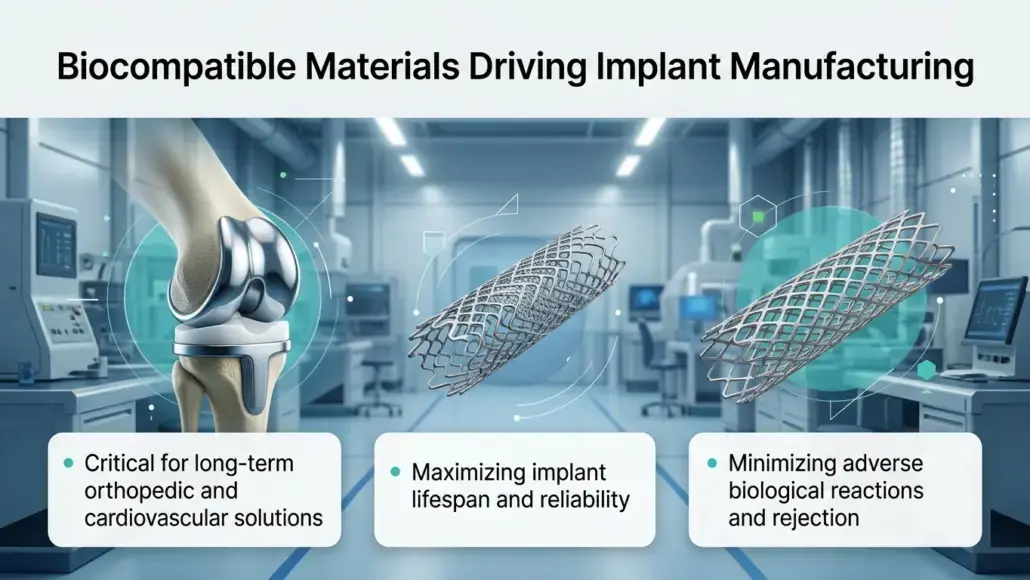
The development of high-performance medical implants relies fundamentally on the interaction between synthetic components and human biology. As the demand for long-term orthopedic implants and cardiovascular devices grows, the industry has turned its focus toward materials that minimize adverse reactions while maximizing functional longevity. The role of biocompatible materials in this context is paramount, as they provide the structural and chemical foundation for a new generation of medical devices. By reducing the risk of inflammatory responses and improving the integration of the device with the surrounding tissue, these materials are changing the expectations for patient recovery and long-term surgical success.
Implant manufacturing has moved beyond the simple use of inert metals toward the application of sophisticated biomaterials that actively support the healing process. This shift is driven by a deeper understanding of how the body responds to foreign objects at a cellular level. Modern manufacturing innovation involves the use of advanced polymers, ceramics, and metal alloys that are specifically engineered to mimic the mechanical properties of bone and soft tissue. When biocompatible materials are used, the resulting implant is not just a replacement part but a functional extension of the patient’s own body. This focus on biological harmony is a hallmark of the modern approach to medical device engineering.
Surface Engineering and Tissue Integration Standards
The interface between the implant and the host tissue is where the success or failure of a procedure is often decided. Surface engineering techniques, such as plasma spraying, hydroxyapatite coating, and laser texturing, are used to modify the outer layer of the device to encourage cellular attachment. When biocompatible materials are treated with these advanced methods, the rate of osseointegration—the direct functional and structural connection between living bone and the surface of a load-bearing implant—is significantly improved. This leads to a more stable fixation and reduces the likelihood of the device loosening over time, which is a primary cause of revision surgery.
Furthermore, the use of bioactive coatings can help to mitigate the risk of infection, a major concern in any surgical procedure. By incorporating antimicrobial agents or specific proteins into the surface of the implant, manufacturers can create a barrier against bacterial colonization. The integration of these protective features directly into the biocompatible materials is a significant technical achievement that enhances the safety profile of the device. For orthopedic surgeons and their patients, this level of protection provides greater confidence in the outcome of the surgery and the long-term durability of the implant.
Regulatory Compliance and Quality Assurance in Manufacturing
The transition from research and development to commercial production requires a rigorous adherence to international standards for safety and performance. Regulatory compliance is a fundamental requirement for any firm involved in implant manufacturing, as the consequences of a material failure can be catastrophic for the patient. Manufacturers must provide extensive data to demonstrate that their biocompatible materials are non-toxic, non-carcinogenic, and non-immunogenic. This involves a comprehensive program of biocompatibility testing, including in vitro and in vivo studies, to verify the behavior of the material under physiological conditions.
Quality assurance also extends into the production process itself, where every step from raw material sourcing to final sterilization must be carefully controlled. The use of advanced manufacturing innovation, such as cleanroom environments and automated inspection systems, ensures that each implant meets the required specifications for purity and structural integrity. The documentation provided by the manufacturer serves as a vital record of the material’s history and its compliance with regulatory requirements. This transparency is essential for maintaining the trust of the medical community and for ensuring the safety of the patients who receive these life-changing devices.
Mechanical Performance and Long Term Durability
The durability of a medical implant is defined by its ability to withstand the mechanical stresses of the human body over many years. For orthopedic implants, this means enduring millions of loading cycles without suffering from fatigue or wear. Biocompatible materials such as cobalt-chrome alloys and ultra-high-molecular-weight polyethylene are selected for their exceptional strength and wear resistance. However, the challenge for engineers is to balance these mechanical properties with the need for biological compatibility. A material that is incredibly strong but causes an adverse tissue reaction is not a viable solution for long-term implantation.
Modern material science is addressing this challenge through the development of hybrid and composite materials that combine the best features of different substances. For instance, a titanium core can provide the necessary strength for a hip replacement, while a specialized ceramic coating provides a low-friction bearing surface and excellent biocompatibility. The use of biocompatible materials in these sophisticated configurations allows for a more tailored approach to implant design, ensuring that the device is perfectly suited to its specific anatomical role. The result is a new generation of implants that offer superior performance and a longer useful life.
Future Horizons in Biomaterial Innovation
The continued evolution of the medical device industry will likely lead to an even greater emphasis on personalized and responsive materials. We are already seeing the development of “smart” implants that can monitor their own structural health and provide data on the healing process. The role of biocompatible materials in supporting these electronic components is essential, as they must provide a stable and non-reactive environment for the sensors and circuitry. This move toward more intelligent and integrated medical devices is a clear indication of where the sector is headed.
In the coming years, the use of 3D printing and additive manufacturing will allow for the creation of implants with complex internal geometries that were previously impossible to manufacture. These designs can be tailored to the specific anatomy of the individual patient, providing a perfect fit and better functional outcomes. The ability to print biocompatible materials in these intricate shapes will further enhance the integration of the device with the surrounding tissue and improve the overall success rate of complex surgeries. The ongoing innovation in manufacturing technology will continue to drive the evolution of the implant market, ensuring that patients have access to the best possible care.
The transition toward a more biological and data-driven approach to implant design is a defining characteristic of the modern healthcare industry. By prioritizing the use of biocompatible materials, manufacturers can achieve levels of safety and performance that were once considered unattainable. The benefits of this approach extend beyond the operating room, contributing to a more effective and sustainable health system that is better equipped to handle the challenges of an aging population. The commitment to technical excellence and biological harmony is what will define the leaders of the industry in the decades to come.
As the industry moves forward, the focus will remain on the refinement of material properties and the continued improvement of surgical outcomes. The ability to handle the increasing complexity of new implant designs will remain a key challenge for engineers and clinicians alike. The ongoing evolution of biocompatible materials is a testament to the power of technical innovation in the service of human health, ensuring that the next generation of medical devices is both safe and effective for every patient who needs them.