








Biotech organizations are facing tremendous pressure. This is something we can witness daily; the competition to find new drugs is getting fiercer but the expectations regarding complete reproducibility of data have never been higher.
For many years laboratory automation implied the use of robots to perform one task, such as plate shaking or transferring a vial. However, such fragmented approaches have their limitations and now we observe a development of events in another direction.
This trend is leading us to the threshold of self-driving laboratories that are increasingly becoming a reality rather than a fantasy of biotech leaders.
What Is a Self-Driving Laboratory?
But what is an autonomous laboratory exactly? As simple as it may sound, it represents a system combining the capabilities of robotics, artificial intelligence (AI), machine learning, and real-time analytics. Rather than having data evaluated by a person and the next test scheduled by hand, closed-loop machine learning is employed in order to create, perform and analyze the experiment in a completely autonomous manner.
And here is the crux of autonomy that differentiates it from automation. Where the process of automation involves the execution of predefined actions, an autonomous process is dynamic, adapting itself according to its own conclusions. In case of drug discovery and high-throughput screening in particular, the system performs testing of a batch of compounds, analyzes the findings and chooses the most promising next compounds for synthesis autonomously.
From Automated Tasks to Autonomous Workflows
Outsourcing of manual and repetitive tasks in the first-generation of laboratory automation systems was the key to success. Nevertheless, as stated in one of the latest studies published in Nature Machine Intelligence, there has been a significant change in the trend towards closed-loop experiments.
Today, these two procedures are not considered separately but rather form one continuous loop in which data collected during tests is fed into the AI system without any interruptions.
Why Biotech Organisations Are Exploring Autonomous R&D Models
This trend towards automation is fueled by actual difficulties in day-to-day operations. The research is becoming more complex, the volume of samples is increasing, and the lack of personnel is always an issue for many labs.
On the other hand, due to the biological revolution and findings of McKinsey, organizations have to significantly shorten their drug discovery process. In combination with the challenge of maintaining reproducibility in multi-site organizations, the burden of traditional approaches becomes too heavy.
The Productivity Challenge Facing Modern Laboratories
Here is a reality check for you: even highly trained scientists find themselves investing lots of time into repetitive processes of preparation. In its report, Lab Manager has said that such operational inefficiencies often hinder innovation efforts.
By automating such predictable and time-intensive processes, the labs will finally be able to allow their people to concentrate on what they really should do – design and analyze experiments.
Reproducibility as a Strategic Priority
Data integrity is yet another huge motivator. The National Institutes of Health (NIH) has continuously stressed the problem of reproducibility issues faced by biomedical research. By standardizing the workflow via autonomous systems, human variability is eliminated, and thus the results of running an experiment at 5 PM on Friday will be exactly the same as those run at 10 AM on Tuesday.
The Technologies Making Self-Driving Laboratories Possible
An autonomous lab necessitates a carefully crafted technology stack. It is not just about getting the smartest device. It is all about integration. If the software does not connect with the hardware, the cycle is broken.
AI-Driven Experimental Design
The software layer is placed at the very top of this hierarchy. The AI learns which candidates will be selected and the best way to run experiments. The machine does not test millions of combinations randomly but helps find the best pathway for doing an experiment.
Robotics and Automated Liquid Handling
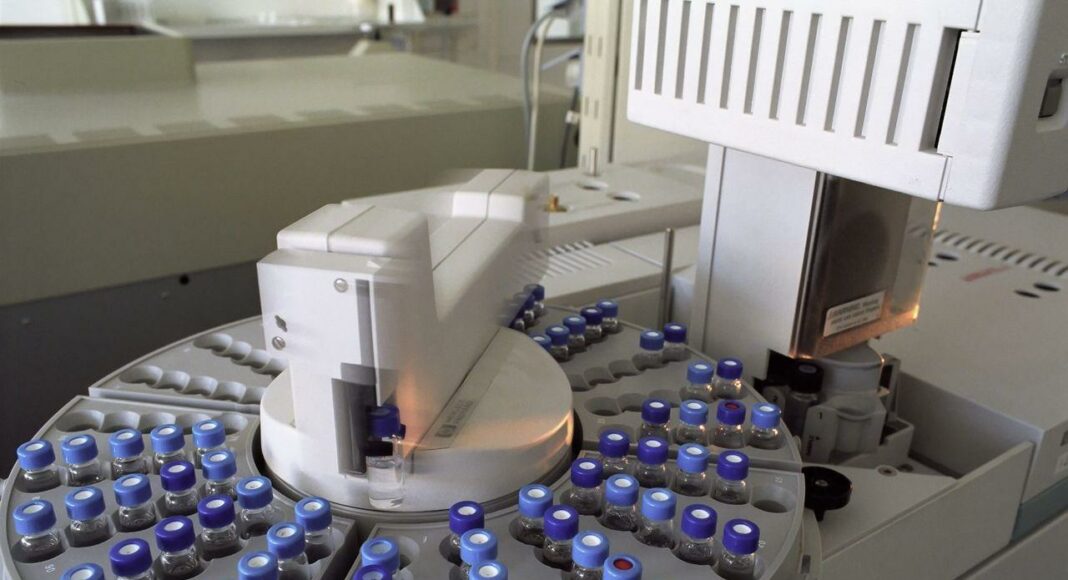
At the bench level, physical implementation is very important. Handling of liquids is one of the most repetitive and unreliable processes in the laboratory. Based on the information from the journal BMC Genomics, automation makes this process much more reliable and effective.
Many laboratories begin their automation journey with automated liquid handling systems because they address one of the most time-consuming and variable stages of experimental workflows while supporting greater consistency and scalability. Once this foundational layer is reliable, scaling up to broader laboratory autonomy becomes much more manageable.
Connected Data and Real-Time Decision Making
Lastly, an article from the SLAS Technology journal highlights the importance of connected laboratory instrumentation and software, where continuous feedback loop makes it possible for data collected by a liquid handler or plate reader to be analyzed on the spot and make on-the-spot decision regarding the following process step.
What Will the Future of Biotech R&D Look Like?
Will scientists become redundant with machines? Certainly not. The future of biotech research & development will be about augmenting capabilities rather than replacing human resources with machines. Laboratories will become much more agile and scalable, where the competitive edge will no longer be defined by how many hands a company has but rather its efficient workflow.
Human Expertise Remains Central
This technology is meant to work alongside researchers; it is not intended to replace them. Human insight, intuition, and creativity are always going to play an important role in achieving scientific discoveries as well as setting research strategies.
Conclusion
The transformation from mere automation to laboratory autonomy is a very natural development in modern-life sciences. The self-driving laboratories are not a science fiction anymore. They are simply the next logical step for those laboratories that are dealing with large numbers of samples as well as demanding high levels of precision.