









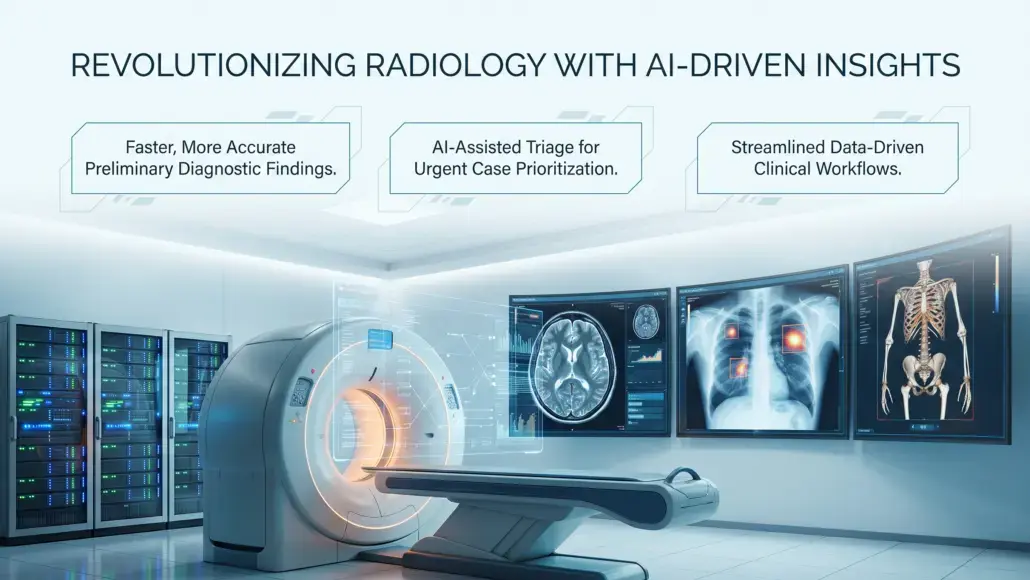

Modern healthcare facilities are experiencing a profound shift in how diagnostic data is generated and interpreted. The arrival of high-performance computing within the radiology suite has allowed for a significant expansion of capabilities, particularly regarding the speed and accuracy of preliminary findings. Hospital administrators and lead clinicians now prioritize the adoption of systems where machine learning algorithms assist in the triaging of urgent cases. This shift represents a transition from purely manual review to a more integrated environment where AI-enabled imaging advancing data-driven clinical processes serves as the foundation for operational excellence. By automating the identification of critical abnormalities, such as intracranial hemorrhages or pulmonary embolisms, these systems ensure that radiologists focus their immediate attention on the most time-sensitive scans. The objective is to create a seamless link between image acquisition and clinical action, reducing the latency that often plagues high-volume departments.
The integration of these technologies goes beyond simple detection. It involves the creation of a comprehensive data ecosystem where every pixel of a scan contributes to a larger clinical narrative. When an imaging system identifies a potential nodule, it does not merely flag the area; it cross-references the finding with existing patient records, longitudinal history, and population-based benchmarks. This depth of analysis allows for a more nuanced understanding of patient health, moving away from static snapshots toward dynamic, information-rich assessments. Healthcare organizations utilizing these tools report a marked reduction in the time required for diagnostic closure, which directly impacts patient throughput and the overall efficiency of the clinical pathway. This methodology ensures that data is not just stored but actively utilized to improve patient outcomes.
Enhancing Diagnostic Precision Through Algorithmic Triage
The implementation of algorithmic triage within diagnostic workflows marks a significant departure from traditional first-in, first-out processing. In high-volume hospital environments, the sheer quantity of imaging data can lead to bottlenecks, where critical findings remain buried in the worklist for hours. Algorithmic systems address this by scanning images in the background the moment they are acquired. If the system detects a high-probability emergency, it reorders the radiologist’s queue, placing the urgent scan at the top. This proactive approach ensures that clinical intervention occurs within minutes rather than hours, which is vital in cases of acute stroke or cardiac distress. The prioritization logic is based on validated clinical guidelines, ensuring that the most severe cases receive the fastest response.
Beyond urgency, these algorithms provide a level of consistency that is difficult to maintain during long shifts. Human fatigue can lead to subtle oversights, particularly when reviewing hundreds of slices in a complex CT or MRI study. The machine learning models, trained on millions of annotated images, maintain a constant level of vigilance. They act as a secondary set of eyes, highlighting areas of interest that might require additional scrutiny. This collaborative model between human expertise and computational power reduces the rate of false negatives, ensuring that patients receive accurate diagnoses the first time. The resulting data streams are then used to refine hospital protocols, ensuring that the entire facility benefits from the insights generated at the point of care. This iterative improvement cycle is essential for maintaining the highest standards of diagnostic accuracy.
Optimizing Resource Allocation and Workflow Efficiency
Efficient resource management is a cornerstone of modern hospital administration. As patient volumes increase, the demand for imaging services often outpaces the available staffing levels. By adopting AI-enabled imaging advancing data-driven clinical processes, facilities can better distribute their workload. Automation handles the repetitive aspects of image processing, such as bone suppression in chest X-rays or the measurement of organ volumes in oncology cases. When these tasks are automated, radiologists are freed to spend more time on complex interpretations and multidisciplinary consultations. This optimization leads to a more sustainable work environment and reduces the burnout associated with high-volume diagnostic production. The ability to do more with existing resources is a key driver for technological adoption in the healthcare sector.
The data generated by these systems also provides valuable insights into the operational health of the department. Administrators can track metrics such as time-to-interpretation, scan volume by modality, and the accuracy of preliminary algorithmic flags. This high-level visibility allows for targeted improvements in workflow design. For instance, if data shows a recurring delay in MRI reporting during certain hours, the facility can adjust staffing levels or reconfigure the technical pipeline to address the issue. The result is a more responsive diagnostic service that adapts to the real-time needs of the patient population. These data-driven adjustments ensure that the hospital remains agile in the face of changing clinical demands.
Integrating Longitudinal Data for Comprehensive Care
One of the most significant advantages of data-centric imaging is the ability to track disease progression with extreme accuracy. In oncology, for example, measuring the response to treatment requires precise comparisons between current and historical scans. AI-enabled imaging advancing data-driven clinical processes allows for automated registration of longitudinal studies, ensuring that measurements are taken at exactly the same anatomical location across different time points. This precision eliminates the variability often seen in manual measurements, providing oncologists with a reliable metric for determining the effectiveness of a particular therapy. The confidence provided by these automated comparisons allows for more aggressive or tailored treatment strategies.
This longitudinal approach extends to chronic disease management as well. For patients with progressive conditions such as multiple sclerosis or chronic obstructive pulmonary disease, the ability to detect subtle changes over years is invaluable. The software can identify minute increases in lesion volume or changes in lung density that might not be apparent to the eye. These insights allow for earlier adjustments to treatment plans, potentially slowing the progression of the disease and improving the patient’s quality of life. The integration of imaging data into the broader electronic health record ensures that every specialist involved in the patient’s care has access to the most current and detailed diagnostic information. This holistic view of the patient is critical for managing complex, multi-system disorders.
Strengthening Clinical Documentation and Compliance
In the current regulatory environment, the accuracy and completeness of clinical documentation are paramount. Automated imaging systems contribute to this by generating structured reports that follow standardized terminologies. When an algorithm identifies a finding, it can automatically populate the relevant sections of the diagnostic report with quantitative data, such as dimensions, Hounsfield units, or standardized uptake values. This reduces the manual entry burden on the clinician and ensures that the report meets all necessary billing and compliance requirements. Additionally, these structured reports are easily searchable, making them an excellent resource for internal audits and retrospective research.
The use of standardized data also facilitates better communication between departments. When a surgeon receives a report that includes precise, algorithmically verified measurements, they can plan their intervention with a higher degree of confidence. The reduction in ambiguity leads to safer procedures and better surgical outcomes. Additionally, the clear documentation of how the AI tool was used in the diagnostic process provides a transparent audit trail, which is essential for maintaining hospital accreditation and demonstrating adherence to best practices. As the sector continues to evolve, the reliance on validated, data-driven documentation will only increase, cementing the role of automated imaging as a vital component of the modern healthcare infrastructure. The transition toward a more data-literate clinical environment is a necessary step for the future of global healthcare systems.
Building Scalable Infrastructure for Future Innovation
The long-term success of any technological implementation in healthcare depends on its scalability. Hospitals must invest in infrastructure that can support the growing computational demands of advanced imaging software. This involves not only upgrading hardware but also ensuring that the internal network can handle the high-speed transfer of large data sets. By building a foundation based on AI-enabled imaging advancing data-driven clinical processes, healthcare organizations position themselves to integrate future innovations, such as predictive analytics for patient outcomes or real-time intraoperative guidance. The modular nature of modern software allows for the addition of new diagnostic tools as they receive regulatory approval, ensuring that the facility remains at the forefront of medical technology.
Collaboration between IT departments and clinical staff is essential during this transition. The goal is to create a system that is both technically sound and clinically relevant. This involves rigorous testing of the software within the specific environment of the hospital to ensure that it aligns with existing workflows. Once established, these systems provide a wealth of data that can be used to train local models, further refining the accuracy of the tools for the specific patient demographic served by the facility. This cycle of continuous improvement ensures that the diagnostic process remains as effective as possible, providing the highest level of care to every patient who enters the hospital. The focus remains on utilizing data to drive better decisions, proving that the future of medicine lies in the intelligent integration of information and expertise. The commitment to a data-driven approach is what defines the next generation of healthcare providers.