













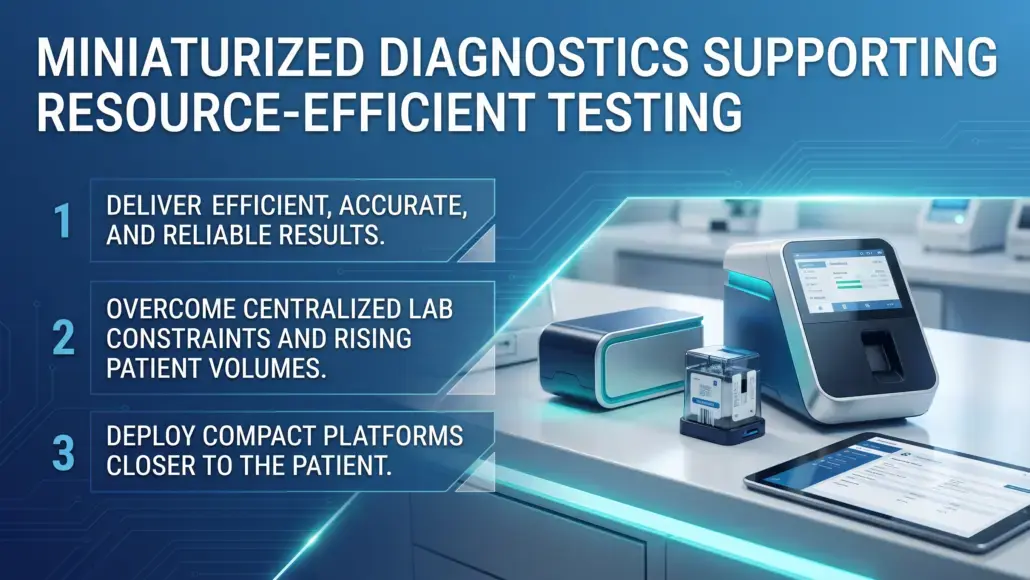

The healthcare sector is currently facing an urgent need for more efficient diagnostic solutions that do not compromise on accuracy or reliability. As patient volumes continue to rise, hospitals are often constrained by the physical limitations of their centralized laboratories. This has led to an increased interest in the development and adoption of compact testing platforms that can be deployed closer to the patient. The transition toward miniaturized diagnostics supporting resource-efficient testing represents a strategic shift in how healthcare providers manage their diagnostic pipelines. By reducing the physical footprint of testing equipment and the volume of reagents required, these systems allow facilities to perform high-quality analysis without the need for expansive, energy-intensive laboratory infrastructure. This evolution is particularly important as medical institutions look to balance increasing clinical demands with the need for environmental and fiscal sustainability.
These advanced systems utilize microfluidic technology to perform complex biochemical analyses on a scale that was previously impossible. This miniaturization allows for the integration of multiple laboratory functions onto a single, portable device, often referred to as a lab-on-a-chip. The implications for resource efficiency are significant, as these devices require minimal maintenance and can be operated with limited specialized training. For hospital administrators, the ability to decentralize certain diagnostic tasks means that the central lab can focus on more specialized, high-complexity testing, while routine panels are handled at the point of care. This optimization of resources ensures that the entire diagnostic ecosystem operates at peak efficiency, providing timely results that are essential for effective clinical decision-making. The adoption of these tools represents a broader move toward a more agile and responsive healthcare infrastructure that can adapt to changing patient needs.
Optimizing Hospital Logistics with Compact Testing Platforms
The logistical challenges of transporting patient samples from the ward to a central laboratory can often lead to delays in treatment. These delays are not merely inconvenient; they can have a direct impact on patient outcomes, particularly in acute care settings. By implementing miniaturized diagnostics supporting resource-efficient testing, hospitals can drastically reduce the turnaround time for critical tests. When the testing platform is located directly in the emergency department or the intensive care unit, results are available in minutes rather than hours. This immediate feedback allows clinicians to initiate appropriate therapies sooner, which is a vital factor in managing conditions like sepsis or acute myocardial infarction. The reduction in transport time also minimizes the risk of sample degradation or loss, ensuring that the integrity of the clinical data is maintained throughout the process.
Additionally, the reduction in sample volume required by these miniaturized systems is a significant benefit for patient comfort and clinical safety. Traditional testing often requires multiple vials of blood, which can be problematic for pediatric or geriatric patients, or those with chronic illnesses who require frequent monitoring. Compact systems typically require only a few microliters of a sample, often obtainable via a simple finger-stick. This approach not only improves the patient experience but also reduces the biohazardous waste generated by the facility. The cumulative effect of these small efficiencies is a more streamlined logistical framework that supports the overall mission of the hospital. These logistics-focused improvements contribute to a more humane and efficient patient experience, reducing the stress associated with frequent blood draws and long waiting periods.
Improving Throughput in Resource-Limited Clinical Environments
In many healthcare settings, particularly those in rural or underserved areas, access to a fully equipped central laboratory is not always guaranteed. In these environments, the deployment of portable diagnostic tools is essential for maintaining a high standard of care. Miniaturized diagnostics supporting resource-efficient testing provides a viable solution for these resource-limited settings, offering the same level of diagnostic precision as larger systems but in a much more accessible format. These devices are designed to be durable and can operate in varied environmental conditions, making them ideal for use in remote clinics or during community outreach programs. The ability to provide high-quality diagnostics outside of traditional hospital settings is a key component of modern health equity strategies.
The ability to perform rapid, on-site testing in these areas ensures that patients do not have to travel long distances for routine diagnostics. This increase in accessibility is a key driver for improving public health outcomes, as it allows for the early detection and management of infectious diseases and chronic conditions. Additionally, the lower cost of operation associated with miniaturized systems makes them a financially sustainable option for smaller facilities. By reducing the reliance on expensive, centralized infrastructure, healthcare providers can allocate their limited budgets toward other critical areas, such as staffing and patient education. This focus on resource efficiency ensures that every patient, regardless of their location, has access to the diagnostic services they need. The expansion of these services into previously underserved areas represents a significant step forward for global healthcare accessibility.
Enhancing Accuracy in Point-of-Care Molecular Diagnostics
The field of molecular diagnostics has traditionally been associated with complex, time-consuming procedures that require a highly controlled laboratory environment. However, the advent of miniaturized molecular platforms is changing this dynamic. These systems employ advanced amplification and detection techniques that are integrated into a single-use cartridge, allowing for the rapid identification of pathogens or genetic markers at the point of care. The precision offered by these devices is comparable to traditional polymerase chain reaction (PCR) methods, but with the added benefit of speed and ease of use. This advancement is particularly impactful for the management of respiratory infections, where rapid differentiation between viral and bacterial causes can guide appropriate antibiotic stewardship. The ability to identify the correct treatment early not only improves the patient outcome but also helps to combat the broader issue of antimicrobial resistance.
The integrated nature of these systems also reduces the risk of sample contamination, which is a common concern in traditional molecular testing. Because the entire diagnostic process takes place within a sealed cartridge, the possibility of environmental exposure is virtually eliminated. This ensures a high degree of reliability in the results, providing clinicians with the confidence they need to make definitive treatment decisions. The adoption of these technologies highlights a commitment to diagnostic excellence, where the focus is on delivering the most accurate information in the shortest possible time. As molecular testing becomes increasingly integrated into routine clinical practice, the role of miniaturized platforms will continue to expand, providing the foundation for more personalized and effective patient care. This technological integration is a hallmark of a modern, data-driven healthcare system that prioritizes precision and speed.
Reducing Operational Costs Through Integrated Microfluidics
From a financial perspective, the adoption of miniaturized diagnostics supporting resource-efficient testing offers several clear advantages. The reduction in reagent consumption alone can lead to significant cost savings over time, especially for high-volume tests. Additionally, the decreased need for specialized laboratory space and the associated utilities reduces the overhead costs of the facility. Because these systems are often modular, hospitals can scale their diagnostic capabilities according to demand, avoiding the large capital expenditures required for traditional laboratory automation. This flexibility is essential for maintaining financial stability in an increasingly complex and competitive healthcare environment. The long-term economic benefits of these systems make them an attractive investment for both large hospital networks and smaller community clinics.
The training requirements for operating these systems are also significantly lower than those for traditional laboratory equipment. This allows for a more flexible use of the existing clinical workforce, as nurses or medical assistants can perform certain tests without the need for a dedicated laboratory technician. While this does not replace the need for specialized laboratory expertise, it does allow for a more efficient distribution of tasks within the clinical team. By empowering point-of-care staff with advanced diagnostic tools, hospitals can improve the overall flow of patient care while maintaining strict control over operational costs. This strategic approach to resource management is a key component of a sustainable healthcare model that values both clinical excellence and financial responsibility. The intelligent use of personnel and technology ensures that the hospital can meet the needs of its community efficiently.
Streamlining Patient Care Pathways with Rapid Diagnostic Feedback
The ultimate goal of any diagnostic intervention is to improve the patient care pathway. When diagnostic results are delivered quickly and accurately, the entire clinical team can work more effectively. Miniaturized diagnostics supporting resource-efficient testing facilitates this by providing the necessary data at the exact moment it is needed. This rapid feedback loop allows for immediate adjustments to treatment plans, reducing the likelihood of complications and shortening the length of hospital stays. For patients, this means a faster return to health and a more positive overall experience within the healthcare system. The reduction in uncertainty that comes with rapid testing is also a significant benefit for patient mental health and overall satisfaction.
The integration of these diagnostic tools with electronic health records ensures that the results are immediately available to all members of the care team, regardless of their location. This visibility is essential for multidisciplinary collaboration, where specialists in different departments must work together to manage complex cases. The ability to share diagnostic data in real time reduces the need for repetitive testing and ensures that the most current information is always at hand. As the healthcare sector continues to prioritize value-based care, the importance of efficient and effective diagnostics cannot be overstated. By investing in miniaturized systems, healthcare organizations are demonstrating their commitment to a more responsive, patient-centered, and resource-efficient future. The focus on maximizing the impact of every diagnostic encounter ensures that the hospital can provide the highest quality of care to the greatest number of patients, building a more resilient and capable healthcare infrastructure for all.