

















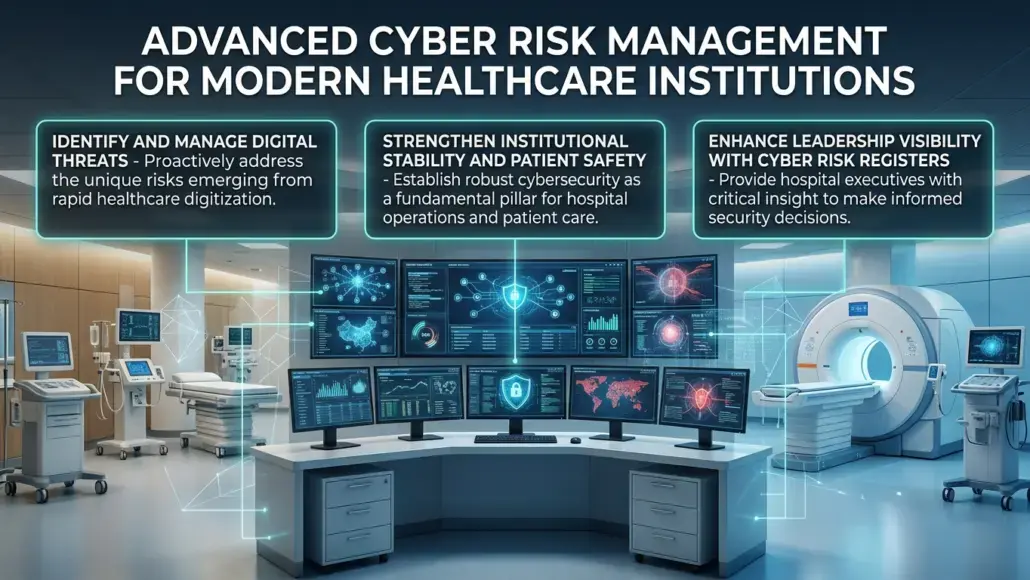

In the modern healthcare environment, the ability to identify and manage risk is a fundamental requirement for institutional stability and patient safety. While hospitals have long maintained traditional risk registries for clinical and financial hazards, the rapid digitization of the healthcare sector has introduced a new and complex category of threats that requires a specialized approach. Cyber risk registers have become an essential tool for providing hospital leadership with the visibility needed to understand the digital threat environment. These registers serve as a centralized repository for identifying, assessing, and tracking the mitigation of cybersecurity threats across the entire enterprise, from the administrative back office to the patient bedside.
By formalizing the documentation of digital threats, hospitals can move away from a fragmented approach to security and toward a unified enterprise risk management strategy. This shift is critical because cybersecurity is no longer just a technical issue; it is a clinical and operational risk that can impact every aspect of patient care. A well-maintained register ensures that the board of directors and the executive leadership team have a clear and consistent understanding of the hospital’s current security posture. This transparency is vital for making informed decisions regarding resource allocation, insurance coverage, and strategic investments in new healthcare technologies. The goal is to create a comprehensive view that encompasses all digital assets and their potential vulnerabilities.
The Anatomy of an Effective Healthcare Risk Registry
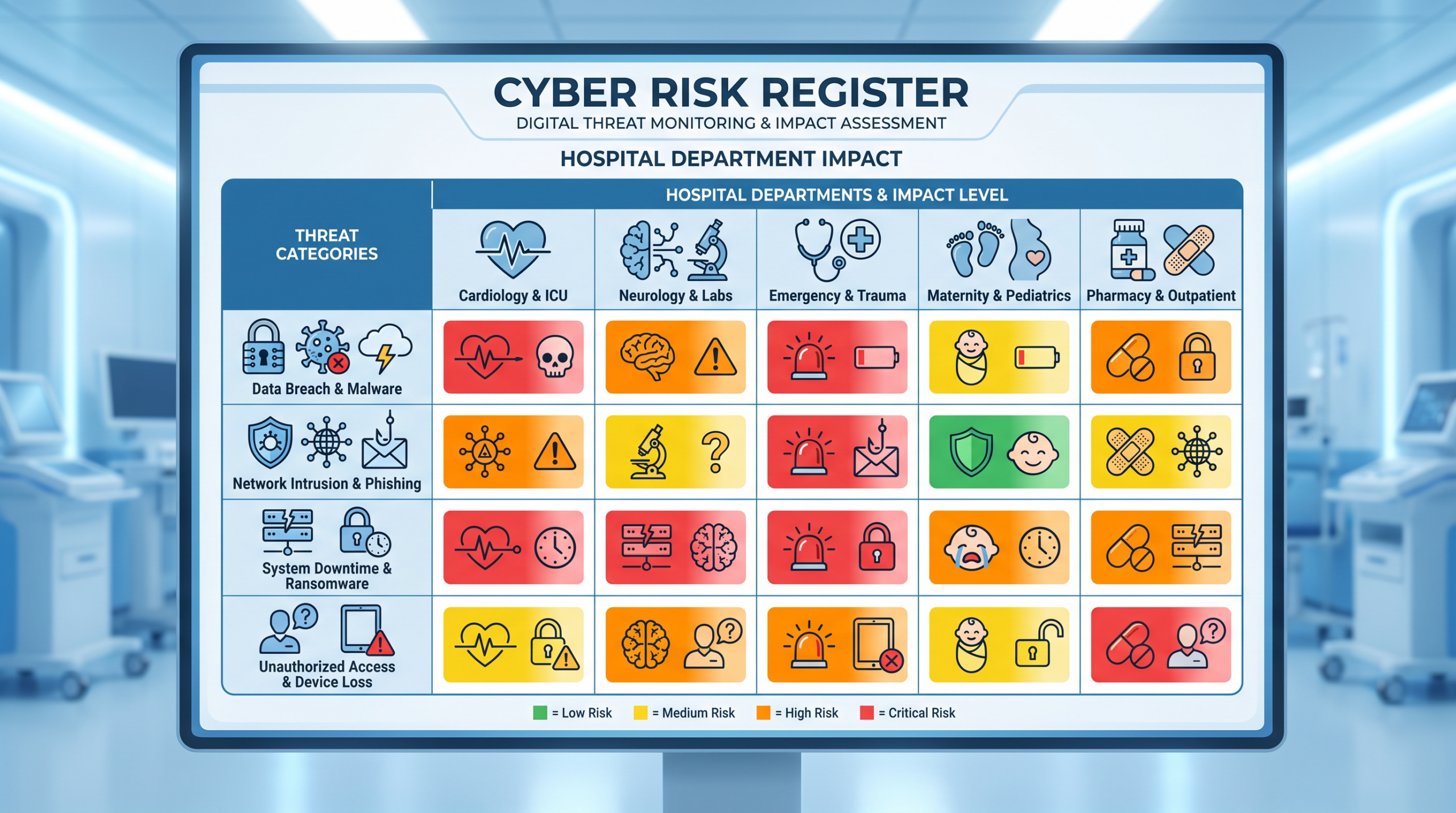
An effective cyber risk register in a hospital setting must be more than just a list of technical vulnerabilities. It must translate complex digital threats into terms that are relevant to clinical and business leaders. Each entry should include a description of the risk, the potential impact on patient safety and hospital operations, and the likelihood of the risk being realized. For example, an entry concerning the use of unsupported operating systems in the laboratory department should clearly state how a system failure could delay diagnostic results and impact patient treatment plans. Detailed entries regarding medical device vulnerability should be a primary focus of these registries to ensure that clinical engineering and IT security are aligned on remediation priorities. This alignment is necessary to prevent a disjointed response to a critical hardware flaw.
The register must also document the current controls in place to mitigate each risk and identify any gaps that require further investment. This includes tracking the progress of security projects, such as the implementation of multi-factor authentication or the deployment of a new clinical firewall. By assigning an owner to each risk, the hospital ensures accountability and provides a clear point of contact for follow-up actions. This structured approach helps prevent critical security issues from being overlooked in the noise of a busy clinical environment. Regularly updating the register allows the hospital to track its progress over time and demonstrate a commitment to continuous security improvement to both internal and external auditors. The use of risk scoring methodologies, such as impact multiplied by probability, provides a quantifiable way to compare disparate threats.
Driving Strategic Alignment and Resource Allocation
One of the primary benefits of utilizing cyber risk registers is the ability to drive strategic alignment between the IT department and the rest of the hospital. Historically, security investments were often driven by the latest technical trends or the immediate response to a recent breach. However, with a comprehensive risk register, the hospital can take a more proactive and data-driven approach to security spending. By identifying the risks with the highest potential impact on patient outcomes, leadership can prioritize investments that provide the greatest reduction in overall enterprise risk. This ensures that limited healthcare budgets are used as efficiently as possible to protect the most critical clinical services. The register acts as a roadmap for multi-year security planning and capital expenditure requests.
This alignment also extends to the hospital’s relationship with its insurance carriers and regulatory bodies. As cyber insurance premiums continue to rise, insurers are increasingly demanding evidence of a strong risk management program. A well-documented register provides this evidence, demonstrating that the hospital is actively monitoring its threat environment and taking logical steps to mitigate its most significant risks. Similarly, during regulatory audits, the ability to produce a detailed risk register shows that the organization is meeting its obligations under frameworks such as the Health Insurance Portability and Accountability Act. This proactive documentation can help the hospital avoid costly fines and legal repercussions in the event of a security incident. The ability to show a history of risk reduction is a powerful tool for demonstrating regulatory compliance.
Integrating Cyber Risk into the Clinical Quality Mission
To be truly effective, cyber risk registers must be integrated into the hospital’s broader mission of clinical quality and patient safety. This involves moving beyond a purely technical view of security and considering the impact of digital threats on the patient experience. For example, the risk of a data breach is not just a privacy concern; it can lead to identity theft for patients and a loss of trust in the healthcare institution. By including these broader impacts in the risk assessment process, the hospital can build a more comprehensive and empathetic security program. This integration helps foster a culture where every staff member understands that protecting data is an essential part of providing high-quality care. The protection of the patient digital identity is now as important as the protection of their physical safety.
Engagement with clinical staff is vital for maintaining the accuracy and relevance of the risk register. Nurses, physicians, and other healthcare workers are often the first to notice issues with device performance or unauthorized access to sensitive information. By encouraging staff to report these observations through a formal risk reporting process, the hospital can identify emerging threats that might be missed by automated security tools. This grassroots involvement ensures that the register reflects the actual reality of the clinical environment rather than just a theoretical model. When staff members see that their reports lead to tangible security improvements, they are more likely to remain vigilant and engaged in the hospital’s security mission. This two-way communication channel is the foundation of a successful risk management culture.
Quantifying Residual Risk and Impact Severity
A critical component of the risk management process is the calculation of residual risk, which is the level of risk that remains after all current controls have been applied. By focusing on residual risk, hospital leaders can see where their existing defenses are failing and where additional investment is needed. This granularity allows for a more nuanced discussion about risk acceptance versus risk mitigation. For instance, the hospital may decide to accept a certain level of risk in an administrative system if the cost of further mitigation is disproportionately high, provided that the risk to patient safety is negligible. However, in clinical systems, the threshold for risk acceptance must be significantly lower. Defining these risk appetites is a key responsibility of the board of directors, supported by the data provided in the cyber risk registers.
The register should also account for the secondary impacts of a cyber event, such as reputational damage and the cost of forensic investigations. These factors can often outweigh the direct technical costs of fixing the initial problem. By including these indirect consequences in the risk assessment, the hospital can develop a more accurate picture of the total financial exposure. This information is invaluable when negotiating cyber insurance policies or when presenting the case for security funding to the finance committee. The inclusion of potential downtime costs, calculated per hour or per department, helps non-technical leaders understand the true stakes of a digital failure.
The following list outlines the essential steps for establishing a sustainable cyber risk management program:
- Creation of a standardized risk assessment methodology that applies to both clinical and administrative systems across the entire hospital network.
- Development of a centralized digital platform for hosting the risk register that is accessible to all relevant stakeholders and supports real-time updates.
- Implementation of a regular review schedule to ensure that risk entries remain accurate and reflect the current threat environment as it evolves.
- Training for risk owners on how to document and track the progress of mitigation efforts while using consistent risk terminology.
- Integration of the cyber risk register into the hospital’s broader enterprise risk management framework and existing clinical reporting structure.
- Regular reporting of high-priority risks to the board of directors to ensure executive oversight and support for long-term remediation projects.
- Use of the register to inform the development of the annual cybersecurity budget and the long-term strategic security roadmap for the organization.
- Evaluation of emerging healthcare technologies against the existing risk register to identify potential new vulnerabilities before they are introduced into the environment.
By following these guidelines, healthcare organizations can change their approach to digital security from a reactive burden into a strategic asset. The visibility provided by cyber risk registers enables hospital leaders to protect their institutions from the devastating impact of a cyber attack while ensuring that the benefits of digital transformation are realized safely. As the healthcare industry becomes increasingly dependent on connected technologies, the ability to manage cyber risk with precision and clinical focus will be a defining characteristic of successful healthcare institutions. This commitment to transparency and accountability ultimately leads to a safer and more resilient healthcare system for everyone involved in the delivery of patient care.