















The global landscape of healthcare is currently navigating a period of unprecedented transformation, characterized by an aging population and an increasing prevalence of chronic diseases. This demographic shift has created a massive, sustained demand for sophisticated medical technologies, ranging from high-precision diagnostic tools to complex implantable devices. However, the path from a revolutionary concept to a commercially viable, mass-produced product is fraught with immense logistical, financial, and regulatory hurdles. In this high-stakes environment, contract manufacturing driving medical device scale has emerged as the most critical strategic lever for original equipment manufacturers (OEMs) seeking to maintain a competitive edge. By delegating the intricate complexities of production to specialized partners, companies can focus on their core competencies innovation, clinical research, and market strategy while ensuring that their products are manufactured with the highest levels of quality and regulatory precision.
The decision to outsource is no longer merely a tactical cost-saving measure; it has become a foundational strategic imperative. The medical device industry is governed by some of the most stringent and evolving regulatory frameworks in the world, including the FDA’s Quality System Regulation in the United States and the European Union’s Medical Device Regulation (MDR). Navigating these requirements demands a level of expertise, documentation, and infrastructure that many startups and even established mid-sized firms find difficult to maintain in-house. Specialized contract manufacturers possess the necessary ISO certifications, such as ISO 13485, and advanced cleanroom facilities to meet these rigorous standards, effectively acting as an integrated extension of the OEM’s own operations. This partnership allows for a level of scalability that would be impossible to achieve through internal investment alone, especially when facing the unpredictable fluctuations of global market demand and the need for rapid geographic expansion.
The Strategic Evolution of Specialized OEM Partnerships
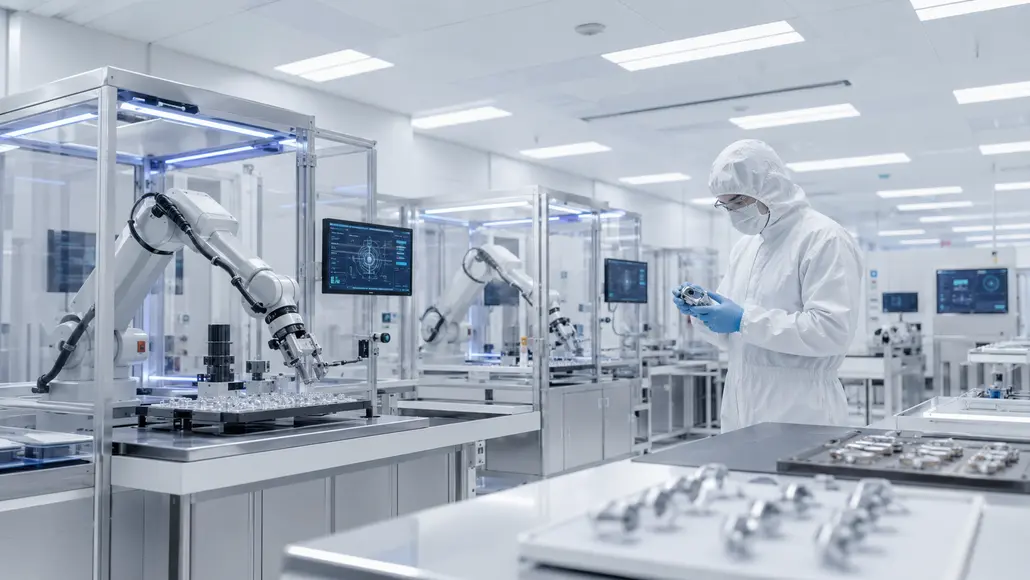
One of the most significant advantages of contract manufacturing driving medical device scale is the ability to leverage existing, highly sophisticated technological ecosystems. Modern contract manufacturers (CMOs) are far more than just assembly shops; they have evolved into centers of excellence for engineering, material science, and global supply chain management. By forming deep-rooted OEM partnerships, medical device companies gain immediate access to advanced manufacturing techniques such as high-precision additive manufacturing, complex multi-component injection molding, and sub-micron machining without the staggering capital expenditure required to acquire and maintain these technologies. This access is particularly vital as devices become smaller, smarter, and more complex, requiring tolerances and material interactions that are often beyond the reach of standard production lines.
Furthermore, the collaborative nature of these partnerships fosters a “design for manufacturability” (DFM) approach that is essential for long-term success. When a contract manufacturer is involved early in the design and prototyping phase, they can identify potential production bottlenecks, material incompatibilities, or assembly challenges that might not be apparent to a design-focused team. Their engineers can suggest modifications that reduce waste, improve yield, and lower per-unit costs before the design is finalized and the expensive process of regulatory filing begins. This proactive engagement ensures that when the time comes to scale from low-volume clinical trial units to high-volume commercial production, the transition is seamless and predictable. The integration of the entire supply chain through a single, competent partner also mitigates the inherent risks associated with multi-vendor management, providing a unified and transparent path from raw material procurement to final sterile packaging and distribution.
Navigating the Maze of Regulatory Compliance and Quality Assurance
In the medical sector, quality is not just a metric; it is synonymous with patient safety and clinical efficacy. A single defect in a medical device can have catastrophic consequences for patient outcomes and result in devastating legal, financial, and reputational repercussions for the manufacturer. Contract manufacturing driving medical device scale places a premium on quality assurance systems that are built into every discrete step of the production process. These partners employ rigorous testing protocols, automated inspection systems, and real-time process monitoring to ensure that every unit produced meets the exact, validated specifications approved by regulatory bodies. For many OEMs, the transition to an outsourced model is driven by the desire to “de-risk” their operations, transferring the burden of operational compliance and audit readiness to an entity whose entire business model is built on maintaining these gold-standard levels of performance.
The expertise of contract manufacturers in regulatory documentation is also a significant asset during the scaling process. As a product expands into new international markets, it must comply with a patchwork of varying local regulations and standards. A global contract manufacturer often has extensive experience navigating these different jurisdictions, providing the necessary technical files, risk management reports, and audit support to facilitate faster and more successful market entries. This global reach is a fundamental component of scaling, as it allows companies to penetrate diverse markets—from North America to the Asia-Pacific region without the need to establish a local manufacturing footprint in every country. The CMO provides the “regulatory muscle” needed to sustain a truly global product lifecycle.
Enhancing Cost Efficiency and Strategic Capital Allocation
Traditional manufacturing models require massive, front-loaded investments in facilities, specialized equipment, and skilled labor. For a medical device company, particularly one in the growth phase, this capital is often much better spent on research and development or aggressive marketing and sales efforts. Contract manufacturing driving medical device scale allows for a “pay-as-you-go” financial model, where costs are tied directly to actual production volume. This inherent flexibility is essential for companies launching new products where initial market uptake may be uncertain or where seasonal demand fluctuates. By converting fixed overhead costs into variable costs, firms can maintain a leaner, more resilient balance sheet and respond more effectively to competitive shifts or economic changes.
Cost efficiency also extends to the large-scale procurement of raw materials and components. Large-scale contract manufacturers often have significant purchasing power and long-standing relationships with tier-one suppliers, allowing them to negotiate significantly better prices for high-grade medical materials such as titanium, surgical-grade stainless steel, and specialized medical-grade polymers. These savings are passed on to the OEM, further improving the overall margin of the device and providing the financial “breathing room” to invest in the next generation of innovation. When combined with optimized labor costs, reduced waste, and the elimination of maintenance expenses for internal facilities, the financial argument for contract manufacturing becomes undeniable. It provides a pathway to profitability that is both faster and more sustainable than the traditional approach of building an internal manufacturing empire from scratch.
Accelerating Time to Market in a High-Velocity Competitive Environment
The window of opportunity for a new medical device is often incredibly narrow. Competitors are constantly vying for market share, and being first to market can define a product’s long-term trajectory and revenue potential. Contract manufacturing driving medical device scale provides the speed and agility necessary to compress development and launch timelines. With ready-made production lines, validated cleanrooms, and experienced engineering teams already in place, a contract manufacturer can often move from a finalized prototype to full-scale commercial production in a fraction of the time it would take an OEM to build, staff, and validate the same capability internally. This speed is a critical factor in maintaining the momentum generated during successful clinical trials and securing the interest of hospital procurement committees.
The ability to pivot quickly is another hallmark of the modern contract manufacturing model. If clinical feedback or initial market performance suggests that a device needs iterative modification, a contract manufacturer can implement these changes across the production line with minimal disruption compared to a rigid internal setup. This agility ensures that the final product is perfectly aligned with the evolving needs of both clinicians and patients. In the rapidly evolving world of MedTech, where digital integration and patient-centric designs are becoming the norm, the capacity to iterate and scale simultaneously is a powerful and necessary competitive advantage.
Leveraging Advanced Technology and Specialized Engineering Talent
The engineering talent required to manufacture modern medical devices is highly specialized and in high demand. From software engineers for connected devices to material scientists for biocompatible implants, the human capital required is significant. Contract manufacturing driving medical device scale allows OEMs to tap into a pre-existing pool of this specialized talent. CMOs invest heavily in training their workforce on the latest manufacturing technologies and regulatory updates, ensuring that the people building the devices are as sophisticated as the devices themselves. This “talent-as-a-service” model means that an OEM doesn’t need to worry about the recruitment, training, and retention of specialized manufacturing staff, which is a major operational headache in many parts of the world.
Furthermore, CMOs are often at the forefront of implementing Industry 4.0 technologies. This includes the use of digital twins to simulate manufacturing processes, AI-driven predictive maintenance to prevent downtime, and blockchain for end-to-end supply chain transparency. By partnering with a technologically advanced CMO, an OEM inherits these benefits, ensuring that their manufacturing process is as innovative as the product itself. This technological synergy is a key driver of scale, as it allows for higher precision, lower error rates, and more efficient resource utilization across the entire production lifecycle.
The Future of Scalable Manufacturing in the Global Healthcare Ecosystem
Looking toward the future, the role of contract manufacturing driving medical device scale will only become more deeply integrated into the fabric of the global healthcare industry. We are seeing a move toward “smart manufacturing” where data analytics and automation are used to optimize every facet of the factory floor, from energy consumption to individual component tracking. Contract manufacturers are leading this digital revolution, implementing systems that provide total, real-time transparency into the manufacturing process for their OEM partners. This level of data-driven insight allows OEMs to monitor production metrics and quality data in real-time, regardless of where the factory is located, ensuring that the final product is always a perfect reflection of their original vision.
The rise of personalized medicine and value-based care will also drive new manufacturing paradigms. Devices tailored to the specific anatomy or physiological profile of an individual patient require a level of customization that is difficult and expensive to achieve on a traditional, rigid assembly line. Contract manufacturers are developing the flexible, modular production models necessary to support these high-mix, low-volume requirements. By combining the benefits of industrial scale with the precision of individual customization, these partners are enabling a new era of healthcare that is more effective, more personalized, and more accessible than ever before. In conclusion, the partnership between OEMs and contract manufacturers is the essential engine that will continue to drive the medical device industry forward, ensuring that the next generation of life-saving technologies is within reach of the global patient population.