















The physical environment of a modern healthcare facility is far more than a mere backdrop for clinical activity; it is an active and influential participant in the healing process. For many decades, hospital architecture was dominated by a singular focus on clinical efficiency, ease of cleaning, and sterile functionality, often resulting in cold, intimidating, and labyrinthine spaces that inadvertently increased patient anxiety, disoriented visitors, and contributed to staff burnout. However, a powerful new paradigm has emerged in recent years where healthcare facility design improving patient experience is the central, non-negotiable objective. This sophisticated approach, rooted in the principles of Evidence-Based Design (EBD), recognizes that every element of the built environment from the layout and lighting to the acoustics and the views from a patient’s window can have a measurable, positive impact on recovery rates, pain perception, and overall patient satisfaction.
As global healthcare systems continue to move toward a more holistic, patient-centered model of care, the design of the physical infrastructure must adapt to meet the complex emotional and psychological needs of those it serves. A well-designed facility is one that proactively reduces the “environmental stress” that patients and their families inevitably experience during a medical crisis. By creating environments that feel welcoming, intuitive, dignified, and supportive, healthcare providers can foster a deep sense of trust and safety. This transformation is not merely about “hospitality-style” aesthetics; it is about leveraging the science of the built environment to improve clinical outcomes, enhance operational efficiency, and ensure that the hospital is a place of genuine, human-centered healing rather than just a place of technical treatment.
The Scientific Foundations of Evidence-Based Design and Healing Environments
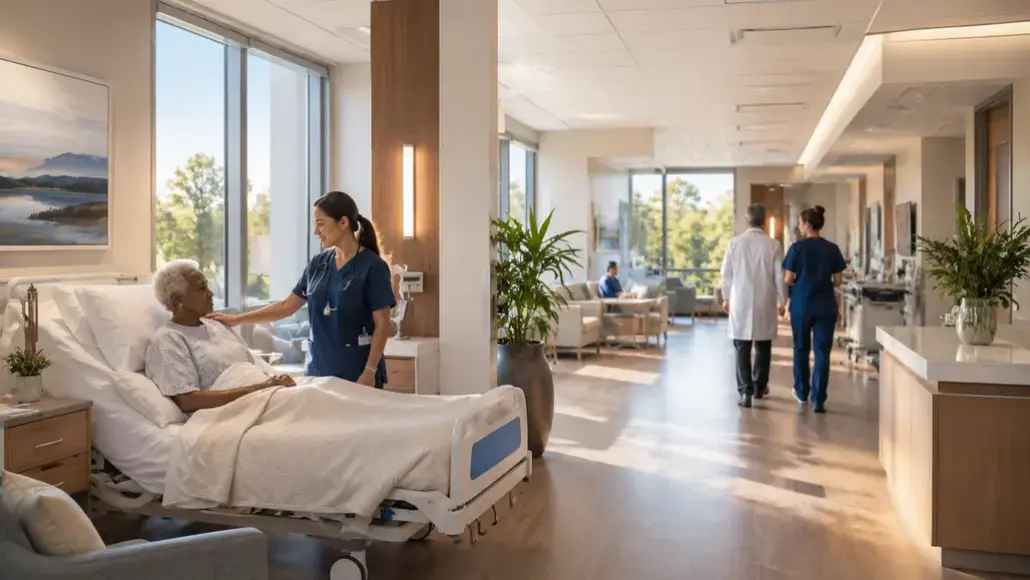
Evidence-Based Design is a rigorous process where decisions about the physical environment are based on credible, peer-reviewed research to achieve the best possible clinical and operational outcomes. In the context of healthcare facility design improving patient experience, this means creating “healing environments” that actively support the physiological and psychological recovery process. One of the most well-documented and influential findings in this field is the critical importance of access to natural light and the outdoors. Research has consistently shown that patients in rooms with ample natural sunlight and views of green space or nature require significantly less pain medication, experience lower levels of the stress hormone cortisol, and often have shorter hospital stays compared to those in windowless or dim environments.
This “biophilic” approach to healthcare design goes beyond just windows; it integrates nature into the fabric of the building through the use of internal gardens, natural materials like wood and stone, and art that depicts natural scenes. Another critical but often overlooked element of the healing environment is acoustics. The traditional hospital is notoriously noisy, filled with the constant sounds of mechanical alarms, rolling carts, paging systems, and loud conversations. This “acoustic pollution” is a major source of stress, disrupting vital sleep patterns and hindering effective communication between clinicians and patients. Modern healthcare facility design addresses this challenge through the strategic use of high-performance sound-absorbing materials, decentralized nursing stations that move activity away from patient doors, and “silent” alarm systems that send notifications directly to staff handheld devices. By creating a quieter, more peaceful atmosphere, the facility allows patients to get the essential rest they need to heal and significantly reduces the daily stress levels of the healthcare professionals working within those spaces.
Ergonomic Layouts, Human-Centric Design, and Intuitive Wayfinding
The ease with which a patient, an elderly visitor, or a stressed family member can navigate a large, complex facility is a major and often underestimated factor in their overall experience. “Wayfinding” is the multi-disciplinary science of using architecture, lighting, signage, and color to help people orient themselves and find their destination without confusion or anxiety. In many older hospitals, the confusing, repetitive layout of corridors contributes to a sense of helplessness and frustration. Healthcare facility design improving patient experience prioritizes intuitive, “legible” layouts where major destination points—such as the pharmacy, radiology, or the main cafeteria—are easily identifiable and accessible from a central, welcoming entrance. The use of clear, high-contrast, multi-lingual signage and consistent visual cues, such as distinct flooring patterns or unique art installations, helps reduce the cognitive load on visitors who are already under significant emotional strain.
Ergonomics also plays a vital and multifaceted role in the design of patient rooms and clinical areas. A modern patient room must be designed to accommodate the diverse needs of the patient, their visiting family, and the multi-disciplinary clinical team simultaneously. This includes the creation of dedicated “family zones” within the room, equipped with comfortable seating, sleeper sofas, and charging stations, which encourage family presence and involvement in care a key driver of better outcomes and patient safety. For the patient, ergonomic design means having adjustable, multi-layered lighting, intuitive temperature controls they can operate from their bed, and bathrooms designed with universal design principles to minimize the risk of falls. For the clinical staff, an ergonomic layout reduces the amount of unnecessary walking, stretching, and lifting, allowing them to spend more of their time at the bedside and less time on the logistical “waste” of searching for supplies or navigating poorly planned spaces.
Optimizing Clinical Workflows and Enhancing Operational Efficiency
While the patient and family experience is the primary goal, a healthcare facility cannot function effectively if it does not also support the highly complex workflows of the clinical team. Healthcare facility design improving patient experience is inextricably linked to sophisticated hospital layout optimization. By deeply analyzing the daily “traffic patterns” of nurses, doctors, and support staff, designers can create layouts that minimize bottlenecks, reduce the distance traveled during a shift, and improve the visibility of patients. For example, the use of decentralized nursing “alcoves” located just outside patient rooms ensures that nurses are physically closer to their patients, improving response times and increasing the amount of direct observation and engagement.
The seamless integration of technology is another cornerstone of efficient workflow design. Modern facilities are built from the ground up with a robust, scalable digital infrastructure that supports real-time location systems (RTLS) for tracking critical equipment and personnel, integrated telehealth capabilities for remote consultations, and effortless access to electronic health records (EHRs) at every point of care. These technologies should be “invisible” and non-intrusive to the patient but highly functional and reliable for the staff. When the physical environment and the digital infrastructure are perfectly aligned, the hospital operates with a level of precision and “quiet efficiency” that enhances patient safety, reduces the potential for medical errors, and allows the human elements of care to remain the primary focus.
Strategic Infrastructure Planning and the Necessity of Future-Proofing
The field of medicine is evolving at a staggering pace, and a healthcare facility built today must be able to adapt to the clinical and technological advancements of the next twenty to thirty years. Healthcare infrastructure planning requires a long-term, strategic perspective that emphasizes structural flexibility and modularity. This might include designing “universal” patient rooms that can be easily and quickly converted from standard medical-surgical use to high-acuity intensive care if the needs of the community change. It also involves creating “soft spaces” or non-structural areas that can be repurposed to accommodate new, bulky technologies, such as advanced robotic surgery systems or next-generation proton therapy suites, without requiring a complete and disruptive structural overhaul.
Future-proofing also means designing for extreme resilience. Modern hospitals must be able to remain fully operational and safe during natural disasters, extreme weather events, or public health emergencies like pandemics. This requires the integration of redundant power systems, advanced independent air filtration and negative pressure zones, and the ability to rapidly “flex” the facility’s capacity to handle a sudden, massive influx of patients. By building these robust capabilities into the initial design and infrastructure plan, healthcare organizations ensure that they can continue to provide a safe, stable, and high-quality experience for their patients regardless of the external circumstances. A resilient facility is a reliable facility, and that reliability is a foundational component of the long-term trust between a healthcare provider and its community.
Designing for Community Wellness and the Holistic Care Continuum
Finally, the vision of the modern healthcare facility is moving toward a more integrated, proactive role in the overall health of the community. We are seeing the rise of “health villages” or “wellness campuses” where traditional clinical services are co-located with community fitness centers, healthy dining options, educational spaces, and public green parks. Healthcare facility design improving patient experience in this broad context means breaking down the historical walls between the “hospital” and the “community” it serves. By making the facility a welcoming destination for wellness, prevention, and education rather than just a place to go when sick or injured, healthcare providers can promote a more holistic, proactive approach to health.
In conclusion, the design of a healthcare facility is one of the most powerful and lasting tools available for improving the human experience of medicine. By combining the scientific rigor of Evidence-Based Design with a deep, empathetic understanding of the needs of the patient, the family, and the provider, we can create spaces that do not just house medical activity but truly facilitate the healing process. As we continue to innovate in the realms of hospital architecture, ergonomic planning, and resilient infrastructure, the goal remains clear: to create environments that respect the inherent dignity of the patient, support the professional excellence of the clinician, and foster a lasting culture of health and wellness for all. The buildings we design and build today will shape the healthcare experiences of generations to come.