















The global field of physical and cognitive rehabilitation is currently undergoing a profound technological renaissance. Driven by a global increase in life expectancy, a rising incidence of age-related chronic disabilities, and a surge in survival rates from major traumas and strokes, the rehabilitation equipment market advancing recovery solutions has become a vital and rapidly expanding component of the modern healthcare ecosystem. For the millions of people worldwide who are recovering from debilitating conditions such as strokes, spinal cord injuries, traumatic brain injuries, or complex orthopedic surgeries, the right equipment is often the defining factor between a life of total dependency and a successful return to functional autonomy and social participation. Today’s market is characterized by a fundamental shift away from static, manual tools toward dynamic, intelligent systems that leverage robotics, virtual reality, artificial intelligence, and sophisticated data analytics to optimize the recovery journey for every individual.
The demand for these advanced rehabilitation solutions is also being fueled by a growing body of clinical evidence suggesting that early, intensive, and high-frequency therapy leads to significantly better long-term functional outcomes. In the past, rehabilitation was often a slow, labor-intensive, and sometimes frustrating process, limited by the physical availability of therapists and the varying endurance levels of both the patient and the clinician. Modern equipment is specifically designed to augment and extend the capabilities of the therapist, allowing for the delivery of higher volumes of repetitive, high-quality, and task-specific movements that are essential for promoting neuroplasticity and muscle strengthening. By providing a more engaging, interactive, and objectively measurable therapy experience, these innovative tools are not only accelerating recovery times but are also significantly improving the psychological well-being and motivation of patients as they navigate their often-difficult path back to health.
The Transformative Impact of Robotics and Wearable Exoskeletons
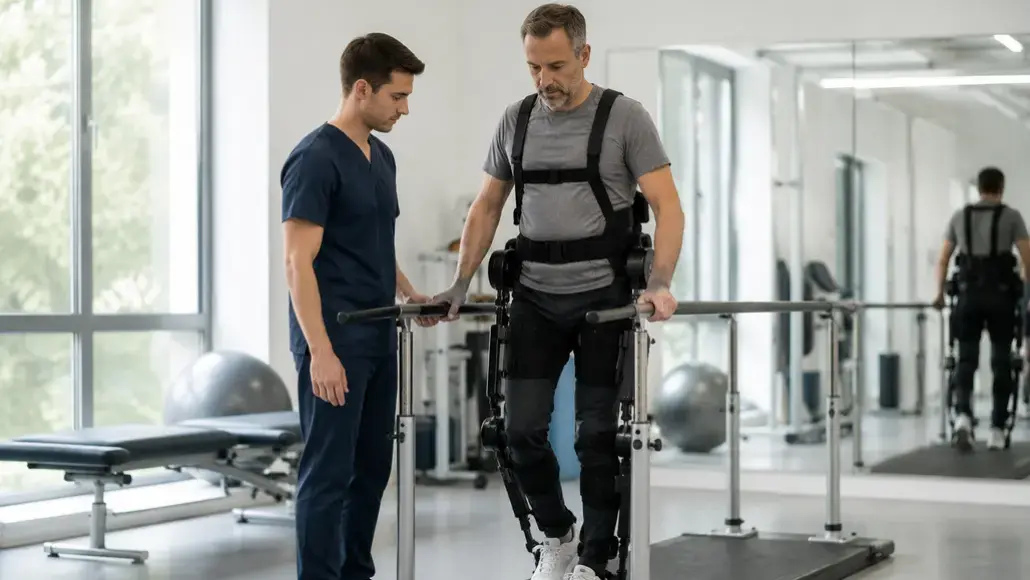
One of the most innovative and transformative sectors within the rehabilitation equipment market advancing recovery solutions is the rapid development and clinical adoption of robotic-assisted therapy systems and wearable exoskeletons. These sophisticated devices are designed to support the patient’s body weight and guide their limbs through precise, physiologically correct therapeutic movements. For individuals with severe mobility impairments or paralysis, exoskeletons provide the revolutionary opportunity to stand and walk again, which has profound and well-documented physiological benefits. These include improved bone mineral density, better cardiovascular health, enhanced bowel and bladder function, and a reduction in the incidence of pressure sores. However, perhaps the most significant impact is psychological—the ability to be at eye-level with others and regain a sense of independent movement is a powerful driver of patient morale and recovery.
In the controlled clinical setting, robotic gait trainers are increasingly used to provide highly consistent and intensive walking practice for patients after a stroke or spinal cord injury. These machines can be adjusted with extreme precision to provide varying levels of assistance, allowing the therapist to challenge the patient progressively as they regain strength and coordination. The integrated sensors in these devices provide immediate, real-time feedback on the patient’s gait pattern, highlighting subtle asymmetries, dragging, or compensatory movements that need to be corrected. This data-driven approach allows for a level of movement precision and volume that is simply impossible to achieve with manual therapy alone. As these technologies become more portable, easier to don, and more affordable, we are seeing a move toward home-use exoskeletons, which will allow patients to continue their intensive recovery and maintain their mobility in their own homes and communities.
Virtual Reality and the Power of Gamification in Neurorehabilitation
The challenge of rehabilitation is often as much a mental and emotional struggle as it is a physical one. The repetitive and sometimes painful nature of physical therapy can lead to boredom, frustration, and a lack of motivation, which in turn significantly slows down the recovery progress. The rehabilitation equipment market advancing recovery solutions is proactively addressing this by integrating immersive virtual reality (VR) and gamification principles into traditional therapy systems. By placing the patient in a compelling virtual environment where their physical movements control an avatar or interact with a game-like task, therapy is transformed into an engaging and rewarding experience. This “distraction therapy” allows patients to perform many more repetitions and push through physical discomfort, often without even consciously realizing the intensity of their effort.
In the complex field of neurorehabilitation, VR is particularly effective because it can create diverse and challenging scenarios that would be impossible, unsafe, or prohibitively expensive to replicate in the real world. A patient recovering from a stroke can practice navigating a virtual grocery store, preparing a meal in a digital kitchen, or crossing a busy street, rebuilding their cognitive and motor coordination in a safe, controlled, and repeatable environment. The VR system can provide immediate, multi-sensory feedback, reinforcing correct movements and encouraging the patient to try again. This real-time biofeedback is essential for retraining the brain and creating new neural pathways after an injury. By making therapy fun, competitive, and rewarding, VR-based systems are significantly increasing patient compliance and ensuring that they remain committed to their recovery programs until their functional goals are achieved.
Advancements in Traditional Assistive Devices and Mobility Aids
While high-tech robotics and VR systems often capture the public’s imagination and the headlines, the rehabilitation equipment market advancing recovery solutions also includes essential and life-changing advancements in more traditional mobility aids and assistive devices. Modern wheelchairs, for example, have evolved from simple transit devices into highly engineered pieces of personal mobility equipment that are now lighter, more ergonomic, and more customizable than ever before. The strategic use of carbon fiber, titanium, and high-strength aluminum alloys has dramatically reduced the weight of manual wheelchairs, making them much easier for users to propel and transport independently. For those who require power mobility, sophisticated “smart” control systems allow users with limited upper-body function to operate their chairs with minimal movement, using joysticks, head-array controls, or even advanced eye-tracking technology.
Innovations in the fields of prosthetics and orthotics are also providing entirely new levels of functionality and natural movement for people with limb loss or structural impairments. Myoelectric prosthetic limbs, which are controlled by the electrical signals naturally generated by the user’s remaining muscles, allow for an intuitive and fluid movement of the hand, wrist, or arm. Advanced “smart” orthotic braces can now adjust their internal stiffness or resistance in real-time based on the user’s current activity—providing rigid support during walking while allowing for comfortable flexibility during sitting or climbing stairs. These “assistive technologies” are not just about basic mobility; they are about social and economic integration. By reducing the physical barriers to daily living, these devices allow individuals with disabilities to participate more fully and confidently in their families, workplaces, and wider communities.
The Rise of Data-Driven Recovery and Telerehabilitation
The integration of advanced sensors, cloud connectivity, and mobile applications into rehabilitation equipment is ushering in a new era of data-driven recovery. Every session on a piece of smart rehabilitation equipment now generates a wealth of objective data on the patient’s range of motion, force production, speed of movement, and overall endurance. This information is invaluable for therapists and physicians, allowing them to track progress over time with extreme precision and adjust the individual treatment plan based on actual performance rather than subjective observation. It also provides patients with tangible, visual proof of their progress, which is an incredibly powerful psychological motivator during the long and often frustrating road to recovery.
This digital connectivity is also enabling the rapid growth of telerehabilitation, which is breaking down geographic barriers to care. Many patients, especially those in rural or underserved areas, face significant challenges in accessing specialized rehabilitation clinics. The rehabilitation equipment market advancing recovery solutions is responding with a range of home-based systems that can be remotely monitored and managed by a therapist. A patient can perform their prescribed exercises on a smart device or with a wearable sensor at home, and the performance data is securely transmitted to the clinic for review. The therapist can then provide feedback, adjust the difficulty of the tasks, and conduct video consultations to ensure that the patient is performing the movements correctly and safely. This model not only dramatically improves access to expert care but also reduces the overall burden on the healthcare system by allowing for high-quality, effective recovery to happen outside of the traditional, resource-constrained hospital setting.
Future Perspectives: Hyper-Personalization and AI-Driven Care
Looking toward the future, the continued evolution of the rehabilitation equipment market advancing recovery solutions lies in the realm of hyper-personalization and the deep integration of artificial intelligence (AI). AI algorithms will soon be able to analyze a patient’s unique physiological profile, genetic markers, and historical recovery trajectory to design a truly bespoke, optimized therapy program. This program will be dynamic, adapting in real-time to the patient’s performance increasing the challenge when they are excelling and providing additional support or rest when the system detects signs of fatigue or overexertion. We are also seeing the development of “smart textiles” and bio-sensing clothing that can monitor muscle activation patterns and joint angles throughout the entire day, providing a continuous, 24/7 picture of the patient’s function in the real world.
The ultimate goal of these advancements is to create a seamless, patient-centric recovery ecosystem where the equipment, the therapist, the family, and the patient are all connected by a single, intelligent, and supportive platform. In this future, rehabilitation will no longer be something that happens for an hour a day in a sterile clinic; it will be an integrated and empowering part of the patient’s daily life, supported by technologies that are as unobtrusive as they are effective. By continuing to push the boundaries of engineering and clinical science, the rehabilitation equipment market is ensuring that a diagnosis of physical or cognitive disability is no longer a permanent barrier to living a full, active, and independent life.