

















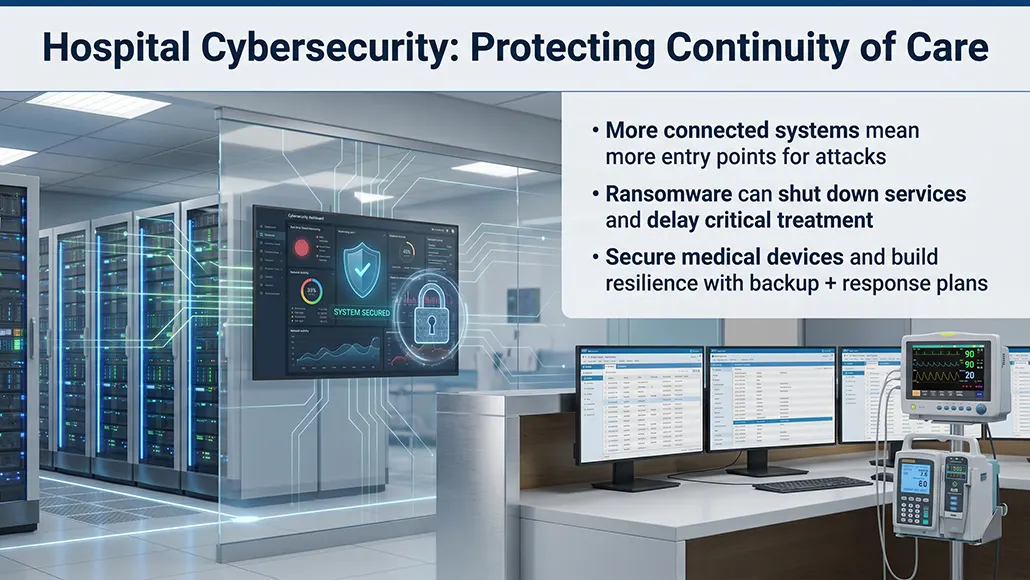

Hospitals are increasingly dependent on digital infrastructure. From electronic health records and connected medical devices to cloud-based scheduling systems and remote consultations, modern healthcare operations now rely heavily on continuous data access and network connectivity. While this digital transformation has improved efficiency and care coordination, it has also introduced a growing vulnerability. Today, hospital cybersecurity is no longer viewed as an IT issue alone it has become a major operational risk.
Unlike many other industries, hospitals cannot afford downtime. A system failure does not simply interrupt workflow it can directly affect patient care, emergency response, and clinical decision-making. This makes healthcare one of the most sensitive and high-risk sectors in the cybersecurity landscape.
The Expanding Digital Footprint of Hospitals
Traditional hospital systems were once relatively isolated, relying heavily on physical infrastructure and localized operations. That model has changed rapidly with the adoption of digital healthcare technologies.
Modern hospitals now operate interconnected systems that include:
- Electronic health records (EHRs)
- Networked diagnostic equipment
- Remote monitoring devices
- Telehealth platforms
- Automated pharmacy systems
- Cloud-based administrative tools
While these technologies improve operational efficiency, they also create multiple access points for cyber threats. Every connected system increases the complexity of managing digital security across the healthcare environment.
Why Hospitals Have Become Prime Targets
Cybercriminals increasingly target hospitals because healthcare systems contain highly sensitive and valuable data. Patient records include personal, financial, and medical information, making them attractive targets for ransomware groups and data theft operations.
However, the risk extends beyond data breaches. Cyberattacks can disrupt:
- Clinical operations
- Appointment scheduling
- Emergency services
- Diagnostic systems
- Medication management
In extreme cases, operational disruptions can compromise patient safety. This is what distinguishes hospital cybersecurity from many traditional corporate security concerns the consequences are not purely financial or reputational, but potentially clinical.
Ransomware and the Rise of Operational Disruption
One of the most significant threats facing hospitals today is ransomware. In these attacks, malicious actors encrypt hospital systems and demand payment to restore access.
The operational impact can be severe:
- Delayed procedures and surgeries
- Loss of access to patient records
- Diversion of emergency patients
- Communication breakdowns across departments
Hospitals are particularly vulnerable because operational continuity is critical. Unlike other sectors that may tolerate temporary downtime, healthcare systems often face immense pressure to restore services immediately.
This has shifted cybersecurity discussions from data protection toward operational resilience.
Medical Devices and the Growing Attack Surface
A major challenge in hospital cybersecurity is the rapid growth of connected medical devices. Ventilators, infusion pumps, imaging systems, and patient monitoring equipment are increasingly network-enabled, allowing data sharing and remote management.
While this connectivity improves clinical efficiency, it also expands the attack surface. Many medical devices were not originally designed with modern cybersecurity standards in mind, creating vulnerabilities within hospital networks.
Securing these systems is particularly complex because:
- Devices may operate on outdated software
- Downtime for updates may affect patient care
- Equipment lifecycles often extend for many years
This creates a difficult balance between operational continuity and digital security.
Cybersecurity as an Operational Strategy
Hospitals are beginning to recognize that cybersecurity must be integrated into broader operational planning rather than treated as a standalone IT function.
This shift includes:
- Embedding cybersecurity into infrastructure design
- Conducting regular risk assessments
- Integrating security protocols into clinical workflows
- Strengthening vendor and third-party management
Increasingly, hospital administrators are treating cybersecurity in the same way they approach physical safety and emergency preparedness as a core operational requirement.
The Human Factor Remains a Major Vulnerability
Despite advances in security technology, human behavior continues to represent one of the largest cybersecurity risks within hospitals.
Phishing attacks, weak password practices, and accidental data exposure remain common entry points for cyber incidents. In fast-paced healthcare environments, staff are often focused on clinical priorities, making digital vigilance more challenging.
Training and awareness are therefore becoming critical components of hospital cybersecurity strategies. Security protocols are most effective when integrated into everyday operational behavior rather than treated as separate compliance tasks.
Regulatory Pressure and Compliance Challenges
Healthcare organizations are also facing increasing regulatory scrutiny regarding data protection and cybersecurity standards. Compliance requirements around patient privacy and digital security continue to evolve globally.
Hospitals must now navigate:
- Data protection regulations
- Cybersecurity audit requirements
- Incident reporting obligations
- Third-party security assessments
Meeting these requirements can be resource-intensive, particularly for smaller healthcare systems with limited cybersecurity infrastructure.
At the same time, regulatory compliance alone is no longer sufficient. Hospitals are realizing that simply meeting minimum standards does not guarantee resilience against increasingly sophisticated cyber threats.
The Financial Impact of Cybersecurity Failures
The cost of cybersecurity incidents extends far beyond ransom payments or technical recovery expenses.
Cyberattacks can result in:
- Operational downtime
- Revenue loss from disrupted services
- Legal and regulatory penalties
- Reputational damage
- Increased insurance and compliance costs
For hospitals operating under financial pressure, these disruptions can significantly affect long-term sustainability. As a result, cybersecurity investment is increasingly being viewed as a form of operational risk management rather than discretionary technology spending.
Building Digitally Resilient Hospitals
The future of healthcare will be increasingly digital, making cybersecurity resilience essential for operational stability. Hospitals are now investing in:
- Advanced threat detection systems
- Network segmentation strategies
- Real-time monitoring platforms
- Incident response planning
- Backup and recovery infrastructure
The goal is not simply preventing attacks, but ensuring continuity even when disruptions occur.
As frequently discussed across healthcare management platforms, digital resilience is becoming a defining characteristic of modern hospital systems. The ability to maintain secure and uninterrupted operations will increasingly shape institutional trust and operational performance.
Conclusion: Cybersecurity as a Healthcare Imperative
The healthcare sector’s digital transformation has created enormous opportunities for efficiency, connectivity, and patient care improvement. However, it has also introduced a new category of operational risk that hospitals can no longer ignore.
Hospital cybersecurity is no longer confined to IT departments. It now influences clinical operations, patient safety, financial stability, and institutional resilience. As hospitals become more connected and data-driven, cybersecurity will play a central role in determining how effectively healthcare systems operate in an increasingly digital environment.
The challenge ahead is not simply protecting data but protecting the continuity of care itself.