












The modern healthcare landscape is characterized by high patient volumes, complex clinical pathways, and the constant pressure to deliver high-quality care with limited resources. In this environment, the traditional decentralized model of hospital management is often unable to keep pace with the dynamic nature of patient needs. To address this, many forward-thinking health systems are turning to a “mission control” approach, establishing hospital command centers driving operational excellence. These centralized hubs serve as the nervous system of the hospital, integrating real-time data from across the organization to provide a “single source of truth” for operational decision-making. By leveraging advanced analytics, artificial intelligence, and a cross-functional team of experts, these centers are transforming how hospitals manage patient flow, bed utilization, and clinical coordination.
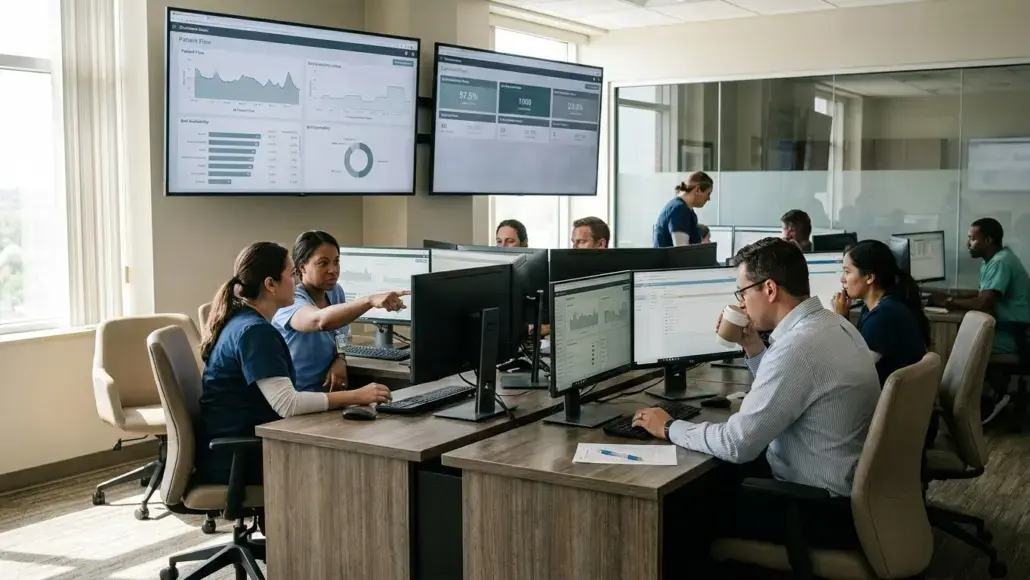
The primary objective of hospital command centers driving operational excellence is to eliminate the silos that traditionally hinder efficient hospital operations. In a typical hospital, the emergency department, the surgical units, and the inpatient floors often operate as independent entities, leading to bottlenecks and delays. A command center breaks down these barriers by providing a panoramic view of the entire facility. Staff can see, in real-time, how many patients are waiting in the ER, which surgical cases are running behind schedule, and where beds are about to become available. This high-level visibility allows for proactive interventions, such as diverting ambulances to less crowded facilities or prioritizing discharges on specific units to free up capacity for incoming patients.
Enhancing Patient Flow Management through Real-Time Analytics
Patient flow is the lifeblood of hospital operations, and its optimization is a core focus of hospital command centers driving operational excellence. When patient flow is disrupted, the consequences are felt throughout the system: longer wait times in the emergency department, delayed surgeries, and “boarding” of patients in hallways or non-clinical areas. Command centers use sophisticated predictive analytics to identify potential bottlenecks before they occur. For example, by analyzing historical data and current trends, the system can predict a surge in admissions several hours in advance, allowing the hospital to mobilize extra staff and open additional beds before the pressure becomes critical.
Furthermore, hospital command centers driving operational excellence play a crucial role in managing the transition of care. Discharging a patient is a complex process that involves coordination between physicians, nurses, pharmacy, physical therapy, and transport services. Any delay in this chain can prevent a bed from being available for the next patient. Command center software tracks these discharge “milestones” in real-time, alerting staff if a specific task such as a final medication reconciliation or a transportation request is lagging. By streamlining these processes, hospitals can significantly reduce the average length of stay, which not only improves patient satisfaction but also increases the hospital’s capacity to serve the community.
Optimizing Bed Management and Resource Allocation
Bed management is one of the most challenging aspects of healthcare operations, often described as a high-stakes game of musical chairs. Hospital command centers driving operational excellence simplify this task by automating the bed assignment process. Instead of relying on phone calls and manual spreadsheets, the command center uses algorithms to match patients with the most appropriate bed based on their clinical needs, acuity level, and the proximity to the necessary medical equipment. This ensures that patients are placed in the right care setting the first time, reducing the need for internal transfers, which are both disruptive to the patient and labor-intensive for the staff.
Resource allocation extends beyond physical beds to include staffing and specialized medical equipment. Hospital command centers driving operational excellence can monitor the “pulse” of the hospital’s workforce, identifying units that are understaffed relative to the patient load. This allows for the dynamic redistribution of staff throughout the shift, ensuring that patient safety is never compromised due to nursing shortages. Similarly, the command center can track the location and status of critical assets, such as ventilators or infusion pumps, ensuring they are available where they are needed most. This data-driven approach to resource management is a key driver of operational excellence healthcare, maximizing the utility of every asset the hospital possesses.
Driving Clinical Coordination and Safety Outcomes
While the operational benefits of command centers are clear, their impact on clinical outcomes is equally profound. By providing a centralized platform for clinical coordination, hospital command centers driving operational excellence ensure that patients receive timely care. For example, the command center can monitor “high-acuity” alerts, such as signs of sepsis or deteriorating vital signs, across the entire hospital. If a patient’s condition begins to decline, the command center can immediately notify the rapid response team, ensuring that intervention occurs as quickly as possible. This “extra set of eyes” on the most vulnerable patients is a powerful tool for reducing hospital mortality and preventing adverse events.
The command center also facilitates better communication between different clinical teams. In complex cases involving multiple specialties, the command center can serve as a hub for coordinating consults and diagnostic tests. By ensuring that all members of the care team are working from the same real-time information, the center reduces the likelihood of miscommunication and medical errors. This level of coordination is particularly important in large, academic medical centers where patients often have multiple comorbidities and require highly specialized care. Hospital command centers driving operational excellence act as a bridge, connecting the various pieces of the clinical puzzle to provide a seamless patient experience.
Scaling Command Center Technology Across Healthcare Systems
The success of hospital command centers driving operational excellence has led to their expansion from individual facilities to entire healthcare systems. In a multi-hospital network, a “system-wide” command center can balance the load across multiple locations. If one hospital is reaching its capacity, the command center can direct new admissions to a sister facility that has available beds. This regional approach to patient flow management ensures that the resources of the entire health system are utilized efficiently, preventing any single facility from becoming overwhelmed.
The technology powering these centers is also becoming more sophisticated, with the integration of advanced hospital analytics and machine learning. Future iterations of command center software will likely include “digital twin” capabilities, allowing administrators to run simulations of different operational strategies before implementing them in the real world. As AI continues to evolve, the command center will move from reactive and predictive analytics to “prescriptive” analytics, where the system not only predicts a problem but also recommends the most effective solution. This evolution will further cement the role of hospital command centers driving operational excellence as the cornerstone of the modern, efficient healthcare organization.
Conclusion: The Future of High-Performance Healthcare
The implementation of hospital command centers driving operational excellence represents a fundamental shift in how we think about hospital management. It is a move away from the chaotic, reactive nature of traditional operations and toward a disciplined, data-driven approach to care delivery. By centralizing information and empowering staff with actionable insights, these centers are proving that it is possible to improve both operational efficiency and clinical quality simultaneously.
As the healthcare industry continues to face increasing demand and financial constraints, the need for operational excellence has never been greater. Hospital command centers provide the tools needed to navigate this complexity, ensuring that every patient receives the right care, in the right place, at the right time. They are the heartbeat of the high-performance hospital, driving a culture of continuous improvement that benefits patients, staff, and the broader community. In the years to come, the “command center” will not just be a room in a hospital it will be a way of doing business, defining the new standard for what a modern healthcare system can achieve.