








Close
Digital Health & Ai Innovation summit 2026
Medical Taiwan 2026

From Screens to Patients: How Indonesia’s Leap into AI-Native Healthcare Earned Global Recognition

Note* - All images used are for editorial and illustrative purposes only and may not originate from the original news provider or associated company.

Subscribe

- Never miss a story with notifications

- Gain full access to our premium content

- Browse free from any location or device.

Media Packs

Expand Your Reach With Our Customized Solutions Empowering Your Campaigns To Maximize Your Reach & Drive Real Results!

– Access the Media PackNow

– Book a Conference Call

Leave Message for Us to Get Back

Related stories

Healthcare Financing Models Supporting Modern Care...

The transformation of the economic foundations of medicine from a volume-based to a value-based model represents the most significant shift in clinical administration in over a generation. In an era of rising costs and an aging population, the traditional "fee-for-service" approach is being replaced by sophisticated financial structures that incentivize high-quality outcomes and long-term health maintenance. By integrating insurance innovation, sustainable investment strategies, and data-driven cost optimization, healthcare financing models supporting modern care delivery are becoming the primary driver of clinical sustainability and innovation. This evolution ensures that financial resources are allocated where they have the most impact improving the lives of patients and ensuring that the healthcare system remains resilient and accessible for every member of society.

Regulatory Compliance in Healthcare Technology Advancements

The rapid integration of sophisticated digital tools into clinical practice requires a robust and adaptive oversight framework to ensure that innovation never comes at the expense of patient safety or data integrity. As medical technologies evolve from simple mechanical devices to complex, AI-driven diagnostic and therapeutic systems, the role of governmental and professional standards becomes increasingly critical. By establishing clear certification processes and rigorous risk management protocols, regulatory compliance in healthcare technology advancements is becoming the primary guardian of quality in the modern medical landscape. This commitment to oversight ensures that the benefits of high-tech medicine such as improved accuracy and more personalized treatments are delivered within a secure and ethically sound environment, effectively bridging the gap between scientific discovery and safe clinical application.

Healthcare Interoperability Enabling Connected Care Systems

The ability of disparate digital platforms to seamlessly exchange and interpret clinical information represents the critical infrastructure upon which modern medicine is built. In a complex care environment where patients often interact with multiple specialists, pharmacists, and community health providers, the lack of data connectivity can lead to fragmented care and significant safety risks. By establishing a unified framework for data exchange and electronic health records integration, healthcare interoperability enabling connected care systems is becoming the primary driver of clinical coordination and efficiency. This transformation ensures that the right information reaches the right provider at the right time, creating a comprehensive "clinical narrative" that supports better decision-making and a more patient-centered approach to healing.

Indonesia has become the first country in the world to deploy InterSystems IntelliCare, an AI-native Electronic Healthcare Record (EHR) system that frees clinicians from screens so they can focus on people. This leap has earned InterSystems the Indonesia Technology Innovation of the Year – Healthcare Technology award at the Asian Innovation Excellence Awards 2025.

The Asian Innovation Excellence Awards, organised by Asian Business Review, recognise innovations that deliver measurable results, address critical challenges, and drive meaningful progress across industries. InterSystems’ recognition in the Healthcare Technology category reflects the company’s long-term commitment to improving care delivery and patient outcomes through intelligent, data-driven systems.

This recognition is rooted in a universal truth of modern healthcare that technology should serve people, not the other way around. Across hospitals worldwide, clinicians are burdened by complex systems and data entry. InterSystems set out to change that dynamic, using AI to remove administrative barriers and help doctors refocus on what matters most: their patients.

As a data technology provider managing over one billion healthcare records globally, InterSystems launched IntelliCare earlier this year and has quickly achieved a major milestone with the world’s first live deployment of IntelliCare at EMC Healthcare, a leading hospital group in Indonesia. Built on InterSystems’ TrakCare Electronic Health Record system, which is trusted by600+ hospitals worldwide, IntelliCare is a next-generation EHR with AI at its center. It includes a comprehensive portfolio of AI-enabled clinical, administrative, revenue cycle management and departmental modules. With IntelliCare AI capabilities, the clinicians can focus more on patients with less documentation burden, care teams can deliver a better patient experience, and the healthcare organizations can improve operational and financial performance.

Indonesia’s Leap Forward in Digital Health

Indonesia’s healthcare system continues to face familiar challenges, such as fragmented hospital systems, disconnected patient data, and time-consuming administrative work that reduces the time doctors can spend with patients. At the same time, the country is accelerating its SATUSEHAT initiative, a national digital health framework designed to achieve interoperability across hospitals, laboratories, insurers, and public health systems.

To bridge these challenges, InterSystems delivers a combination of technologies that bring data together for efficieny and better patient outcomes. The first is IntelliCare, an AI-native electronic health record (EHR) that automates clinical documentation, streamlines workflows, and returns valuable time to clinicians. The second is InterSystems IRIS for Health, a data platform that powers IntelliCare and allows medical data to flow securely across hospitals, laboratories, insurers, and government systems to support population health initiatives in the aging era.

Together, these innovations make Indonesia the first country in the world to implement an AI-native healthcare system at a national scale, positioning the country as a regional leader in digital health transformation.

InterSystems healthcare solutions enable healthcare data to flow securely across hospitals, laboratories, insurers, and government systems to support population health initiatives in the aging era.InterSystems technology is trusted by leading healthcare organizations and local IT providers, including EMC Healthcare, Prodia, Tzu Chi Hospital, EKA Hospital, Pondok Indah Group, Asia One Healthcare and Bali International Hospital, to modernize care delivery, improve interoperability, and enhance patient outcomes.

To ensure that every implementation reflects Indonesia’s healthcare environment, InterSystems collaborates with local technology partners such as Zi.Care, ICS Compute, and BitHealth. Through these partnerships, InterSystems aligns with the Ministry of Health’s priorities for connected, patient-centered healthcare, ensuring that each deployment is scalable, sustainable, and designed for long-term national impact.

Real-World Results from EMC Healthcare

At EMC Healthcare, part of the EMTEK Group and the world’s first adopter of IntelliCare, results from early pilots show tangible, measurable improvements:

  • 75% reduction in clicks (from 8 to 2) for retrieving lab results, enabling faster decision-making and smoother workflows.
  • Data completeness increased from 68% to 98% across its hospitals.
  • 7 EMC hospitals deployed EMR within 18 months after first hospital go live, one of the fastest rollouts of its kind.
  • Over 700 clinicians now supported by IntelliCare’s AI-driven documentation and data retrieval.

At EMC Healthcare, we believe technology should not hinder a doctor’s work,it should strengthen it. We All aware today’s EMR’s challenges, EMRs have interrupted clinicians during assessments as they switch screens and search for data. Yet the essence of clinical work is connecting the dots that means seeing the full picture while staying focused on the patient. With AI Ambience and AI Assistant, we can close that gap. Doctors can remain on a single assessment screen, ask AI for what they need, and receive clinical information in real time without breaking their train of thought. This is not just a tech upgrade,it reflects our deep understanding of frontline burdens and gives clinicians the space to think, analyze, and care for patients with full attention.,” said Dr. Bella Desra AndaeChief Medical Informatics Officer, EMC Healthcare.

“With AI at its core, IntelliCare enables providers to spend more time with patients and less time on paperwork. This award proves that healthcare innovation isn’t about adding more technology, it’s about making technology invisible, so human care comes first,” added Luciano Brustia, Regional Managing Director, Asia Pacific, InterSystems.

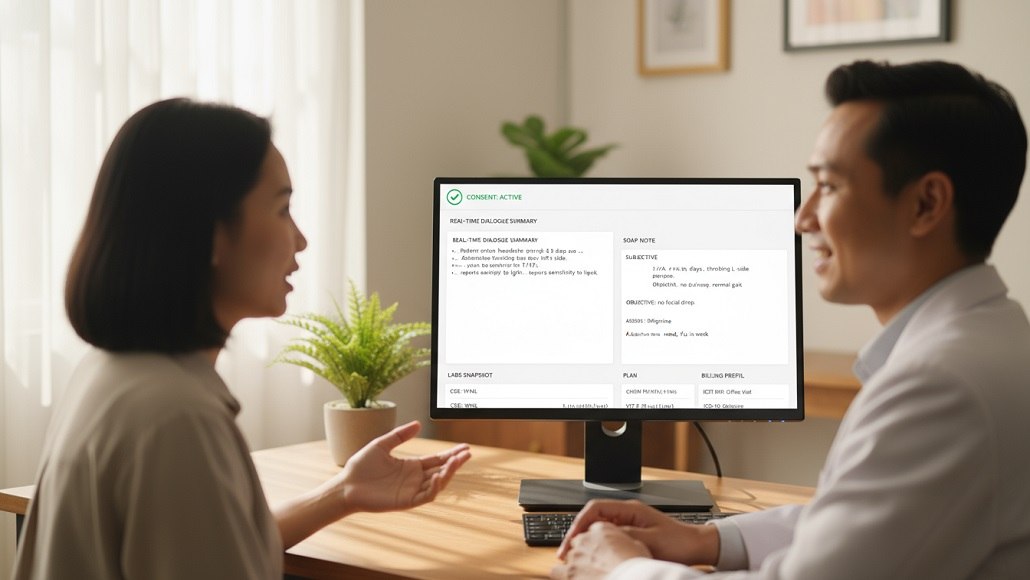
Before IntelliCare, clinicians often spent valuable minutes typing notes. Now, AI listens, transcribes, and learns, allowing doctors to look their patients in the eye again.

At EMC Healthcare Jakarta, IntelliCare’s AI now captures the patient-doctor conversation (with consent), generates structured medical notes, and prepares billing automatically. The patient leaves with a prescription and the reassurance that their doctor was fully present.

“Our goal at EMC has always been to combine the highest medical standards with meaningful patient relationships. IntelliCare helps us achieve that balance, technology behind the scenes, people at the center,” said Jusup Halimi, President Director, EMC Healthcare.

More Than an Award, A New Responsibility

For InterSystems, this award is not the finish line but the starting point for broader impact. Moving forward, the company is committed to:

  • Expanding IntelliCare’s implementation to more hospitals and health networks across Indonesia.
  • Collaborating with government and industry partners to strengthen the national health data ecosystem.
  • Sharing Indonesia’s success story with other Asia-Pacific countries accelerating their digital health transformation.

“This award strengthens our direction, but it also deepens our responsibility. Technology must continue to help doctors do what they do best: care for people. Our mission now is to extend that impact to more hospitals and more patients,” said Luciano Brustia.
Company: InterSystems


InterSystems is the information engine that powers some of the world’s most important applications. In healthcare, finance, government, and other sectors where lives and livelihoods are at stake, InterSystems has been a strategic technology provider since 1978. InterSystems is a privately held company headquartered in Cambridge, Massachusetts (USA), with offices worldwide, and its software products are used daily by millions of people in more than 80 countries. For more information, visit InterSystems.com

Send Enquiry for this story

By submitting this form you agree to allow www.hhmglobal.com to contact you regarding your enquiry.
See our Privacy Policy to learn more.

MEDICAL FAIR ASIA 2026

Latest stories

Related stories

Healthcare Financing Models Supporting Modern Care Delivery

The transformation of the economic foundations of medicine from a volume-based to a value-based model represents the most significant shift in clinical administration in over a generation. In an era of rising costs and an aging population, the traditional "fee-for-service" approach is being replaced by sophisticated financial structures that incentivize high-quality outcomes and long-term health maintenance. By integrating insurance innovation, sustainable investment strategies, and data-driven cost optimization, healthcare financing models supporting modern care delivery are becoming the primary driver of clinical sustainability and innovation. This evolution ensures that financial resources are allocated where they have the most impact improving the lives of patients and ensuring that the healthcare system remains resilient and accessible for every member of society.

Regulatory Compliance in Healthcare Technology Advancements

The rapid integration of sophisticated digital tools into clinical practice requires a robust and adaptive oversight framework to ensure that innovation never comes at the expense of patient safety or data integrity. As medical technologies evolve from simple mechanical devices to complex, AI-driven diagnostic and therapeutic systems, the role of governmental and professional standards becomes increasingly critical. By establishing clear certification processes and rigorous risk management protocols, regulatory compliance in healthcare technology advancements is becoming the primary guardian of quality in the modern medical landscape. This commitment to oversight ensures that the benefits of high-tech medicine such as improved accuracy and more personalized treatments are delivered within a secure and ethically sound environment, effectively bridging the gap between scientific discovery and safe clinical application.

Healthcare Interoperability Enabling Connected Care Systems

The ability of disparate digital platforms to seamlessly exchange and interpret clinical information represents the critical infrastructure upon which modern medicine is built. In a complex care environment where patients often interact with multiple specialists, pharmacists, and community health providers, the lack of data connectivity can lead to fragmented care and significant safety risks. By establishing a unified framework for data exchange and electronic health records integration, healthcare interoperability enabling connected care systems is becoming the primary driver of clinical coordination and efficiency. This transformation ensures that the right information reaches the right provider at the right time, creating a comprehensive "clinical narrative" that supports better decision-making and a more patient-centered approach to healing.

Patient Engagement Technologies Enhancing Care Experience

The evolution of clinical care from a provider-centric model to one that actively involves the individual represents a profound shift in the modern medical landscape. By integrating digital communication tools, comprehensive patient portals, and intuitive mobile health applications, healthcare institutions are empowering individuals to take a leading role in their own wellness journeys. This transformation is not merely about the introduction of new software; it is about fostering a collaborative environment where information flows freely and the patient-provider relationship is built on a foundation of mutual transparency and respect. As these systems become more sophisticated, patient engagement technologies enhancing care experience are becoming the primary catalyst for improved health outcomes and a more personalized standard of care.

Subscribe

- Never miss a story with notifications

- Gain full access to our premium content

- Browse free from any location or device.

Media Packs

Expand Your Reach With Our Customized Solutions Empowering Your Campaigns To Maximize Your Reach & Drive Real Results!

– Access the Media Pack Now

– Book a Conference Call

Leave Message for Us to Get Back

Translate »